How to Do Weekend Science Experiments Together
Start weekend science experiments by gathering budget-friendly supplies from your kitchen—baking soda, vinegar, and food coloring work perfectly. Choose projects that match each family member’s age and interests so everyone stays engaged. Set up a safe workspace with protective covering and keep paper towels nearby for spills. Try classic experiments like homemade lava lamps or baking soda volcanoes to build confidence first. Below, you’ll find step-by-step ideas to make science time a lasting family tradition.
Key Takeaways
- Gather affordable supplies from your kitchen, garage, dollar stores, and thrift shops before starting experiments.
- Choose age-appropriate experiments matching each family member’s skill level and interests to keep everyone engaged.
- Set up a safe workspace with protective coverings, gathered materials, and clear safety guidelines for all participants.
- Start with classic projects like baking soda volcanoes or homemade lava lamps to build confidence and excitement.
- Document discoveries using science journals, photos, and charts, then share findings together at family meals.
Gathering Your Science Supplies on a Budget

You don’t need a fancy lab or expensive equipment to explore science at home. Most supplies are already in your kitchen or garage.
Start with what you have:
- Baking soda and vinegar
- Food coloring
- Empty jars and containers
- Measuring cups and spoons
Find thrift store finds**** like magnifying glasses, old kitchen scales, or glass bowls. These work perfectly for experiments and cost almost nothing.
Create DIY supplies**** from everyday items:
- Paper towel tubes become telescopes
- Plastic bottles transform into rockets
- Rubber bands power simple machines
Check dollar stores for droppers, funnels, and safety goggles. Ask neighbors for egg cartons or cardboard boxes.
Science curiosity matters more than fancy gear. Your enthusiasm is the best tool you’ll ever use.
Choosing Age-Appropriate Experiments for Everyone
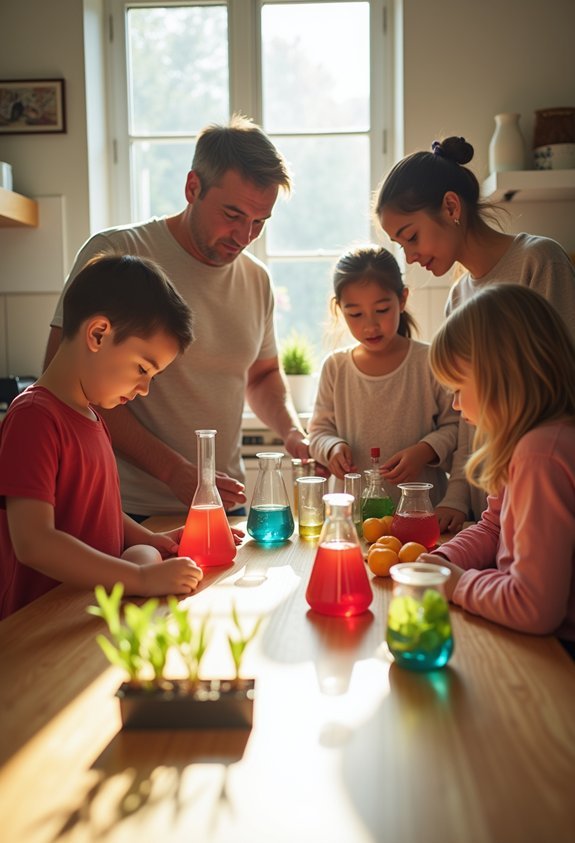
When families experiment together, matching activities to each person’s skill level keeps everyone safe and engaged. Start with quick skill assessments. Notice what each family member can do independently.
Consider these factors:
Every family scientist brings something different to the table—age, interest, and learning style all shape how we explore together.
- Age ranges: Toddlers love mixing colors. Teens enjoy chemical reactions.
- Interest levels: Follow what sparks curiosity in each person.
- Learning styles: Some kids learn by watching. Others need hands-on action.
You’ll find success when everyone has a meaningful role. Little ones can pour and stir. Older children can measure and record data. Adults handle heat or sharp tools.
Don’t worry about perfect matches. Experiments teach flexibility. When something feels too easy or hard, adjust together. That’s real science in action.
Setting Up a Safe and Organized Workspace
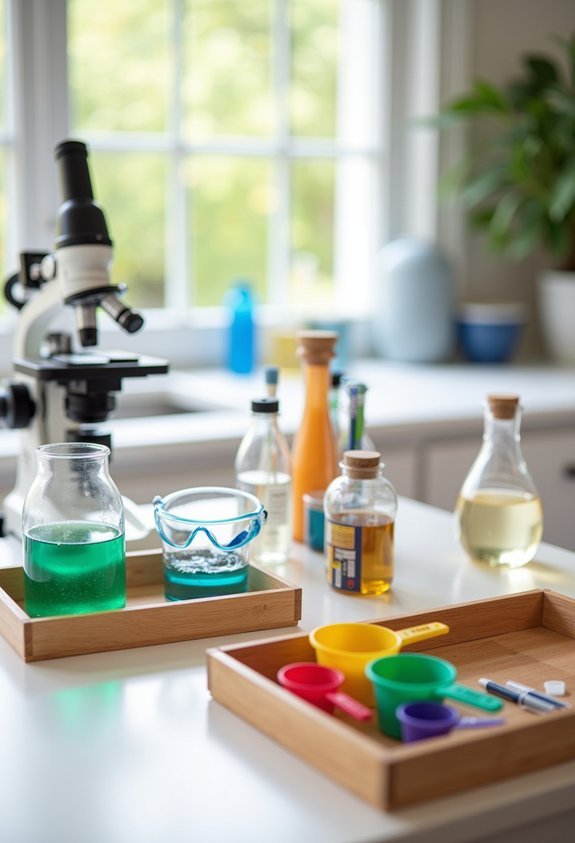
Before anyone touches a beaker or mixes a single ingredient, a well-organized workspace makes all the difference.
Workspace Essentials
Gather these items first:
- A flat, stable surface (kitchen table works great)
- Protective covering like newspaper or a plastic tablecloth
- Paper towels for quick cleanups
- All experiment materials in one spot
Safety Guidelines to Follow
Keep these rules simple and clear:
- Tie back long hair
- Wear old clothes or aprons
- Know where the sink is
- Keep a trash bin nearby
- No eating experiment materials—even if they look tasty
You don’t need a fancy lab. You just need a clean space where spills won’t cause panic. When everyone knows where things belong, the real fun begins.
Classic Kitchen Chemistry Projects to Try First

Once you’ve got your workspace ready, it’s time to dive into some classic experiments that never disappoint. These projects use ingredients you probably already have on hand.
Baking Soda Volcanoes
This one’s a crowd favorite for good reason. You’ll need:
- Baking soda
- Vinegar
- Dish soap
- Food coloring
Build a small mound around a cup, add your ingredients, and watch the fizzy eruption. Kids love the dramatic reaction.
Homemade Lava Lamps
Fill a clear bottle with water and vegetable oil. Drop in food coloring and an antacid tablet. The bubbling colors look magical and spark great questions about density.
Start with these two projects. They’re simple, safe, and build confidence for bigger experiments ahead.
Outdoor Nature Experiments That Inspire Wonder

Now that you’ve conquered the kitchen, it’s time to step outside and let nature become your laboratory. Your backyard holds endless discoveries waiting to happen.
Simple Outdoor Experiments to Start:
- Create a nature scavenger hunt with leaf shapes and rock types
- Set up a weather tracking station using jars and thermometers
- Try plant identification walks with a field guide
- Practice wildlife observation at dawn or dusk
Insect study teaches patience. Grab a magnifying glass and watch ants work together. You’ll witness ecosystem balance in action.
Habitat exploration sparks real curiosity. Flip a log gently. Peek under leaves. Every small space tells a story.
These outdoor experiments build wonder naturally. Your child sees science everywhere—and that changes everything.
Turning Mistakes Into Teachable Moments
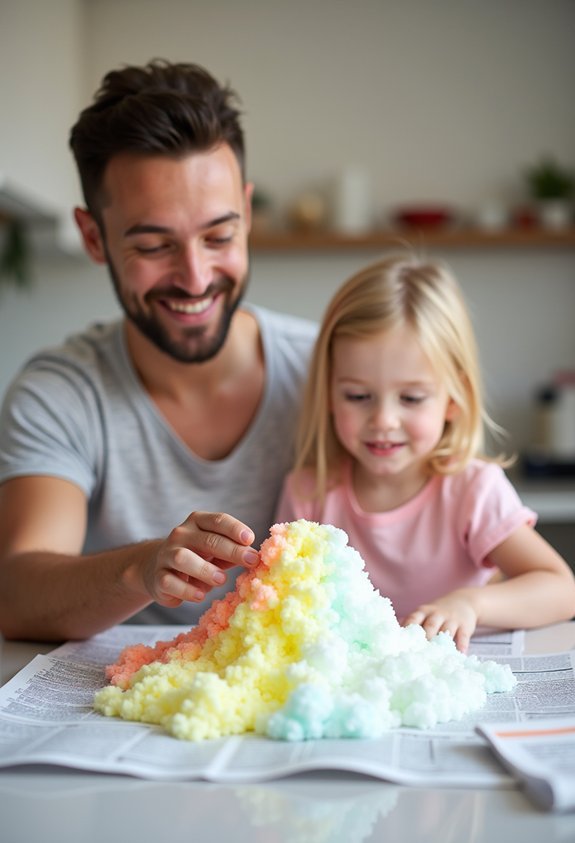
When an experiment doesn’t go as planned, you’ve just stumbled onto the best learning opportunity of all.
Embracing failure is actually how real scientists work. They test, fail, adjust, and try again. Show your child this process in action.
Here’s how to turn a flop into a win:
- Stay calm. Your reaction matters. A simple “Interesting!” keeps curiosity alive.
- Ask questions together. What happened? What did we expect? What’s different?
- Try again. Change one thing and see what shifts.
Learning resilience happens naturally when kids see that mistakes aren’t endings—they’re beginnings. You’re teaching them that setbacks are steps forward.
The volcano that fizzled? The plant that didn’t grow? These become stories they’ll remember. And those stories build confident, curious thinkers.
Documenting Your Discoveries Like Real Scientists

Even if your child’s experiment involves nothing more than mixing soap and water, writing it down makes the whole experience feel important. Science journals transform casual play into real discovery logs.
Writing down even the simplest experiments transforms messy kitchen play into meaningful scientific discovery.
Simple Ways to Record Experiment Results:
- Draw pictures of what you observed
- Write three sentences about what happened
- Take photos at each step
- Create charts for data analysis
Your child builds observation skills every time they pause to notice details. These research methods matter more than perfect outcomes.
When the experiment ends, try a quick “presentation” at dinner. Let your child share collaborative findings with the family. This builds presentation skills and confidence.
That simple notebook? It becomes treasure. Your young scientist will flip through it proudly for years.
Building a Weekly Experiment Routine That Sticks
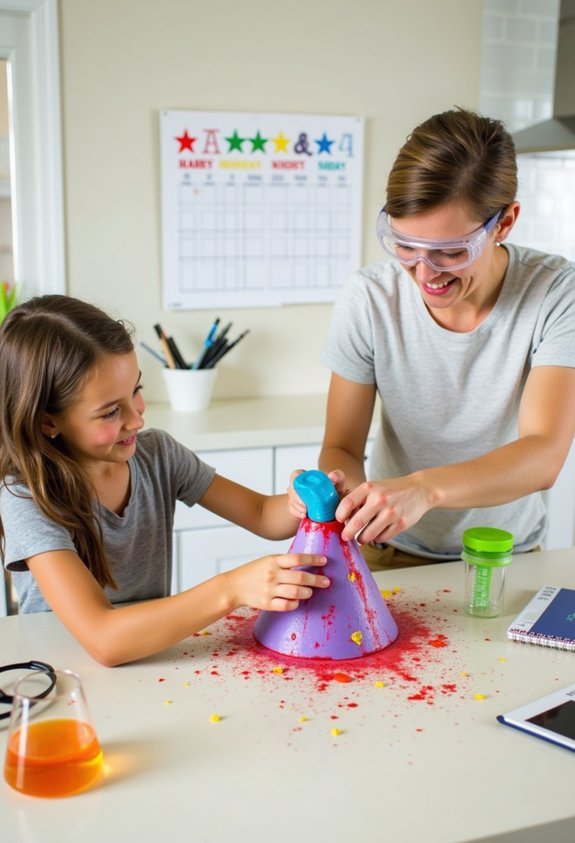
Recording discoveries matters, but consistency brings the real magic. A steady experiment schedule turns weekend science into a treasured habit your family looks forward to.
Here’s how to make it last:
- Pick your day. Saturday morning or Sunday afternoon—choose one and protect it.
- Keep it short. Twenty to thirty minutes works perfectly.
- Prep together. Family involvement starts with gathering supplies as a team.
- Rotate leaders. Let each person pick an experiment sometimes.
You don’t need fancy equipment or perfect conditions. You need showing up. Some weeks feel rushed. That’s okay. Even a quick five-minute observation counts.
Build this rhythm now and watch curiosity become second nature. Your family’s science story grows one weekend at a time.
In case you were wondering
How Do I Handle a Child Who Gets Frustrated and Wants to Quit Mid-Experiment?
You’ll want to practice frustration management by acknowledging their feelings first, then break the experiment into smaller steps. Try encouraging perseverance by celebrating small wins and reminding them that real scientists face setbacks too.
Can Weekend Science Experiments Actually Help Improve My Child’s School Grades?
Yes, weekend experiments can boost grade improvement by making abstract concepts tangible. You’ll strengthen your child’s learning retention when they physically engage with science, helping them recall information more easily during school tests.
What if Siblings Want to Do Completely Different Experiments at the Same Time?
You can try collaborative projects where siblings combine their ideas into one experiment, or use experiment rotation—letting each child pick activities on alternate weekends. This keeps everyone engaged and reduces conflicts.
How Do I Explain Complex Scientific Concepts Without Confusing Younger Children?
Think of yourself as a bridge connecting two islands. You’ll use simplified explanations that break down big ideas into smaller pieces. You’ll find relatable examples from their everyday world—like comparing atoms to building blocks.
Are Screen-Based Science Apps a Good Substitute for Hands-On Weekend Experiments?
You shouldn’t rely on them entirely. While screen benefits include visual demonstrations and accessibility, app limitations mean kids miss tactile learning experiences. You’ll get better results combining both approaches for deeper understanding.
Conclusion
Think of these weekend experiments as seeds you’re planting together. Each bubbling volcano and growing crystal adds another ring to your family tree of curiosity. You’re not just mixing ingredients—you’re building explorers who question, test, and wonder.
Start small this weekend. Grab one simple project. Watch the magic unfold.
The laboratory of your kitchen awaits. Your young scientists are ready. Now go discover something amazing together.