How to Stop Feeling Like a Full-Time Entertainment Director for Your Kids (And Get Your Time Back)
You can retire from your unpaid cruise-director job, promise. Your kid doesn’t need nonstop crafts, outings, and themed snacks—they need practice being bored. Next time they whine, “I’m boooored,” don’t panic; say, “Good, that’s your brain warming up. Go find something.” Set up a safe “yes space” with toys, art, blocks, and let them figure it out while you drink a hot coffee like a free human. Want simple scripts and systems that actually work?
Key Takeaways
- Shift your role from constant entertainer to guide: set the tone, values, and boundaries without filling every moment.
- Normalize boredom as healthy; calmly respond with simple scripts that put problem-solving back on your child.
- Create “yes spaces” stocked with safe, open-ended materials so kids can play independently without constant supervision.
- Use predictable routines (e.g., daily quiet play blocks) to train kids to expect and accept independent playtime.
- Offer limited choices instead of ready-made activities, encouraging kids to make decisions and entertain themselves while you reclaim personal time.
Why Modern Parents Feel So Much Pressure to Entertain

Parent guilt is basically a full-time job now, and no one even pays you for it. You feel like you must entertain your kid every second or you’re a bad parent. Blame sky-high parenting expectations and weird societal norms.
Parent guilt is the unpaid overtime of modern motherhood—constant, exhausting, and somehow never enough.
Your mom sent you outside; now people act shocked if your kid gets bored for five minutes. You see perfect craft moms online and think, “Cool, I’m failing.” Digital distractions don’t help; everyone posts highlight reels, not the meltdowns.
So you jump in, performing, instead of letting children’s independence grow. Then family dynamics pile on—grandparents, partners, friends, all with opinions about “good” childhood development.
No wonder you’re tired. You’re running a one-person theme park. And guess what, there’s no closing time, union, or bathroom breaks.
How Constant Entertainment Backfires for Kids and Parents
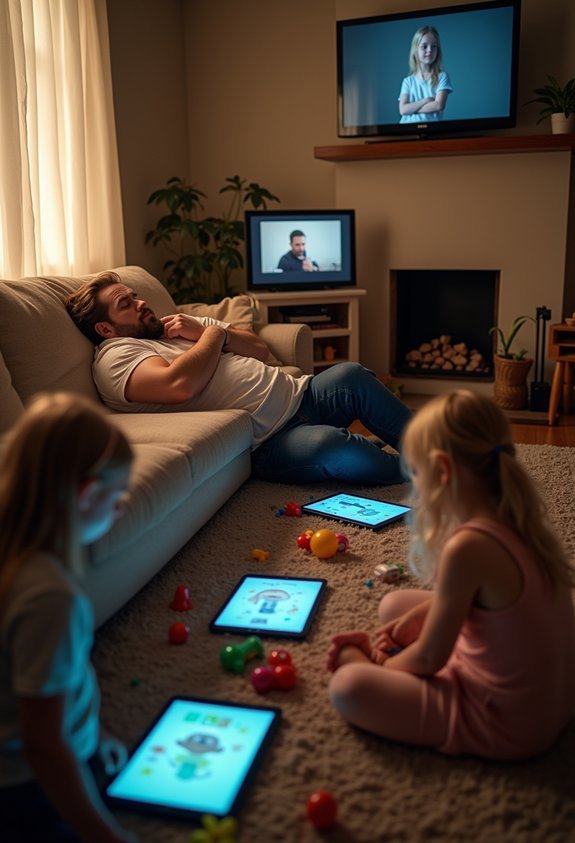
When you turn life into a 24/7 kids’ carnival, it feels cute at first—but it quietly wrecks stuff for both of you. Your kid learns that fun must be nonstop, and normal life starts to feel boring and “bad.” They expect fireworks for homework, bath time, even walking the dog.
You feel it too. Your days turn into over scheduled lives packed with crafts, outings, and digital distractions “for the kids” that somehow drain you most. Hello, emotional exhaustion. You’re fried, snappy, and secretly dreading weekends.
Meanwhile, your child never gets bored enough to daydream or invent anything. That’s where creative stagnation sneaks in. Instead of building their own fun, they wait for you to perform again. No wonder everything feels hard and loud.
Clarifying Your Role: From Cruise Director to Confident Guide

Freedom starts the second you fire yourself as the family cruise director.
Right now, you act like you owe your kids a non-stop theme park. No wonder you’re wiped.
Your real job isn’t “keep everyone happy every second.” Your real job is role clarification: you’re the guide, not the clown.
A guide shows the trail, packs snacks, then lets people walk. You set the tone, the values, the basic plan. They bring the curiosity, effort, and yes, sometimes whining.
Confident guidance sounds like, “I’m here, I love you, and you can handle this.” You don’t jump in to fix every sigh or bored face.
You trust them to figure things out while you reclaim your actual life. That’s where your power and peace return.
Practical Scripts and Boundaries for “I’m Bored” Moments

Of course your kid is “sooooo bored” in a house full of toys, snacks, and Wi‑Fi; boredom is their way of saying, “Dance for me, entertainment servant.”
This is where you stop tap-dancing and start using actual scripts and boundaries. When they whine, “I’m boooored,” you say, “Great. Boredom benefits your brain. You’ve got 20 minutes to find three creative solutions. I’m not your activity robot.”
Then zip it. Don’t rescue.
Try this one too: “You can read, draw, or play outside. If you keep complaining, you’re choosing a chore.”
Say it calmly, like you’re reading weather. Follow through.
Boredom keeps going? “Sounds hard. I trust you to handle it.”
You’re not cold. You’re giving them space to grow. They’ll survive. So will you.
Simple Systems That Encourage Independent Play Every Day
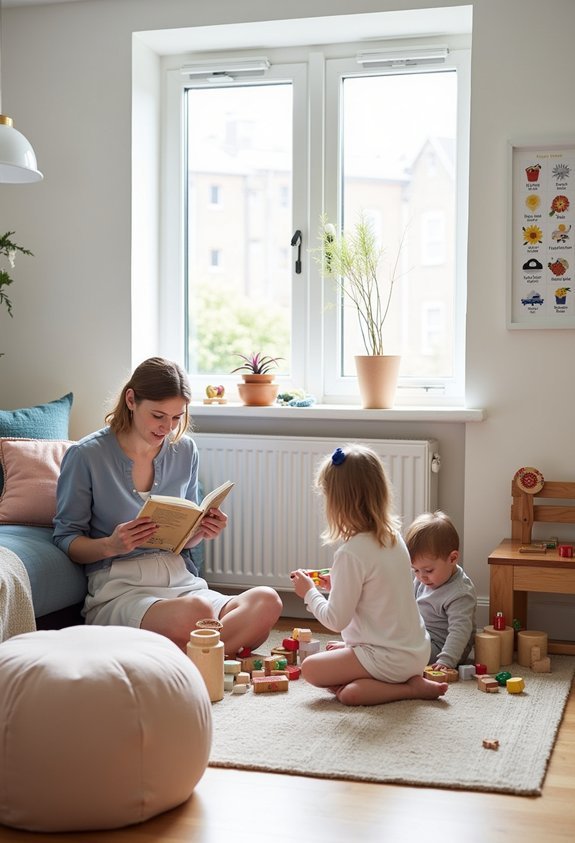
Some days it feels like your kid has a sixth sense that pings the second you try to sit down, pee alone, or answer an email.
So set up systems that don’t need you every five seconds. Start with “yes spaces”: one room or corner that’s safe, stocked, and totally kid-approved. Bins with cars, blocks, dolls, paper, tape, cardboard boxes. Nothing fancy. Rotate stuff every few days so it feels new.
Next, use simple routines to signal independent play time: snack, bathroom, pick a bin, timer on. You stay nearby, but you’re not the cruise director. When they ask, “What now?” point to options, not solutions.
Over time, their creative freedom grows, and you finally drink hot coffee. Without reheating it four times first.
Staying Consistent When Guilt and Outside Pressure Show Up

Even when your new routines are working, guilt loves to tap you on the shoulder like, “Hi, I live here now.”
You finally get your kid playing on their own, you sit down with a snack, and boom—your brain whispers, “Good parents play all the time…why are you on the couch?”
Then there’s outside noise: the friend who posts daily “magical” crafts, the relative who says, “When mine were little, I never needed a break,” or the teacher who hints you should be reading 47 books a night.
Here’s the truth: wanting space doesn’t make you a lazy parent; it makes you a human one.
Guilt management means noticing the drama in your head, then sticking to plan anyway.
That’s pressure coping in action.
In case you were wondering
How Do I Involve Grandparents or Caregivers so Expectations Are Consistent?
You create simple shared routines, write them down, and explain the why behind every rule. Use consistent caregiver communication: group text, short check-ins, and quick calls after hard days. Encourage grandparent involvement by inviting questions.
What if My Child Has Special Needs and Struggles With Independent Play?
Rome wasn’t built in a day—you can nurture independent play, even if your child has special needs; start small, scaffold activities, use visual supports, repeat routines, celebrate micro-wins, and collaborate with therapists so independence grows.
How Can Co-Parents Get on the Same Page About Entertainment Limits?
You get on the same page by agreeing on shared goals, practicing calm co parenting communication, and setting boundaries together, then reviewing what works, adjusting rules, backing each other up, and prioritizing consistency over perfection.
Are There Cultural Factors That Change What “Too Much Entertaining” Looks Like?
Yes, cultural norms shape what counts as “too much entertaining.” Ask yourself: do your parenting styles celebrate activities or criticize them? Your family dynamics and community expectations decide whether you’re overdoing it or parenting responsibly.
How Do I Repair Things if I’Ve Already Over-Entertained for Years?
You repair things by explaining the shift, rebuilding boundaries with empathy, and fostering independence through small challenges. Then start saying no kindly, schedule quiet times, and let boredom spark creativity while you honor your limits.
Conclusion
You’re not your kid’s cruise director; you’re the captain of the whole ship. You set the course, they learn to steer. When boredom pops up, you don’t panic—you point to the tools, toys, and time they already have. Some days they’ll whine. Some days you’ll cave. Fine. Just keep drifting back to these boundaries. Bit by bit, they’ll build real skills, and you’ll finally drink coffee while it’s still hot. Like a tiny daily vacation.