50 Nature Scavenger Hunt Ideas for Kids
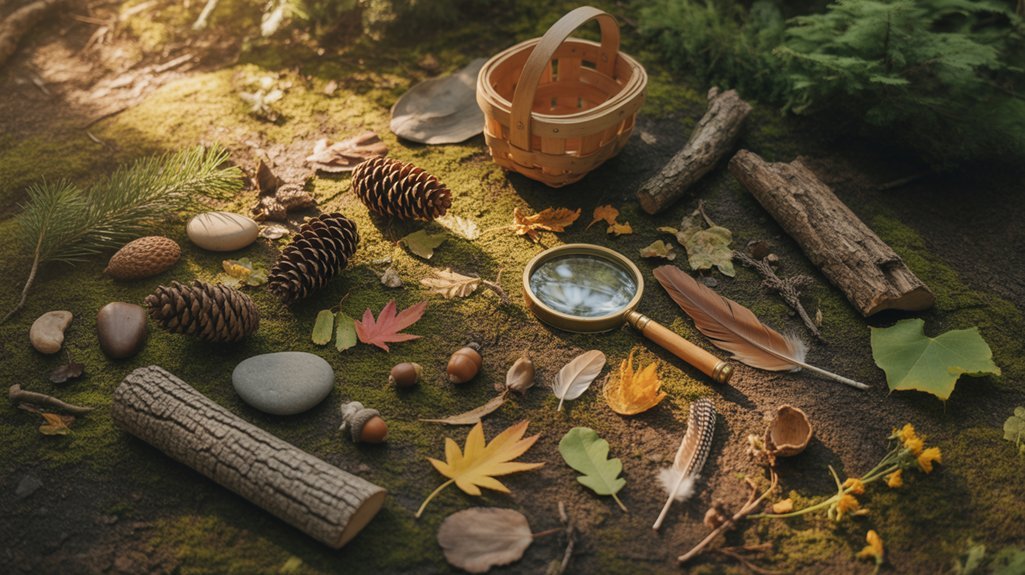
You’ll find endless excitement by challenging your kids to hunt for red flowers like poppies, smooth river stones, Y-shaped sticks for crafts, and spotted insects like ladybugs. They can search for blue treasures like forget-me-nots, collect pinecones with different textures, discover animal tracks in mud, and identify cloud shapes overhead. Encourage them to photograph white daisies, create bark rubbings from various trees, find floating objects like feathers, and spot striped flowers in gardens. Your outdoor adventures become learning experiences that’ll spark their curiosity about nature’s hidden wonders.
Key Takeaways
- Search for colors in nature: red flowers, blue stones, white daisies, or autumn leaves to develop observation skills.
- Explore textures by finding smooth river rocks, soft moss, rough tree bark, or velvety flower petals.
- Look for wildlife evidence including animal tracks, feathers, nests, burrows, or droppings to understand local ecosystems.
- Collect natural craft materials like Y-shaped sticks, pinecones, or birch bark for creative projects and woodland art.
- Identify patterns in nature such as spotted ladybugs, cloud shapes, or spiral patterns on pinecone scales.
Something Red in Nature
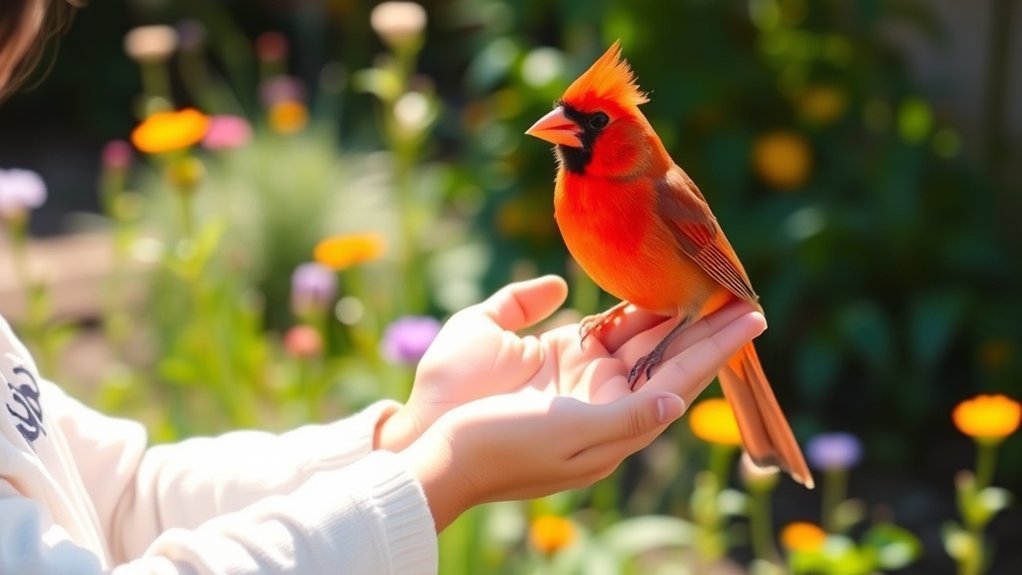
Looking for red items transforms a simple nature walk into an exciting treasure hunt.
You’ll find red flowers like poppies, tulips, and roses blooming in gardens and wild spaces. Cardinals and robins add splashes of crimson to tree branches.
Red berries offer excellent search targets throughout different seasons. Strawberries, raspberries, and cranberries grow in various habitats. Remember to teach your kids the “look but don’t touch” rule, since some red berries can be toxic.
Red leaves appear abundantly during autumn, making fall the perfect season for this activity. You can also spot red mushrooms, ladybugs, and certain types of bark.
Red clay soil and rust-colored rocks provide geological finds. Challenge your children to photograph each discovery, creating a colorful collection of nature’s red treasures.
A Feather From Any Bird
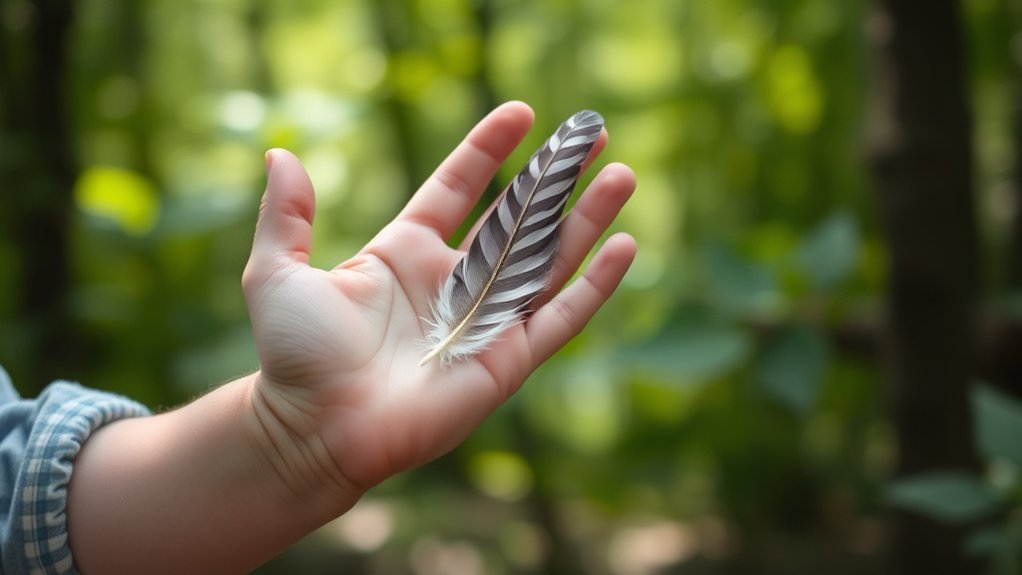
While colorful red items catch your eye from a distance, feathers present a subtler challenge that sharpens observation skills. You’ll find feathers near bird feeders, under trees, or along walking paths where birds frequently perch.
Teach your kids proper feather identification by examining color, size, and pattern. Small gray feathers often come from sparrows, while larger brown ones might indicate robins or jays. Bird watching enhances this activity—encourage children to observe which species frequent your area.
Examining feather color, size, and pattern teaches children proper identification while encouraging observation of local bird species in your area.
Remember to check local regulations before collecting feathers, as some protected species have restrictions. Always practice hygiene by having kids wash hands after handling feathers.
This hunt connects children to wildlife while developing patience and attention to detail as they search ground level for these delicate natural treasures.
Three Different Shaped Leaves
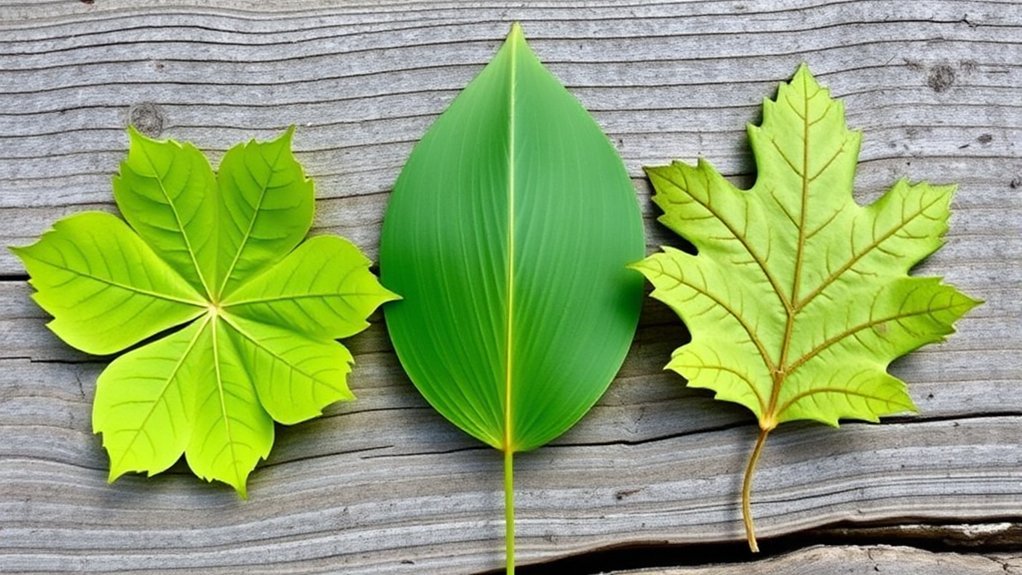
Leaf hunting transforms an ordinary walk into a botanical adventure as children discover the remarkable diversity of tree species around them.
You’ll help kids develop leaf identification techniques by examining shapes—look for pointed maple leaves, rounded oak leaves, and needle-like pine leaves. Encourage them to notice details like smooth versus jagged edges, size variations, and vein patterns.
This challenge teaches children that different tree species produce distinctive leaves, making identification easier over time. They’ll learn that heart-shaped leaves differ dramatically from fan-shaped or compound leaves with multiple leaflets.
Have them gently collect fallen leaves rather than picking from trees, preserving nature while building their collection. This activity sharpens observation skills and creates appreciation for botanical diversity in their local environment.
A Smooth Rock
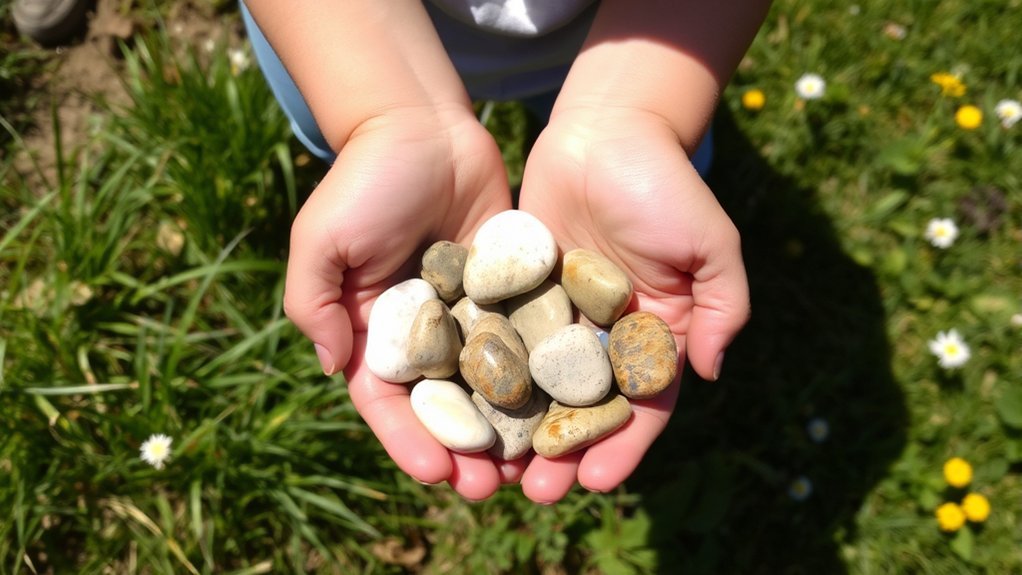
The ground beneath your feet holds treasures just as interesting as those hanging from tree branches. Searching for a smooth rock teaches kids about erosion and weathering processes.
You’ll discover smooth rock types like river stones polished by water currents, beach pebbles tumbled by waves, or glacially-smoothed rocks shaped by ancient ice movements.
The smooth rock benefits extend beyond geology lessons. Kids develop tactile awareness by comparing textures between rough and smooth surfaces.
They’ll learn patience while searching through gravel piles and creek beds. Encourage your young explorers to find rocks with different colors, sizes, and smoothness levels.
Challenge them to identify what made each rock smooth—was it water, wind, or ice? This simple hunt item sparks conversations about Earth’s natural forces and timeframes.
Evidence of an Animal Living Nearby
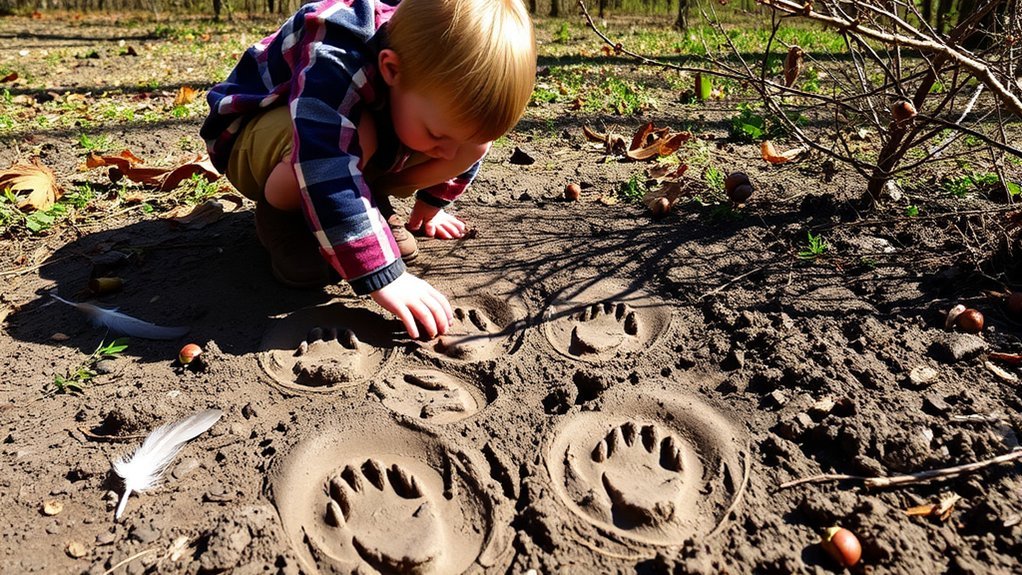
Animal detectives will find endless fascination in tracking down clues left by wildlife.
You’ll transform ordinary walks into exciting investigations when searching for evidence that creatures call your area home. Kids develop observation skills while discovering the hidden world of animals around them.
Look for these telltale signs:
- Animal tracks in mud, sand, or snow – Identify different species by paw prints, hoof marks, or bird footprints along trails and water sources.
- Burrow signs like holes in the ground – Examine entrances to underground homes where rabbits, chipmunks, or groundhogs might live.
- Nests, feathers, and droppings – Spot bird nests in trees, scattered feathers, or scat that reveals what animals recently passed through.
Document discoveries with photos or sketches for later identification.
Something That Makes a Sound
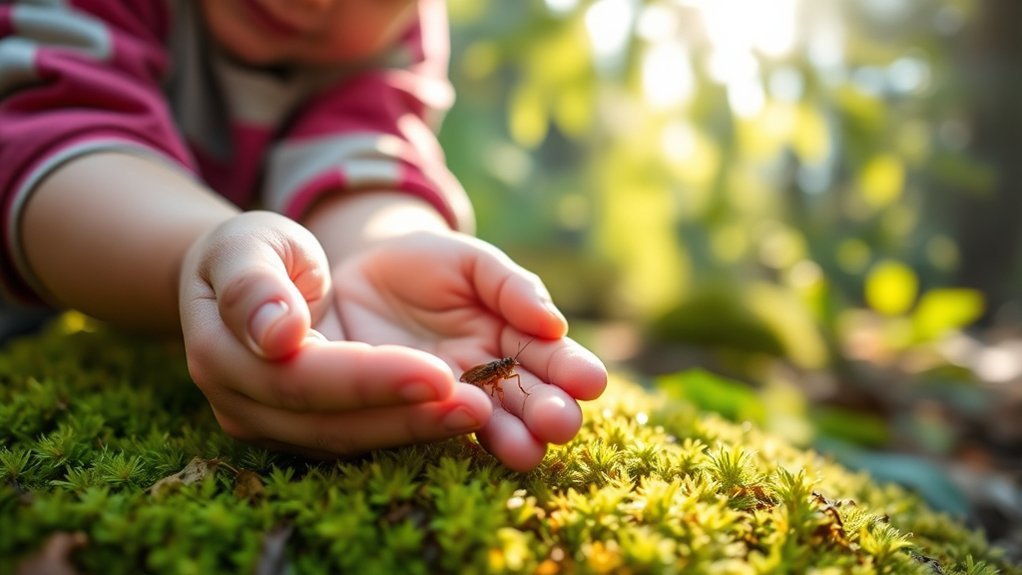
Nature’s symphony plays continuously when you learn to listen carefully. Challenge kids to discover natural sound-makers during your scavenger hunt. They’ll find rustling leaves that whisper in the breeze, crackling twigs underfoot, and trickling water in streams. The sounds of nature offer endless possibilities for exploration.
Musical insects provide fascinating discoveries. Crickets chirp their rhythmic songs, cicadas buzz loudly from tree branches, and bees hum while visiting flowers. Kids can also shake seedpods to hear rattling seeds inside or tap hollow logs for drum-like echoes.
Encourage children to record sounds using smartphones or simply describe what they hear. They’ll develop better listening skills while connecting with their environment. This activity transforms ordinary walks into acoustic adventures, teaching kids that nature’s orchestra performs everywhere.
A Seed or Seed Pod
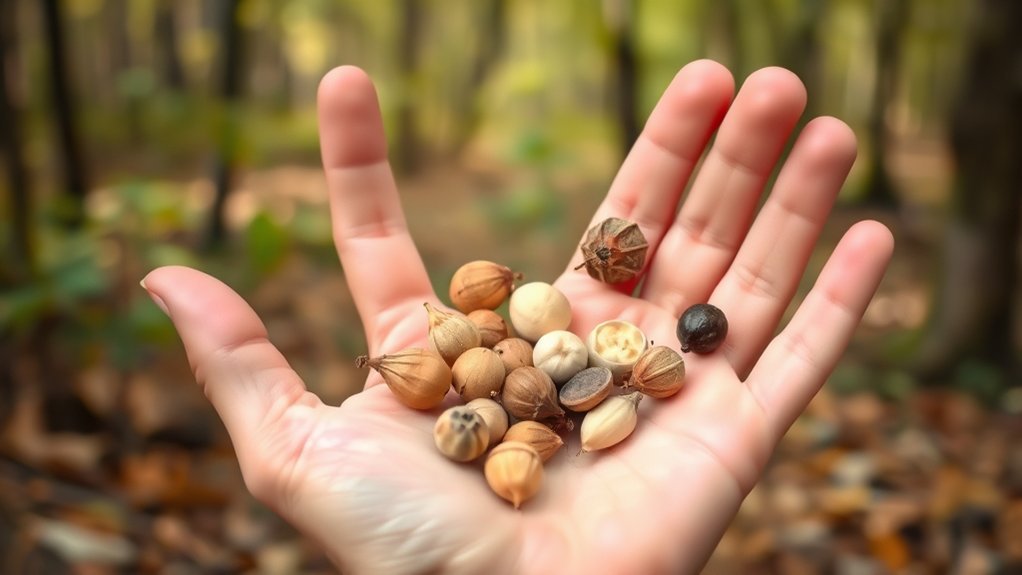
Seeds represent nature’s promise of future growth, making them perfect treasures for young explorers to discover.
You’ll find countless types of seeds during your hunt, from tiny maple helicopters to hefty acorns. Each one tells a story about how plants spread and survive.
Help kids understand seed dispersal methods while collecting:
- Wind travelers – dandelion puffs, maple samaras, and milkweed fluff that float on air currents
- Hitchhikers – burrs and sticky seeds that cling to clothing and animal fur
- Heavy droppers – acorns, walnuts, and pine cones that fall directly beneath parent trees
Encourage children to examine their finds closely.
They’ll notice different shapes, sizes, and textures that reveal how each seed reaches new ground to grow into tomorrow’s plants.
Something Rough to Touch
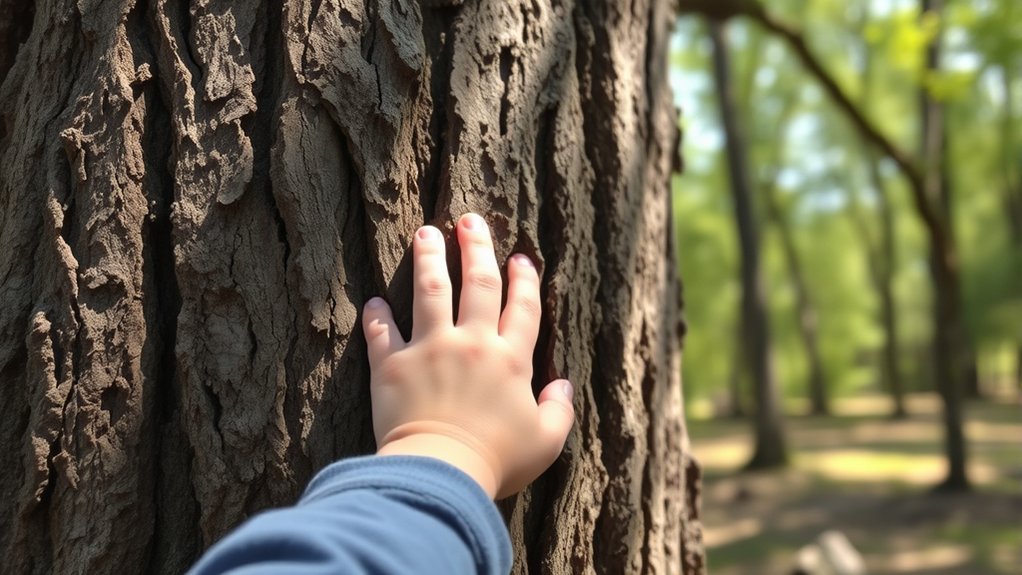
Texture exploration transforms a simple nature walk into a sensory adventure that sharpens observation skills. Encouraging kids to find rough textures develops their tactile awareness while connecting them with nature’s surfaces.
Tree bark offers the most accessible rough surface. Oak, pine, and maple trees each present distinct textures—from deeply ridged to scaly patterns. Pinecones provide another excellent example, with their woody, overlapping scales creating bumpy surfaces.
Tree bark textures range from deeply ridged oak to scaly pine, while pinecones offer perfectly bumpy surfaces for young explorers.
Rocks and stones deliver varying degrees of roughness. Sandstone feels gritty, while volcanic rocks offer porous, abrasive surfaces. Dried seed heads, weathered wood, and certain leaves like lamb’s ear also work well.
Remind children to touch gently and avoid potentially harmful plants. This tactile discovery teaches them that nature’s surfaces serve purposes—rough bark protects trees, and textured seeds aid dispersal.
A Y-Shaped Stick
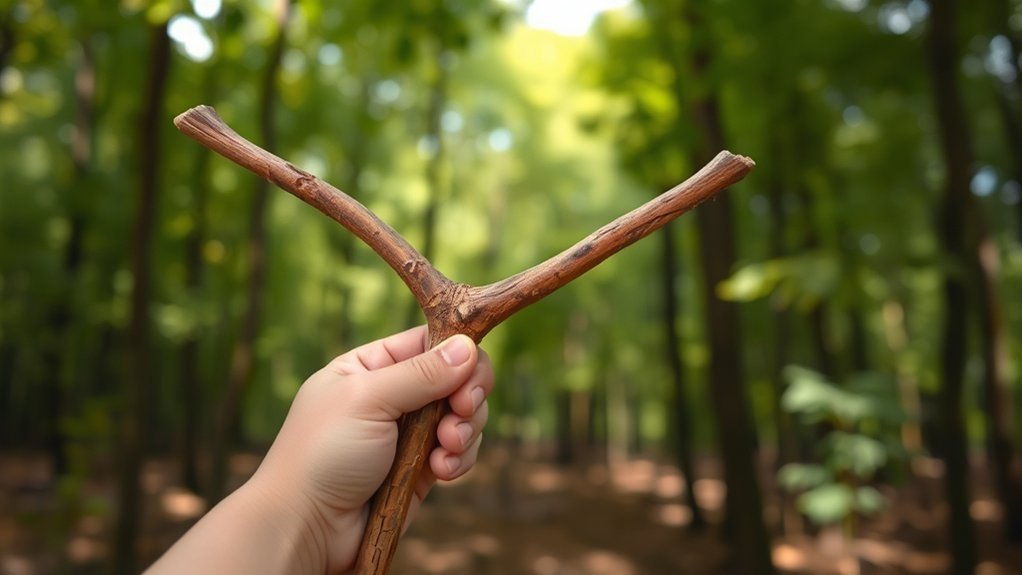
Finding Y-shaped sticks turns kids into treasure hunters scanning the ground beneath trees and shrubs. This simple item becomes exciting when children discover the perfect fork formation.
Finding y-shaped sticks teaches kids to observe natural patterns and shapes in their environment.
Creative y shaped stick uses include:
- Building slingshots – Kids can stretch rubber bands across the fork to create a classic toy (under adult supervision)
- Making fairy wands – Wrap colorful ribbons around the handle and hang beads from the branches
- Creating stick figures – Use the Y-shape as a base for crafting woodland characters with leaves and twigs
Challenge your children to find sticks with the most symmetrical branches or the widest angles.
They’ll develop spatial awareness while collecting these natural treasures for future craft projects.
Something That Smells Interesting
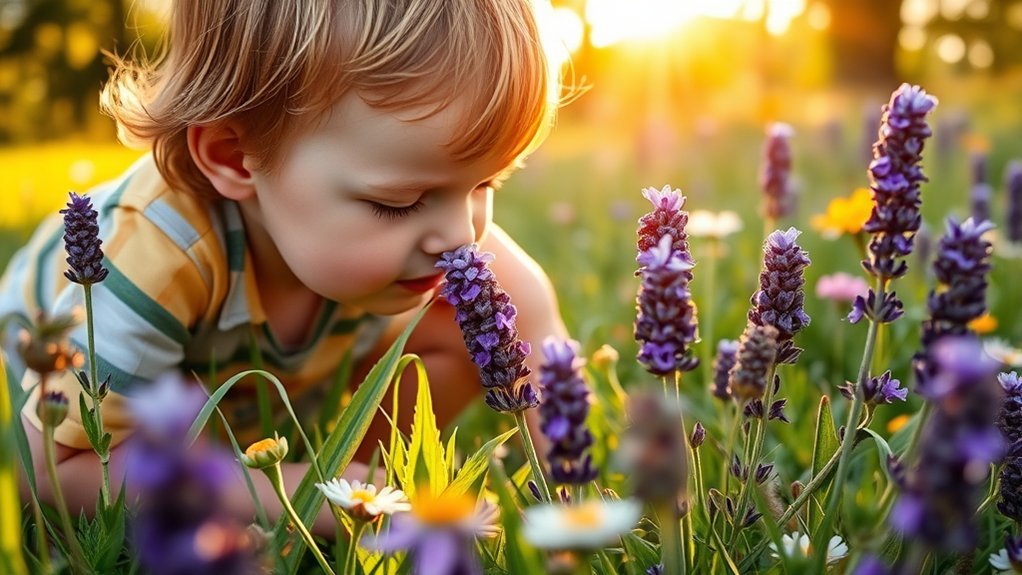
Nature’s aromatic treasures awaken children’s sense of smell in ways that screens and toys never can. Challenge kids to discover something with an interesting scent during their outdoor adventure. They might find a fragrant flower like honeysuckle or jasmine, crush pine needles to release their fresh aroma, or identify an aromatic herb such as wild mint growing near streams.
Teach children to gently smell their discoveries without picking protected plants. They’ll learn that not all interesting smells are pleasant—decomposing leaves, mushrooms, and tree bark each offer unique scents that tell nature’s stories.
This sensory exploration helps kids build memory associations with their environment while developing observation skills. Encourage them to describe what they smell using creative comparisons, making the experience both educational and memorable.
A Pinecone
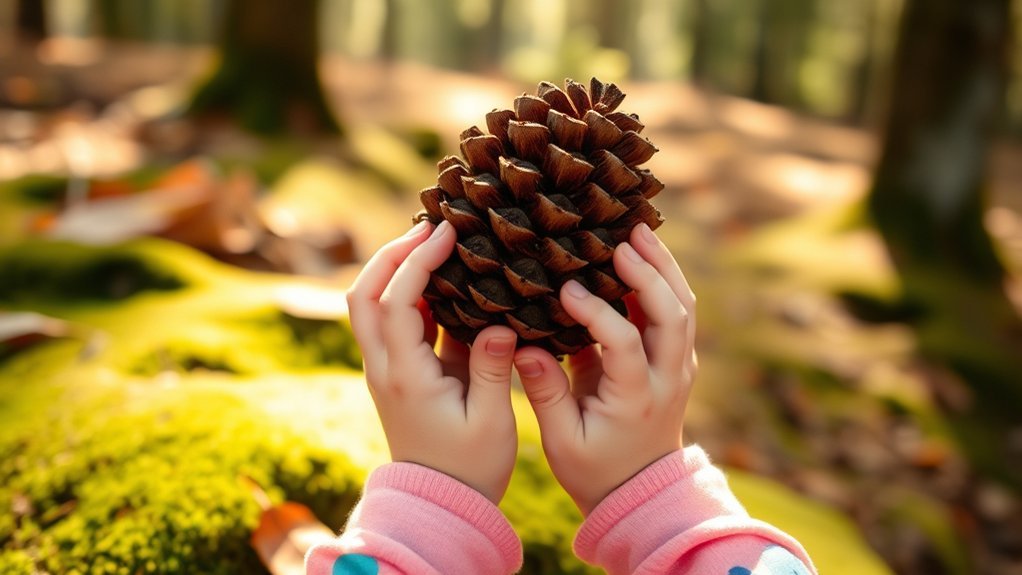
Pinecones rank among the most rewarding treasures for young nature explorers to collect and examine. You’ll find these fascinating seed-bearing structures beneath evergreen trees, and they’re perfect for teaching kids about tree species through pinecone identification.
When your children discover pinecones, encourage them to:
- Compare sizes and shapes from different tree species, noting whether they’re round, elongated, or have tightly closed scales.
- Feel the textures by running their fingers over smooth, prickly, or sticky surfaces.
- Count the spiral patterns on the scales to discover nature’s mathematical secrets.
After your hunt, these natural treasures transform into wonderful pinecone crafts like bird feeders, holiday ornaments, or painted decorations.
They’re lightweight, easy to carry, and withstand handling during outdoor adventures.
Something Smaller Than Your Thumb
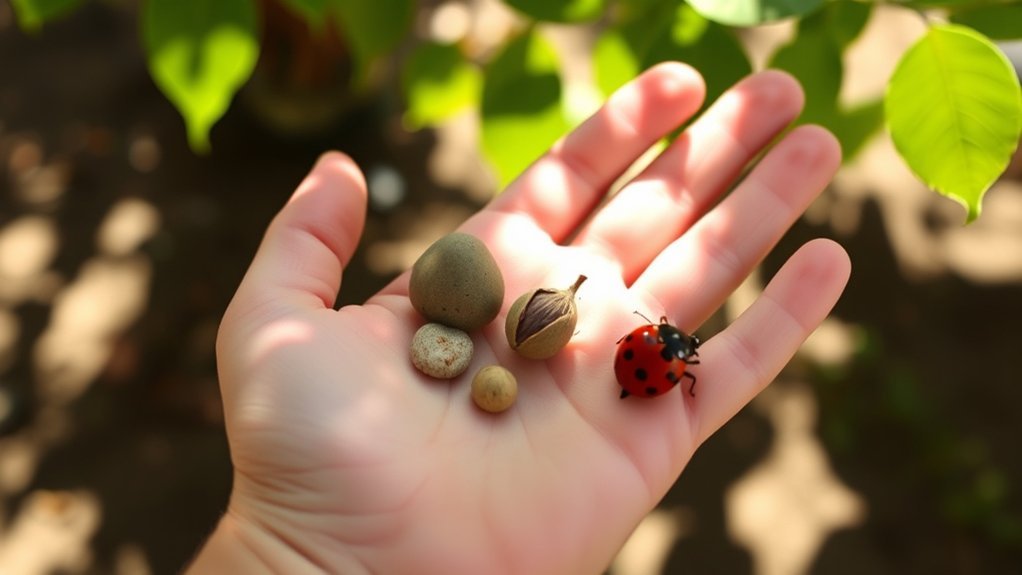
While pinecones offer large-scale discoveries, encouraging your kids to search for tiny treasures sharpens their observation skills and reveals nature’s hidden world. Challenge them to find objects smaller than their thumb—pebbles, acorns, seeds, flower petals, or small shells.
This activity transforms your children into nature detectives who’ll crouch down, peer closely, and examine their surroundings with fresh eyes.
These miniature wonders often go unnoticed during regular outdoor play. A smooth river stone, a delicate leaf bud, or a tiny wildflower becomes fascinating when you’re specifically hunting for it.
You’ll watch your kids develop patience and attention to detail as they sift through grass and inspect tree bark.
Keep a magnifying glass handy to examine their finds up close, turning each tiny treasure into an exciting scientific discovery.
Tree Bark With an Interesting Texture
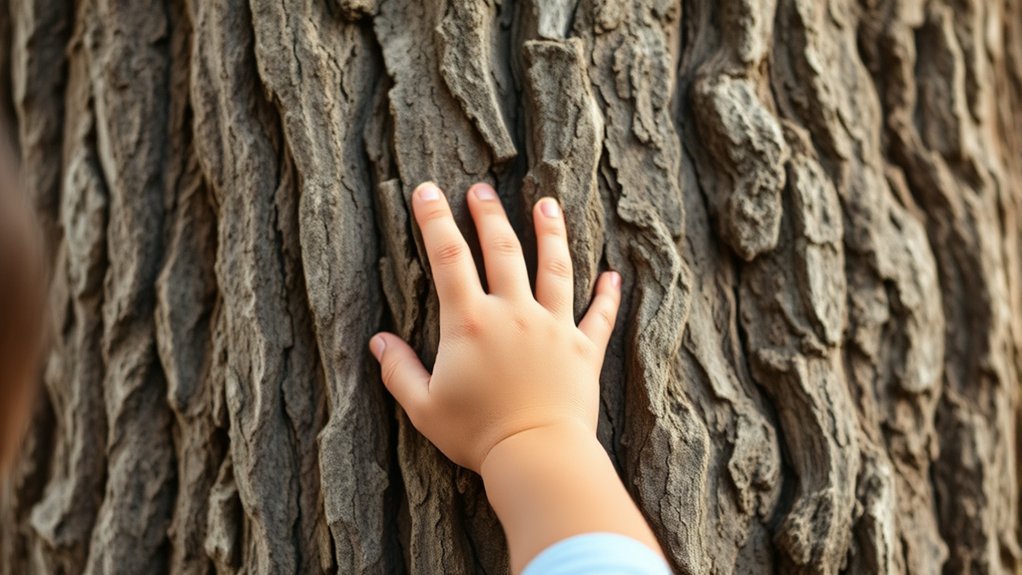
After examining nature’s smallest details, it’s time to explore something you can feel with your hands—tree bark with interesting textures.
Bark textures offer a fantastic sensory experience for kids while teaching them about tree identification. Each species has unique patterns, from smooth and papery to deeply ridged and rough.
Here’s how to make this activity engaging:
- Create bark rubbings by placing paper against the trunk and rubbing with crayons to capture different patterns.
- Compare textures across multiple trees—you’ll discover some feel like puzzle pieces while others resemble alligator skin.
- Photograph your findings to build a texture collection you can reference later.
This tactile exploration helps children understand that trees aren’t just tall plants—they’re living organisms with distinctive characteristics worth studying and protecting.
A Spider Web
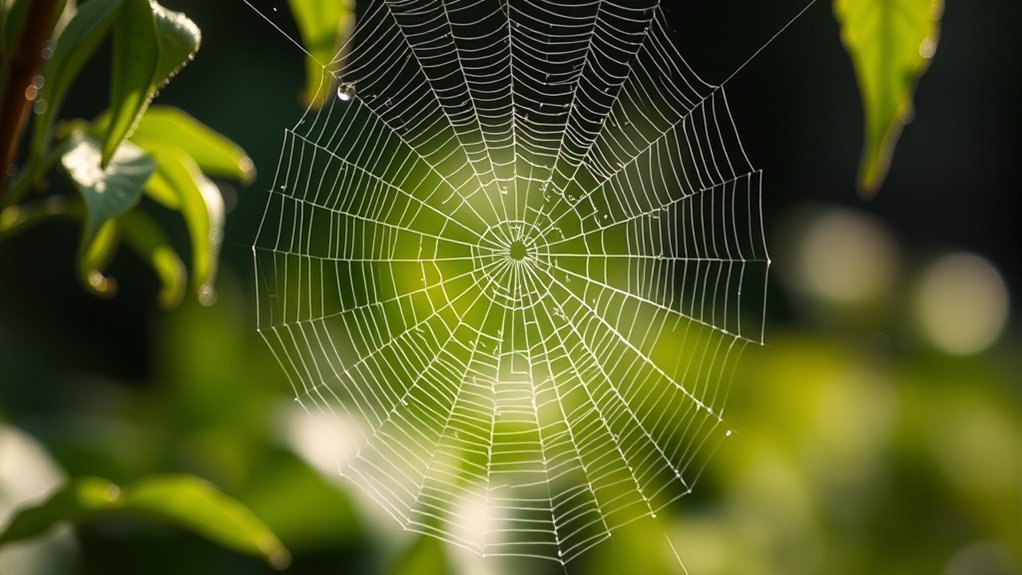
Moving from what you can touch to what you should only observe, spider webs make excellent scavenger hunt treasures that showcase nature’s engineering marvels.
You’ll find these intricate structures in various spider web habitats, from corners of fences to branches between trees and garden shrubs.
Teach kids to look carefully without disturbing the web or its creator. Early morning’s the best time for web spotting when dew highlights the delicate silk threads.
Dawn’s dewdrops transform invisible spider silk into glistening masterpieces, making early mornings perfect for observing webs without disturbing their architects.
Point out different spider web construction styles—some spiders create classic spiral orb webs, while others weave funnel-shaped or messy cobweb designs.
Encourage children to photograph their discoveries rather than touch them. This approach respects the spider’s hard work while documenting the find.
Each web represents hours of patient construction work.
Something Yellow
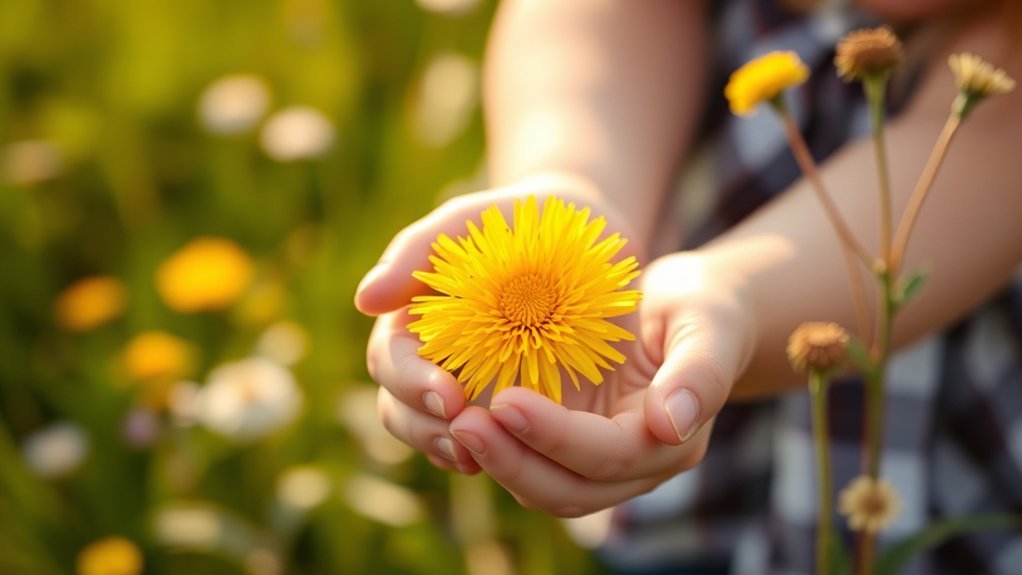
How many yellow treasures can you spot on a nature walk? Searching for something yellow helps you notice the bright, cheerful colors that might otherwise blend into the background.
You’ll train your eyes to look beyond green and brown, discovering surprising splashes of sunshine everywhere.
Here’s what you can hunt for:
- Sunny flowers like dandelions, buttercups, or black-eyed Susans dotting meadows and gardens
- Yellow leaves fallen from trees during autumn or early spring when new growth appears
- Butterflies and insects with golden wings fluttering between plants
This challenge works year-round since nature provides yellow in every season.
Spring brings blooms, summer offers buzzing pollinators, fall delivers colorful foliage, and winter presents dried grasses and evergreen touches.
Five Different Types of Leaves
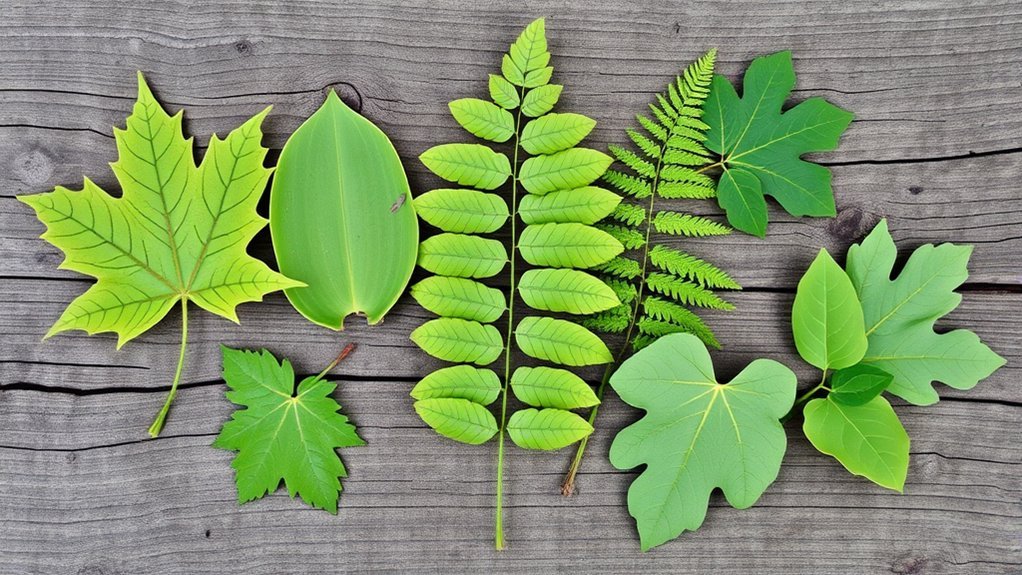
While you’re searching for yellow items, take a closer look at the leaves around you—they’re far more diverse than you might think.
Challenge your kids to find five different leaf types by examining their shapes, sizes, and edges. Simple leaf identification techniques include checking whether leaves are oval, heart-shaped, needle-like, or fan-shaped.
Encourage children to discover five distinct leaf varieties by observing their unique shapes, from oval and heart-shaped to needle-like and fan-shaped patterns.
You’ll discover leaves with smooth edges, serrated borders, or deep lobes. Don’t forget about leaf color variations—collect green, red, purple, or multicolored specimens.
Compound leaves with multiple leaflets count too! Have your children arrange their collection on a flat surface to compare differences.
This activity sharpens observation skills while teaching basic botany. Kids learn that trees and plants create unique leaf signatures, making identification easier with practice.
Animal Tracks or Footprints
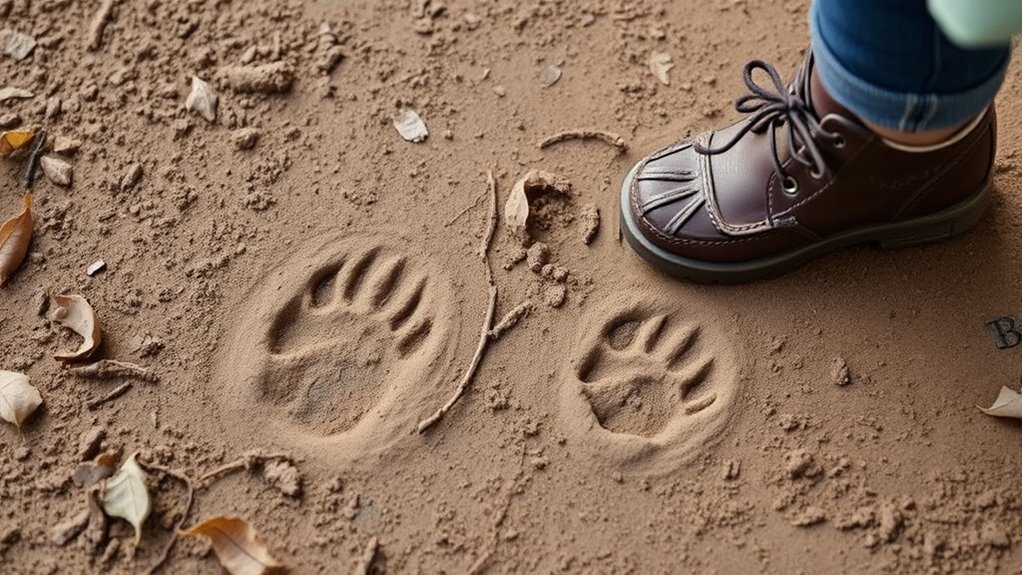
Where can you find the best clues about which animals have visited your outdoor space? Look down at the ground! Animal tracks or footprints reveal fascinating details about animal behavior and local wildlife activity.
Track identification becomes an exciting detective game for kids. Here’s how to make the most of this scavenger hunt challenge:
- Search muddy areas, sandy patches, or snow – These surfaces capture the clearest impressions of visiting creatures.
- Bring a field guide or tracking app – Compare what you’ve found with reference images to identify birds, mammals, and reptiles.
- Take photos or make plaster casts – Preserve your discoveries and create a collection of tracks you’ve encountered.
Kids develop observation skills while learning which animals share their neighborhood ecosystem.
Something Soft
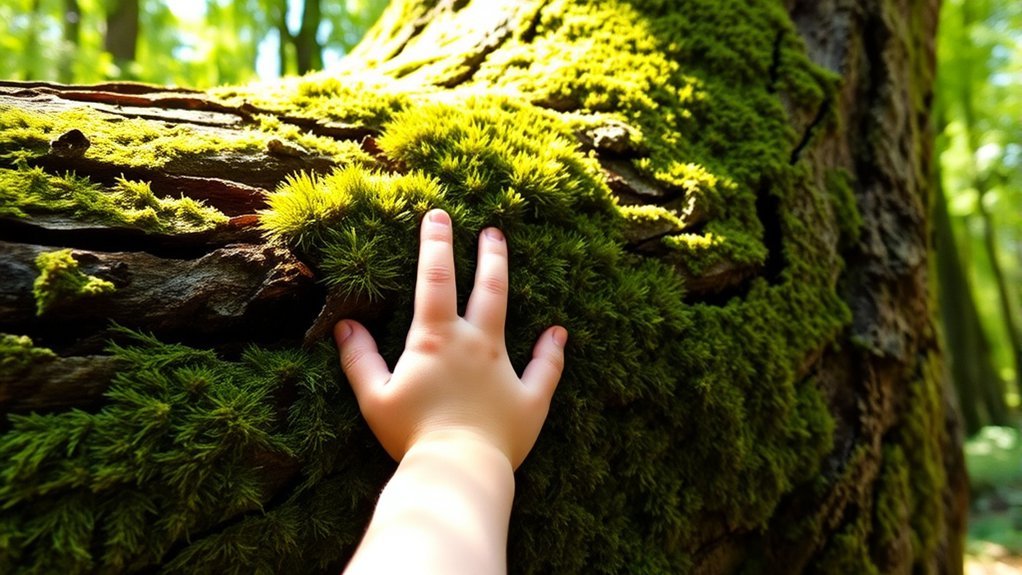
After examining the hard evidence left behind in mud and sand, shift your focus to the gentle textures nature offers.
Challenge kids to discover items with a soft texture throughout their outdoor exploration. They’ll find moss carpeting tree trunks, dandelion puffs ready to scatter seeds, and velvety flower petals. Feathers from birds make excellent soft discoveries, while certain leaves like lamb’s ear feel remarkably fuzzy.
Nature’s softest treasures await young explorers—from feathery moss and downy dandelions to fuzzy leaves that beg to be touched.
Encourage children to touch grass blades and compare their softness to rougher plants nearby. They might spot a soft animal like a caterpillar inching along branches or observe rabbits from a distance.
Remind them to look without disturbing wildlife. This tactile activity teaches kids to appreciate nature’s diverse textures while developing sensory awareness and observation skills.
A Flower or Wildflower
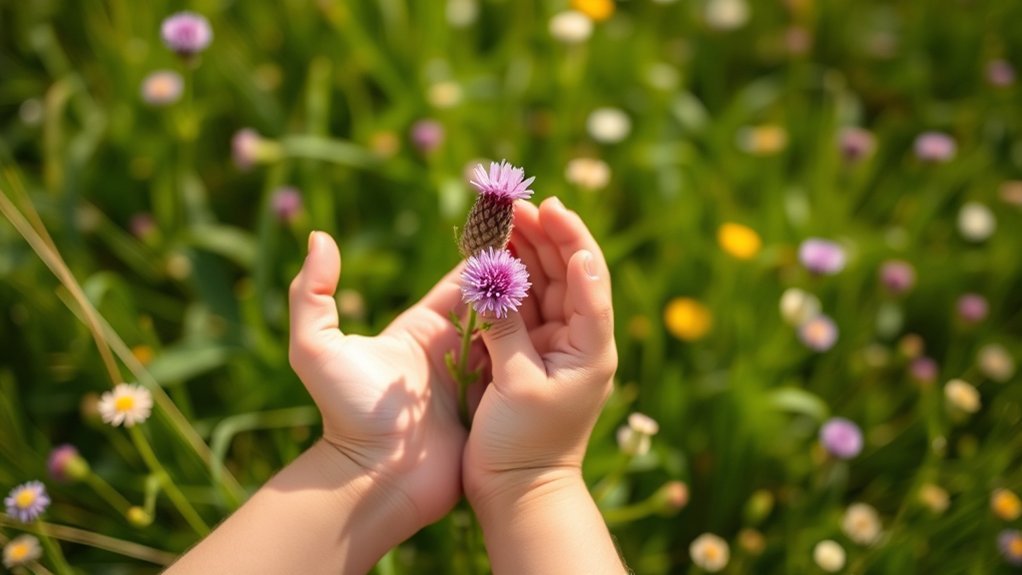
Blooms of every color dot meadows, gardens, and woodland paths during spring and summer months.
You’ll help children develop flower identification skills while they search for these natural treasures. Encourage them to observe details like petal count, leaf shape, and color patterns.
Teaching kids about wildflower benefits makes this activity more meaningful:
- Pollinator support – Wildflowers provide essential food sources for bees, butterflies, and hummingbirds that help plants reproduce.
- Soil protection – Their root systems prevent erosion and improve soil health in natural habitats.
- Ecosystem diversity – Native wildflowers support local wildlife and maintain balanced environments.
Remind children to photograph flowers rather than pick them, preserving blooms for others to enjoy and allowing plants to complete their natural lifecycle.
Something White in Nature
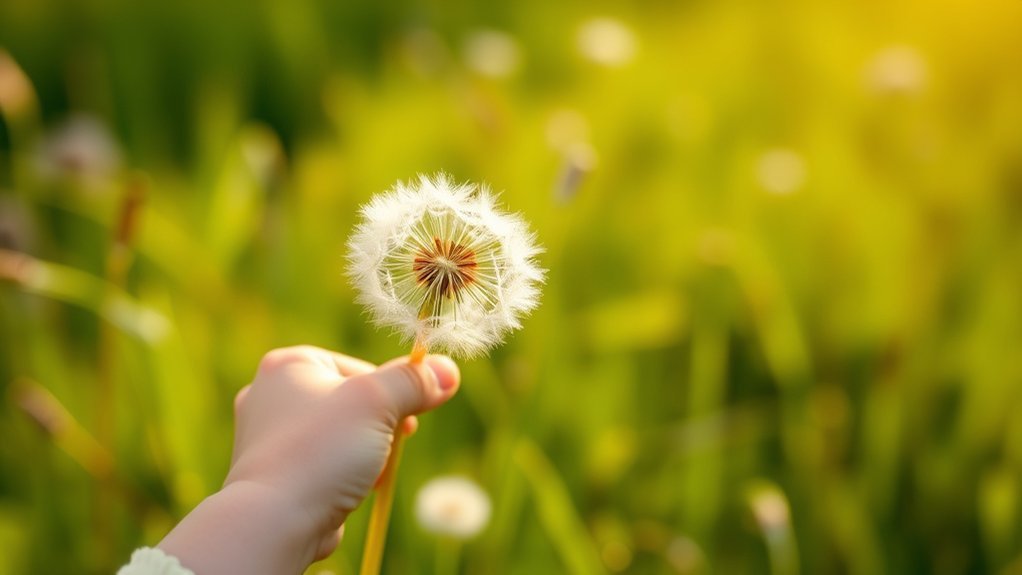
While colorful flowers capture immediate attention, white objects in nature offer their own fascinating discoveries.
You’ll find that searching for something white encourages kids to look more carefully at their surroundings.
A white flower stands out beautifully against green foliage. Look for daisies, dogwood blossoms, or Queen Anne’s lace. Kids can examine the petals’ texture and count how many they find.
White flowers like daisies and dogwood create striking contrasts against green leaves, inviting children to explore delicate petals and practice counting skills.
A white rock makes an excellent discovery too. Children can compare different sizes, shapes, and patterns. Some rocks appear purely white, while others show white streaks or speckles.
Don’t overlook other white finds: birch bark, dandelion fluff, mushrooms, feathers, or clouds. Each discovery teaches observation skills and helps kids appreciate nature’s diverse color palette beyond the obvious bright hues.
A Piece of Moss
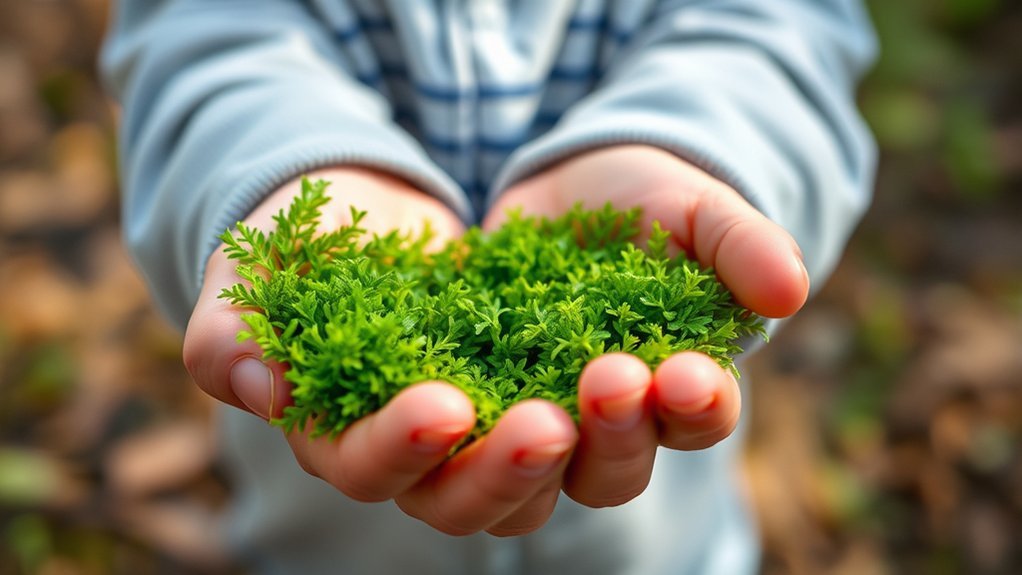
Moss creates a miniature forest world that kids love to explore up close.
You’ll find this treasure in shady, damp areas where it forms soft, cushiony carpets. Examining moss textures helps children develop observation skills while discovering the diverse moss habitat.
Three ways to enhance the moss experience:
- Compare textures – Have kids gently touch different moss types to feel variations from velvety to feathery surfaces.
- Use magnifying glasses – Let them examine the tiny leaf-like structures that create these green cushions.
- Document locations – Encourage kids to note where they found moss, teaching them about preferred growing conditions.
Remember to collect only small pieces from abundant areas, and teach kids to leave most moss undisturbed.
This preserves the moss habitat for insects and microorganisms living within it.
Something That Grows on a Tree
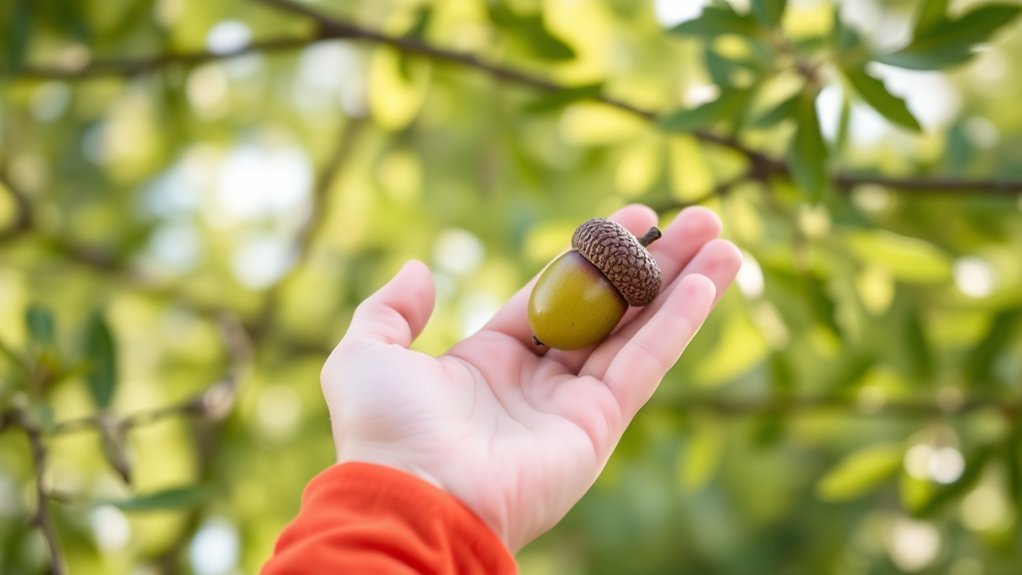
Trees host an incredible variety of life forms that kids can easily spot during a scavenger hunt. You’ll find countless options growing directly on bark, branches, and trunks.
Look for fungi like mushrooms or shelf fungus attached to tree sides.
Tree flowers offer seasonal beauty—think cherry blossoms, magnolia blooms, or catkins dangling from oaks. Tree fruit provides another excellent target, from acorns and pinecones to apples, cherries, or seed pods.
Don’t overlook lichens clinging to bark or mistletoe bundles in higher branches. Kids can also search for galls, those unusual bumps created by insects.
Bird nests tucked into branches count too, though you should observe from a distance.
Each discovery teaches children about the complex ecosystems trees support and encourages careful observation skills.
A Perfectly Round Rock
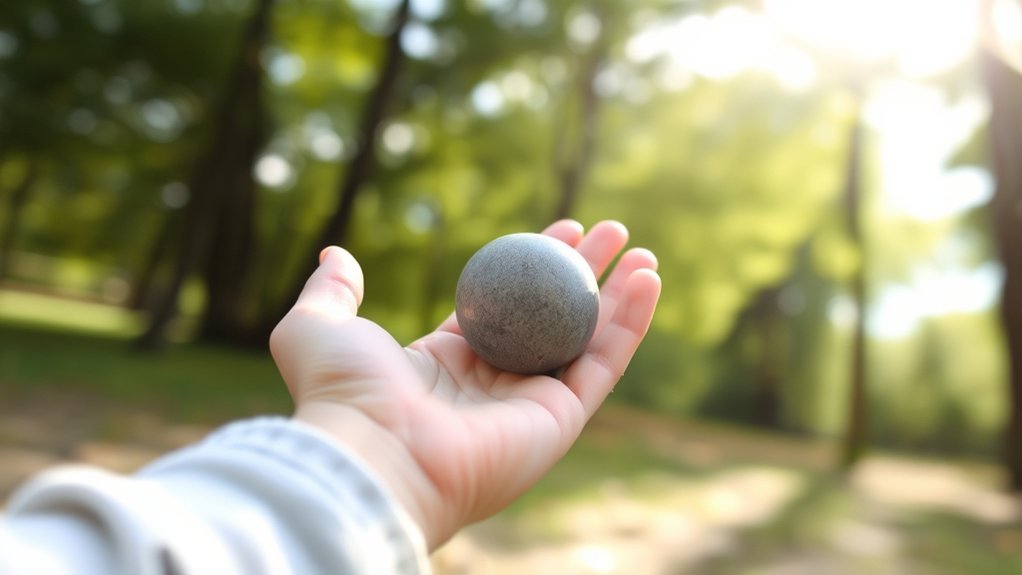
Finding a perfectly round rock challenges kids to examine geology with a critical eye. This search encourages them to understand how water and erosion create smooth, spherical stones over time.
Hunting for round rocks transforms young explorers into junior geologists, revealing nature’s patient sculptural work through water and time.
They’ll learn that round rock shapes often indicate rocks tumbled by rivers or ocean waves.
Tips for Finding Round Rocks:
- Check streambeds and beaches – Moving water naturally polishes rocks into rounder forms through constant friction and tumbling action.
- Compare sizes and textures – Round rocks come in various dimensions, from pebbles to larger stones, with different surface smoothness levels.
- Notice rock color variations – Perfectly round rocks display diverse hues including gray, brown, white, and speckled patterns depending on their mineral composition.
This activity sharpens observation skills while teaching geological processes.
Something an Animal Might Eat
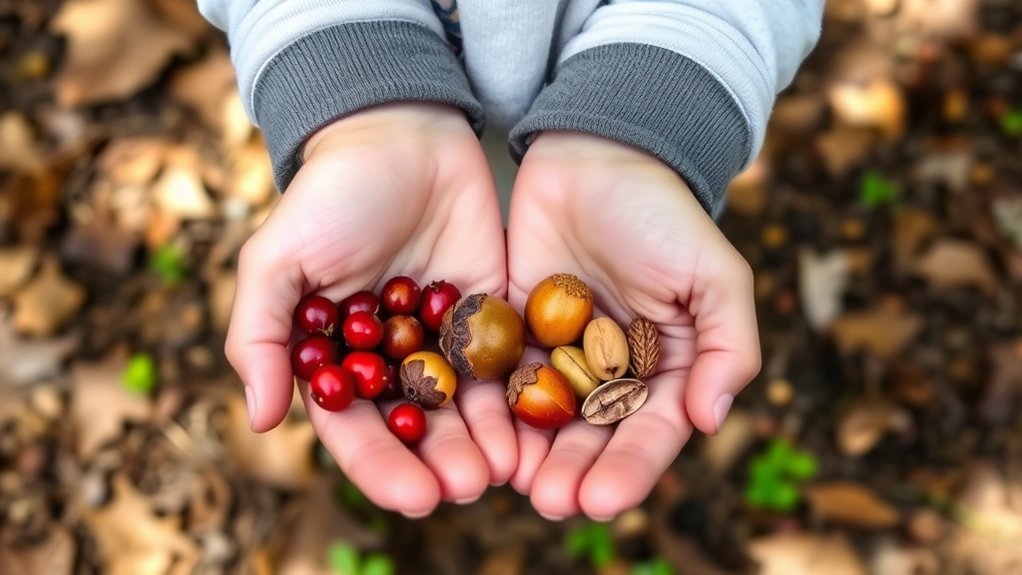
While examining rocks teaches children about geology, observing what animals eat connects them directly to local ecosystems and food chains. Challenge kids to identify animal food sources in their environment. They’ll discover acorns for squirrels, berries for birds, clover for rabbits, and seeds from various plants.
Encourage children to think critically about which animals might consume specific items. A pine cone contains seeds that appeal to woodpeckers and crossbills. Fallen apples attract deer and insects. Grass provides sustenance for rabbits and groundhogs.
This activity teaches kids about favorite animal snacks while fostering observation skills. They’ll learn that different species have specialized diets.
Remind children never to disturb animal feeding areas or remove food sources that wildlife depends on for survival.
A Twig That Looks Like a Letter
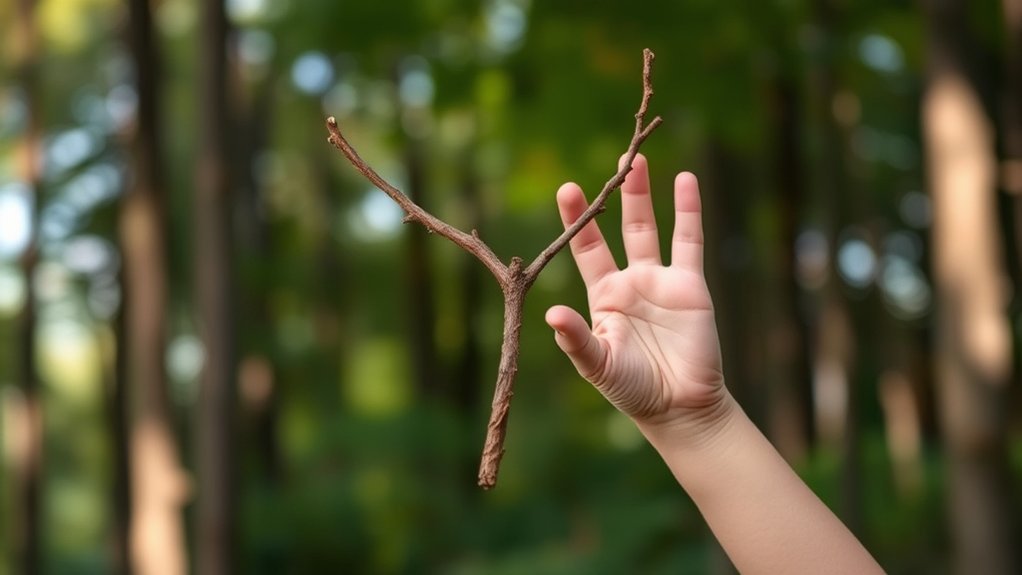
Nature’s alphabet reveals itself in the twisted shapes of fallen twigs, transforming a simple scavenger hunt item into an engaging literacy activity. You’ll find kids naturally gravitate toward this challenge as they search for twig letters hidden among the forest floor. This creative nature activity sharpens observation skills while reinforcing letter recognition.
Twigs transform into letters when children learn to see nature’s hidden alphabet scattered across the forest floor.
To maximize the learning potential:
- Challenge older kids to spell their entire name using individual twigs they’ve collected.
- Create a twig alphabet display by arranging found branches into all 26 letters on a flat surface.
- Play letter-matching games where children photograph their discoveries and identify which alphabet characters they resemble.
The curved branches, straight sticks, and Y-shaped pieces become building blocks for outdoor literacy, making abstract letter shapes tangible and memorable.
Something Blue
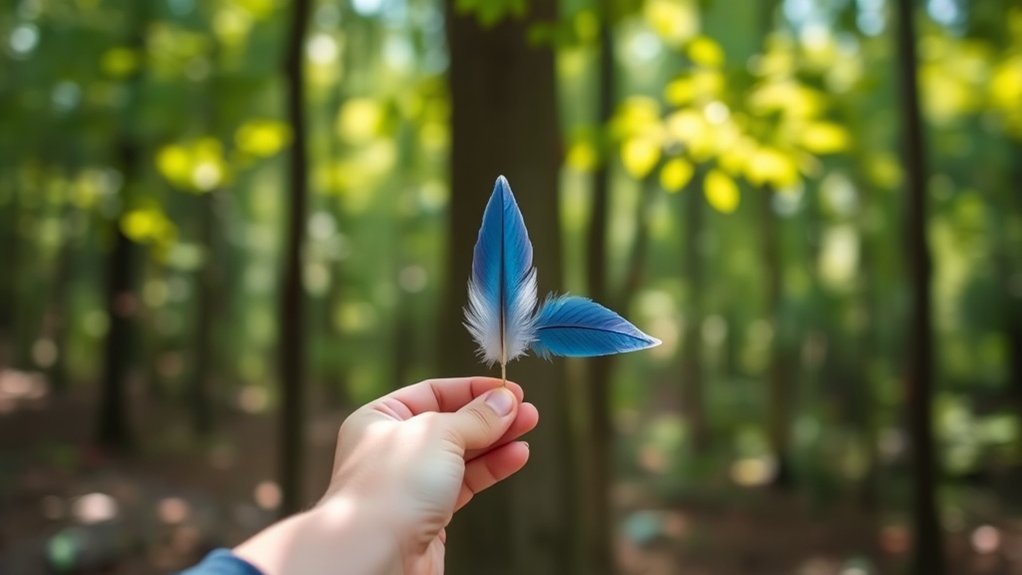
After searching for twig letters among browns and greens, shift your focus to spotting nature’s rarest color.
Blue appears infrequently in the natural world, making this challenge particularly exciting for young hunters.
You’ll discover blue flowers like forget-me-nots, bluebells, or morning glories depending on your season and location.
Check garden edges and meadows where these treasures often hide.
Blue stones present another fascinating find—look for smooth river rocks with blue-gray hues or search for painted pebbles left by previous visitors.
Don’t overlook the obvious: blue jay feathers, robin’s eggshell fragments, or even blue bottle caps that nature’s reclaimed.
Encourage kids to photograph delicate items like butterfly wings rather than collecting them.
This search teaches observation skills while revealing how uncommon blue truly is outdoors.
Berries Growing Wild
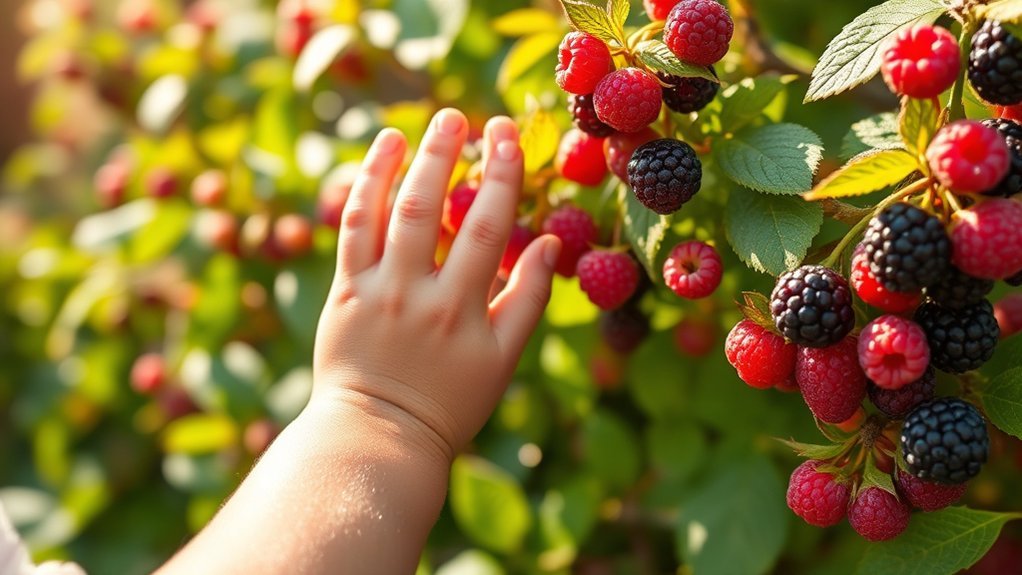
Wild berries transform any scavenger hunt into an edible adventure, though you’ll need to establish strict safety rules before sending kids to search.
Teaching children to identify wild berry varieties requires careful supervision and clear guidelines about what’s safe to touch and taste.
Berry identification demands adult oversight and explicit safety boundaries to protect young foragers from toxic look-alikes in the wild.
Essential berry picking tips for your scavenger hunt:
- Create a photo identification card showing safe berries in your region, like blackberries, blueberries, and strawberries, alongside poisonous varieties to avoid.
- Implement the “look but don’t eat” rule until an adult verifies each discovery, preventing accidental consumption of harmful berries.
- Bring collection containers so kids can gather their finds for group inspection later.
You’ll foster observation skills while keeping everyone safe during this exciting outdoor activity.
A Curved Stick
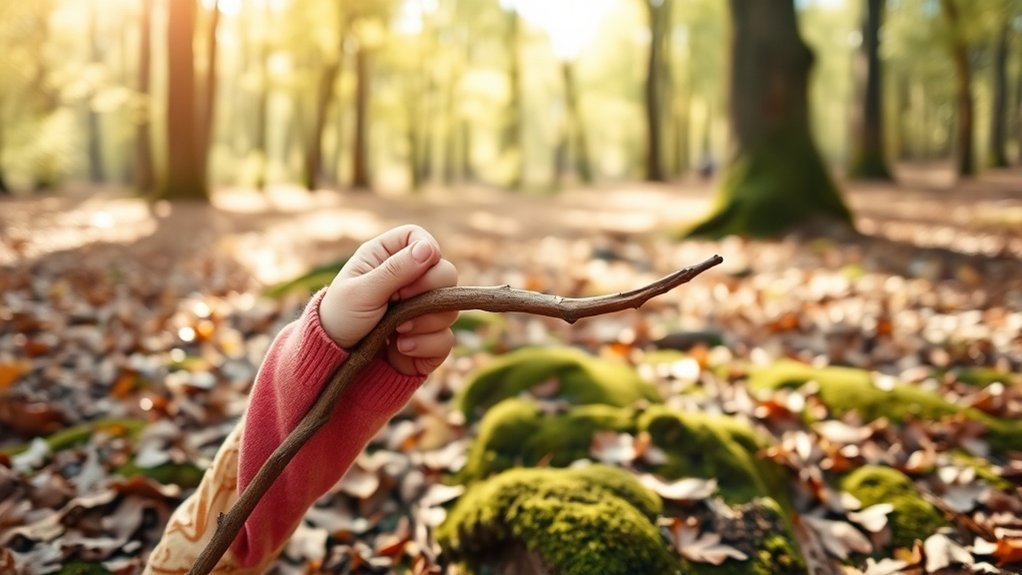
Curved sticks spark children’s imagination like few other natural objects can, transforming instantly into walking canes, magic wands, or bows for pretend adventures.
You’ll find finding curved sticks teaches kids to observe tree branches, fallen limbs, and woodland edges where natural growth patterns create interesting shapes.
Look near creek beds where water pressure bends saplings, or check areas with dense undergrowth where plants compete for sunlight. The search itself becomes an adventure as children learn to spot unique formations.
Curved stick uses extend beyond play—they’re perfect for building shelters, creating art installations, or fashioning rustic handles.
Encourage your kids to collect various sizes and curvatures, then challenge them to invent new purposes for their discoveries, fostering creativity and problem-solving skills.
Something With Spots or Stripes
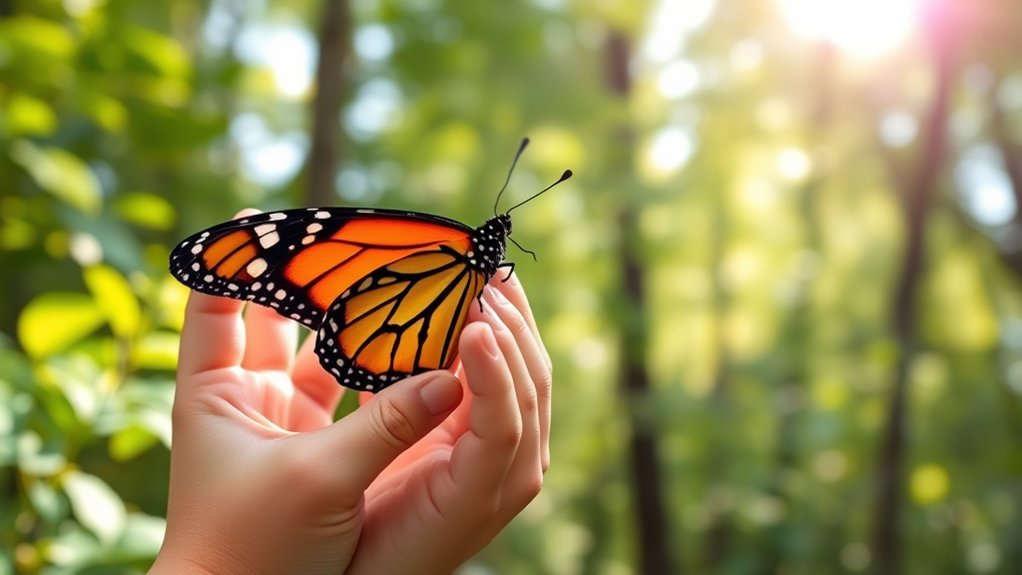
Spotted leaves, striped feathers, and patterned rocks turn every nature walk into a living gallery of natural design.
You’ll discover patterns everywhere once your kids start looking for them in nature.
Challenge them to find:
- Spotted insects crawling on tree bark or buzzing through gardens—ladybugs showcase perfect polka dots while butterflies display intricate spotted wing patterns.
- Striped flowers growing wild or in gardens—petunias, tulips, and irises often feature bold racing stripes down their petals.
- Patterned stones with natural zebra-like bands or speckled surfaces created by mineral deposits over thousands of years.
This hunt teaches children about camouflage, warning colors, and geological formations.
They’ll understand why animals and plants developed these distinctive markings for survival and reproduction in their ecosystems.
An Acorn or Nut

Acorns and nuts transform into treasure during fall nature walks, when oak trees drop their prized seeds and squirrels frantically gather their winter stash.
You’ll help kids develop acorn identification skills by examining the distinctive caps that cover these nuts. Different oak species produce varying acorn shapes—some are round and plump, while others are elongated. The caps also differ, featuring smooth, bumpy, or scaly textures.
Beyond acorns, search for other nut varieties like walnuts, hickory nuts, and hazelnuts. Teach children to look beneath trees where nuts naturally fall. They’ll discover pecans have smooth shells, while black walnuts feature thick, bumpy outer husks.
Create a sorting activity where kids categorize their findings by size, shape, and type. This hands-on experience builds observation skills while connecting them to wildlife food sources.
Something That Floats
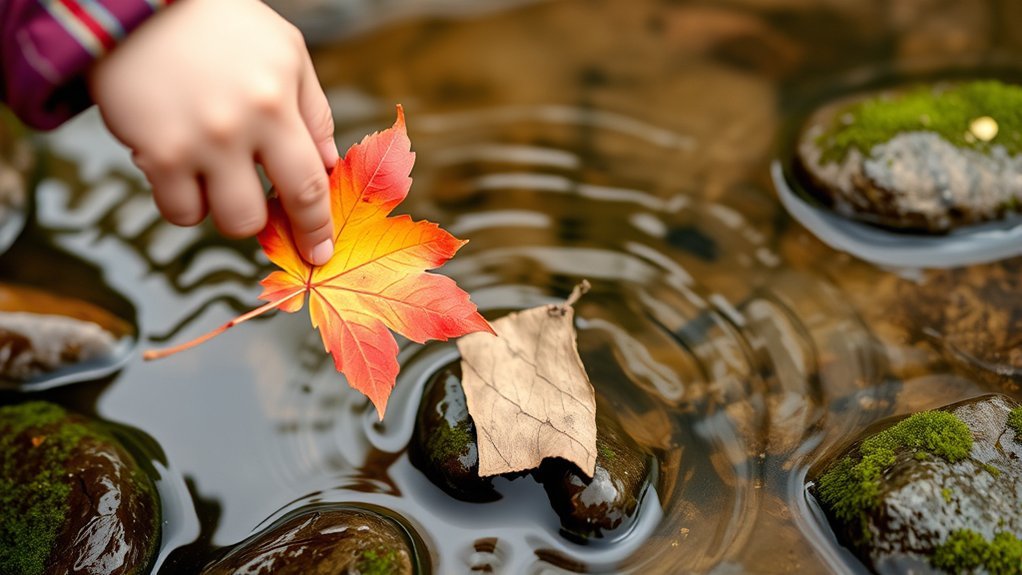
While collecting acorns tests observation skills on land, discovering what floats introduces kids to basic physics through nature’s own materials.
This hands-on activity teaches children about buoyancy while they explore ponds, streams, or even puddles.
Challenge your kids to find these floating objects:
Turn nature walks into science experiments by searching for items that stay afloat when placed in water.
- Leaves and twigs – Dry leaves make excellent floating objects, demonstrating how air pockets and surface tension work together.
- Feathers – These lightweight treasures show how density affects buoyancy, staying on water’s surface effortlessly.
- Pine cones and bark – Buoyant plants and tree materials float surprisingly well due to their porous structure and trapped air.
Let children test their finds in water, comparing which items float best.
They’ll learn that lightweight, porous materials typically stay afloat while dense objects sink.
A Leaf With Holes in It
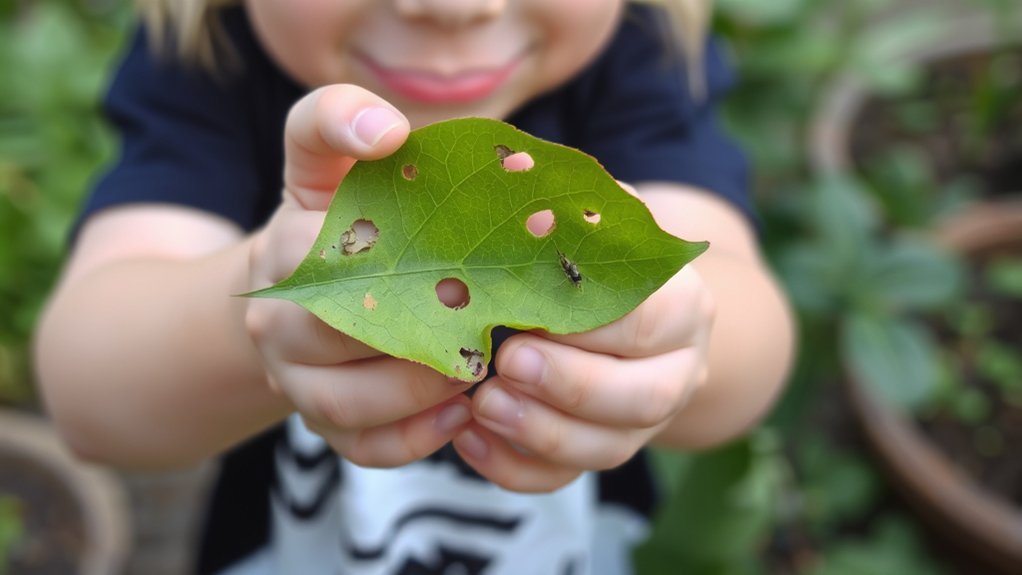
Moving from water experiments to detailed plant inspection, hunting for leaves with holes transforms children into nature detectives investigating tiny ecosystems.
You’ll find natural holes created by hungry caterpillars, beetles, and other insects that munched their way through.
These imperfect leaves tell fascinating stories about the food chain and insect behavior. Encourage your kids to examine the hole patterns—are they random or organized? Large or tiny? Some insects eat along the edges, while others tunnel straight through the middle.
This activity teaches children that “damaged” leaves aren’t flawed—they’re evidence of nature working perfectly. You can collect different specimens and compare the various eating patterns.
It’s an excellent way to discuss how insects survive and why leaf-eating bugs are essential parts of healthy forests and gardens.
Something Orange
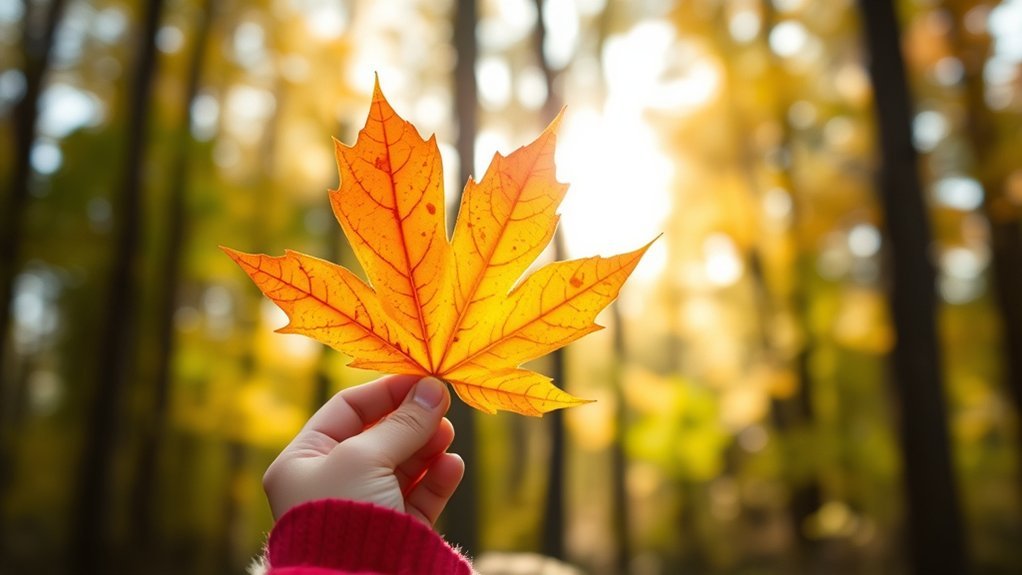
Orange treasures in nature grab children’s attention instantly, making this color hunt both easy and exciting.
You’ll find numerous opportunities throughout different seasons, from vibrant blooms to natural minerals scattered across trails.
Guide your kids to search for these orange discoveries:
- Orange flowers like marigolds, California poppies, tiger lilies, or daylilies that brighten gardens and wild meadows.
- Orange rocks including sandstone, jasper, or rust-stained stones found near rivers and hiking paths.
- Natural objects such as fallen leaves during autumn, mushrooms (look but don’t touch), berries, butterfly wings, or tree bark with orange lichen.
Encourage children to photograph their finds rather than collecting delicate items.
This approach teaches observation skills while preserving nature’s beauty for others to enjoy.
Cloud Shapes in the Sky

Looking up transforms any outdoor adventure into an imaginative journey as clouds drift across the sky in ever-changing formations.
Cloud watching encourages children to spot imaginative shapes like dragons, castles, or animals floating overhead.
Challenge kids to find specific forms: a heart, dinosaur, ship, or their favorite cartoon character. They’ll develop observation skills while exercising creativity as they interpret abstract patterns.
Different cloud types offer varying experiences—fluffy cumulus clouds provide the best canvas for shape-spotting, while wispy cirrus clouds create delicate designs.
Make it interactive by having children draw what they see or create stories about their discoveries. They can photograph their findings or describe them to others.
This activity costs nothing, requires no preparation, and works anywhere with an open view of the sky, making it perfect for spontaneous outdoor fun.
Something Fuzzy
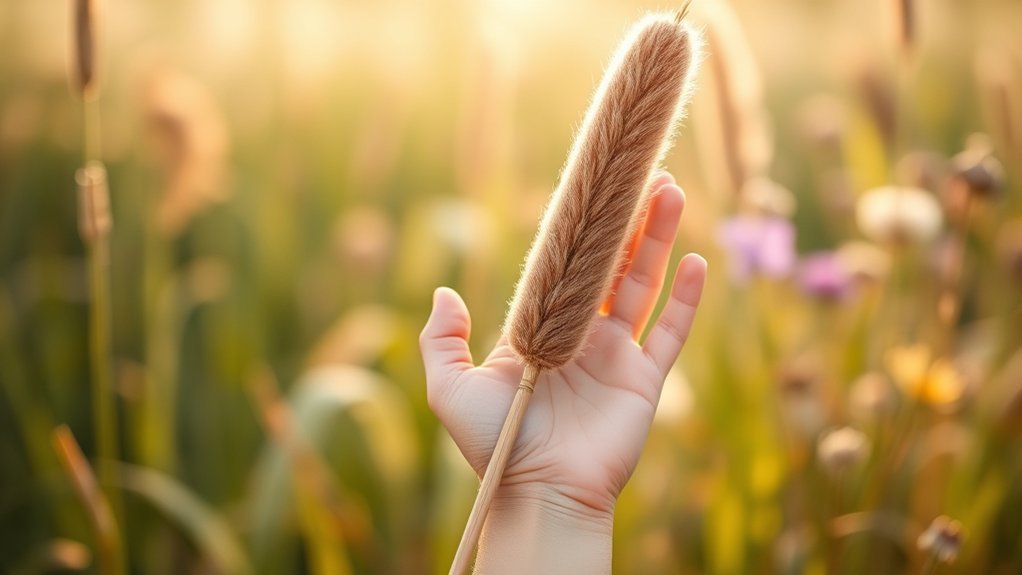
Texture exploration adds a tactile dimension to nature scavenger hunts, and fuzzy items provide some of the most delightful discoveries outdoors.
Touching nature’s fuzzy treasures transforms ordinary outdoor adventures into sensory-rich learning experiences that children will remember and want to repeat.
You’ll find countless opportunities for kids to identify soft, velvety textures in their environment.
Common fuzzy finds include:
- Fuzzy plants like lamb’s ear leaves, pussy willows, moss patches, and dandelion seed heads offer safe, accessible options for young explorers to touch and examine.
- Fuzzy animals such as bumblebees, woolly bear caterpillars, and rabbits provide exciting wildlife encounters, though remind children to observe from a respectful distance.
- Tree elements including certain bark types, seed pods, and newly emerged leaves present interesting textural variations throughout different seasons.
Encourage kids to describe what they’ve found using descriptive words beyond “fuzzy”—soft, velvety, or fluffy.
A Piece of Tree Bark on the Ground
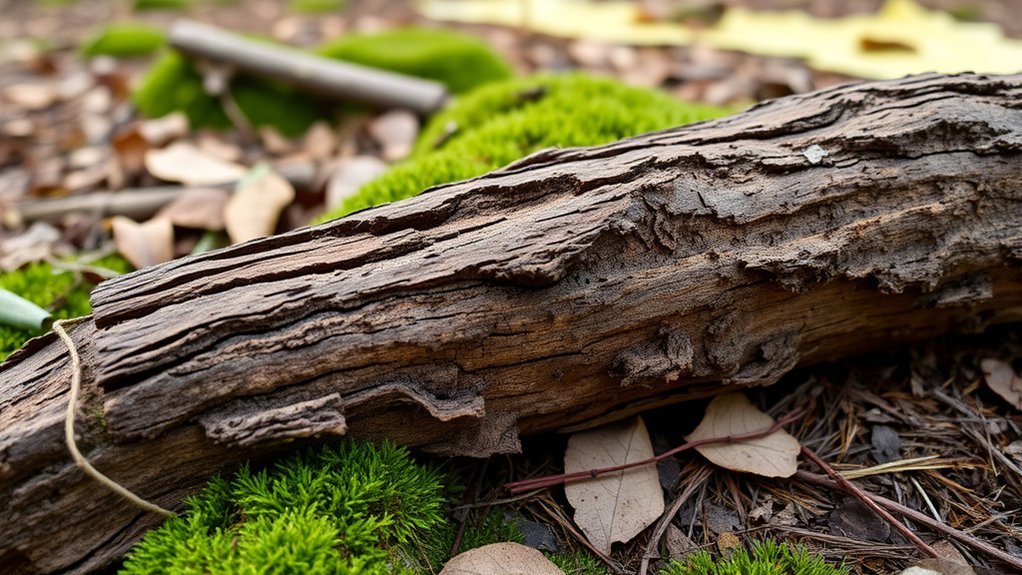
While exploring textures like fuzzy plants and soft moss, children naturally gravitate toward the ground where fallen treasures await discovery. A piece of tree bark on the ground offers fascinating opportunities to examine tree bark textures up close.
You’ll find that each species displays unique characteristics—some bark feels smooth and papery, while others present rough, deeply grooved surfaces.
Encourage kids to collect only bark that’s already fallen, never peeling it from living trees. They can observe bark peeling patterns that reveal how trees naturally shed their outer layers.
Look for pieces showing interesting colors, from silvery birch to reddish cedar. Children can compare different samples, noticing variations in thickness, flexibility, and surface patterns, turning a simple find into a hands-on botany lesson.
Something That Grows Close to Water
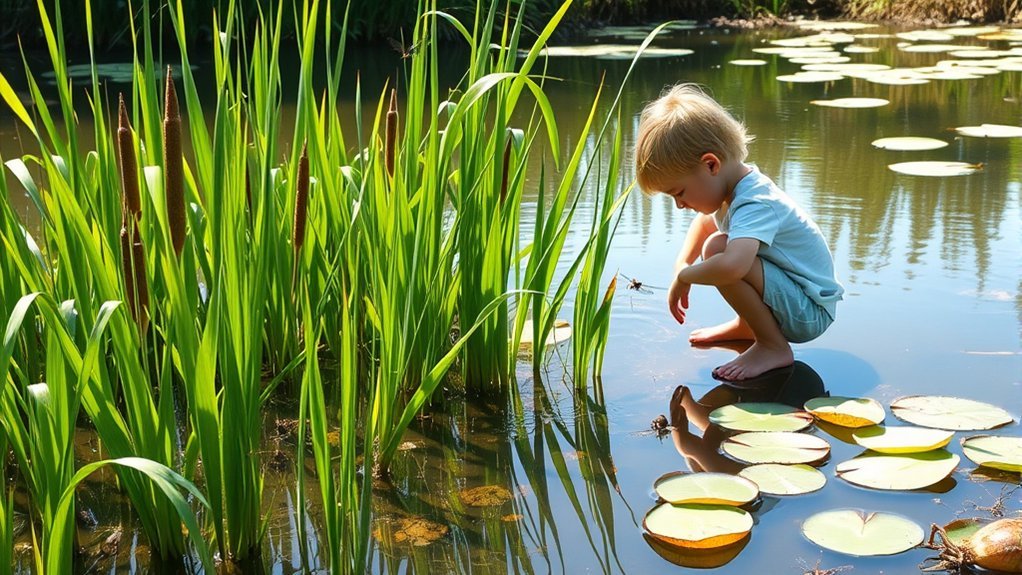
Streams, ponds, and lakeshores create perfect habitats for water-loving plants that kids can easily identify during their scavenger hunt.
Wetland edges offer young explorers an accessible introduction to aquatic plant communities and specialized water-dependent vegetation.
You’ll discover fascinating wetland plants that thrive in moist soil and shallow water. Challenge your children to find these riverside flowers and vegetation that depend on aquatic environments.
Common water-edge plants to search for:
- Cattails – These tall brown cylinders on green stalks are unmistakable markers of wetlands and pond edges.
- Ferns – Look for feathery green fronds flourishing in shady, damp areas near streams.
- Marsh marigolds – Bright yellow flowers blooming in early spring along creek banks.
You’ll teach kids about specialized ecosystems while they explore water margins.
Remember to supervise children closely near water and respect protected wetland areas during your hunt.
A Rock With Multiple Colors
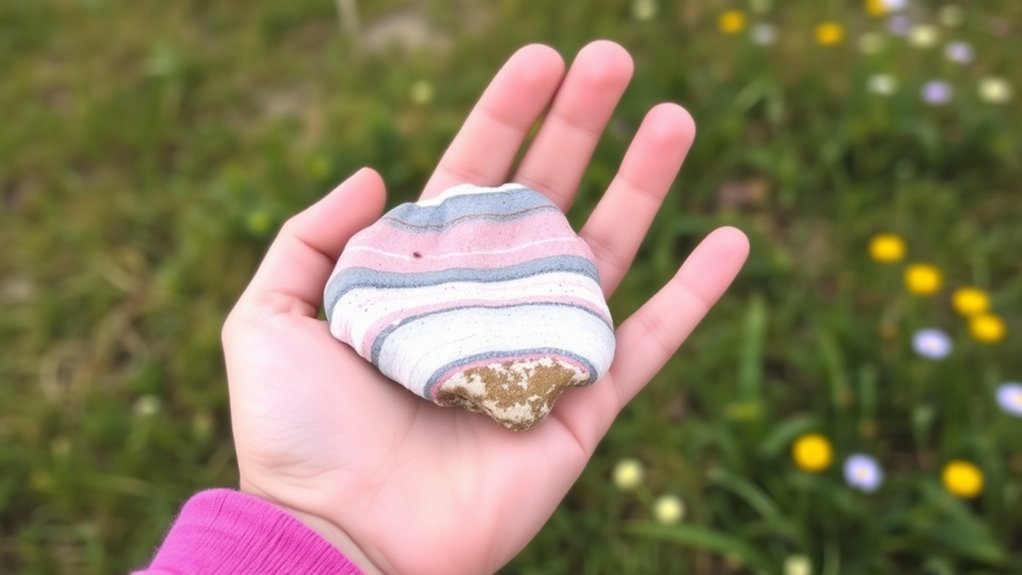
Rocks naturally display stunning color combinations created by different minerals, weathering processes, and geological events over millions of years. When you’re searching for multicolored specimens, look along stream beds, hiking trails, and areas with exposed bedrock where colorful rock formations appear more frequently.
Here are rock hunting tips to make your search successful: examine stones closely under different lighting conditions, as wet rocks reveal colors more vividly than dry ones. Check for striations, bands, or speckles that indicate mineral variety.
Common multicolored finds include granite with pink, black, and white flecks, or sandstone featuring red, tan, and cream layers.
Encourage your kids to collect several specimens and compare their patterns. This activity teaches geological concepts while developing observation skills and appreciation for Earth’s natural artistry.
Something Green That Isn’t a Leaf
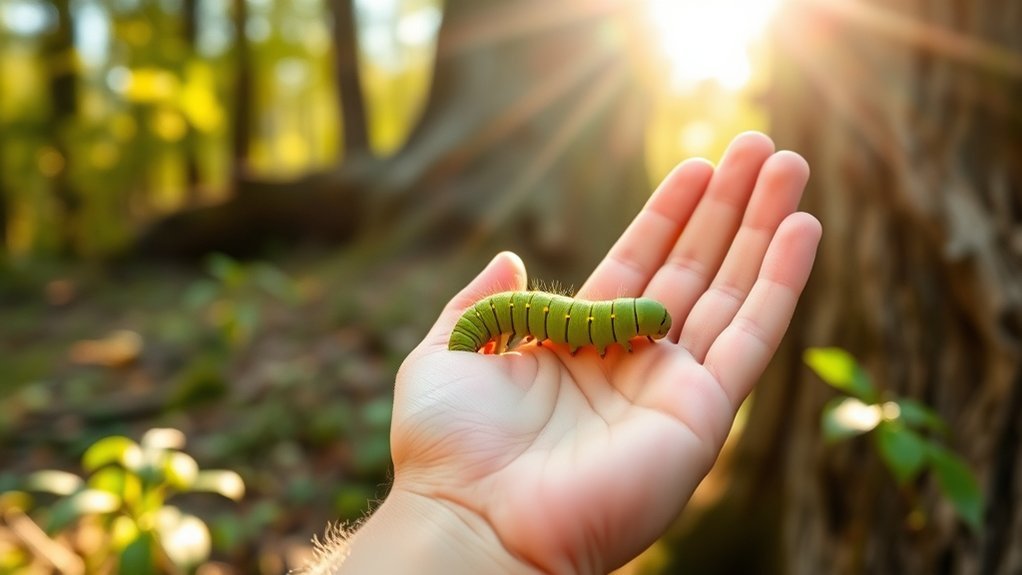
Green treasures abound in nature beyond the obvious foliage, challenging young explorers to sharpen their observational skills and discover unexpected finds.
You’ll encourage kids to think creatively when they search for green items that don’t include leaves.
Guide them toward these non-leaf discoveries:
- Mossy rocks – These fuzzy, textured surfaces grow in shaded, damp areas. Kids love touching the soft green moss that carpets stones near streams or under trees.
- Green caterpillars – These crawling creatures blend into their surroundings perfectly, making them exciting finds for patient observers.
- Unripe berries – Many fruits start green before ripening, offering lessons about plant life cycles.
This challenge teaches children that green appears throughout nature in diverse forms, from living creatures to plant coverings beyond simple foliage.
Signs of Insects at Work
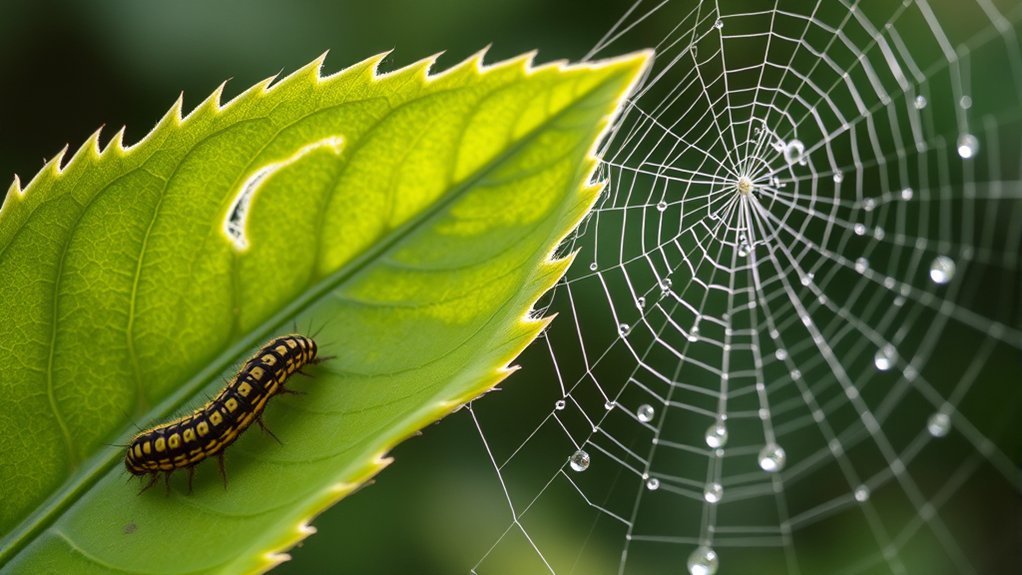
Tiny architects leave behind fascinating clues about their activities, transforming natural materials in ways that’ll captivate young detectives.
You’ll discover ant trails zigzagging across sidewalks, leading to hidden insect habitats beneath stones. Look for spider silk glistening between branches, showcasing intricate engineering.
Examine leaves for caterpillar markings—chewed edges and rolled hideaways reveal feeding patterns. Search tree bark for beetle droppings and tiny bore holes indicating wood-dwelling residents.
Watch flowers closely for pollinator activity: bees collecting pollen or butterfly patterns as they flutter between blooms. Listen for insect sounds like buzzing or chirping.
Challenge kids to spot insect camouflage on tree trunks. If you’re lucky, you might observe hive structures attached to branches, displaying nature’s remarkable construction skills through hexagonal precision.
Something That Feels Cold
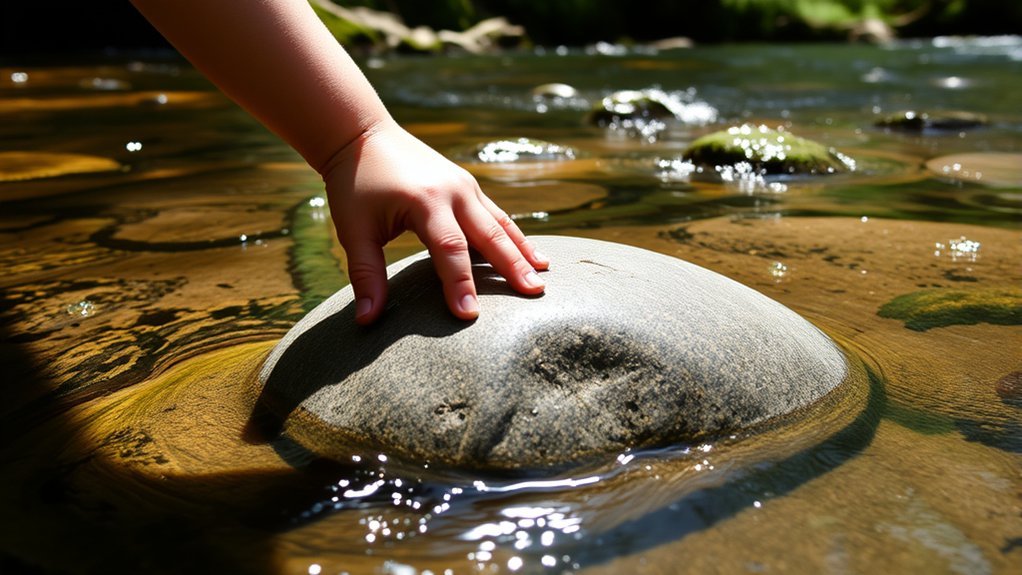
Temperature exploration adds an exciting sensory dimension to your scavenger hunt, encouraging children to safely touch and compare different natural materials.
Guide kids to discover naturally cold items in their outdoor environment:
- Shaded rocks and stones – These retain coolness, especially in morning hours or beneath tree canopies where sunlight doesn’t penetrate.
- Cold water sources – Stream beds, puddles, or damp soil near water features provide refreshing temperature contrasts for little hands to explore.
- Ice crystals and frost – During cooler months, search for frost on leaves, ice crystals along pond edges, or frozen dewdrops on grass blades.
Encourage children to compare temperature differences between sunny and shaded areas.
This activity teaches them how sunlight, shade, and moisture affect temperature while developing their tactile awareness and observation skills.
A Plant With Thorns or Prickles
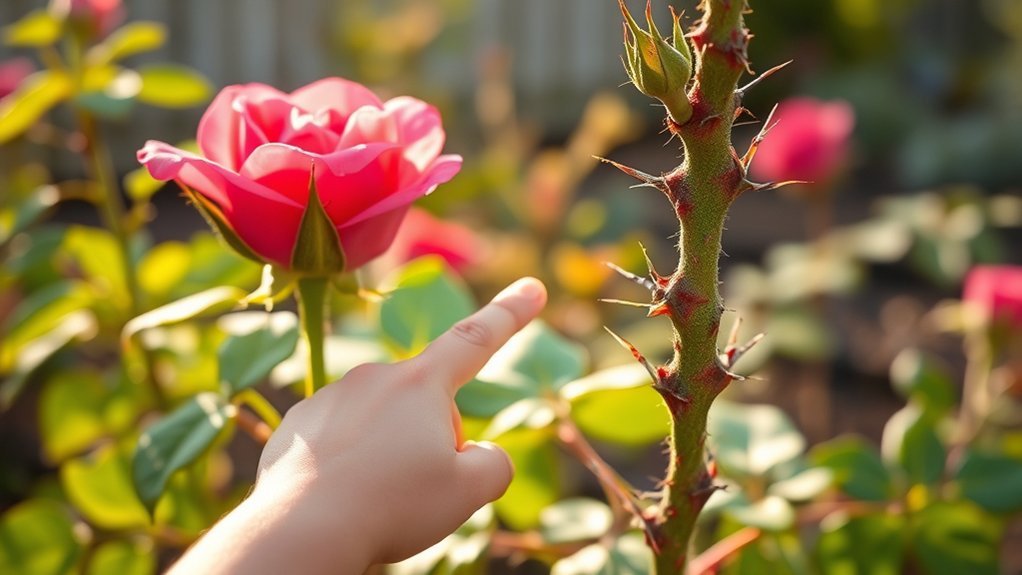
Nature’s defenses create fascinating teaching moments when children discover plants equipped with thorns or prickles. You’ll find thorny plants like roses, blackberry bushes, and hawthorns in most gardens and parks. These sharp structures protect plants from animals that might eat them.
Before searching, teach your kids to observe carefully without touching. Point out the differences between thorns (modified stems) and prickles (outgrowths from the plant’s surface). Prickly bushes like raspberry canes and thistle plants make excellent examples.
Challenge children to photograph their discoveries instead of collecting samples. They’ll learn that beautiful things often come with protective features. This hunt develops observation skills while reinforcing important safety lessons about respecting nature’s boundaries and understanding why plants evolved these remarkable defensive adaptations.
Something Brown
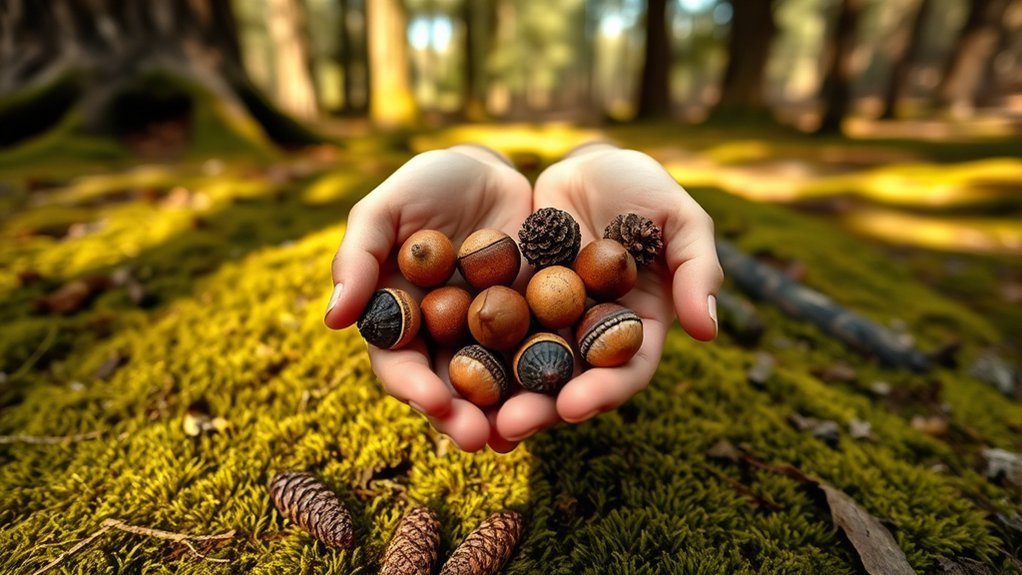
Brown discoveries await in every corner of the natural world, making this one of the easiest scavenger hunt items for young explorers.
You’ll find countless opportunities for kids to check this category off their list.
Common brown finds include:
- Tree bark variations – Brown tree bark comes in multiple shades, from light tan to deep chocolate. Encourage kids to compare different bark textures and colors across various species.
- Fallen leaves and pinecones – Dried leaves and pinecones offer perfect brown specimens that children can safely collect and examine.
- Animal evidence – While spotting brown animal fur requires keen observation, kids might discover shed fur on fences or bushes, along with feathers from brown birds.
This simple search teaches children that brown dominates nature’s palette.
Two Items That Are the Same
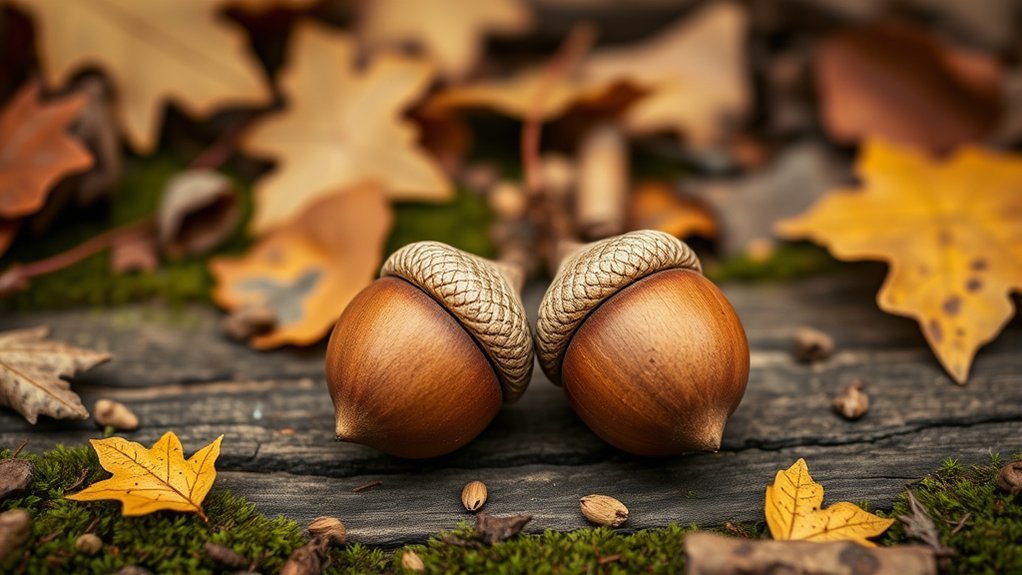
Finding two identical items sharpens a child’s observation skills and introduces basic classification concepts. You’ll challenge kids to identify matching pairs in nature’s diverse landscape.
Start with identical stones—they’re abundant and vary in size, color, and texture. Encourage children to examine shape, weight, and surface patterns. This activity teaches them to notice subtle details they’d typically overlook.
Matching leaves offer another excellent option. Kids can search for two leaves from the same tree species, comparing size, vein patterns, and color variations. They’ll learn that even “identical” items have slight differences.
Other pairs include twigs of similar length, acorns from the same oak, or pinecones with matching scales.
You’re helping children develop critical thinking skills while they explore their natural surroundings purposefully.
A Fallen Branch
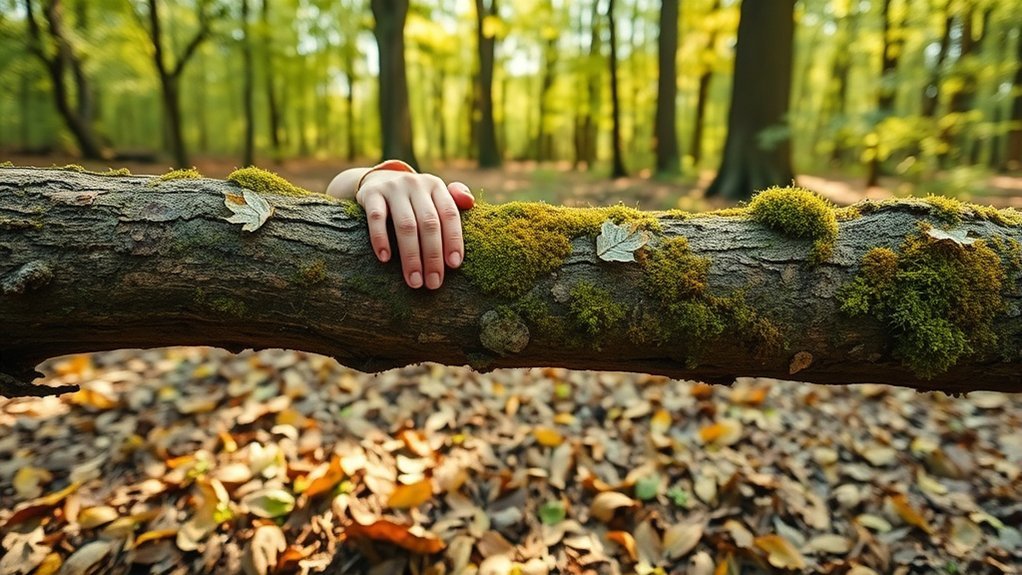
After searching for matching pairs, encourage kids to look for a single fallen branch—one of nature’s most versatile scavenger hunt items. This simple find opens up countless possibilities for exploration and creativity.
Here are three exciting fallen branch uses to try:
- Building miniature structures like fairy houses, lean-tos, or forest forts
- Creating nature wands by decorating with leaves, flowers, and twine
- Making stick people by arranging smaller twigs into characters
You’ll find that crafts with branches naturally extend the scavenger hunt experience beyond just collecting items. Kids can transform their discoveries into art projects, tools for imaginative play, or even rustic home decorations.
This activity teaches children to see potential in natural materials while keeping them engaged outdoors.
Something That Casts a Shadow
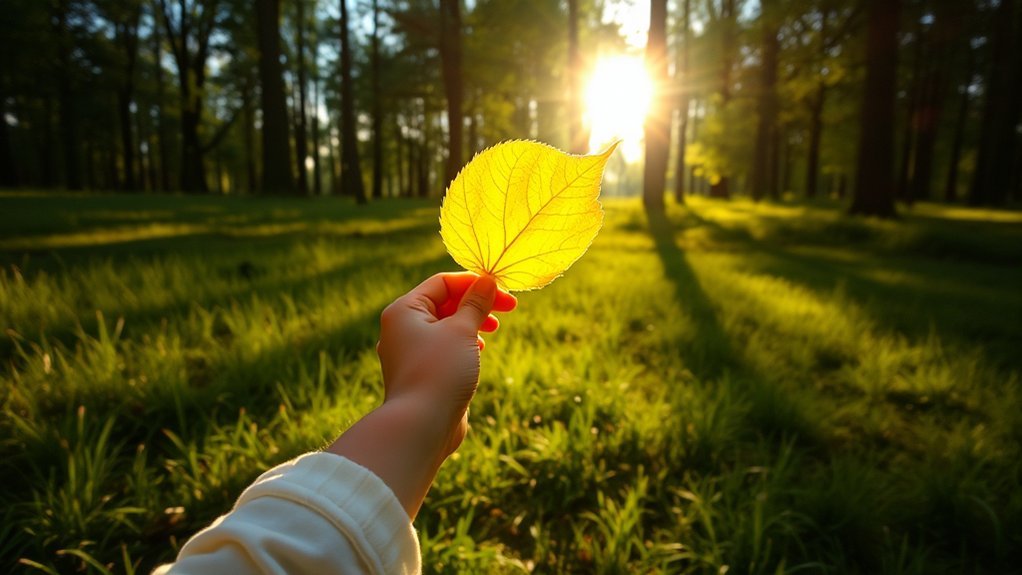
While exploring shadows might seem simple at first, this scavenger hunt challenge transforms ordinary objects into fascinating discoveries about light and science.
You’ll encourage kids to find items like trees, rocks, or playground equipment that create distinct shadow shapes on the ground.
Make this activity more engaging by asking children to trace shadows with chalk or compare how shadows change throughout the day. They can experiment with shadow play by positioning themselves at different angles to the sun, creating long morning shadows versus short midday ones.
Challenge older kids to find the most interesting shadow patterns, like lacy tree branches or geometric fence designs.
This hunt teaches basic physics concepts while keeping children actively engaged with their environment.
Evidence of Weather Changes
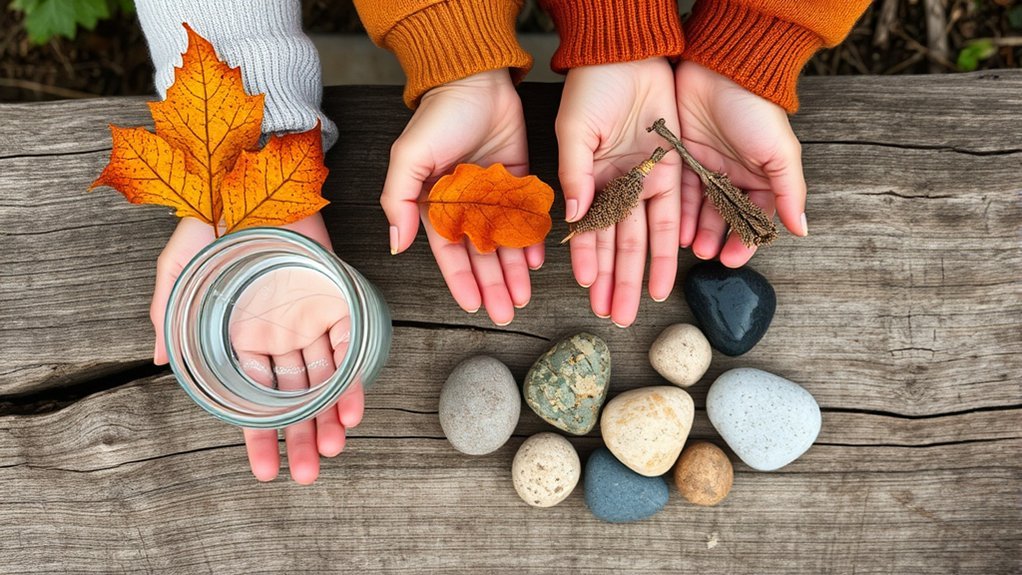
Weather leaves behind clues that turn kids into nature detectives on the hunt for atmospheric evidence.
You’ll help children understand weather patterns by searching for tangible signs of recent conditions. These discoveries make abstract concepts like climate change more concrete and observable.
Signs to find:
- Puddles and wet ground – Recent rainfall creates pools in low areas, damp soil, and water-filled tree hollows that reveal precipitation timing and intensity.
- Bent or broken branches – Strong winds leave evidence through damaged limbs, scattered twigs, and leaning plants that show storm force and direction.
- Frost patterns or sun-bleached items – Temperature extremes create visible marks like ice crystals on grass, cracked mud from heat, or faded leaves from prolonged sun exposure.
These weather remnants teach observation skills while connecting kids to nature’s ever-changing conditions.
Something Shiny in Nature
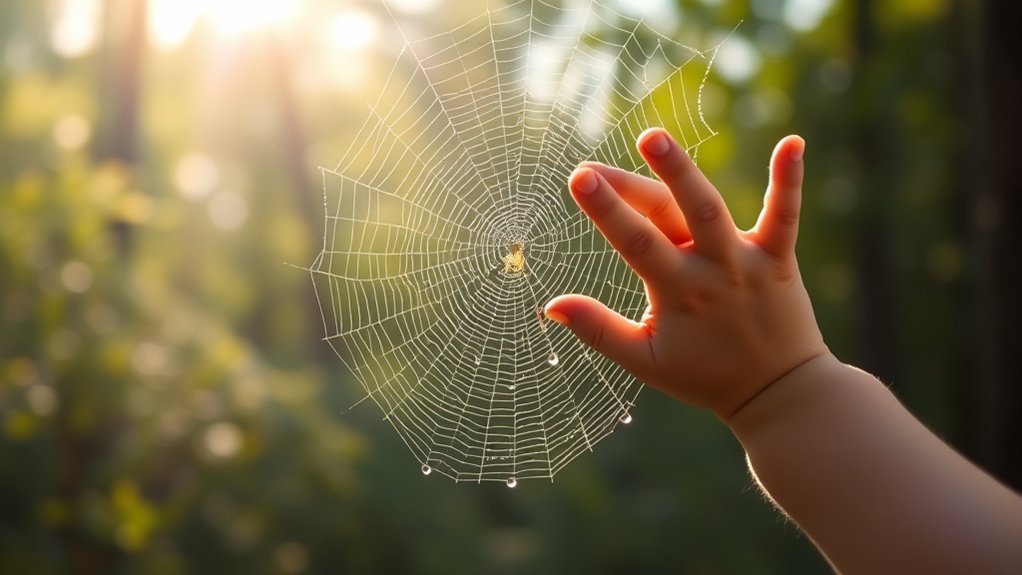
The hunt for shiny objects transforms ordinary nature walks into treasure expeditions that capture children’s innate attraction to sparkle and gleam.
You’ll find countless reflective surfaces in natural settings, from dew-covered spider webs catching morning light to water droplets clinging to leaves after rainfall.
Shiny rocks become prized discoveries when kids spot mica-flecked stones, wet pebbles near streams, or quartz crystals embedded in larger rocks.
Teach your children to identify fool’s gold, smooth river stones, and metallic-looking minerals that naturally occur in your area.
Beyond geology, search for beetle shells with iridescent coatings, fish scales along shorelines, or ice crystals on winter mornings.
Even tree bark can reveal shiny sap or resin.
These discoveries encourage kids to observe details they’d typically overlook while developing appreciation for nature’s hidden brilliance.
A Natural Object That Forms a Pattern
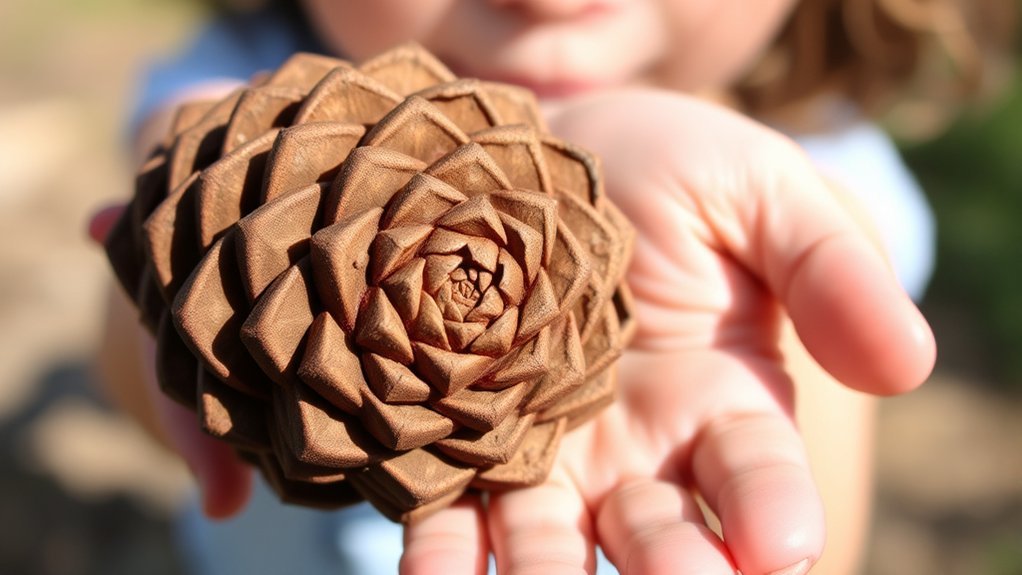
Patterns emerge everywhere in nature once children learn to recognize them, from the spiral arrangement of pinecone scales to the symmetrical veins branching through fallen leaves.
You’ll help kids develop observational skills by challenging them to identify these mathematical designs hiding in plain sight.
Guide children to discover natural symmetry through these examples:
- Patterned leaves showcase repeating shapes along stems, creating mirror images on opposite sides of branches.
- Flower petals display radial symmetry, with identical segments radiating from central points like nature’s kaleidoscopes.
- Tree bark reveals vertical ridges and horizontal striations that form predictable geometric arrangements.
Encourage kids to photograph or sketch their discoveries, then compare findings.
They’ll quickly realize patterns aren’t random—they’re nature’s blueprint for growth and survival, making mathematics tangible and exciting.
Something Beautiful to You
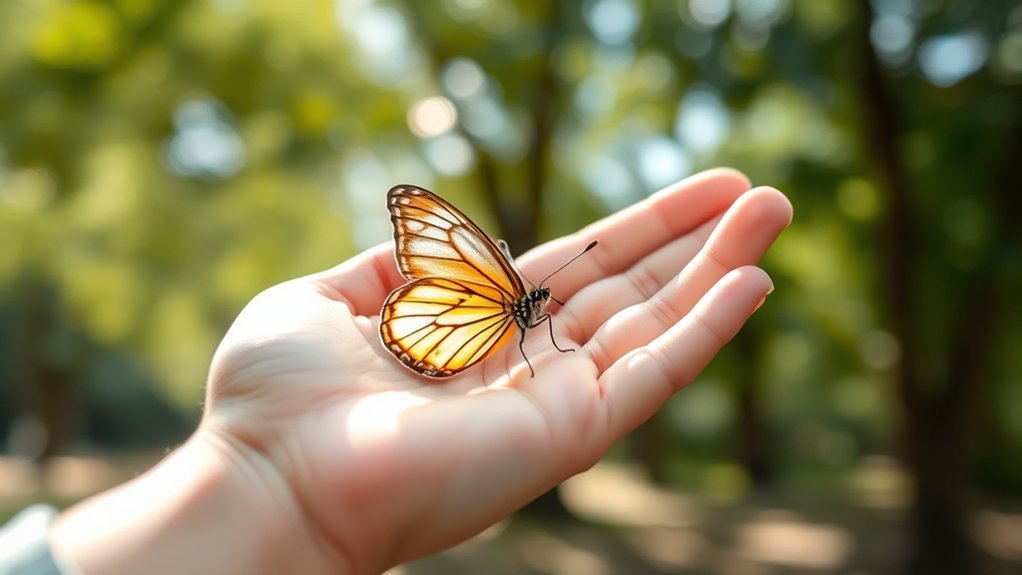
Beauty exists subjectively in nature, making this scavenger hunt item deeply personal for each child. You’ll encourage kids to explore their individual perspectives and preferences when searching for something they find beautiful.
One child might choose a beautiful sunset painting the sky with orange and pink hues, while another discovers a colorful butterfly resting on a flower. Some kids gravitate toward smooth river stones, delicate spider webs, or perfectly formed pinecones.
This open-ended challenge helps children develop aesthetic awareness and articulate why certain natural elements appeal to them. You’re fostering emotional connections with nature while building observation and communication skills.
Encourage kids to photograph or sketch their discoveries. They can share their findings and explain what makes each item beautiful to them, creating meaningful discussions about perspective and appreciation.
In case you were wondering
What Age Group Is Best Suited for Nature Scavenger Hunts?
You’ll find nature scavenger hunts work perfectly for all ages! You can adapt them from simple toddler activities like finding colorful leaves to complex teen challenges involving species identification and photography. They’re truly versatile outdoor adventures for everyone.
How Long Does a Typical Nature Scavenger Hunt Take to Complete?
You’ll typically need 30-60 minutes for a nature scavenger hunt, though duration expectations vary by age and list complexity. When activity planning, consider your kids’ attention spans and the area’s size to maximize engagement and fun.
What Supplies Should Kids Bring on a Nature Scavenger Hunt?
You’ll need essential gear like a collection bag, water bottle, sunscreen, and bug spray. Your scavenger hunt supplies should also include a checklist, pencil, magnifying glass, and camera to document discoveries along the way.
Can Nature Scavenger Hunts Be Done in Winter or Cold Weather?
Absolutely! Winter wonderlands await your exploration. You’ll discover nature scavenger hunts make fantastic cold weather activities year-round. Bundle up and search for pinecones, animal tracks in snow, evergreen branches, ice formations, and winter berries during your frosty adventures.
How Do You Keep Kids Safe During Outdoor Scavenger Hunts?
You’ll keep kids safe by establishing clear boundaries, using the buddy system, and reviewing safety precautions beforehand. Always bring a first aid kit, dress appropriately for weather, and maintain constant supervision throughout the hunt.
Conclusion
You’ve armed yourself with nature’s checklist, and now it’s time to explore. Like a detective searching for clues, you’ll discover the outdoor world’s hidden treasures with fresh eyes. Don’t worry about finding everything at once—nature scavenger hunts aren’t races. They’re adventures that’ll strengthen your observation skills and deepen your connection to the environment. So grab your list, head outside, and let curiosity guide your journey through nature’s wonders.