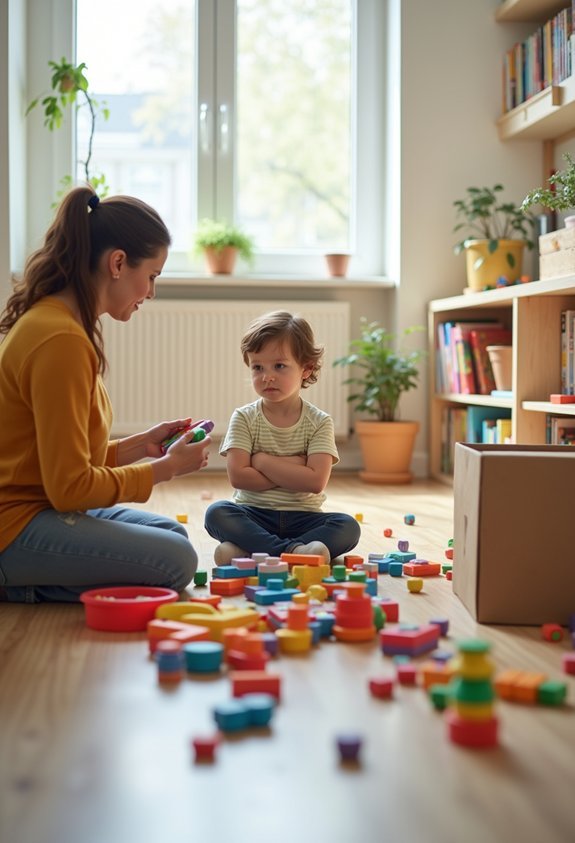
Parenting Chaotic Kids: Why Young Kids Get Into Trouble When Left Alone And Trigger Mess
Your toddler’s chaos isn’t rebellion—it’s research. Their prefrontal cortex is still developing, which means impulse control barely exists while curiosity runs wild. When you step away, they’re driven to explore through touch, taste, and experimentation. That sudden silence? It usually signals they’ve discovered something fascinating and forbidden. Their growing physical abilities outpace their understanding of consequences, creating the perfect storm for messes. Understanding these developmental stages can help you stay one step ahead.
The Science Behind Your Child’s Curiosity-Driven Chaos
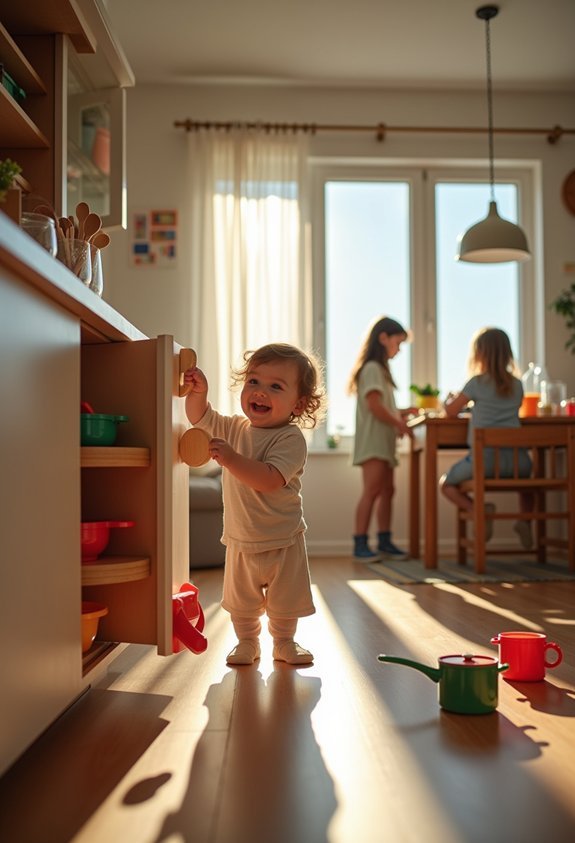
When your toddler dumps an entire box of cereal on the floor to “see what happens,” they’re not misbehaving—they’re conducting research. Young children’s brains are wired for curiosity exploration, driving them to test boundaries and investigate their environment through hands-on experimentation.
During early childhood, your child’s prefrontal cortex—the brain region responsible for impulse control and decision-making—remains underdeveloped. This means they literally can’t stop themselves from touching, tasting, and testing everything within reach.
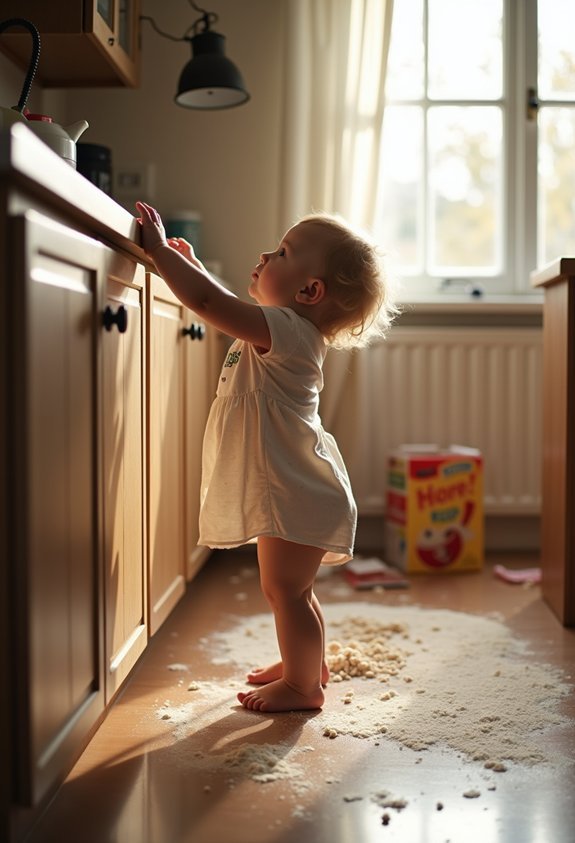
Sensory experiences form the foundation of learning at this age. Your child processes information through direct interaction with their world. That flour scattered across the kitchen? They’re discovering texture, cause and effect, and spatial relationships.
Understanding this developmental reality helps you respond with patience rather than frustration when chaos inevitably unfolds.
Developmental Stages That Make Unsupervised Moments Risky
Although your child’s curiosity serves essential developmental purposes, certain age-related milestones create windows of heightened risk during unsupervised moments.
Between ages two and four, your child experiences a surge in toddler independence. They’ve mastered walking and climbing but haven’t developed judgment about consequences. This mismatch between physical ability and cognitive understanding creates dangerous scenarios when you step away briefly.
Developmental milestones like improved fine motor skills mean your child can now open containers, turn doorknobs, and access items previously out of reach. Their growing sense of autonomy drives them to test boundaries and explore without waiting for permission.
As fine motor skills improve, toddlers gain access to containers, doors, and hidden spaces—often before developing the judgment to stay safe.
You’ll notice these risky windows often coincide with newfound capabilities. When your child learns a new skill, they’ll practice it relentlessly—whether you’re watching or not.
Why Silence From Your Toddler Should Set Off Alarm Bells

Why does sudden silence feel more alarming than your toddler’s loudest tantrum? Your instincts aren’t deceiving you.
Toddler silence often signals intense focus on something they shouldn’t be exploring—unrolling toilet paper, sampling pet food, or discovering permanent markers.
At this developmental stage, your child lacks impulse control and risk assessment. They’re driven by curiosity without understanding consequences. When noise stops, they’ve typically found something captivating enough to command their full attention.
Watch for these warning signs: prolonged quiet lasting more than a minute or two, absence from their usual play area, or closed doors they can’t normally reach.
Trust your gut when something feels off.
You’re not overreacting. That silence represents your toddler’s complete absorption in discovery—and that discovery rarely ends well for your walls.
Common Household Items That Become Irresistible Targets

Your toddler doesn’t distinguish between toys and treasures—everything you touch becomes a target worth investigating.
Kitchen utensils clatter enticingly in drawers, while art supplies promise colorful exploration across walls and floors. Electronic devices with glowing screens and buttons prove impossible to resist.
Kitchen drawers sing siren songs to tiny hands, while screens and art supplies whisper promises of colorful chaos.
You’ll find cleaning products under sinks become forbidden fruit, and craft materials transform into sensory experiments.
Furniture fixtures—knobs, handles, and drawer pulls—invite tiny fingers to twist and pull repeatedly. Pet food bowls sitting at floor level offer irresistible snacking opportunities.
Even organized toys storage areas aren’t safe; your child will dump everything seeking that one item buried at the bottom.
Understanding this behavior-driven curiosity helps you anticipate which household items need securing before your little explorer strikes during those quiet moments.
How Short Attention Spans Lead to Big Messes
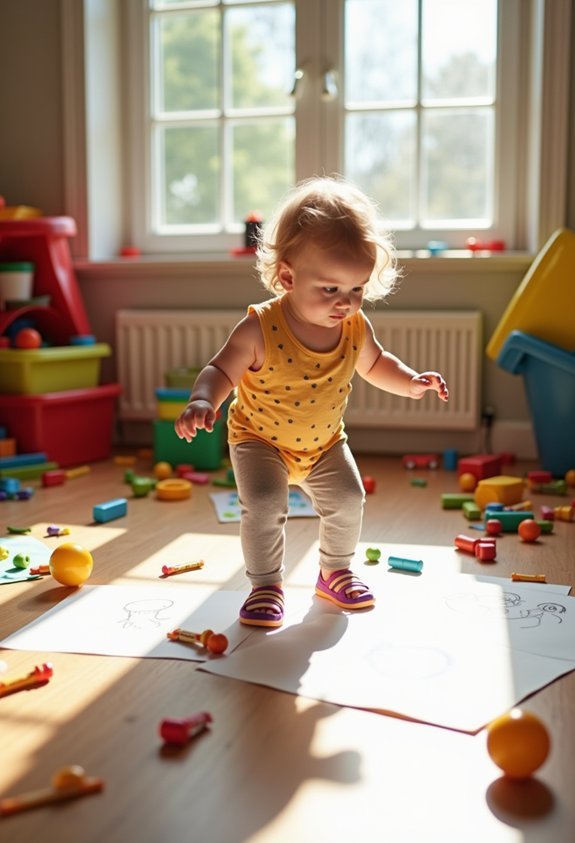
Beyond the magnetic appeal of household items, your toddler’s developing brain plays a starring role in the chaos that unfolds. Their attention span shifts rapidly from one stimulus to the next, leaving a trail of half-finished explorations behind them.
When your child starts stacking blocks, they might suddenly notice the plant across the room. They abandon the blocks, investigate the soil, then spot something else entirely. Each transition creates another pocket of disorder.
This isn’t defiance—it’s developmental. Young children can’t sustain focus the way adults do. Their brains are wired for exploration, not completion.
What looks like destruction often represents creative play in motion. Your toddler isn’t trying to make messes; they’re discovering their world one fleeting moment at a time.
The Role of Impulse Control in Childhood Mischief

While attention spans explain the scattered nature of toddler chaos, impulse control—or rather, its absence—drives the intensity of their mischief. Your child’s prefrontal cortex, the brain region responsible for impulse control, won’t fully develop until their mid-twenties. This means toddlers literally can’t stop themselves from grabbing, throwing, or exploring forbidden items.
When your child sees something interesting, they act immediately. There’s no internal pause button asking, “Should I do this?” Childhood mischief stems from this developmental reality, not defiance or bad behavior.
You’ll notice your child understands rules yet breaks them anyway. They know they shouldn’t dump the cereal box, but the urge overwhelms their underdeveloped self-regulation.
Recognizing this gap between knowing and doing helps you respond with appropriate expectations and patience.
Practical Strategies to Minimize Unsupervised Disasters

Understanding why toddlers act before thinking sets the stage for prevention rather than reaction. When you recognize that your child’s developing brain can’t yet pump the brakes on impulses, you’ll approach chaos with empathy instead of frustration.
Preventive Measures That Work
You’ll find success by childproofing beyond the basics. Secure cabinets, relocate tempting items, and create yes-spaces where exploration is safe.
Rotate toys to maintain engagement and reduce boredom-driven mischief.
Supervision Tips for Busy Parents
You don’t need eyes on your child every second, but you do need strategic awareness. Use audio monitors, establish visual checkpoints, and practice the “too quiet” rule—silence often signals trouble.
Keep high-risk activities short and schedule them when you’re fully present. Your proactive approach transforms potential disasters into manageable moments.
In case you were wondering
At What Age Can Children Typically Be Trusted to Stay Home Alone Safely?
You can typically trust children around 10-12 years old to stay home alone, though age guidelines vary by state. Consider safety considerations like your child’s maturity, judgment, and ability to handle emergencies before deciding.
How Do Siblings Influence Each Other’s Mischievous Behavior When Unsupervised?
You’ll notice sibling rivalry often escalates into collective mischief when kids are unsupervised—they egg each other on, testing boundaries together. Your children aren’t being “bad”; they’re naturally exploring social dynamics and seeking connection through shared adventures.
Does Birth Order Affect How Likely a Child Is to Create Messes?
Yes, birth order can influence mess-making tendencies. You’ll notice firstborn responsibilities often make older children more cautious, while middle child independence drives them to explore freely, sometimes creating bigger messes as they assert themselves.
Are Boys Really More Prone to Causing Chaos Than Girls?
Research shows gender differences in chaotic tendencies aren’t as significant as you’d think. You’ll find individual temperament, energy levels, and developmental stages matter more than whether you’re raising a boy or girl.
How Much Screen Time Helps Versus Harms When Parents Need a Break?
Studies show 1-2 hours of quality content won’t harm your child’s development. You’ll want to set clear screen limits while maintaining digital balance—it’s okay to need breaks, but you’re building habits that shape behavior long-term.
Conclusion
You’re not parenting poorly—you’re parenting a perfectly developing child. Those messy moments and curious catastrophes aren’t character flaws; they’re developmental milestones in disguise. By balancing boundaries with patience and preparation with presence, you’ll help your little one learn limits without losing their wonderful wonder. Remember, today’s tornado-making toddler is tomorrow’s thoughtful thinker. Stay steady, stay supportive, and celebrate the small successes along the way.