Why Bored Kids Freeze When You Say “Go Play”: The Hidden Boredom Gap Every Kid Is Bored By But Never Says Out Loud
When your child freezes at “go play,” they’re not being difficult—they’re facing a genuine cognitive challenge. The boredom gap is the space between wanting stimulation and knowing how to create it independently. Modern kids get less practice generating their own ideas because screens and overscheduled days do the thinking for them. This gap is completely normal and actually signals your child’s brain is ready for growth. Understanding what’s really happening can help you support them through it.
What the Boredom Gap Actually Looks Like in Your Living Room

When your child dramatically flops onto the couch and declares there’s “nothing to do” despite a room full of toys, you’re witnessing what researchers call the boredom gap—the space between a child’s desire for stimulation and their ability to generate it independently.
This gap reveals itself through specific boredom triggers: transitions between activities, lack of social interactions, or when structured play suddenly ends.
You’ll notice creativity blocks emerge as your child struggles to shift from passive entertainment to imaginative play.
The good news? This uncomfortable moment holds hidden boredom benefits. It’s your child’s brain signaling readiness for exploration opportunities.
Their play preferences are developing, and that frozen moment before independent play begins is actually healthy cognitive growth happening in real time.
The Overstimulation Trap: Why More Options Create More Paralysis

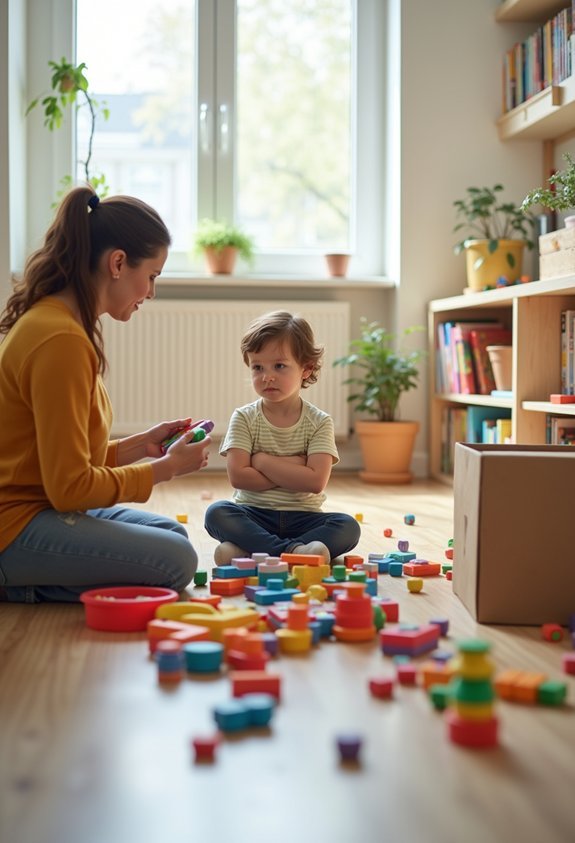
That room full of toys your child ignores isn’t evidence of ingratitude—it’s often the source of the problem. Options overload triggers decision fatigue faster than you’d expect. When everything competes for attention, your child experiences choice paralysis, and play reluctance follows.
Stimulation saturation creates a creativity block that looks like laziness but feels like mental clutter to your child. This imaginative drought happens because their brain can’t filter priorities.
Here’s what overstimulation actually steals from your child:
- The confidence to make independent decisions
- The patience to explore one thing deeply
- The ability to self-soothe through unstructured time
- The creativity that emerges from limitation
- The satisfaction of completing self-directed play
You’re not failing them—their environment needs simplification, not more choices.
How Screen Time Rewires the Brain’s Ability to Self-Start

Although screens aren’t the enemy, they do change how your child’s brain approaches play initiation. When your child watches videos or plays digital games, their brain receives constant external prompts—what to look at, what to do next, where to focus. This passive consumption requires zero self-direction.
Over time, this brain rewiring affects your child’s internal motivation systems. The neural pathways responsible for generating ideas and initiating action get less practice. Your child’s brain becomes accustomed to waiting for instructions rather than creating them.
Here’s the reassuring news: this isn’t permanent damage. Children’s brains remain remarkably adaptable. By gradually introducing unstructured time alongside screen time, you’re helping rebuild those self-starting pathways your child needs for independent play.
The Lost Skill of Transitioning From Passive to Active Entertainment
Because modern children spend so much time receiving entertainment rather than creating it, they’ve lost practice with a crucial skill: the mental gear-shift from watching to doing.
Passive entertainment requires nothing from your child—no decisions, no effort, no imagination. Active engagement demands all three.
This transition feels genuinely hard for kids today. You’re witnessing:
- A brain stuck waiting for the next dopamine hit
- Genuine confusion about how to begin without instructions
- Fear of boredom itself, which feels uncomfortable and unfamiliar
- Underdeveloped “idea generation” muscles
- Real distress, not defiance or laziness
Here’s what matters: this skill isn’t gone—it’s dormant. Your child can rebuild the bridge between passive entertainment and active engagement.
They simply need patient guidance and repeated practice to strengthen neural pathways that screens haven’t exercised.
Why “Go Play” Feels Like an Impossible Command to Your Child
Understanding why this mental gear-shift feels so difficult helps explain something frustrating: when you tell your child to “go play,” you’re not giving them a simple instruction. You’re asking them to generate ideas, choose materials, create scenarios, and sustain engagement—all without external prompts. That’s cognitively demanding work.
Play independence doesn’t emerge automatically. It develops through practice, and many children today get fewer opportunities to build this muscle. When screens constantly provide direction, children lose familiarity with imaginative exploration‘s initial discomfort.
Your child isn’t being defiant or lazy. Their brain genuinely struggles to activate without stimulation handed to them. The blank canvas of unstructured time feels overwhelming rather than inviting.
Recognizing this distinction changes how you respond—from frustration to supportive guidance that rebuilds their capacity for self-directed play.
The Executive Function Connection Most Parents Miss
When your child stares blankly at a room full of toys, what you’re witnessing isn’t a motivation problem—it’s an executive function challenge.
Executive function skills—planning, initiating tasks, and cognitive flexibility—are still developing in young brains. Your child genuinely struggles to:
- Generate play ideas from scratch
- Shift attention from screens to open-ended activities
- Organize steps needed to start a game
- Filter overwhelming choices into one decision
- Sustain focus without external structure
This isn’t laziness or defiance. Their prefrontal cortex is literally under construction until their mid-twenties.
When you understand this, frustration transforms into compassion.
Understanding the brain science behind your child’s struggles shifts everything—suddenly you’re allies, not adversaries.
Your child needs scaffolding, not lectures. By supporting their developing cognitive flexibility, you’re building neural pathways that will serve them throughout life.
They’ll get there—with your patient guidance.
How Modern Childhood Accidentally Eliminated Unstructured Downtime
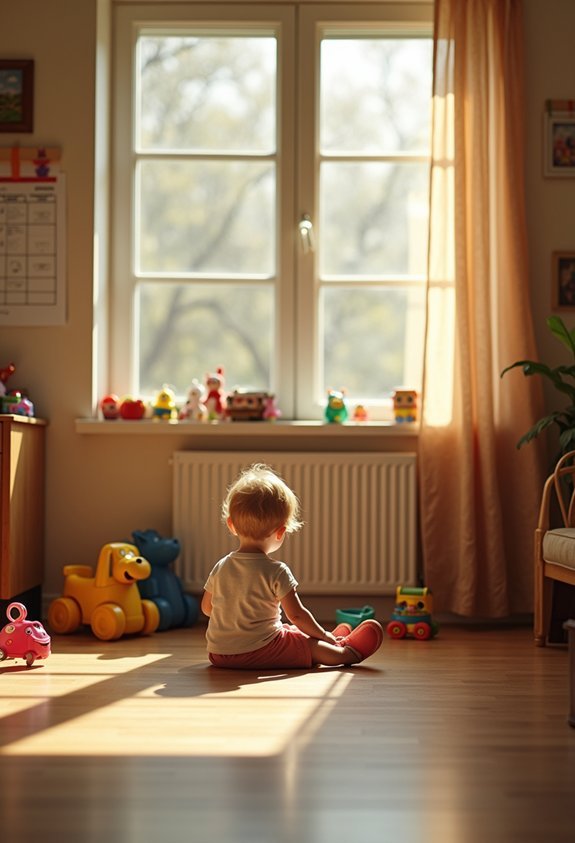
Beyond the neurological factors at play, there’s a cultural shift that’s quietly reshaping childhood itself.
You’ve likely noticed how packed your child’s schedule has become—school, sports, tutoring, enrichment activities. Each commitment seems valuable individually, yet collectively they’ve squeezed out something essential: unstructured play.
Today’s children experience roughly 25% less free time than kids did thirty years ago. That’s not accidental. It reflects your genuine desire to give your child every advantage.
But here’s what matters: childhood creativity doesn’t flourish in structured environments alone. It needs empty space.
When you eliminate unstructured downtime, you’re inadvertently removing the training ground where kids learn to entertain themselves.
They haven’t rejected independent play—they simply haven’t had enough practice with it. This isn’t failure; it’s an opportunity for recalibration.
Signs Your Child Has Forgotten How to Be Bored Productively

How can you tell if your child has forgotten the art of productive boredom? Watch for these revealing patterns:
- They immediately reach for a screen when activities end
- They can’t start creative play without step-by-step instructions
- They complain of boredom within minutes of free time
- They seem anxious or irritable when left without entertainment
- They’ve stopped inventing games or making up stories
You’re not witnessing a character flaw—you’re seeing a skill that’s gone dormant.
Your child’s brain hasn’t lost its capacity for imagination; it simply hasn’t practiced self-directed play recently. The boredom benefits that once sparked creativity now feel uncomfortable because the muscle has weakened.
This is fixable.
With patience and the right environment, your child can rediscover how stillness leads to imagination.
Practical Strategies to Bridge the Gap Without Becoming the Entertainment Director
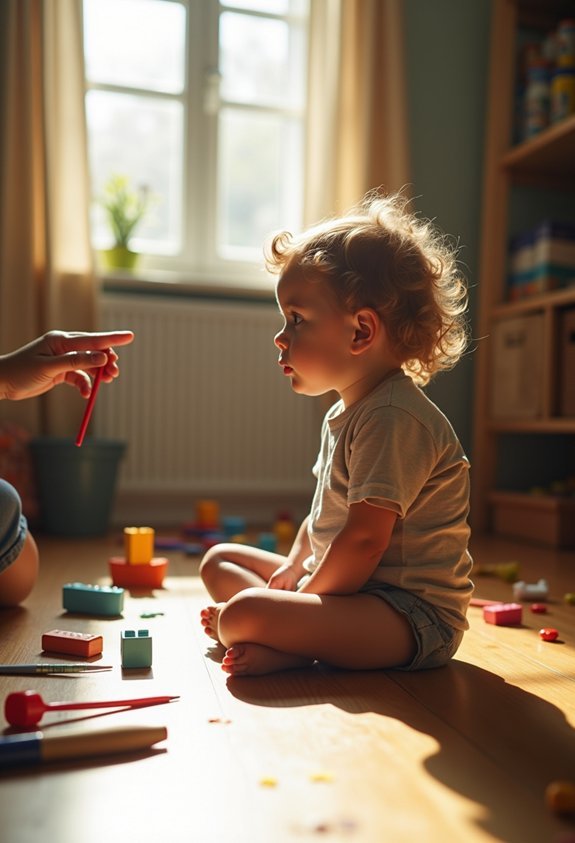
Though you might feel tempted to swoop in with activity suggestions the moment your child declares boredom, your restraint becomes the very tool that rebuilds their creative independence.
Start by acknowledging their frustration without solving it. Say, “I hear you’re bored. I wonder what you’ll figure out.” This validates their feelings while signaling confidence in their abilities.
Create a “boredom jar” together with playtime alternatives they’ve brainstormed during calm moments. When boredom strikes, they can pull ideas they’ve already approved.
Set a waiting period before offering help—even ten minutes allows boredom benefits to emerge. You’ll notice they often find something engaging before time expires.
Your role shifts from entertainer to supportive observer, trusting that discomfort sparks the creativity they’re learning to access again.
Rebuilding Your Child’s Self-Directed Play Muscles One Boring Afternoon at a Time
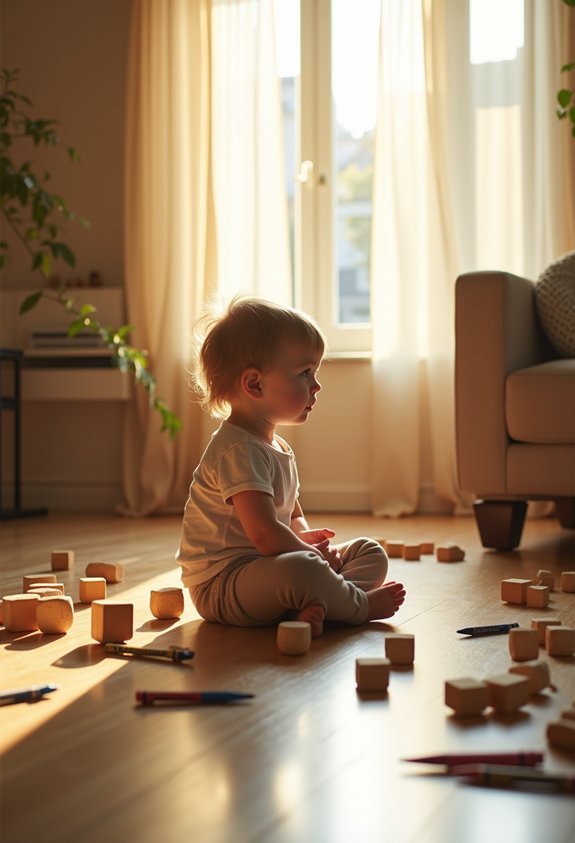
Your child’s capacity for self-directed play works much like a muscle—it strengthens through regular use and weakens without it. When you resist the urge to rescue them from boredom, you’re actually creating space for self-directed exploration to emerge naturally.
Boredom isn’t a problem to solve—it’s fertile ground where your child’s independence takes root.
Consider what happens during these uncomfortable moments:
- Your child discovers they can tolerate discomfort
- Creative problem solving kicks in when no one provides answers
- Confidence builds from solving their own entertainment needs
- Imagination reconnects with real-world materials
- Independence becomes something they trust in themselves
Start small. Five minutes of unstructured time today becomes fifteen minutes next week.
You’re not abandoning them—you’re giving them room to remember who they’re without constant input.
In case you were wondering
At What Age Should Parents Start Worrying About Their Child’s Boredom Responses?
You don’t need to worry at any specific age—boredom triggers look different across developmental stages. If your child consistently can’t self-direct play by age seven or eight, gently explore what’s blocking them rather than panicking.
Can the Boredom Gap Cause Long-Term Psychological Issues in Children?
What if unaddressed boredom shapes your child’s developing mind? Yes, chronic boredom triggers can affect psychological resilience over time, but you’re building protective skills now. With your support, children develop healthy coping mechanisms that serve them throughout life.
Do Children With ADHD Experience the Boredom Gap Differently Than Neurotypical Kids?
Yes, ADHD experiences often intensify the boredom gap significantly. Your child’s brain craves more stimulation, making boredom tolerance harder to develop. This isn’t defiance—it’s neurological wiring. With patience and understanding, you can help them build coping strategies.
How Does the Boredom Gap Affect Children’s Social Relationships With Peers?
When your child struggles with boredom, their peer interactions often suffer because they can’t engage naturally in unstructured play. Don’t worry—with support, they’ll develop social skills that help them connect more confidently.
Is the Boredom Gap Reversible Once a Child Reaches Their Teenage Years?
“It’s never too late to learn.” You can absolutely help your teen reverse the boredom gap by teaching boredom strategies together. Teenage engagement improves when you’re patient, consistent, and meet them where they’re developmentally.
Conclusion
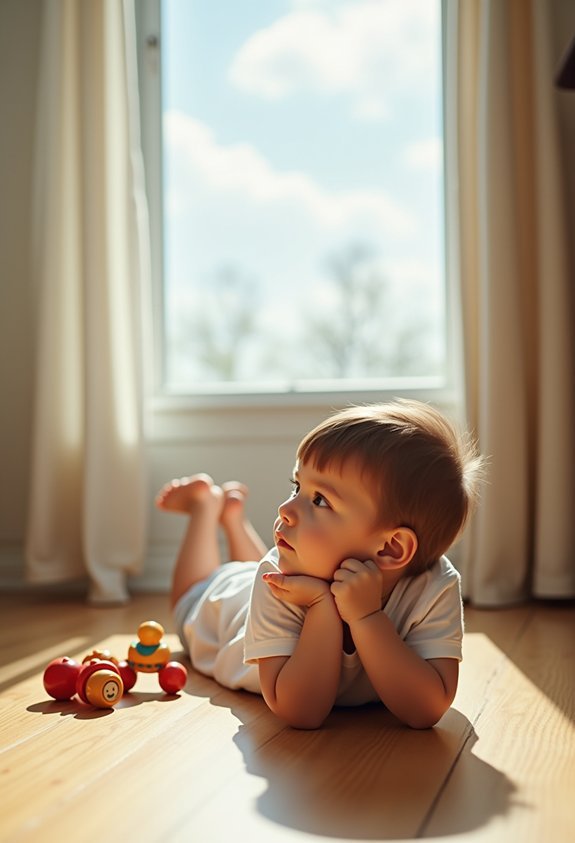
Picture your child sprawled on the floor, staring at the ceiling—not defeated, but thinking. That quiet moment isn’t failure; it’s their brain learning to spark its own fire. You’re not abandoning them when you step back; you’re handing them the match. Trust the process, embrace the awkward silence, and watch as boredom transforms from enemy to ally in your child’s creative development.