Why Building Toddler Habits Early Matters Most
Your toddler’s brain is basically wet cement, and every tiny routine you repeat is a footprint that hardens. Sit for family meals? That’s shaping how they eat at 15. Calm bedtime routine? That’s fewer drama nights later. Name feelings, practice sharing, limit screens, let them help with tiny chores—you’re wiring habits for food, sleep, emotions, and responsibility. Start now, keep it simple, and stick around to see how small tweaks can change everything for you.
Key Takeaways
- Early habits wire the toddler brain like “wet cement,” creating lasting patterns for eating, sleep, emotions, and behavior.
- Daily routines and repetition make desired behaviors automatic, reducing future power struggles and resistance.
- Toddlers learn mainly by copying; modeling healthy routines early makes positive behavior their default, not a correction later.
- Consistent sleep and mealtime habits support emotional stability, focus, and healthy growth throughout childhood.
- Early responsibilities and emotion-coaching build self-control, independence, and resilience that benefit school readiness and social relationships.
The Science Behind Early Habit Formation
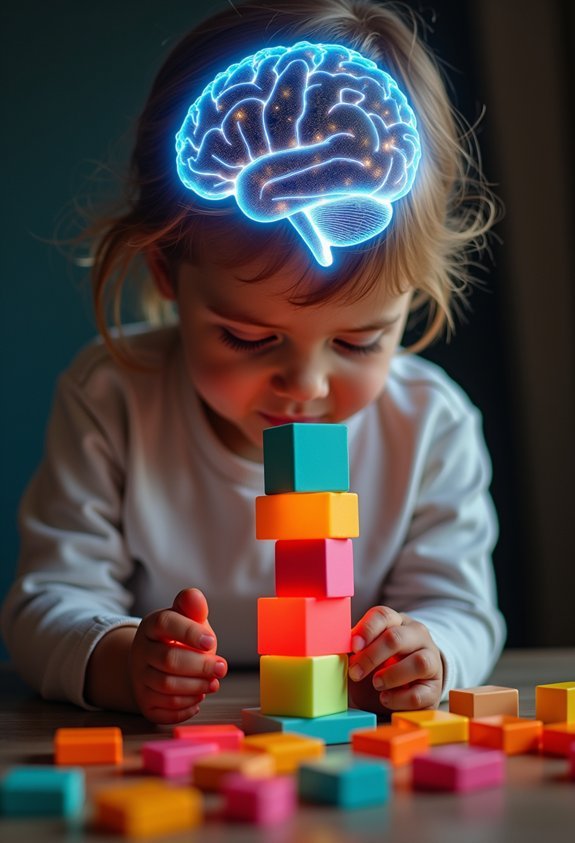
Even though your toddler sometimes acts like a tiny tornado in pajamas, their brain is actually a habit-making machine right now.
Your pint-sized whirlwind is secretly wiring lifelong habits with every snack, snuggle, and bedtime routine
Inside that cute chaos, brain cells fire together over and over, wiring tiny paths that say, “Oh, we do this every day.” Neuroscience insights show these early paths harden fast, kind of like wet cement that suddenly sets.
Behavioral psychology adds another piece: your toddler’s brain loves patterns and rewards. Same song before nap? Brain notes the cue. Snack after cleanup? Brain shouts, “Cleaning = good stuff!”
Repeat that loop and it sticks. Skip it, and the pathway fades.
How Toddlers Learn From What You Do, Not What You Say
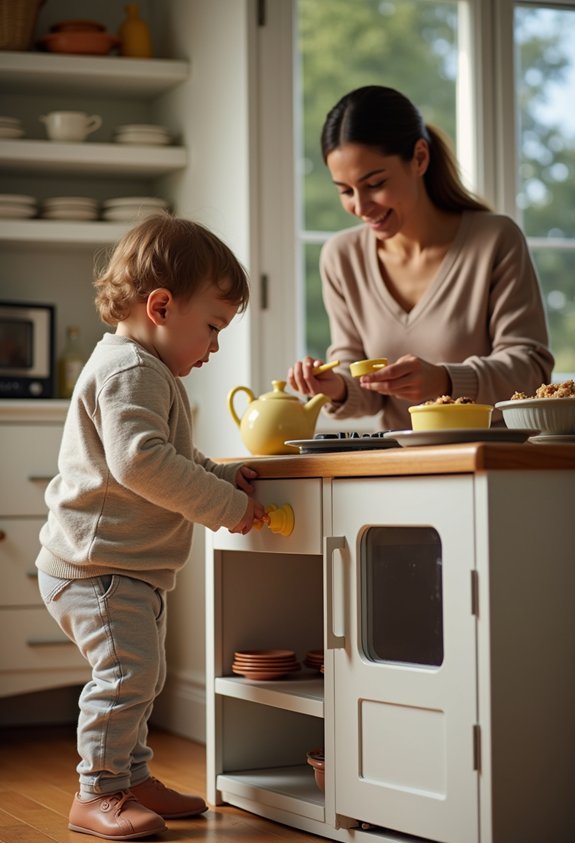
While you’re busy giving great speeches about “gentle hands” and “one toy at a time,” your toddler is staring at you like a tiny scientist taking notes: “Cool story, but what do you *actually* do?”
Toddlers are professional copy machines with jam on their fingers—they learn way more from watching you than from listening to you. That’s modeling behavior in action. You slam a door, they slam a door. You breathe instead of yell, they learn that too.
This is observational learning, toddler-style: monkey see, tiny monkey do. So act out the habits you want. Put your phone down. Pick up the toy. Say “sorry” when you mess up.
Your everyday moves become their blueprint. They won’t remember your speeches, only your daily show.
Mealtime Routines That Shape Lifelong Eating Habits
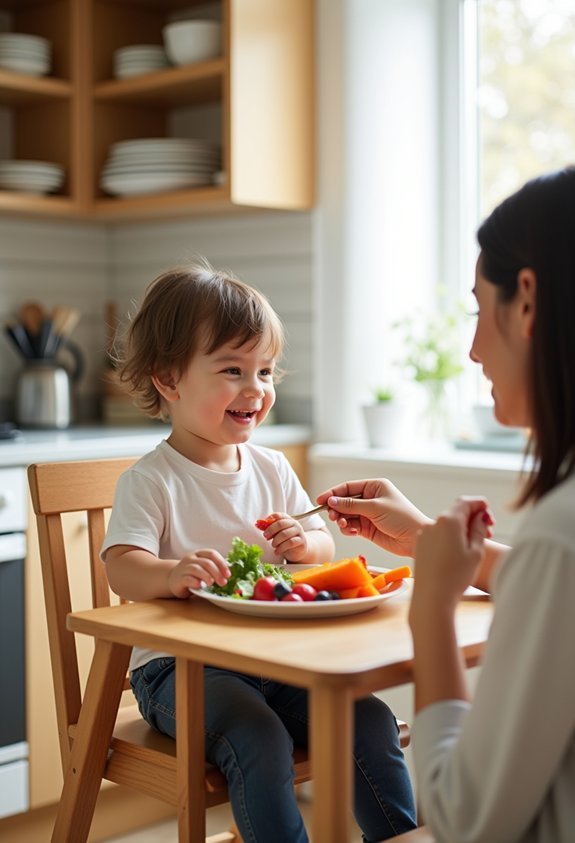
Your tiny copy machine doesn’t just study how you talk and slam doors—they’re also clocking how you eat.
When you sit for family meals without phones, you teach mindful eating without saying a word. You pause, taste, breathe. They copy.
Every phone-free family meal quietly teaches mindful eating: slow bites, deep breaths, and kids who mirror your calm.
When you serve simple portion control instead of a mountain of nuggets, you show that “enough” is a thing.
Rotate food variety—carrots one night, chickpeas the next, plus fun cultural foods from your own roots. That mix feels normal, not weird.
Use positive reinforcement: “Nice trying the green stuff!” not “Finish or else.”
Talk about flavors, colors, and crunchy sounds to build happy sensory experiences.
A little weekend meal planning keeps chaos down and healthy basics ready. You feel calmer, and they eat better.
Sleep Patterns That Support Growth and Emotional Stability

Some days it feels like toddlers run on chaos and crumbs, but their bodies are secretly obsessed with routines—especially sleep. When you aim for steady sleep duration, you’re not just saving your sanity; you’re helping growth hormones do their night shift.
Solid bedtime rituals—bath, books, song—act like a big neon sign that says, “Powering down now!” Naptime consistency keeps moods less volcano, more gentle waves.
Set up a cozy sleep environment: dark, cool, quiet, maybe one stuffed animal that isn’t staring into your soul. Use calming techniques like slow breathing, back rubs, or silly “tension melt” games.
Watch sleep associations; you want habits you can repeat anywhere. Offer emotional reassurance: hugs, simple words, and predictable comfort. Over time, toddler trusts sleep instead of fighting.
Setting Healthy Boundaries Around Screen Time

Even though tablets can feel like tiny miracle babysitters, screen time with toddlers is kind of like candy—you need rules or it takes over fast.
You don’t have to ban screens and move to the woods. Just set healthy limits. Pick a small daily window, stick to it like bedtime, and keep it mostly educational content. That’s cartoons with a brain, not endless toy unboxing.
Protect tech free zones: the table, the car for quick trips, the last hour before bed.
Then pile on active play, silly dances, blocks, dirt, all of it. Aim for digital balance, where screens are a tool, not the boss.
Use shows to spark family engagement, real social interaction, and ridiculous, giggly quality time everyone remembers long after bedtime.
Everyday Moments That Teach Emotional Regulation

Tantrums, toy wars, and that epic meltdown because you cut the banana “wrong” can actually be secret training sessions for emotional regulation. In those wild moments, you’re teaching emotional awareness, even if it feels like chaos. Everyday messes become mini classes.
Those chaotic kid moments? They’re actually mini emotional workouts shaping tomorrow’s calmer, more resilient brain.
- Breakfast battles: Name feelings out loud—“You’re mad,” “You’re disappointed”—to build emotional vocabulary and empathy development.
- Car-seat drama: Practice mindful breathing and silly calming techniques, like “smell the pizza, blow out the candles.”
- Sharing fails: Step in as coach, guiding conflict resolution and frustration tolerance instead of just yelling, “Be nice!”
- Bedtime protests: Use self soothing strategies, cuddles, stories, and quiet talk, then add positive reinforcement for calm social interactions.
These tiny reps wire your child for steadier feelings tomorrow.
Using Play and Chores to Build Responsibility
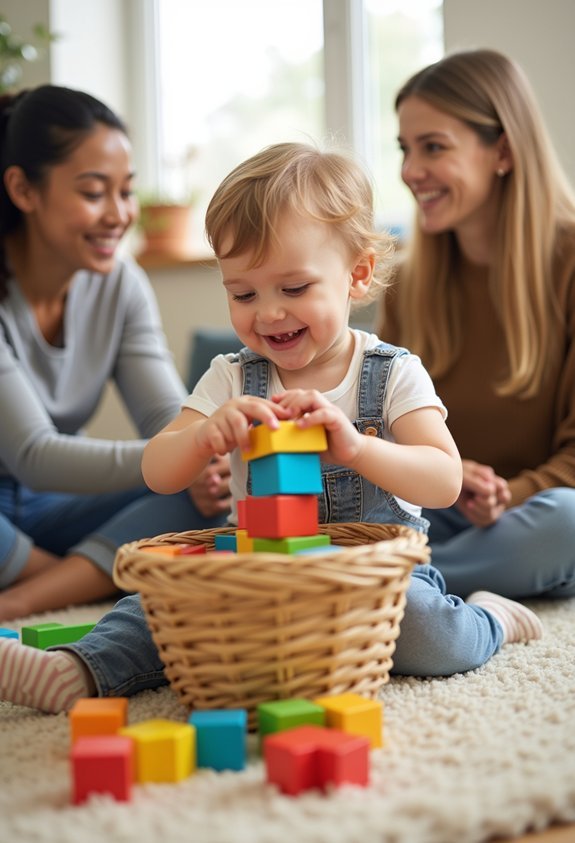
While it might feel faster to just do everything yourself, handing your toddler tiny “jobs” turns them into a proud little boss-in-training. You’re not just getting help; you’re building playful responsibility.
Ask them to be the “sock matcher,” “toy rescuer,” or “crumb patrol.” Suddenly, chores feel like a game, not punishment. That’s chore engagement: they feel important, you get fewer Legos stabbing your feet at 2 a.m. Win-win.
Keep tasks short, clear, and crazy specific: “Put all the blue cars in this basket.” Cheer like they just solved world peace when they finish.
Will it be messy? Oh yes. But you’re teaching, “In this family, we help,” and that habit sticks longer than a Cheerio in the minivan. They notice, and they copy you.
Simple Strategies to Make Habits Stick for Busy Families

Most days feel like a sprint from breakfast crumbs to bedtime battles, so any “perfect routine” that needs color‑coded charts and 2 free hours can go straight in the trash.
You need habits that fit real life, not a parenting fantasy film. Think tiny, repeatable, and easy to cheer for.
- Pick one micro habit and hook it to something you already do, like brushing teeth after bath.
- Use loud, goofy praise for habit reinforcement: “You put toys away? Legendary.” Your toddler glows; you both win.
- Build family involvement: let siblings race to model the habit, and let your toddler feel like part of the “team.”
- Keep cues obvious: basket by door, cup by sink, pajamas on bed, so habit does itself for tired brains.
What to Do When Routines Fall Apart and How to Reset

Even with your best charts, songs, and sticker magic, there are days when the whole routine just explodes—someone’s crying, someone’s naked, dinner is cereal, and bedtime happens whenever people stop arguing.
When that hits, don’t power through; hit pause. Lower the bar. Ask, “What’s the bare minimum we need right now?” Maybe that’s PJs, one book, lights out. That’s enough.
Next day, try simple reset techniques. Name what happened: “Last night was wild. Tonight we’re starting fresh.” Kids love a do-over.
Make tiny routine adjustments instead of a full remodel. Move bath earlier. Shorten story time. Put a timer on clean-up. Test one change for a few days. If it helps, keep it. If not, ditch it, no guilt.
You’ll reset again; that’s normal.
In case you were wondering
How Do Toddler Habits Differ for Neurodivergent Children, Like Autism or ADHD?
Toddler daily habits can differ because your neurodivergent child may need clearer structure, accommodations, and more repetition. You’ll use individualized neurodivergent strategies so habit formation feels predictable, compassionate, honoring their unique pacing, and communication style.
Can Inconsistent Routines Between Divorced Parents Still Lead to Strong Toddler Habits?
Yes, your toddler can build strong habits; studies show about 40% of daily actions don’t require conscious choice. You use consistent communication strategies and parenting collaboration techniques so both homes echo the same daily expectations.
How Much Do Daycare or Grandparents’ Rules Affect the Habits We Set at Home?
They shape habits more than you think; daycare influence and grandparent impact can reinforce or confuse routines. You set priorities at home, share them with caregivers, and re-teach expectations so your toddler follows your rules.
Do Cultural or Religious Practices Change Which Toddler Habits I Should Prioritize First?
Gentle guidance grows greatness; yes, you’ll shift priorities when cultural influences and religious traditions matter. You start with safety, sleep, and soothing routines, then layer in language, respect, and rituals that reflect your community’s convictions.
What Habits Matter Most if My Toddler Has Frequent Medical Appointments or Hospital Stays?
You focus on predictable medical routines, simple choices, and comforting rituals. You teach naming feelings, deep breaths, and using a favorite object for courage to build emotional resilience. You protect sleep, flexible play, and connection.
Conclusion
So here’s the deal: your toddler’s habits are forming right now, whether you plan them or not—so you might as well drive the bus instead of hanging on to the bumper. You don’t need perfect charts, color-coded bins, or a “calm voice” 24/7. You just need small, repeatable moves. One meal, one bedtime, one tantrum at a time. Because if today shapes tomorrow anyway, why not make tomorrow slightly less… chaotic?