Why Indoor Physical Games Beat Screen Time?
When you swap scrolling for living-room dodgeball, your body and brain shout, “Finally!” You’re running, jumping, laughing, and sneaking in a workout without boring push-ups. Your heart gets stronger, your muscles and bones toughen up, and your brain has to react fast, plan moves, and remember who just nailed you with a pillow. You also build real-life friendships, lose stress, and feel lighter inside. Stick around to see how to turn spaces into game zones.
Key Takeaways
- Indoor physical games build stronger muscles, bones, and hearts, improving overall fitness in ways passive screen time cannot.
- Active play boosts brainpower by sharpening focus, memory, reaction time, and problem-solving through quick decisions and movement challenges.
- Playing together indoors strengthens social skills like communication, teamwork, empathy, and conflict resolution, unlike isolated screen use.
- Physical games provide real stress relief and mood improvement, helping manage anxiety and build emotional resilience.
- Swapping some screen time for active indoor play creates fun family memories while establishing lifelong healthy habits.
How Active Play Supports Healthy Bodies

Even though the couch is super comfy and your phone is begging you to scroll, your body’s basically yelling, “Can we please move?”
When you jump, run, crawl, and toss stuff around, you’re not just burning off random energy—you’re building stronger muscles and bones, keeping your heart happy, and training your balance so you don’t wipe out every time you trip over a shoe.
Indoor games like dodgeball or hallway relays push muscle development without feeling like a workout. You get cardiovascular health boosts as your heart pounds and you’re laughing, not stuck on a treadmill.
Fast turns and throws give you coordination improvement and flexibility enhancement when you twist to grab a sock. Over time, that play becomes endurance building and strength training.
Boosting Brainpower Through Movement

While your body’s busy jumping around, your brain’s having its own little party too. Every time you dodge a pillow or leap over a chair, your brain has to plan, react, and fix mistakes fast. That’s cognitive development in action, not just sweaty chaos.
Every jump and dodge is brain-training in disguise—quick decisions, sharp focus, zero boring worksheets
You’re doing movement learning every time you figure out how high to jump or how far to throw a sock into the laundry basket. Miss? Brain notes it. Next throw gets better.
Indoor games turn your room into a tiny lab. Simon Says, obstacle courses, balloon keep-up—each one trains focus, memory, and problem‑solving.
It’s like sneaking vegetables into dessert. You think you’re just playing, but your brain’s getting sharper, stronger, quicker. Way better than zoning out at a glowing screen.
Building Social Skills Without a Screen

Your brain isn’t the only one leveling up during all this indoor chaos—your people skills are, too. When you play tag, balloon volleyball, or blanket forts instead of scrolling, you actually talk, move, and problem-solve with real humans in the room.
- You practice team collaboration when you plan sneaky strategies, like trapping your cousin in pillow dodgeball.
- Your communication skills grow as you shout ideas, give quick tips, and call out, “Dude, wrong team!”
- Conflict resolution and empathy development show up when someone gets bossy, or feelings get hurt, and you work it out.
- Trust building and friendship enhancement happen when you rely on each other, share wins, laugh at fails, and still want a rematch again the next day.
Emotional Benefits of Physical Indoor Play

Some days it feels like your brain is just one more browser tab about to crash, but a silly indoor game can flip your whole mood in minutes.
When you start moving, your body dumps tension like old junk in the closet. You punch pillows, dodge socks, chase kids or roommates, and suddenly that knot in your chest starts to melt.
Move your body, and all that stuck, buzzing tension quietly slips out the back door
This is real stress relief, not the fake kind you get from doomscrolling. Your mind goes from “everything is terrible” to “hey, I’m actually okay.”
Over time, this builds emotional resilience. You learn you can feel angry, sad, or worried, then move, sweat, laugh, and come back calmer.
Play doesn’t erase problems, but it gives you the strength and spark to face them.
Turning Small Spaces Into Big Adventure Zones
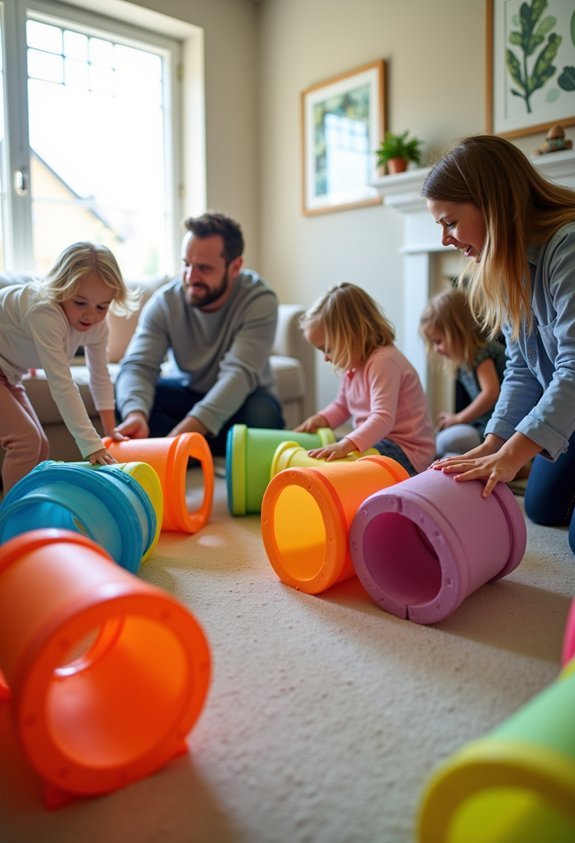
Even if your place is the size of a broom closet, you can still turn it into a full-on adventure zone with a little chaos and a lot of imagination.
You don’t need a giant basement; you need a game plan and a tiny bit of madness.
1. Map the “world.”
Mark off a path from couch to door. Suddenly, it’s lava, cliffs, and quicksand.
2. Build creative obstacle courses.
Crawl under, hop over, tiptoe along “edges,” and race the clock.
3. Try imaginative role playing.
You’re spies, explorers, or space pirates sneaking past danger.
4. Use vertical space.
Reach, stretch, balance on safe, stable spots. Your walls and corners become mountains, towers, and secret bases.
Your small room? Boom—instant epic quest for everyone.
Simple Household Items as Play Power-Ups
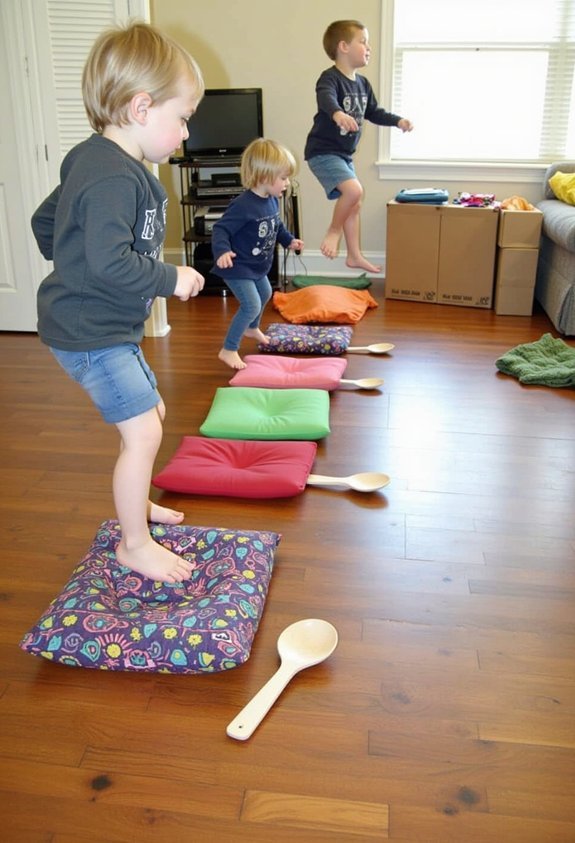
That epic “the floor is lava” course gets way better when the junk in your house turns into magic gear. You don’t need fancy toys; you need imagination and maybe some tape.
Pillows become stepping stones. Chairs turn into cliffs. Suddenly, you’re an action hero dodging certain doom in the living room.
Couch cushions morph into floating islands as you leap, crawl, and conquer your living room wilderness
Grab boxes and build cardboard castles taller than the dog. Cut doors, add windows, boom: instant fortress.
Laundry day? Perfect. Roll up socks and play sock bowling with water bottles as pins. Miss a shot, do five jumping jacks. Hit a strike, celebrate like you won the World Cup.
The best part? You’re moving, laughing, and burning energy, while the TV just sits there, totally ignored. And hey, your floor stays cleaner.
Making Family Connections Through Active Games

When you all start moving together, the whole “family vibe” changes fast. Suddenly you’re not just people sharing Wi‑Fi; you’re a real team. Indoor physical games pull everyone off their own little screens and shove you into the same goofy moment.
That’s where family bonding actually happens—while you’re laughing, tripping, and arguing about who cheated.
- You can’t hide behind a screen when your brother’s flinging a pillow at you.
- Quick games mean loud laughs, fast hearts, zero boredom.
- Kids feel seen, not shushed, when you join the chaos.
- All that active engagement turns “just family” into “we’re actually pretty fun.”
Those little win-or-lose moments stick, long after everyone forgets whatever random videos they scrolled past during that endless couch slump.
Practical Tips to Swap Screen Time for Play Time
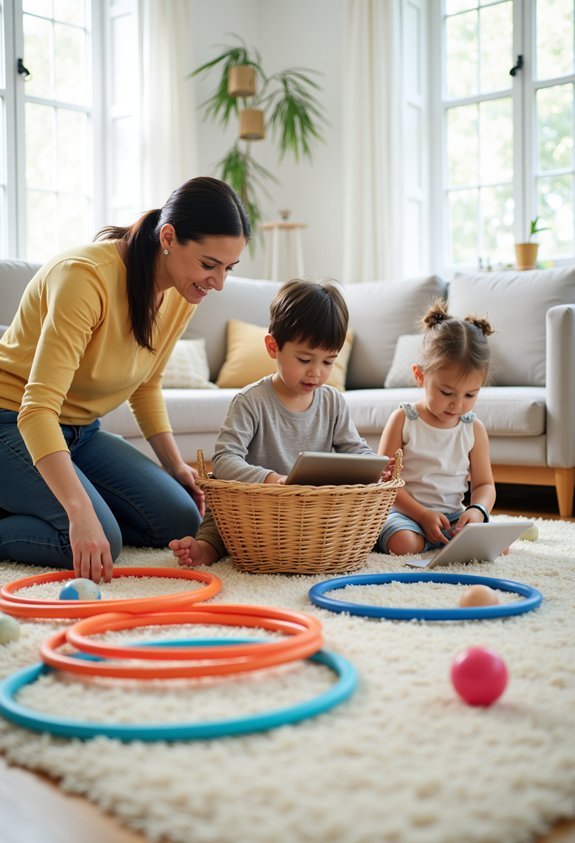
A tiny warning before we start: if you yell “NO MORE SCREENS” and just unplug the Wi‑Fi, your family might stage a dramatic revolt.
Instead, sneak in small swaps. After school, say, “Ten minutes of crazy tag, then shows.” Set a timer. Keep it fair.
Turn chores into creative play: crab‑walk laundry races, sock‑basket basketball, vacuum dance battles. Rotate simple indoor games in a jar so no one argues over ideas.
On weekends, plan one “family fun power hour” where everyone must move: balloon volleyball, hallway bowling, living‑room obstacle course.
Keep screens visible, but not automatic; turn off autoplay and remove apps from the home screen.
Most important, join the chaos. When you move, they follow. Laugh loud, act silly, make memories that stick.
In case you were wondering
How Can I Keep Indoor Physical Games Safe and Injury-Free?
You keep indoor physical games safe by clearing obstacles, using proper safety equipment, setting rules, supervising actively, teaching warm‑ups, and matching intensity to ages and abilities, prioritizing injury prevention and stopping play at first pain.
What Are Good Indoor Physical Games for Children With Disabilities?
You can turn your living room into a storm of joy with adaptive sports like balloon volleyball, seated basketball, obstacle courses, plus sensory play stations using textured bins, soft lights, soothing sounds, and stretchy bands.
How Much Daily Indoor Active Play Do Experts Generally Recommend?
You should aim for at least 60 minutes of indoor active play daily, since expert opinions and daily recommendations suggest children benefit when you break movement into several fun, energetic sessions spread throughout the day.
Are There Low-Cost Options for Structured Indoor Physical Play Programs or Classes?
You can find low-cost structured indoor play through community resources if you know where to look; hit the ground running by checking libraries, YMCAs, parks departments, faith centers, and schools, which offer budget friendly options.
How Can I Track My Child’s Fitness Progress From Indoor Games?
You can track your child’s indoor fitness progress by timing activities, counting repetitions, and recording efforts in progress charts or kid-friendly fitness apps, then reviewing trends together, celebrating improvements, and adjusting goals to keep motivation.
Conclusion
So here’s the deal: screens are cotton candy, but indoor games are a full meal. When you move, you boost your body, brain, mood, and even your friendships—without leaving the living room. You laugh more. You shout more. You feel alive, not just “logged in.” So next time you wanna scroll, grab a ball, a pillow, or your weirdest dance moves instead. Your future self will high-five you. Probably very loudly.