Why Kitchen Time Creates Affordable Family Memories
Kitchen time is where cheap food turns into rich memories. You’re chopping onions, kids are “helping” (dropping cheese on the floor), someone burns the toast, and everyone’s laughing anyway. You’re talking without the pressure of eye contact, sharing stories while stirring the chili you made from sale-bin beans. It’s teamwork, life skills, and inside jokes, all for the price of noodles and a pack of tortillas—and that’s just the start of what you can do together.
Key Takeaways
- Cooking together turns everyday tasks into shared stories, bonding roommates or families through chopping, tasting, and laughing without spending much money.
- Simple, repeated meals become cherished traditions over time, proving you don’t need expensive outings to create meaningful memories.
- Budget-friendly recipes like chili, taco soup, and sheet-pan dinners stretch ingredients while filling bellies and reducing costly takeout.
- Kitchen time naturally teaches kids life skills—cooking, budgeting, teamwork—making it a valuable, low-cost investment in their independence.
- Games, storytelling, and role assignments add fun and creativity to mealtime, creating memorable experiences that cost little more than the food itself.
The Heart of Home: Why Cooking Together Matters
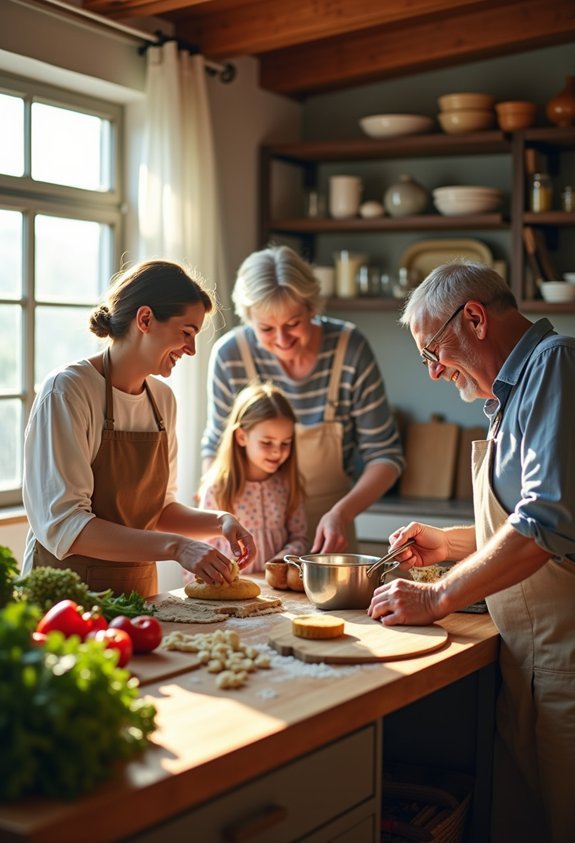
Even though life feels like one giant to‑do list, something kind of magical happens when everyone ends up in the kitchen at the same time.
You’re suddenly not just roommates who share bills; you’re a team. That’s where kitchen bonding kicks in. Someone chops onions, someone burns the toast, someone taste‑tests everything.
You talk without the pressure of eye contact. Kids open up while they’re hunting for the spatula, not sitting under a spotlight.
And the food? That’s your playground for culinary creativity. You throw things in a pan, hope for the best, and laugh when it looks like it crawled out of a cartoon.
You’ll remember the jokes, the spills, the “do NOT sniff that” moments more than the day’s stress later on.
Turning Simple Meals Into Family Traditions

When you really think about it, most “family traditions” are just simple meals that got promoted over time. One random Tuesday, you toss pasta, jar sauce, and frozen peas in a pot. Boom. Ten years later, your kids call it “Legendary Tuesday Pasta Night” and act like you’re a five-star chef.
You turn meals into family favorites by repeating them on purpose. Light a candle. Use the same chipped blue plates. Tell the same silly story about burning the first batch. Soon, everyone’s quoting it.
You can also start recipe swaps with cousins or friends. Trade your “lazy lasagna” for Aunt Kim’s “emergency tacos.”
Print them, stuff them in a binder, and bam—your family playbook for cozy, repeatable memories they’ll beg for every week.
Budget-Friendly Recipes That Bring Everyone to the Table

Some nights, it feels like you need a second job just to afford dinner, but you really don’t. You just need a game plan.
Budget friendly meals don’t mean sad noodles and air. Think big pots: chili, taco soup, sheet-pan chicken and veggies. Cheap stuff, bold flavor, everybody full.
Start with what’s on sale, then build your menu around it. Chicken thighs on discount? Boom—roasted chicken, rice, and carrots. Pasta deal? Hello, creamy tomato bake that somehow disappears in ten minutes.
Turn them into family favorites by adding little twists. Let kids pick toppings, sauces, or “secret” spices.
When everyone builds their own bowl, you get fewer complaints, fuller bellies, and way less takeout guilt. Wallet breathes, table’s busy, and nobody leaves hungry tonight.
Teaching Life Skills Through Everyday Kitchen Tasks
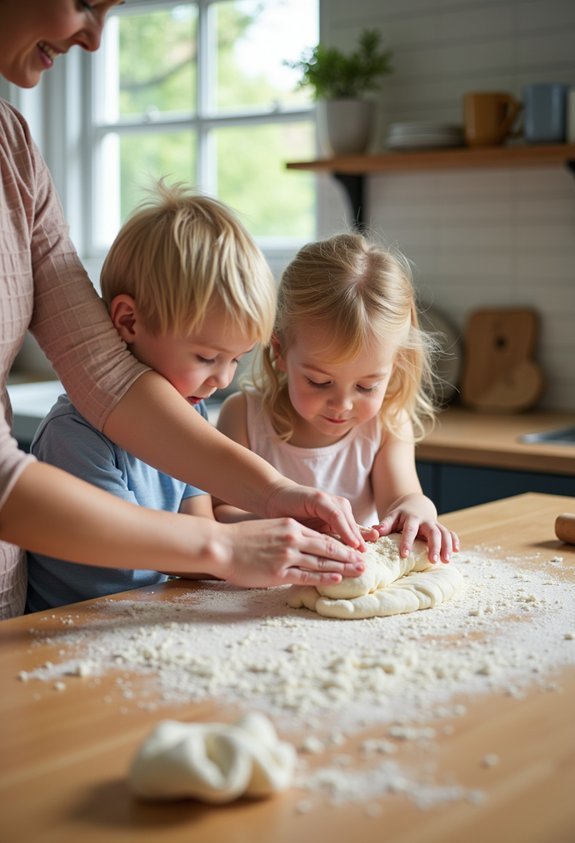
While you’re trying not to burn the garlic bread, you’re actually running a tiny life school in your kitchen.
Your kid learns kitchen safety when you point out, “Hot pan, ten fingers, let’s keep them all.”
You talk meal planning as you ask, “Okay, what can we make with five dollars and this sad bag of rice?”
You show basic cooking techniques—stirring, chopping, not setting the stove to volcano mode.
Ingredient exploration happens when they smell spices, taste new veggies, and decide onions are “dramatic.”
They feel teamwork benefits when everyone has a job and dinner happens faster.
And time management? That’s timing pasta, garlic bread, and homework meltdown all at once.
It’s chaos, sure, but it’s also secret grown-up training camp for them.
Making Mealtime Fun: Games, Stories, and Shared Roles
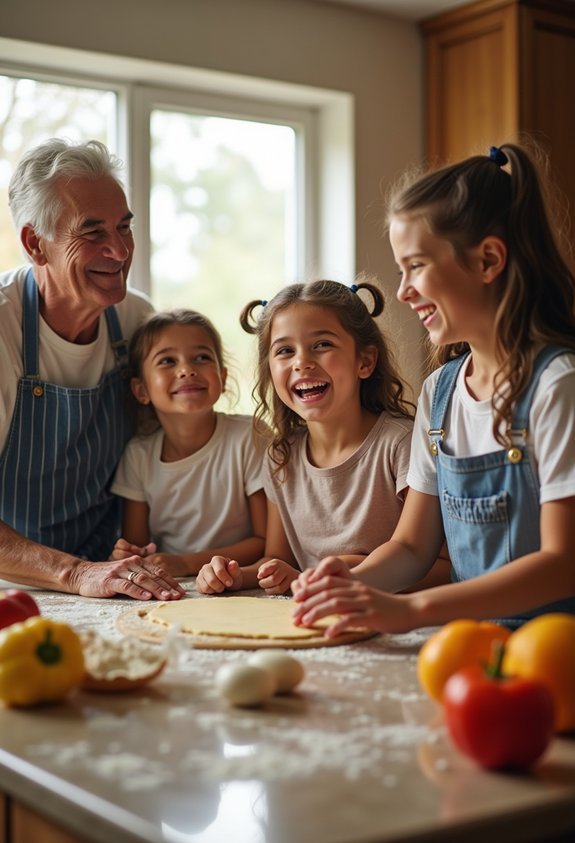
How do you turn “Eat three more bites” war into “Wait, dinner’s over already?” magic? You make the table feel like a tiny theme park.
Start with kitchen games. Let kids earn “points” for trying new foods or guessing secret ingredients. Winner picks dessert topping or tomorrow’s vegetable.
Turn dinner into a game: earn points for brave bites and playful ingredient guesses.
Add quick storytelling sessions. Maybe the broccoli are “tiny trees” in a dragon forest, or the noodles are “worms” you saved from a wizard. Silly? Yes. Effective? Also yes.
Then bring in shared responsibilities. One kid’s the “water boss,” another’s the “napkin ninja.” Rotate roles so everyone feels important.
On wild nights, toss in little culinary challenges, like making the best weird-but-good sandwich from leftovers. Take photos of the chaos; those messy grins become gold later.
Tips to Start a Lasting Family Cooking Routine
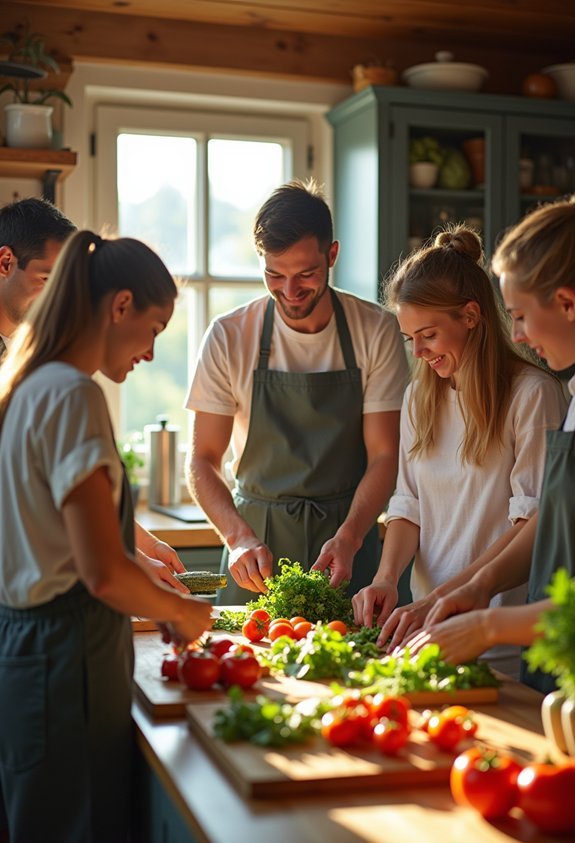
Even if your evenings feel like a game show called “Who’s Losing It Before Bedtime?”, you can still build a family cooking routine that actually sticks.
Start tiny. Think grilled cheese, not Thanksgiving. You’re after family bonding, not a Food Network trophy.
- Pick two “kitchen nights” a week. Protect them like your Wi‑Fi password. Everyone helps, even the kid who only wants to shred cheese and vibes.
- Give simple jobs by age. Washing veggies, stirring sauce, pressing timer buttons—those are real cooking techniques, not fake work.
- Repeat favorite meals. Boring? Nope. Repeating builds skills and calm.
When kids know the steps, drama drops, confidence jumps, and dinner doesn’t feel like a surprise math test. You’ll all actually want to show up.
In case you were wondering
How Can We Involve Extended Family or Grandparents in Our Kitchen Traditions?
Invite grandparents to choose recipes, share cooking stories, and teach favorite techniques while you handle prep. Rotate family contributions, assign simple roles, record their tips, and photograph dishes so everyone feels valued and connected together.
What Safety Guidelines Should We Follow When Young Kids Use Knives or Appliances?
You teach clear knife safety, give kids small, dull knives, and require slow, stable cutting on non-slip boards. Keep appliances unplugged, because you’re practicing appliance supervision; guide one child at controls, and stop if distracted.
How Do We Adapt Family Cooking Time for Children With Sensory or Developmental Differences?
You adapt cooking time by accepting every brain senses differently, then designing sensory adaptations, routines, and visual steps; you offer developmental support through simplified tasks, quiet tools, expectations, and breaks, so children participate joyfully together.
What Are Strategies for Handling Food Allergies While Cooking Together?
You start by listing every allergy, then plan recipes around clear labels and simple allergy substitutions. You teach kids to wash hands, avoid cross-contact, and use color-coded tools for safe cooking and shared confidence together.
How Can We Store and Organize Family Recipes so They’Re Preserved for Future Generations?
Like a modern Alexandria, you safeguard recipes by using digital recipe storage, backing up files, photographing stained cards, and creating a printed family recipe book you share, annotate, and update during gatherings and holiday cooking.
Conclusion
Look, you can spend Saturday scrolling sales or you can stand in a messy kitchen, sleeves rolled up, laughing over crooked pancakes. One gives you receipts; the other gives you stories. When you cook together, you trade shiny stuff for sticky counters, eye contact, and inside jokes. So grab a cheap bag of flour, crank up the music, and start. Burnt edges fade; the memories don’t. Future you will thank you with a happy grin.