17 Fun Outdoor Rainy Day Activities for Families
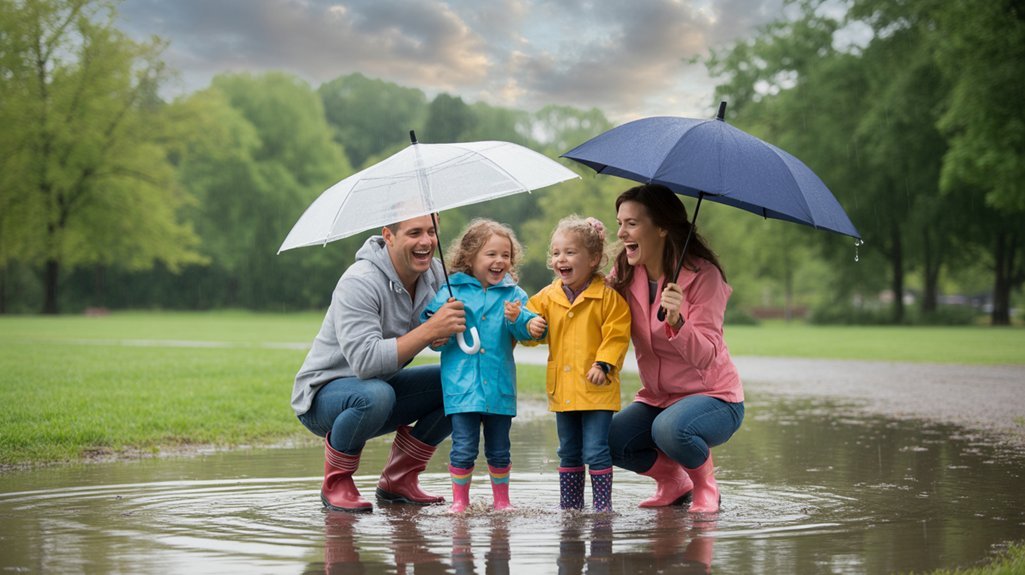
Transform rainy days into exciting outdoor adventures by trying puddle jumping contests, rain painting with watercolors, or building miniature dams in your yard. You can organize nature scavenger hunts to spot rain-specific items, create mud kitchen masterpieces, or collect rainwater for garden projects. Watch how animals behave during storms, make rain art with chalk and watercolors, or fly kites in light drizzle. With proper waterproof gear and a sense of adventure, you’ll discover seventeen creative ways to embrace wet weather while keeping your family active and engaged outdoors.
Key Takeaways
- Rain painting with watercolors creates organic patterns as raindrops hit wet pigment, teaching patience while embracing unpredictability outdoors.
- Puddle jumping contests and leaf boat racing transform rainy sidewalks into playgrounds with splash competitions and creative water activities.
- Nature scavenger hunts during rain sharpen observation skills while discovering rain-specific items like raindrop-covered spiderwebs and animal shelters.
- Building dams and rivers using natural materials teaches teamwork, landscape design, and soil erosion concepts through hands-on exploration.
- Kite flying in light rain offers unique flight experiences, with diamond or delta designs providing stability in moist conditions.
Puddle Jumping and Splash Contests
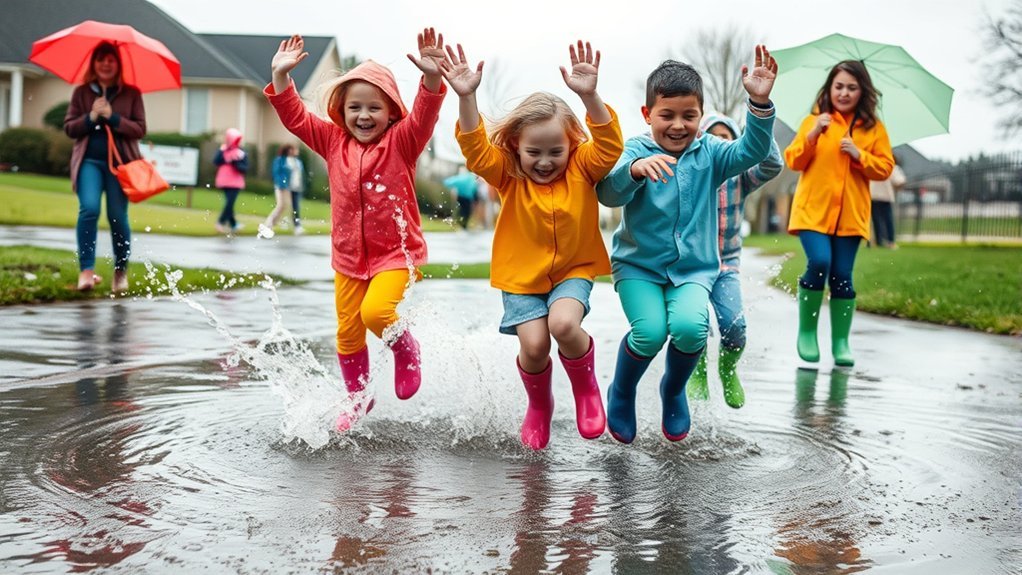
Rain’s transformation of ordinary sidewalks and parking lots into temporary playgrounds creates perfect opportunities for one of childhood’s simplest joys: puddle jumping.
Rain transforms mundane pavement into magical playscapes, turning everyday puddles into splashing zones where childhood wonder comes alive.
You’ll want to establish basic puddle jumping techniques with your kids before they start. Teach them to bend their knees, jump with both feet together, and land flat-footed for maximum splash effect.
Once everyone’s mastered the basics, organize splash contest rules to keep things fair and fun. Set clear boundaries for the competition area, measure splash distance using chalk or sticks, and award points for height, distance, and creativity.
You can create different categories like “biggest splash” or “most artistic landing.” Remember to dress everyone in waterproof boots and rain gear, then let the soggy competition begin.
Rain Painting With Watercolors
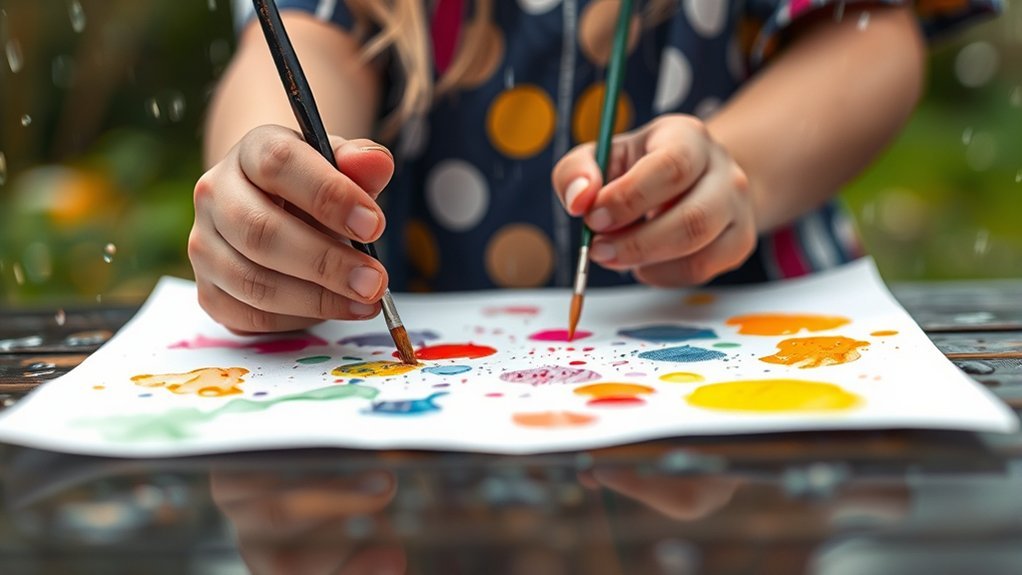
While puddle jumping celebrates rain’s playful chaos, you can harness those same falling droplets as creative tools for making art. Set up watercolor paper on an easel or prop it against outdoor furniture. Apply vibrant watercolors using basic brush techniques—dots, strokes, and washes work beautifully.
Then let nature take over as raindrops hit the wet pigment, creating organic patterns you couldn’t achieve indoors. The rain naturally facilitates color mixing, blending hues in unexpected ways as droplets scatter across your paper. Your kids will love watching their deliberate marks transform into something entirely new.
This activity teaches patience and embracing unpredictability. Protect finished pieces under a covered porch until they dry, then display your family’s collaborative rain-art collection proudly indoors.
Building Dams and Rivers in Your Yard
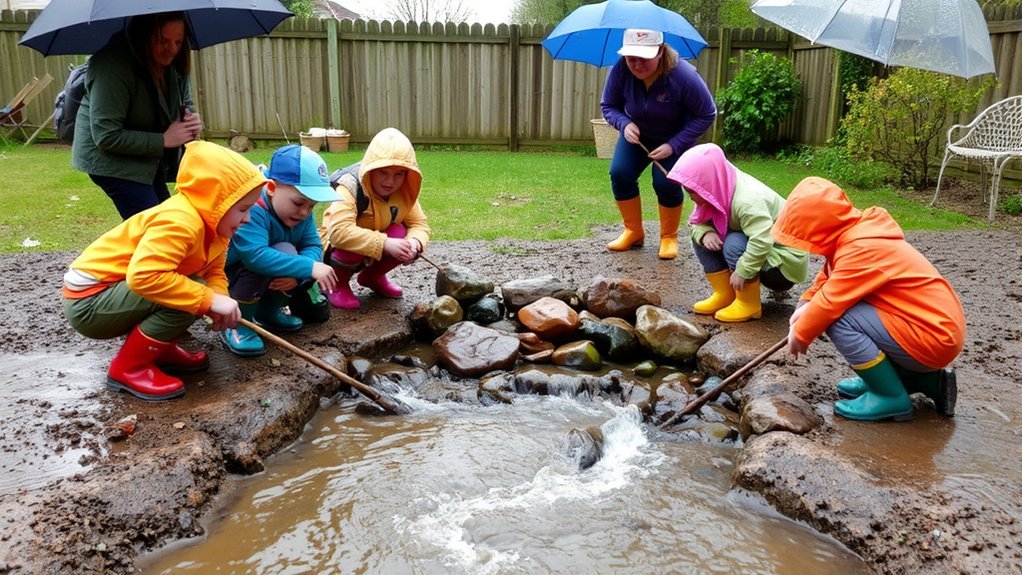
As runoff begins pooling across your lawn, transform your yard into an engineering playground where kids can design waterways and control flow patterns. Using sticks, stones, and mud, you’ll construct creative structures that redirect water flow while observing nature engineering principles firsthand.
Turn muddy puddles into hands-on science lessons by letting kids engineer their own backyard waterways with natural materials.
This hands-on activity teaches channel design basics as children experiment with landscape alteration and its environmental impact. They’ll notice how soil erosion occurs when water moves too quickly and discover water conservation techniques through strategic dam placement.
Building these systems strengthens teamwork skills as family members collaborate on complex projects. The sensory exploration of cold water, muddy textures, and flowing streams engages multiple senses.
You’re fostering scientific thinking while creating memorable outdoor experiences together.
Nature Scavenger Hunt in the Rain
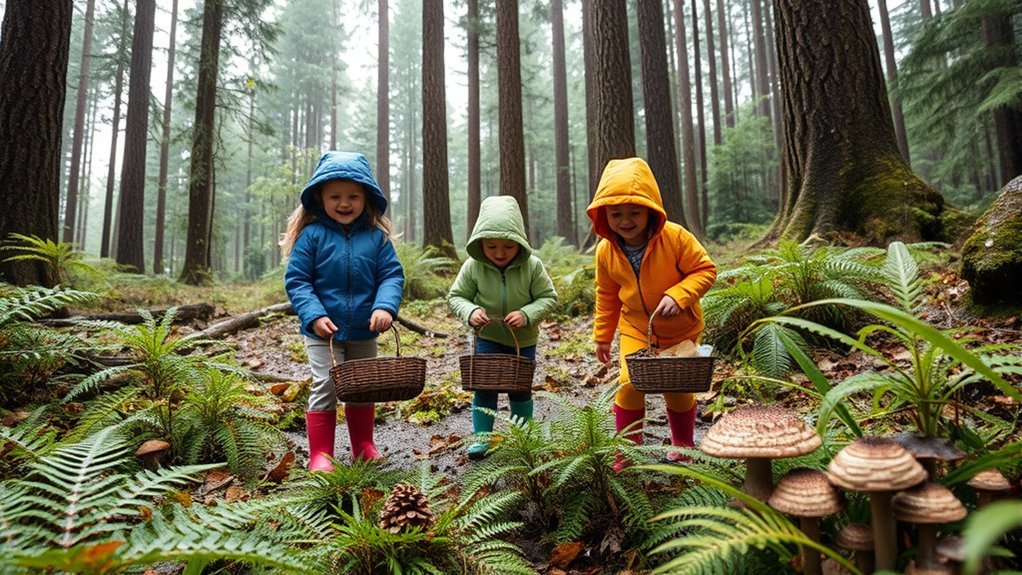
Rainy weather transforms familiar outdoor spaces into treasure troves of discoveries that simply don’t exist on sunny days.
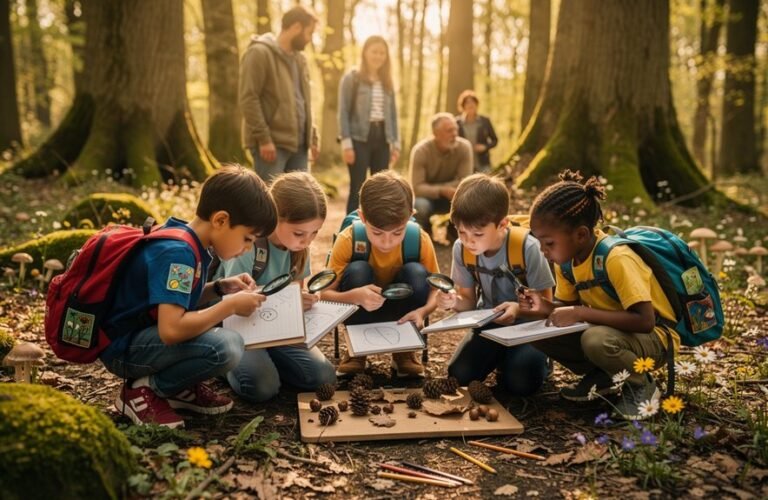
You’ll find earthworms surfacing, rain-soaked spider webs glistening, and puddles reflecting the sky. Create a scavenger hunt list that includes rain-specific items: floating leaves, worm trails, water droplets on flowers, and mushrooms emerging from damp soil.
Equip everyone with waterproof gear and clipboards covered in plastic bags to track findings. Nature identification becomes an engaging challenge as you search for different leaf shapes, bark textures, and insects seeking shelter.
Your kids can photograph discoveries with smartphones in waterproof cases. This activity sharpens observation skills while teaching children that nature remains active and fascinating regardless of weather conditions.
Mud Kitchen Creations
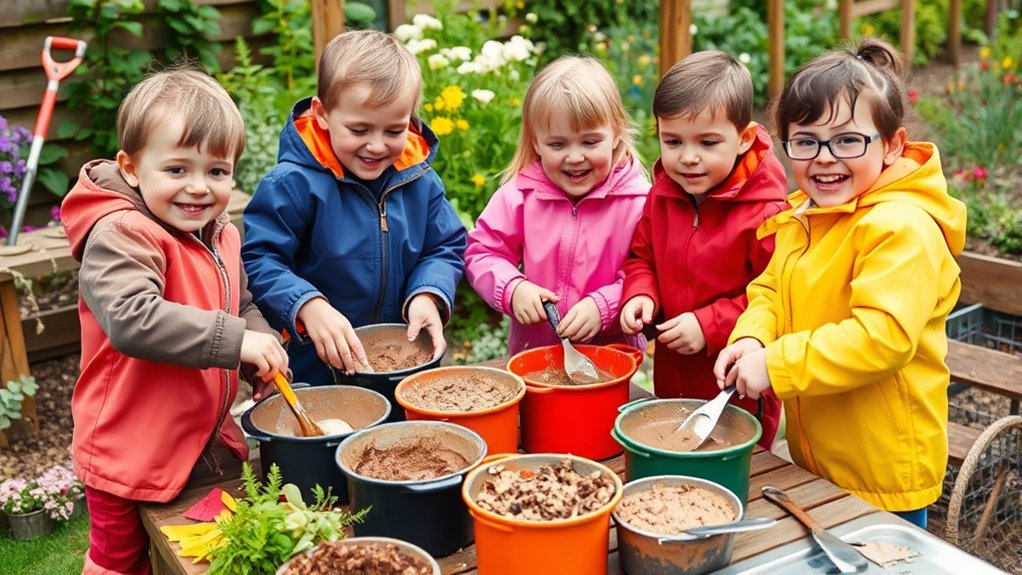
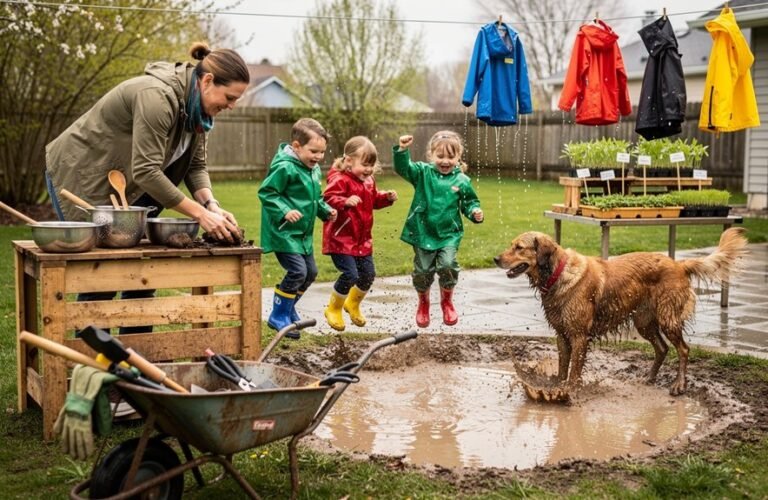
Under gray skies and steady drizzle, a simple mud kitchen transforms your backyard into an outdoor chef’s paradise.
You’ll watch your children blend creativity with nature as they craft elaborate mud pie recipes using wet soil, leaves, and rainwater. This hands-on sensory play engages all their senses while developing fine motor skills and imagination.
Set up a dedicated cooking station with old pots, wooden spoons, muffin tins, and measuring cups. Let them collect natural ingredients like grass clippings, flower petals, and pebbles to enhance their culinary creations.
The rain adds perfect consistency to their muddy masterpieces, making mixing and molding effortless.
Don’t worry about the mess—it’ll wash off. You’re giving them an enriching experience that combines outdoor exploration with imaginative play, teaching them that rainy days offer unique opportunities for fun.
Rain Gauge Making and Weather Tracking
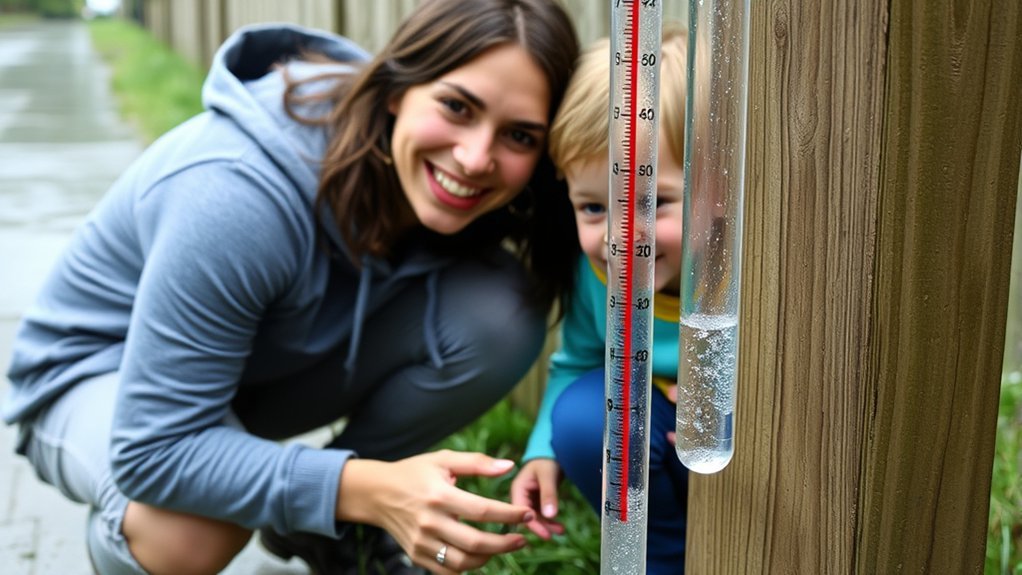
Transform your rainy day into a hands-on meteorology lesson by building a simple rain gauge with your kids. Use a clear plastic bottle, ruler, and waterproof marker to create your measuring device. Place it in an open area away from trees and buildings to collect accurate rainfall data.
Check your gauge daily and record measurements in a weather journal. You’ll observe different precipitation types throughout seasons—from light drizzles to heavy downpours. Graph your findings weekly to identify weather patterns emerging in your area.
This activity teaches scientific observation while connecting your family to nature’s cycles. Kids develop math skills through measurement and data analysis.
They’ll eagerly anticipate rainy days, transforming them from indoor confinement into exciting research opportunities that blend education with outdoor exploration.
Worm Watching and Rescue Missions
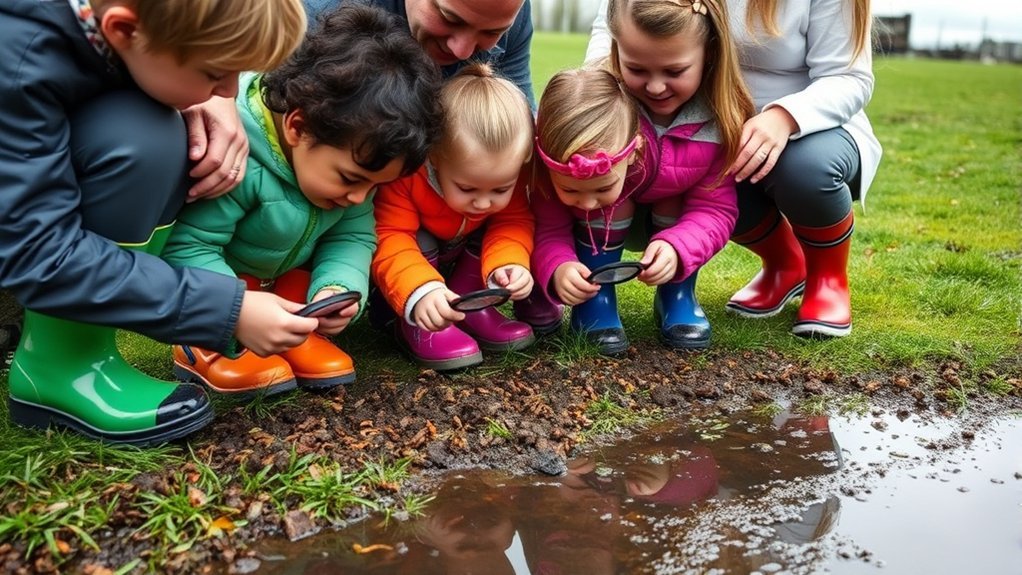
When earthworms surface during rainfall, they create perfect opportunities for your family to learn about these essential soil engineers. You’ll find them on sidewalks and driveways, displaced from their underground homes by waterlogged soil.
Teach your children to gently relocate worms to gardens or grassy areas where they can burrow back into proper worm habitats. Explain how worms improve soil health by aerating earth and creating nutrient-rich castings that help plants thrive.
Bring magnifying glasses to observe their segments and movements up close. Count how many worms you rescue together, turning this activity into a conservation mission.
Your kids will develop empathy for small creatures while understanding their crucial role in maintaining healthy ecosystems and productive gardens.
Dancing and Singing in the Rain
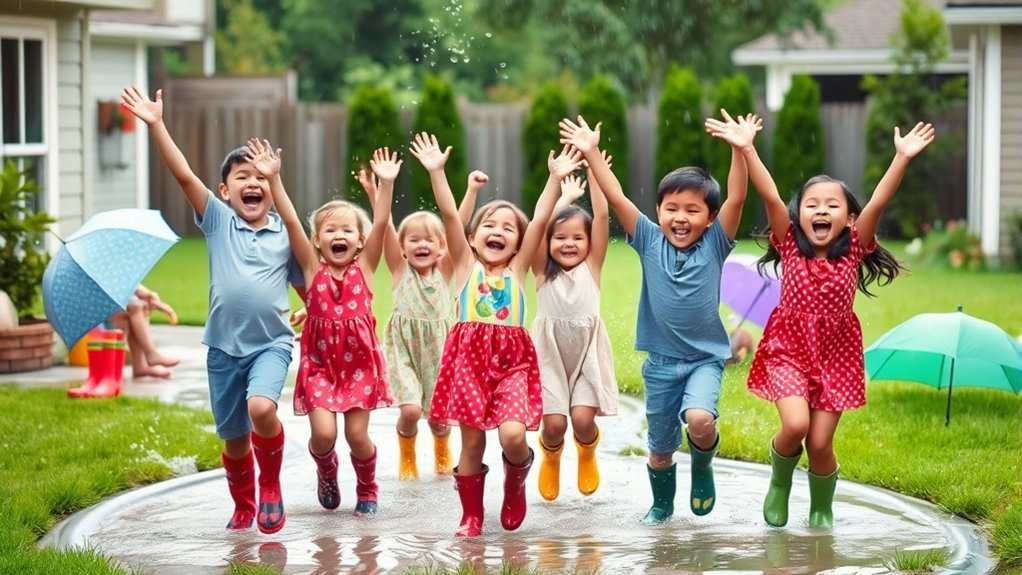
Let your family’s inhibitions wash away as you step outside and embrace one of childhood’s most liberating experiences—moving freely to the rhythm of falling rain.
Create a musical umbrella parade down your street, with each person twirling their colorful umbrella while singing favorite songs. You’ll find the rain’s percussion creates natural accompaniment to your melodies.
Turn rainy day fashion into part of the performance—don vibrant rain boots, splash-worthy clothes, and waterproof jackets that swirl when you spin.
Encourage kids to choreograph simple dance moves: jumping in puddles on the beat, spinning during choruses, or creating synchronized umbrella movements.
This activity builds confidence, releases energy, and transforms dreary weather into a memorable family concert that neighbors might enjoy watching from their windows.
Outdoor Rain Photography Adventure
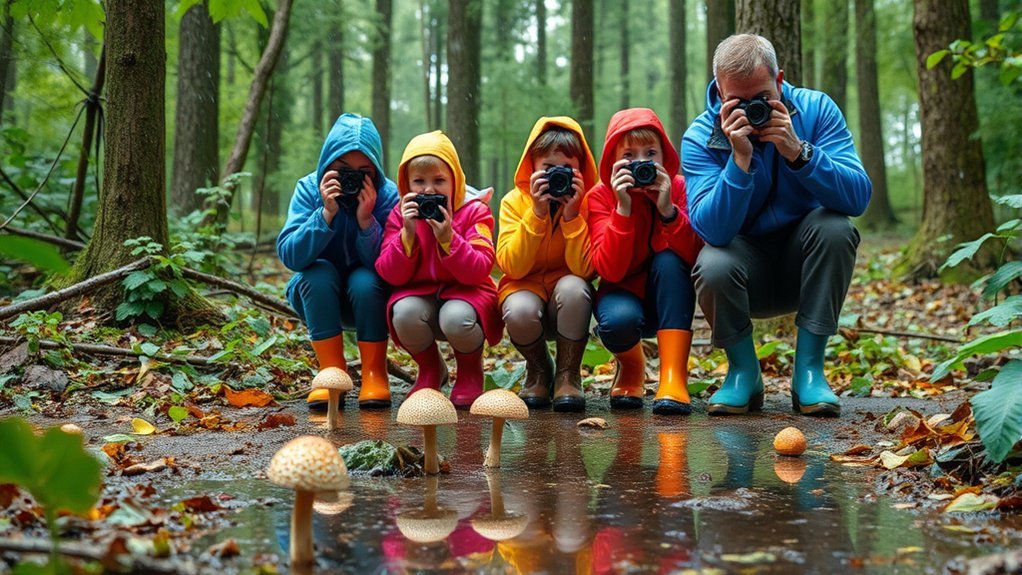
Rain creates stunning visual opportunities that most photographers miss by staying indoors.
Don’t let rain stop your photography—embrace it as a chance to capture extraordinary images others never see.
You’ll capture incredible shots of water droplets clinging to leaves, ripples forming in puddles, and dramatic cloudy skies. Equip your kids with waterproof cameras or smartphones in protective cases to document your rainy adventure.
Apply basic rain photography tips like getting low to photograph puddle reflections or focusing on individual raindrops. Teach your children composition techniques such as the rule of thirds and leading lines created by wet pathways.
Encourage them to experiment with different angles and perspectives.
Make it a scavenger hunt by challenging everyone to find specific subjects: a raindrop-covered spiderweb, colorful umbrellas, or rain streaming down windows.
You’ll create lasting memories while developing everyone’s creative eye.
Creating Leaf Boats for Racing
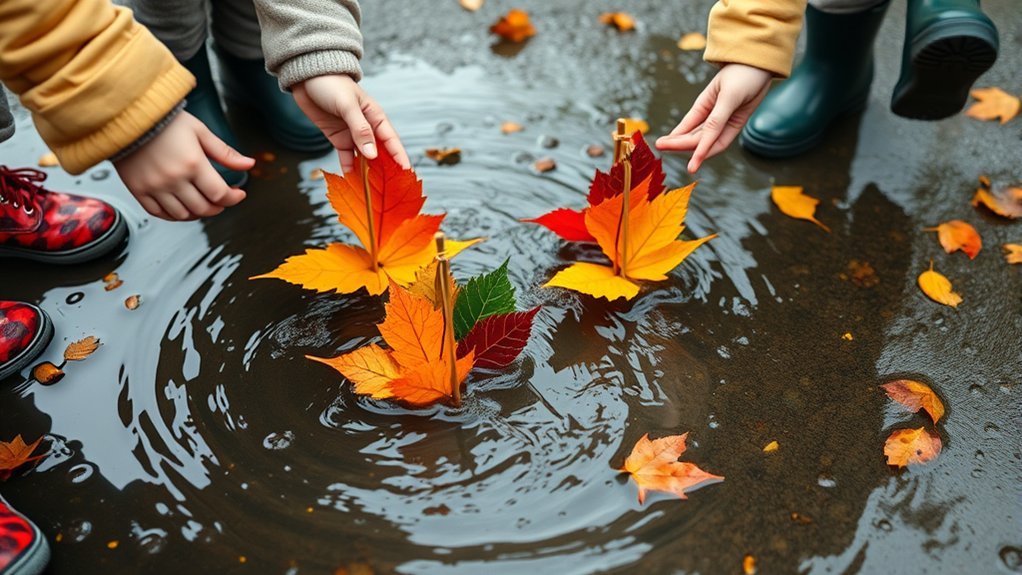
One of nature’s simplest pleasures transforms into an exciting competition when you gather leaves and race them downstream.
Search for large, sturdy leaves that’ll float well—oak and maple leaves work perfectly. Leaf selection matters since thicker leaves withstand the current better than delicate ones.
You’ll find boat decoration adds personality to each racer. Let your kids use small twigs as masts, flower petals as flags, or pebbles as passengers. Keep decorations lightweight so boats don’t sink.
Find a gentle stream, puddle runoff, or rain gutter for your racing course. Mark start and finish lines with sticks.
Release boats simultaneously and cheer them on. The unpredictable currents create suspense, making each race unique. It’s an inexpensive activity that combines creativity, competition, and connection with nature.
Rain Stick Nature Walk
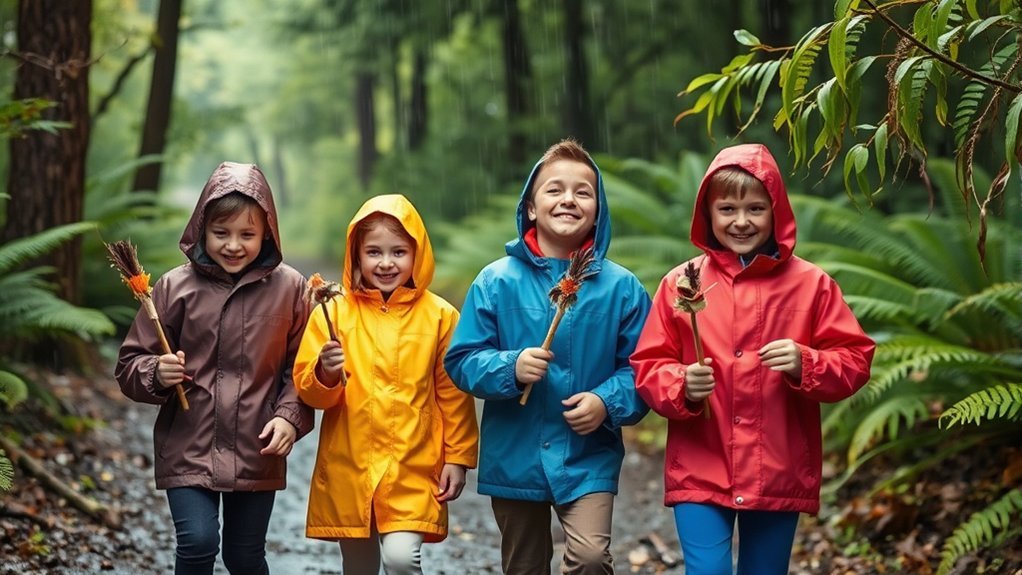
While leaf boats let you observe nature’s movement through water, discovering sounds in the rain opens up a completely different sensory experience.
You’ll transform your family’s rainy walk by collecting natural materials for rain stick crafting. Gather hollow sticks, pinecones, acorns, and pebbles during your exploration.
Listen carefully to nature sounds around you—raindrops hitting different surfaces create unique rhythms. Notice how water sounds change when striking leaves versus bark or rocks. Your children will develop auditory awareness while hunting for crafting supplies.
Each raindrop tells a story—leaves whisper, bark drums, rocks echo. Let your children’s ears discover nature’s hidden symphony.
Once home, you’ll create rain sticks using your collected materials. Insert small twigs inside hollow branches, add dried beans or pebbles, and seal the ends.
Tilting your homemade instrument mimics rainfall, connecting your indoor activity to the outdoor adventure you just experienced together.
Camping Under a Covered Pavilion
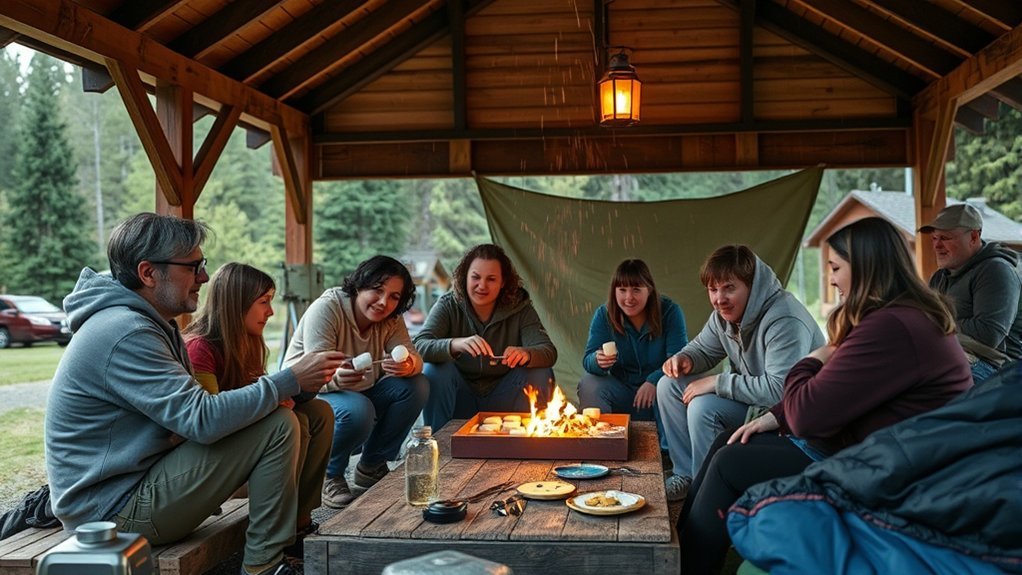
Since most parks offer covered pavilions or picnic shelters, you can maintain your camping plans despite the weather. Set up your tent beneath the structure and create a cozy basecamp for your family adventure.
You’ll stay dry while enjoying the sounds and sights of rainfall around you. Bring battery-powered lanterns to establish ambiance as you share campfire stories together.
The covered space provides perfect conditions for classic camping activities like roasting marshmallows with portable camping stoves. Play covered games such as cards, travel board games, or charades to keep everyone entertained.
Pack sleeping bags, camp chairs, and your favorite camping meals. This sheltered experience offers authentic outdoor sleeping without getting soaked, making it ideal for introducing younger children to camping adventures.
Playing Rain-Friendly Outdoor Games
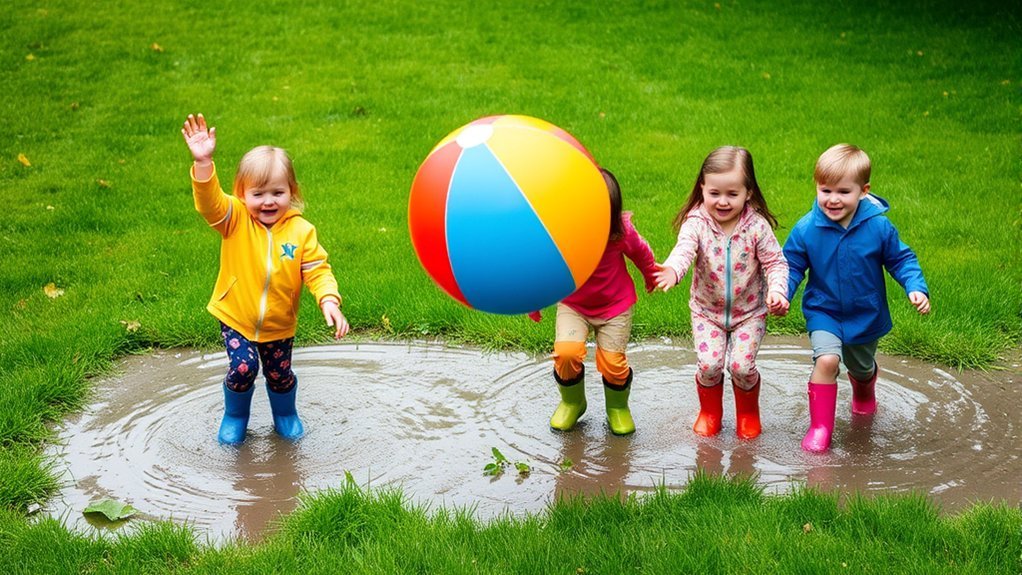
Rain transforms ordinary games into exciting new challenges that’ll have your family laughing and splashing together.
Set up outdoor obstacle courses using waterproof items like traffic cones, pool noodles, and plastic hoops. Kids can crawl under tarps, jump over puddles, and balance on wet logs while timing each other’s runs.
Try classics like capture the flag or tag—the slippery conditions add hilarious difficulty. Organize scavenger hunts where players search for specific leaves, rocks, or flowers in the rain. You’ll need waterproof bags for collecting items.
After active games, transition to rainy day picnics under your car’s liftgate or a pop-up canopy. Pack thermoses with hot chocolate and waterproof blankets.
The combination of physical activity and cozy snacks creates memorable family experiences.
Collecting Rainwater for Garden Projects
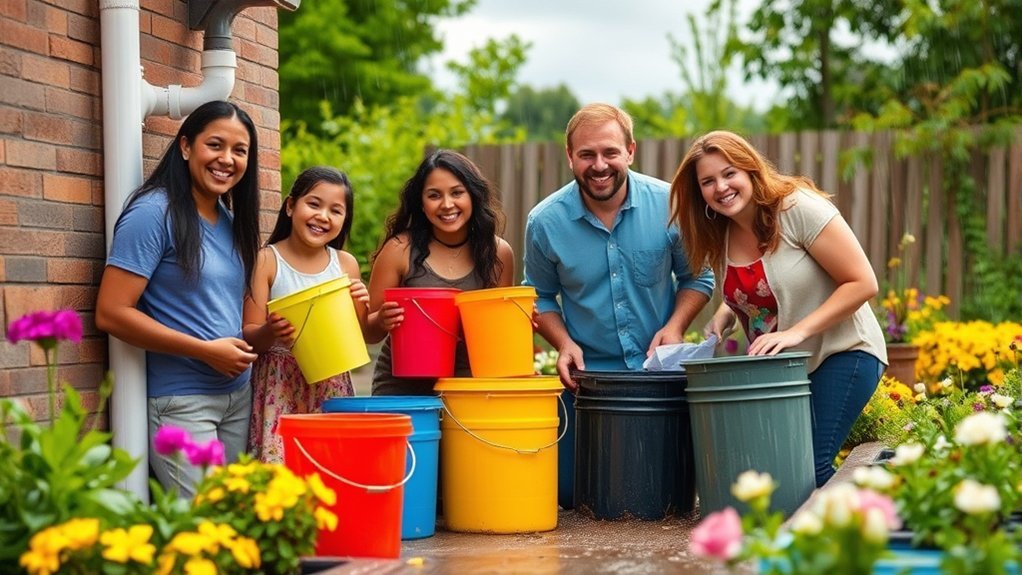
After all that splashing around, you can put those puddles to work for your family garden. Teaching kids about rain barrel systems transforms a dreary day into an educational opportunity about sustainable gardening practices.
Set up collection containers beneath downspouts or in open areas where water naturally flows. Show your children how rainwater differs from tap water—it’s free of chlorine and chemicals, making it ideal for plants. Let them measure rainfall amounts and calculate how much water you’ve collected.
Once gathered, use this resource to water vegetable patches, flower beds, or container plants. Kids love seeing their collection efforts produce tangible results.
This hands-on experience demonstrates water conservation while giving your family a practical resource. You’re creating eco-conscious habits that’ll benefit both your garden and the environment.
Exploring How Animals Behave During Storms
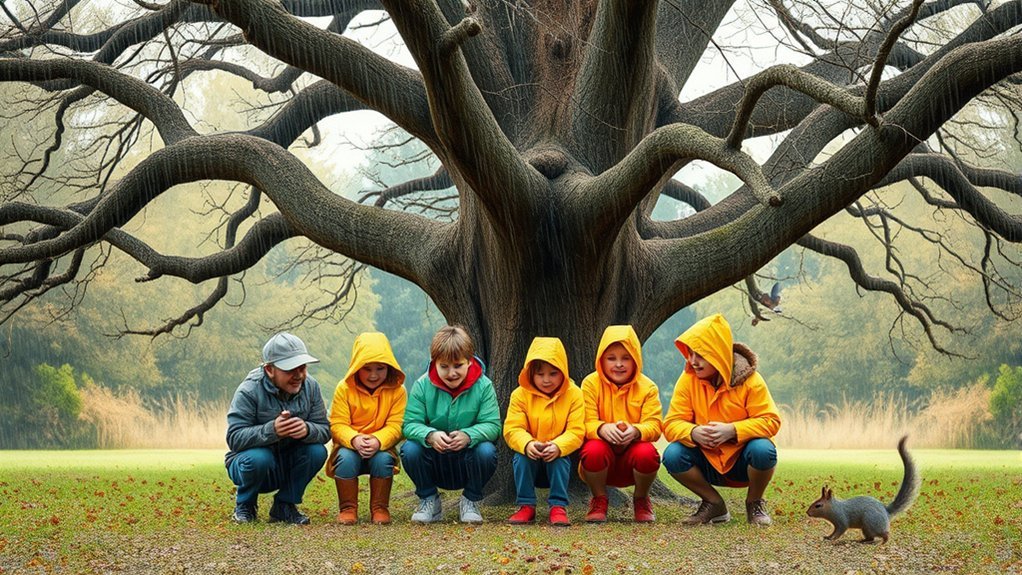
Where do the neighborhood squirrels disappear to when thunder rolls in? Turn rainy days into fascinating lessons about animal behavior by observing how creatures respond to storms.
Rainy days offer perfect opportunities to teach children about wildlife survival instincts by observing how animals seek shelter during storms.
You’ll notice birds seeking shelter under dense foliage while earthworms emerge onto sidewalks. Watch how insects vanish before precipitation starts—they’re detecting pressure changes you can’t feel.
Create a “storm adaptation journal” with your kids. Document which animals appear and disappear, noting their hiding spots and timing.
You’ll discover squirrels retreat to tree cavities, rabbits hunker in burrows, and some birds actually continue foraging between downpours. This hands-on investigation teaches children that wildlife possesses remarkable survival instincts.
Bring binoculars and waterproof notebooks to record your findings, transforming a gloomy afternoon into an exciting backyard research expedition.
Making Rain Art With Chalk and Paper
While observing wildlife teaches patience and scientific thinking, creative expression offers another way to embrace stormy weather.
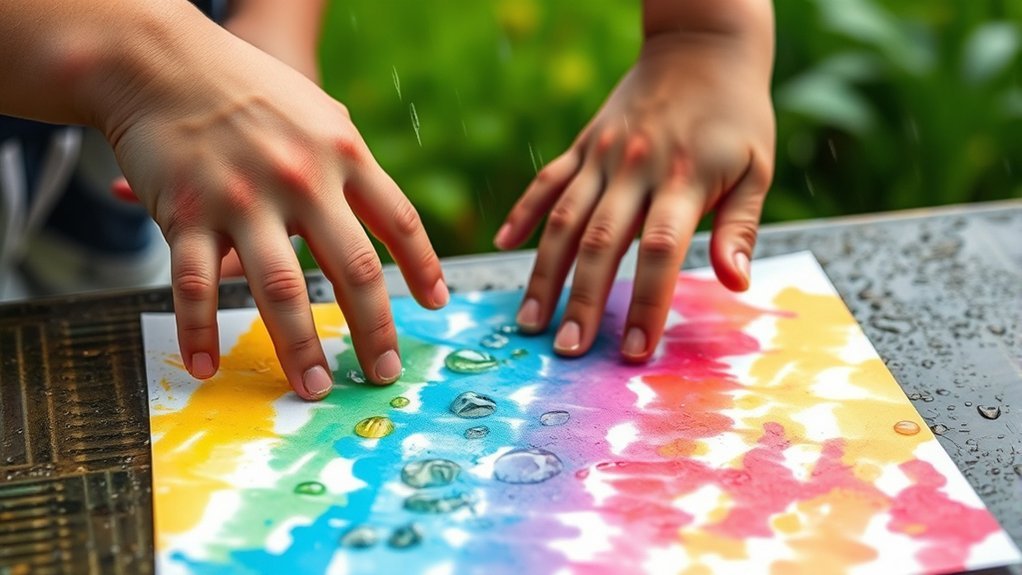
You’ll discover that rain transforms ordinary art supplies into stunning masterpieces. Grab washable sidewalk chalk and heavy paper, then head outside when drizzle begins.
Create vibrant chalk designs on paper before letting raindrops hit the surface. Watch as water spreads pigment across different paper textures, producing watercolor-like effects you can’t replicate indoors. Each raindrop becomes a tiny artist, blending colors unpredictably.
Try these techniques for best results:
- Draw bold patterns with multiple chalk colors for dramatic bleeding effects
- Use textured watercolor paper to capture intricate raindrop patterns
- Experiment with timing—light drizzle creates delicate touches while heavy rain produces abstract swirls
Bring creations inside to dry and preserve your weather-collaborated artwork.
Flying Kites in Light Rain and Wind
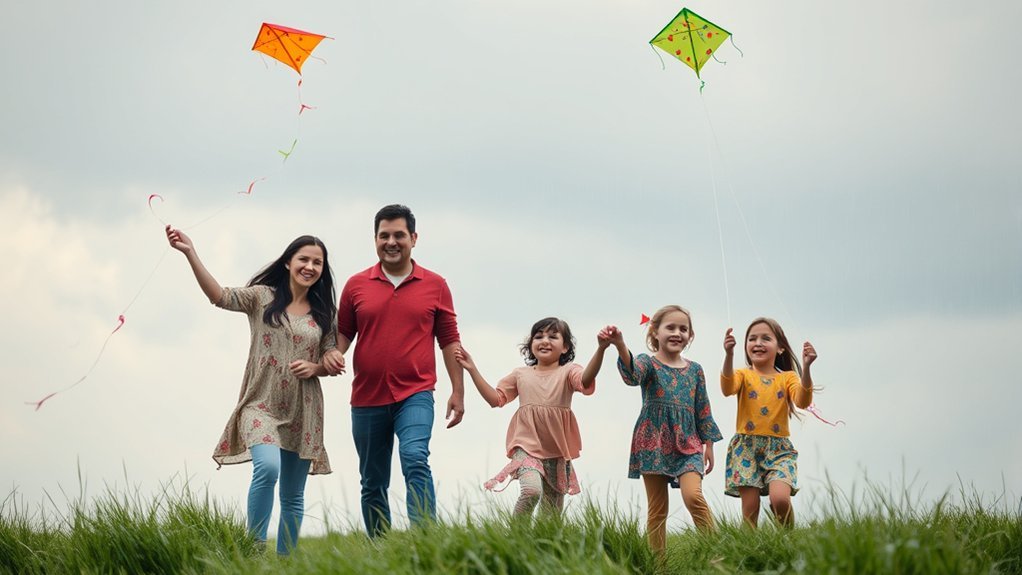
When conditions shift from drizzle to gusty winds, you’ve got the perfect opportunity for kite flying. Light rain won’t damage most kites, and the increased wind patterns make launching easier for beginners.
Choose simple kite designs like diamonds or deltas—they’re stable and forgiving in unpredictable weather. Avoid box kites or elaborate models that struggle with moisture.
Check that your flying area is clear of power lines and trees before launching. The rain adds unexpected excitement as droplets hit the kite’s surface, creating unique flight movements.
Your kids will love watching their kites dance through grey skies while feeling the tug of wind on their strings. Pack towels for drying hands between flights, and dress everyone in waterproof layers.
This activity teaches patience and weather awareness while delivering pure outdoor fun.
In case you were wondering
What Safety Precautions Should We Take When Doing Outdoor Activities in Rain?
You’ll need to watch for slippery surfaces and wear proper footwear with good traction. Monitor weather conditions closely and seek shelter immediately if there’s lightning nearby. Don’t forget waterproof clothing and visibility gear for safety.
What Should Children Wear to Stay Comfortable During Rainy Outdoor Play?
Like ducks ready for a pond adventure, your children need proper rain gear and waterproof footwear. You’ll want to dress them in waterproof jackets, pants, and boots to keep them dry and comfortable during outdoor play.
How Do We Know When Rain Is Too Heavy for Outdoor Activities?
You’ll know rain’s too heavy by monitoring weather alerts and observing rain intensity firsthand. If you can’t see clearly, water’s pooling rapidly, or thunder’s nearby, it’s time to head indoors for safety.
What Age Is Appropriate for Children to Participate in Rainy Day Activities?
Like picking the right shoe size, age recommendations for rainy activities depend on your child’s developmental stages. You’ll find toddlers aged 2+ can splash safely, while preschoolers 4+ handle more complex puddle exploration independently.
How Can We Warm up Children After Playing Outside in the Rain?
You can warm up your children with hot drinks like cocoa or tea and wrap them in cozy blankets. Don’t forget to change them into dry clothes first, then create a comfortable spot for them to relax.
Conclusion
You’ve got enough rainy day adventures here to last a lifetime! So next time storm clouds roll in, don’t let your family’s spirits dampen. Grab those rain boots, embrace the puddles, and head outside for unforgettable memories. Your kids won’t just tolerate rainy days—they’ll eagerly await them. Remember, there’s no such thing as bad weather when you’ve got creativity and a willingness to get wonderfully, gloriously soaked together.