10 Best Winter Outdoor Adventures With Kids
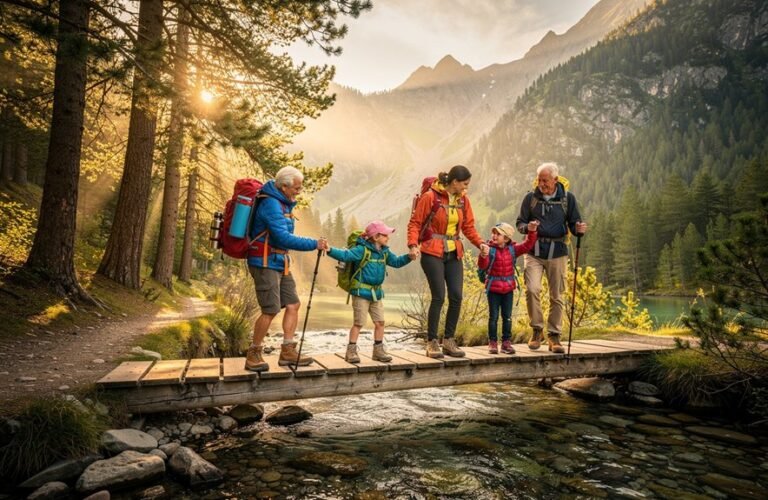
You’ll find endless winter adventure possibilities with your kids, from sledding down snowy hills and building creative snow forts to snowshoeing through magical landscapes and ice skating on frozen ponds. Try tubing at local snow parks for adrenaline-fueled excitement, or teach patience through ice fishing in heated shelters. Don’t miss nighttime stargazing under crystal-clear winter skies, wildlife tracking in fresh snow, or cross-country skiing on beginner-friendly trails. Each activity builds physical skills while creating unforgettable family memories, and the details below will help you prepare for safe, successful outdoor excursions.
Key Takeaways
- Sledding and tubing offer thrilling downhill excitement; scout safe slopes with clear runouts and ensure children wear helmets and waterproof layers.
- Building snow forts and creative snowmen develops motor skills and teamwork while encouraging imagination with natural decorations and kitchen items.
- Snowshoeing on beginner trails and ice skating on safe rinks provide excellent winter exercise for exploring snowy landscapes and frozen surfaces.
- Ice fishing teaches patience and outdoor skills; start with short sessions at established spots with heated shelters and proper safety checks.
- Winter stargazing and northern lights viewing create magical nighttime experiences; use constellation apps and pack hot chocolate for warmth.
Sledding and Tobogganing Down Snowy Hills
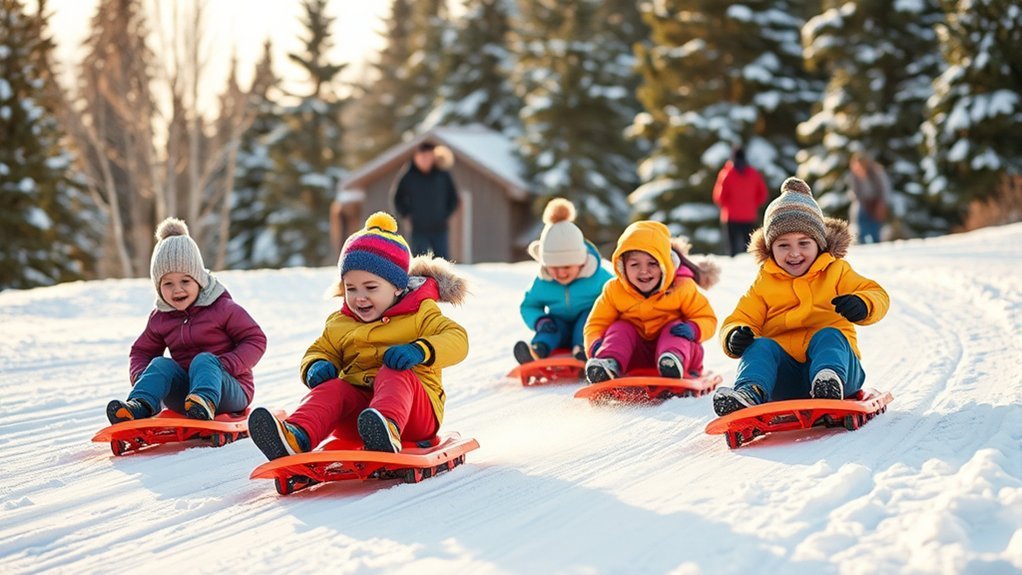
When fresh snow blankets the hills, sledding and tobogganing become irresistible adventures that’ll get your kids squealing with delight.
Before racing downhill, scout your location for obstacles like trees, rocks, or fences. Sledding safety requires checking that the runout area is clear and flat, preventing collisions with hazards.
Scout your sledding hill thoroughly—clear runout areas and visible obstacles mean the difference between joyful rides and preventable accidents.
Start younger children on gentle slopes to build confidence. Master basic tobogganing techniques by teaching kids to sit upright, grip the handles firmly, and use their feet as brakes when needed.
Steer by leaning your body weight or dragging a foot on the snow’s surface.
Always dress your family in waterproof layers and insulated boots. Helmets aren’t just for biking—they’re essential for protecting heads during winter thrills.
Pack hot cocoa for warming breaks between runs.
Building Snow Forts and Snowmen
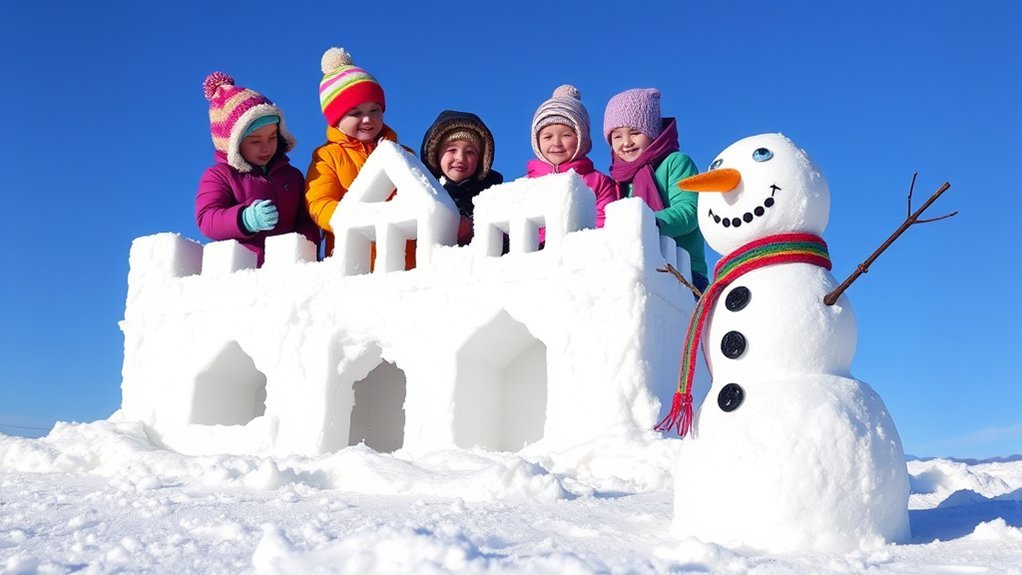
As temperatures drop and snow accumulates, your backyard transforms into a construction zone where imagination takes physical form. Building snow forts requires strategic planning—teach kids to pack snow into sturdy blocks or hollow out snowbanks for instant walls.
They’ll learn architectural basics while creating defensive positions for epic snowball battles.
Snowman construction offers endless creative possibilities beyond the traditional three-sphere design. Encourage experimentation with different sizes, poses, and characters.
Gather snowman decorations from nature—twigs for arms, pinecones for buttons, leaves for hair. Raid your kitchen for carrots, scarves, and old hats.
These activities develop fine motor skills, spatial reasoning, and teamwork. Most importantly, they create tangible memories your children can photograph before spring’s inevitable melt erases their frozen masterpieces.
Snowshoeing Through Winter Trails
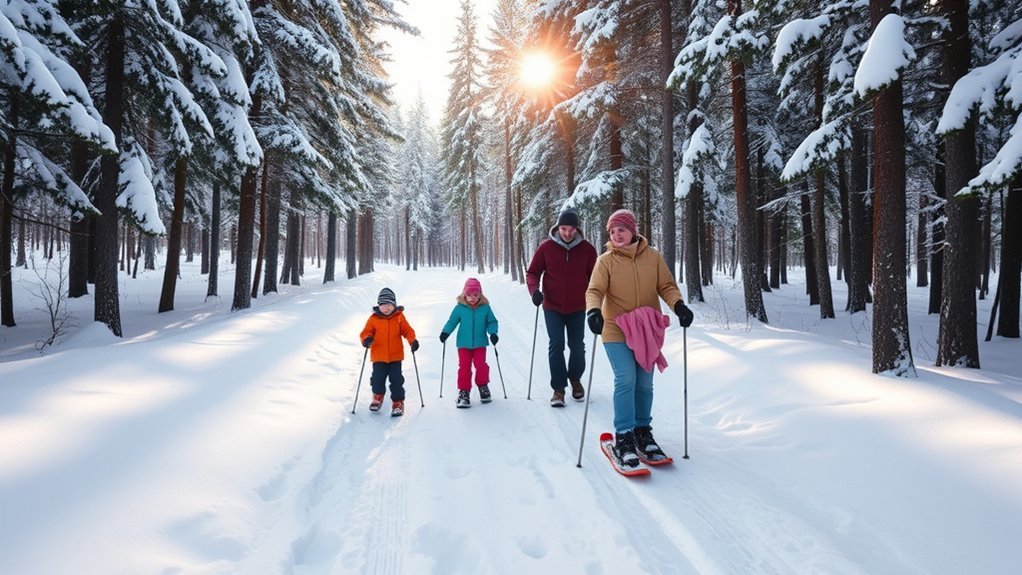
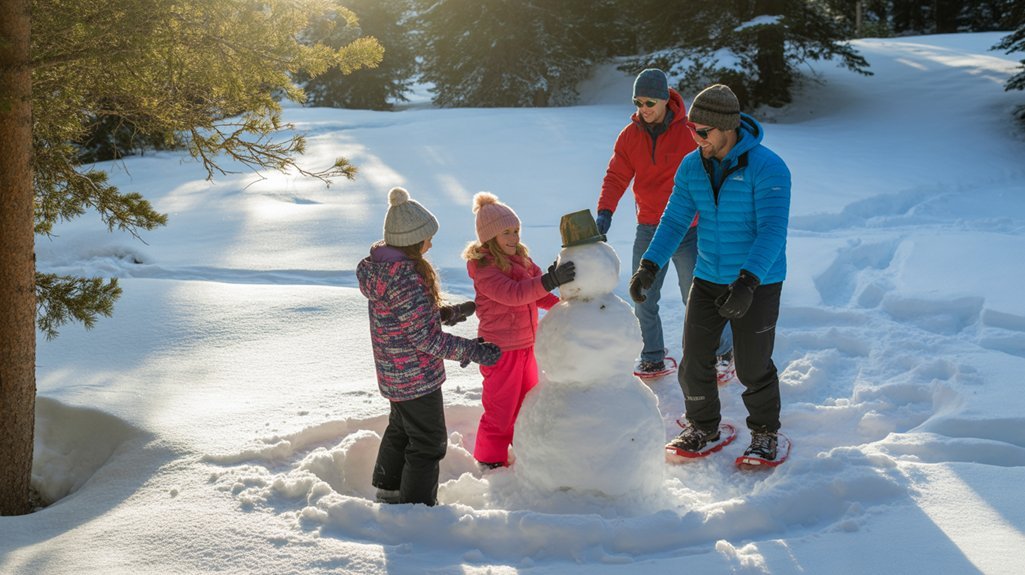
While snowshoeing might seem like a slow-paced winter activity, it opens wilderness areas that become completely inaccessible once deep snow blankets hiking trails.
You’ll discover a magical winter landscape where your kids can explore frozen streams, animal tracks, and pristine forests without sinking waist-deep into powder.
Essential considerations for family snowshoeing:
- Choose youth-sized snowshoes designed for your children’s weight to prevent frustration and ensure proper flotation.
- Pack proper winter gear including extra layers, waterproof mittens, and high-energy snacks for frequent breaks.
- Research beginner-friendly routes with clear markings and prioritize trail safety by checking avalanche conditions and weather forecasts.
Start with short excursions under two miles, gradually building your family’s endurance and confidence on snowshoes.
Ice Skating on Frozen Ponds and Rinks
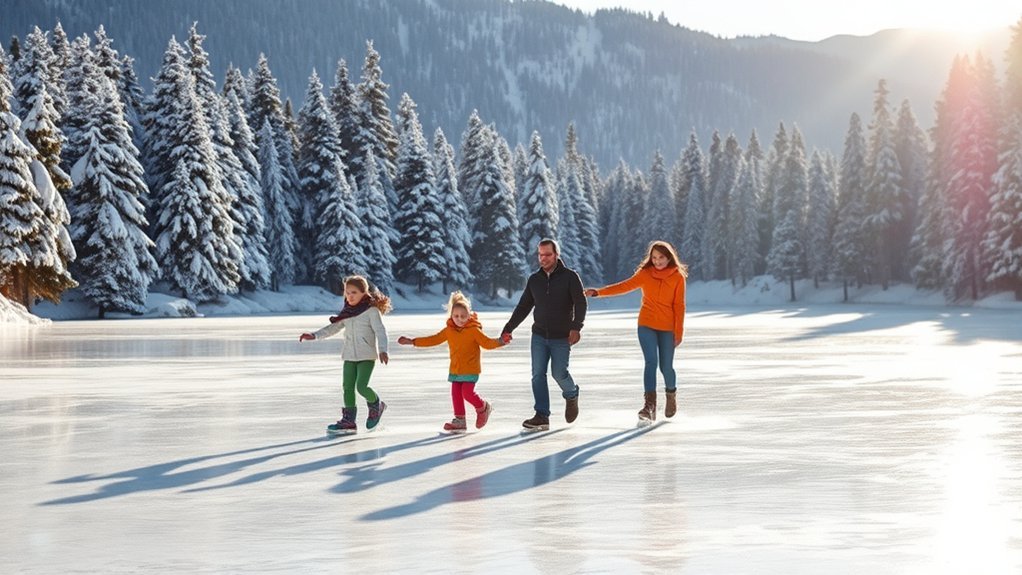
Ice skating transforms frozen water into a playground where kids develop balance, coordination, and confidence while gliding across crystalline surfaces.
Ice skating builds essential physical skills and self-assurance as children master the art of gliding across frozen winter landscapes.
Before venturing onto natural ice, check frozen pond regulations with local authorities to ensure safe ice thickness—at least four inches for individuals.
Start beginners on maintained rinks where smooth surfaces and predictable conditions build foundational skills.
Essential skating safety tips include wearing helmets, using wrist guards, and dressing in layers that allow movement while providing warmth.
Pack hand warmers and hot cocoa for breaks.
Natural ponds offer magical experiences with their rustic charm, but always verify ice conditions first.
Teach kids to stay together and avoid areas with visible cracks or dark patches.
Bring hockey sticks or a simple puck to turn skating into an engaging game.
Cross-Country Skiing for Families
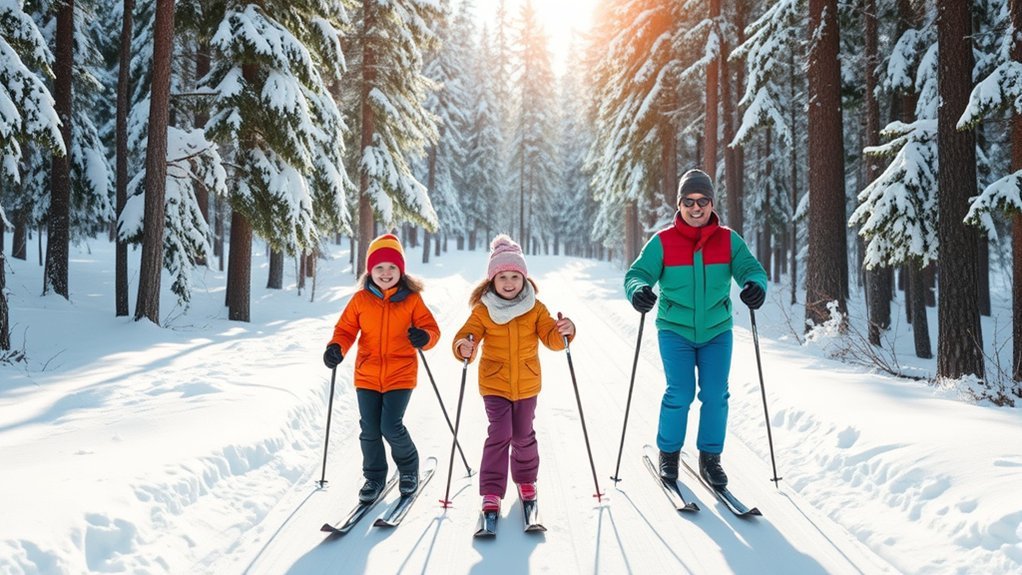
Cross-country skiing opens winter landscapes to families seeking accessible adventures that don’t require expensive lift tickets or crowded resort slopes.
You’ll find this activity gentler on beginners than downhill skiing, making it perfect for introducing children to winter sports. Most trails accommodate various skill levels, so you can choose routes matching your family’s abilities.
Start with family lessons at local ski centers where instructors teach proper techniques and safety basics. Renting ski gear initially lets you test the sport before investing in equipment.
Essential tips for family cross-country skiing:
- Choose groomed trails with clearly marked beginner loops under 2 miles
- Pack high-energy snacks and hot beverages in insulated containers
- Dress in layers you can remove as kids warm up from activity
Winter Scavenger Hunts in Nature
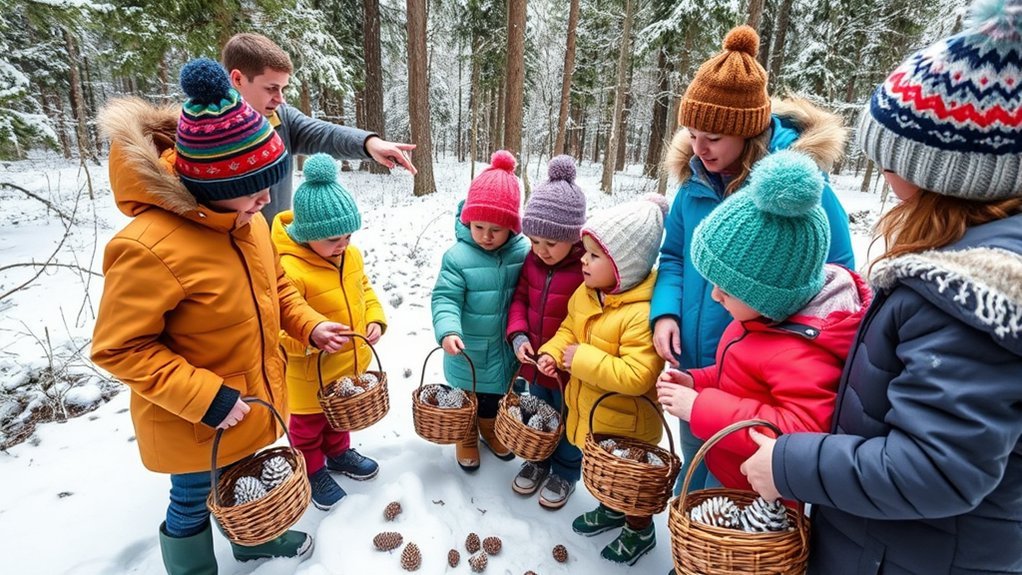
Winter scavenger hunts transform quiet snowy trails into engaging expeditions that sharpen children’s observation skills while keeping them active in cold weather.
You’ll create scavenger maps listing items like pinecones, animal tracks, icicles, evergreen branches, and bird nests. These nature clues encourage your kids to explore their surroundings rather than complaining about the cold.
Start with simple lists for younger children, then progress to photo challenges or ridavenger hunts for older kids. You can organize themed searches focusing on winter animal evidence, tree identification, or frost patterns.
Pack a small bag for collecting non-living items and bring a camera to document findings you shouldn’t disturb.
The activity works perfectly in local parks, forest preserves, or your own backyard, requiring minimal equipment while delivering maximum engagement.
Tubing at Local Snow Parks
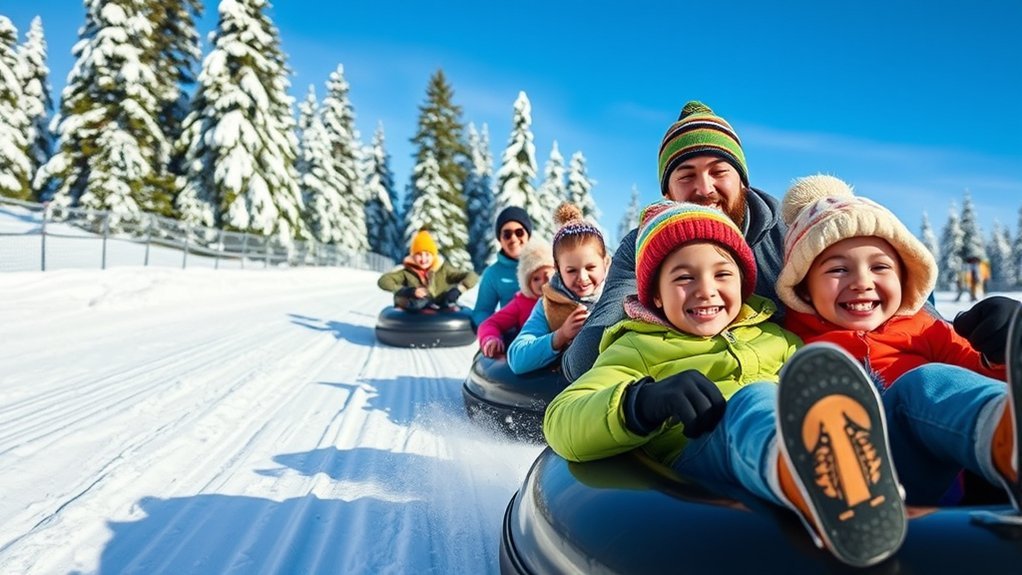
When your kids crave speed and excitement without the learning curve of skiing, tubing delivers pure adrenaline-fueled fun that even toddlers can enjoy.
You’ll race down groomed lanes together, spinning and laughing as snow sprays around you. Most facilities provide all necessary tubing gear, so you won’t need special equipment.
Glide down mountain slopes side-by-side with your children, creating unforgettable memories without expensive gear or lessons.
Essential tips for your tubing adventure:
- Check snow park safety requirements before visiting—many parks have age, height, or weight restrictions for different lanes
- Book tickets online during peak season to avoid disappointment and secure preferred time slots
- Dress in waterproof layers since you’ll be sitting directly on snow, and bring extra gloves for when they inevitably get soaked
Tubing offers maximum thrills with minimal skill required, making it perfect for mixed-age families.
Wildlife Tracking and Bird Watching
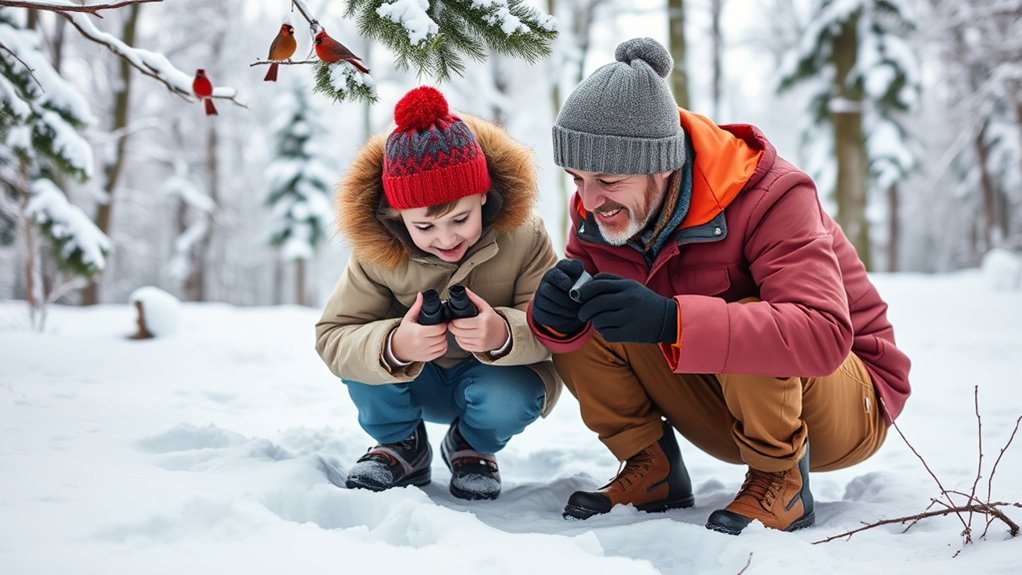
While snow blankets the landscape, it transforms your backyard into a natural canvas where animals leave behind stories of their nighttime journeys. Teaching kids to identify animal tracks becomes an engaging detective game—look for rabbit hops, deer prints, or squirrel trails leading to trees.
You’ll find fresh tracks are easiest to spot after overnight snowfall.
Bird watching takes on new excitement in winter when bare branches reveal hidden nests and feathered visitors. Help your children recognize common bird calls from chickadees, cardinals, and blue jays.
Set up feeders near windows to attract diverse species while keeping kids warm inside.
Bring a field guide, binoculars, and notebook to document discoveries. This quiet activity builds observation skills and deepens your family’s connection to nature’s winter rhythms.
Ice Fishing Adventures
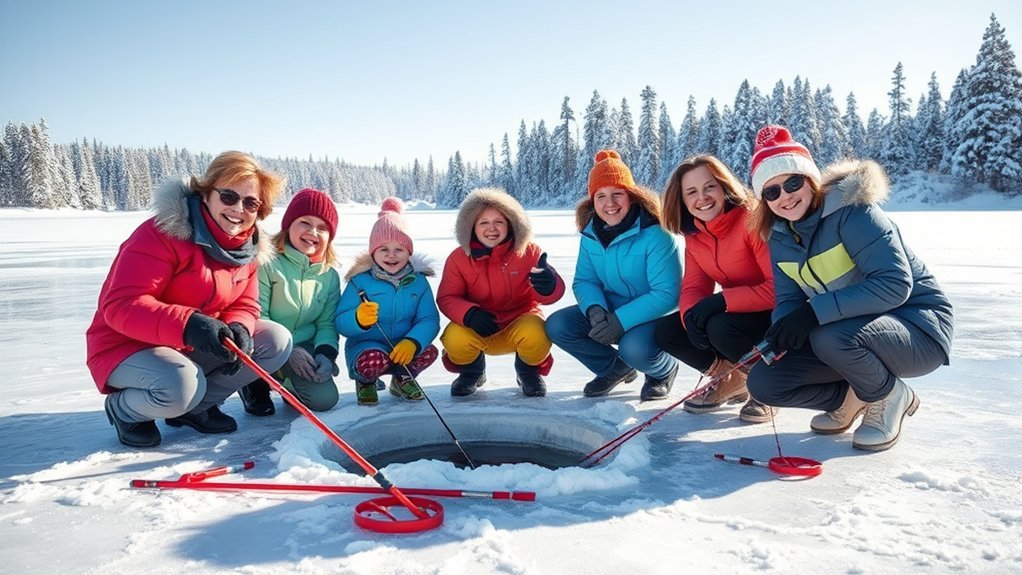
Have you ever watched your child’s face light up as they reel in their first fish through a hole in the ice? Ice fishing creates unforgettable winter memories while teaching patience and outdoor skills.
Ice fishing transforms cold winter days into cherished family moments that teach patience, persistence, and appreciation for the outdoors.
You’ll need proper ice fishing gear, including tip-ups, ice augers, and warm shelters to keep everyone comfortable during your adventure.
Essential family fishing tips for success:
- Start with short two-hour sessions to maintain enthusiasm and prevent cold-related discomfort
- Choose well-established fishing spots with amenities like heated shelters and safety services nearby
- Pack hot chocolate and snacks to keep energy levels high throughout your outing
Safety remains paramount—always check ice thickness requirements and never venture onto questionable surfaces.
Many state parks offer guided ice fishing programs specifically designed for families, providing equipment rentals and expert instruction.
Nighttime Stargazing and Northern Lights Viewing
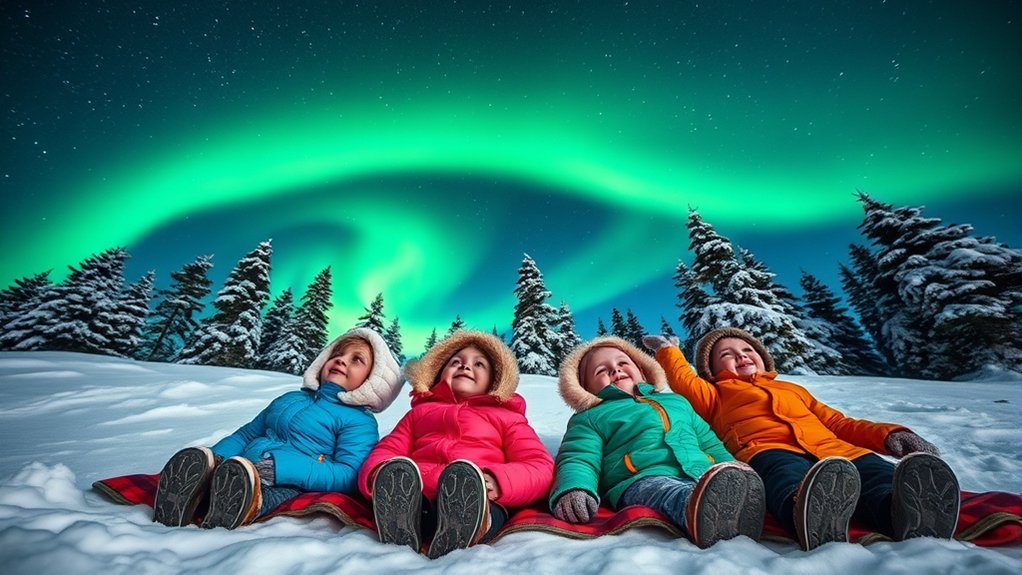
Clear winter skies offer your family a spectacular canvas for celestial exploration, and nothing beats bundling up together to witness the universe’s grandeur.
Winter’s crisp air creates ideal conditions for stargazing, with reduced humidity revealing countless stars invisible during other seasons.
Start with constellations identification by downloading apps that map the night sky in real-time. Kids love pointing devices skyward to discover Orion, Ursa Major, and other stellar patterns.
If you’re near northern latitudes, aurora photography becomes possible during peak solar activity. Pack thermoses with hot chocolate, bring sleeping bags, and set up in areas away from light pollution.
Even young children can learn to operate basic cameras for capturing these ethereal displays, creating memories that’ll spark their curiosity about space for years.
In case you were wondering
What Essential Winter Gear Should Kids Wear for Outdoor Activities?
You’ll need proper winter clothing including insulated jackets, waterproof pants, warm boots, and mittens. Master layering techniques by dressing your kids in moisture-wicking base layers, insulating mid-layers, and weatherproof outer shells to keep them comfortable outdoors.
How Cold Is Too Cold to Take Children Outside in Winter?
You shouldn’t take children outside when temperatures drop below -15°F (-26°C) with wind chill. Follow temperature guidelines that limit cold exposure based on your child’s age, and always watch for frostbite signs and shivering during outdoor activities.
What Snacks and Hydration Work Best for Winter Outdoor Adventures?
Don’t underestimate winter’s dehydrating power! Pack healthy snacks like nuts, dried fruit, and energy bars that won’t freeze solid. Follow these hydration tips: use insulated bottles with warm water, and encourage frequent sips—kids often forget they’re thirsty in cold weather.
How Do You Prevent Frostbite and Hypothermia in Children During Winter Activities?
Layer children’s clothing properly, watch for frostbite symptoms like pale or numb skin, and take frequent warm-up breaks. You’ll ensure hypothermia prevention by keeping kids dry, limiting exposure time, and heading indoors if they’re shivering uncontrollably.
What Indoor Backup Plans Work When Weather Becomes Too Extreme?
Studies show 40% of winter outings get cancelled due to extreme weather. You’ll need indoor alternatives like museum visits, bowling, or swimming. These fun activities keep kids active while avoiding dangerous conditions outside.
Conclusion
Winter’s calling, and you’ve got the roadmap to answer. You’ll watch your kids’ faces light up on the sledding hill, you’ll hear their laughter echo across frozen ponds, and you’ll see their wonder as they track animals through fresh snow. These adventures don’t just fill your days—they strengthen your family bonds, they build lasting memories, and they turn cold months into cherished seasons. So bundle up, step outside, and make this winter unforgettable.