Weekend Family Craft Projects: Fun Bonding Activities Guide
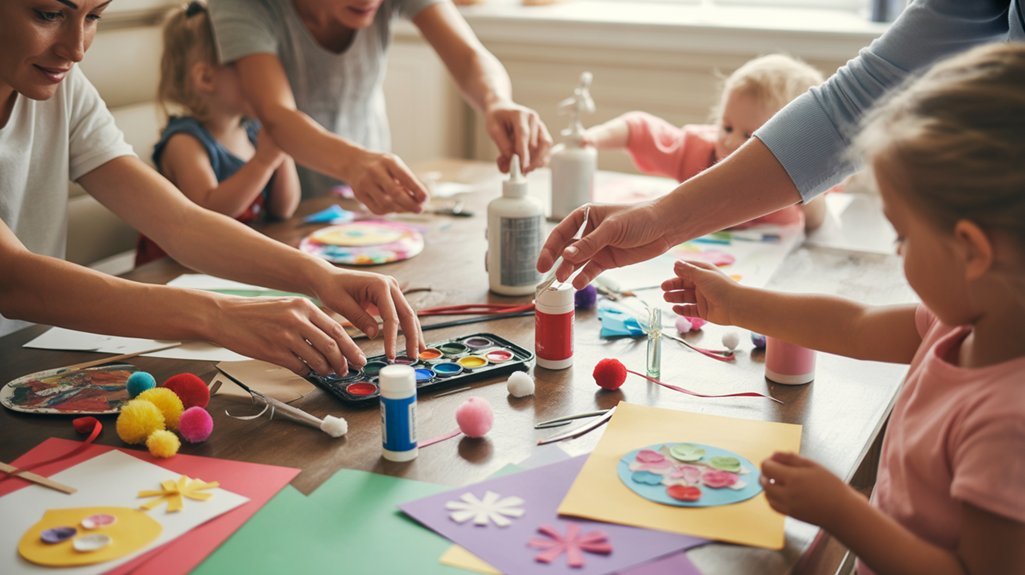
You’ll find endless bonding opportunities through weekend craft projects that combine creativity with hands-on learning. Start by gathering basic supplies like construction paper, glue, markers, and recyclables, then explore paper sculptures, origami, and nature-inspired creations using items from your backyard. Try upcycling household items into planters, luminaries, or cardboard castles while teaching sustainability. Seasonal projects like painted rocks and pinecone ornaments create cherished traditions year-round. These collaborative activities strengthen family relationships while developing critical thinking skills as children learn from both successes and creative failures—there’s much more to discover.
Key Takeaways
- Gather basic supplies like scissors, glue, construction paper, and age-appropriate tools in labeled storage containers for easy access.
- Try paper crafts including origami animals, pop-up cards, and cardboard puppets using recycled materials like cereal boxes.
- Create nature-inspired projects such as leaf bookmarks, painted rocks, pinecone bird feeders, and twig picture frames together.
- Upcycle household items into tin can planters, glass jar luminaries, and cardboard castles while teaching sustainability.
- Embrace failures as learning opportunities to develop problem-solving skills, structural understanding, and critical thinking through experimentation.
Essential Supplies and Materials to Keep on Hand
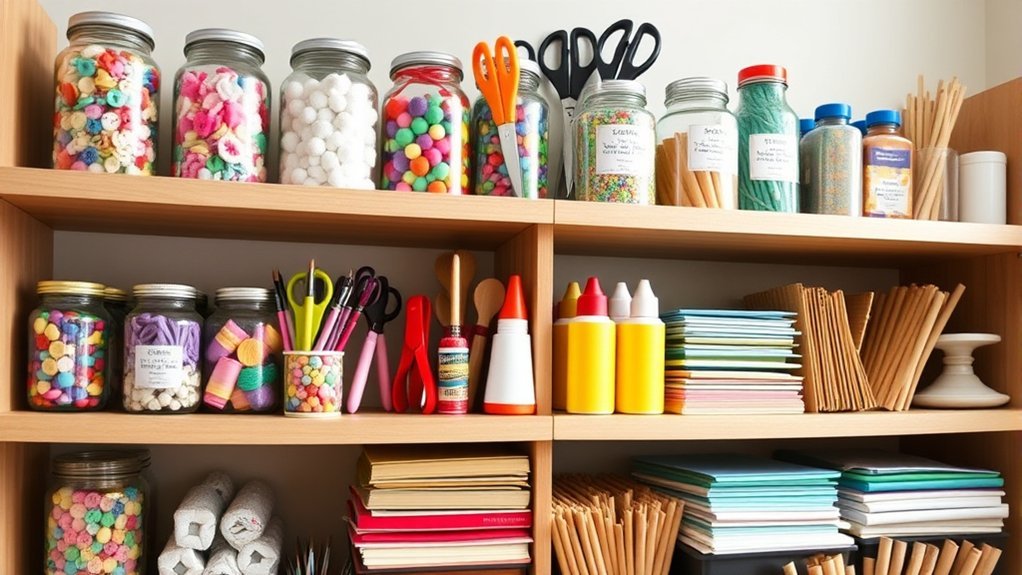
A well-stocked craft closet transforms rainy afternoons into creative adventures.
You’ll want basic crafting tools including scissors, glue sticks, colored pencils, markers, and paintbrushes in various sizes. Keep construction paper, cardstock, pipe cleaners, pom-poms, and googly eyes readily available.
Storage containers are crucial for project organization. Use clear bins to sort materials by type, making everything visible and accessible. Label each container so kids can find supplies independently and clean up efficiently.
Stock age-appropriate items like safety scissors for younger children and craft knives for supervised teen projects. Don’t forget tape varieties: masking, washi, and double-sided.
Add glitter, beads, yarn, and fabric scraps for texture. With these essentials organized and ready, you’ll eliminate shopping trips and maximize creative time together.
Paper and Cardboard Creations for All Ages
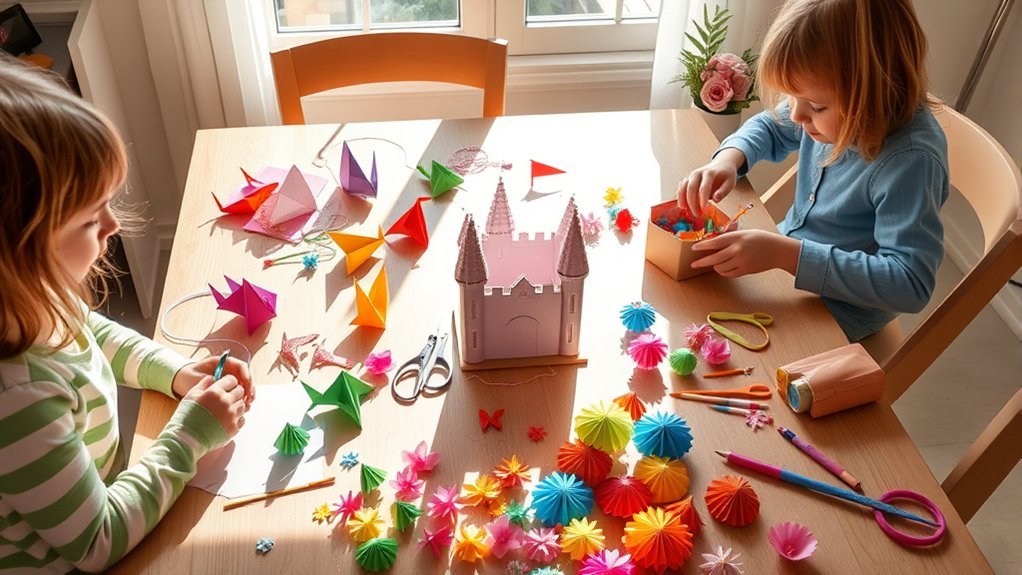
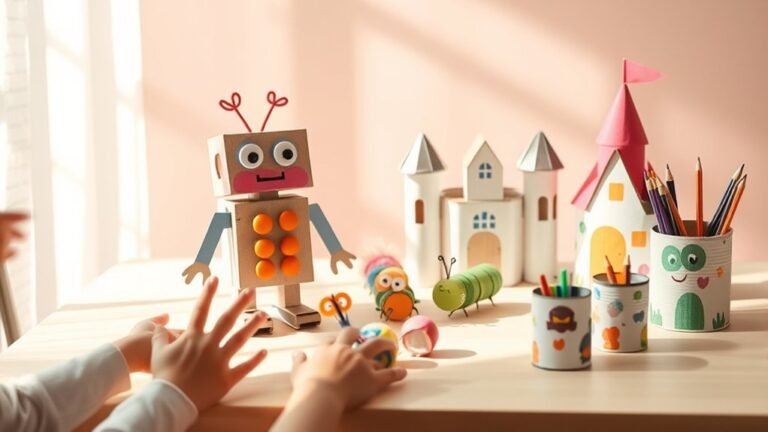
Paper crafts offer endless possibilities because they require minimal investment while delivering maximum creative potential. You’ll find that simple sheets and boxes transform into impressive art through folding, cutting, and gluing techniques.
With just paper, scissors, and glue, you can unlock boundless creativity without breaking the bank.
Start with these engaging projects:
- Origami animals – Teach kids basic folds to create cranes, frogs, and butterflies
- Paper sculpture – Layer and curl strips to build 3D flowers, trees, or abstract designs
- Cardboard puppets – Cut character shapes, add moving joints with brads, and perform shows
- Pop-up cards – Combine cutting and folding to create dimensional greeting cards
These activities develop fine motor skills while encouraging artistic expression. You don’t need fancy materials—recycled cereal boxes, old magazines, and construction paper work perfectly.
Each project adapts easily for different age groups, making them ideal for family bonding sessions.
Nature-Inspired Projects Using Outdoor Finds
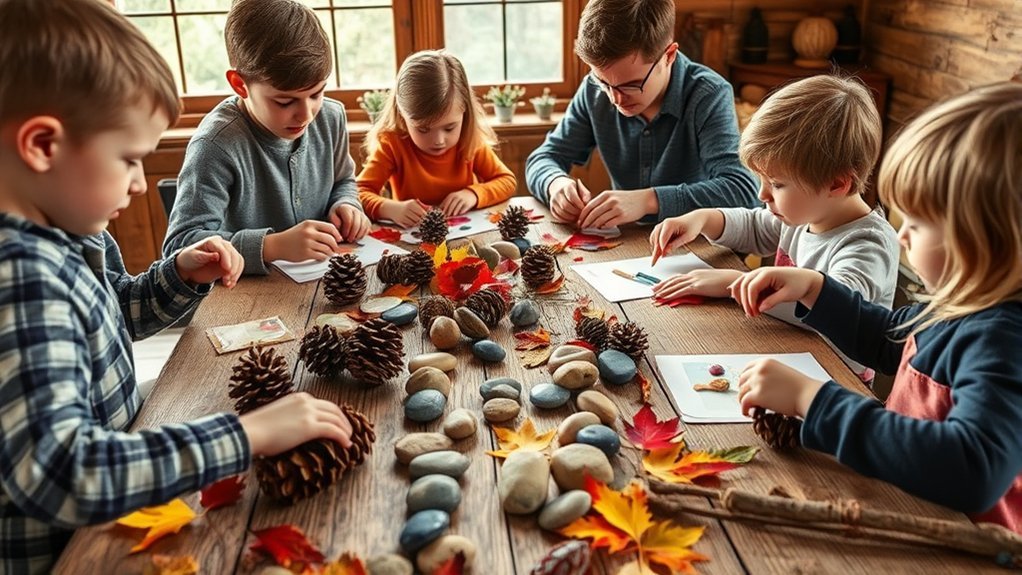
When you venture outside with your family, you’ll discover free craft materials scattered everywhere—pinecones, leaves, twigs, rocks, and acorns waiting to become art.
Start with a nature scavenger hunt where kids collect interesting items. They’ll develop observation skills while gathering supplies.
Leaf pressing creates beautiful bookmarks and framed artwork. Place colorful leaves between parchment paper inside heavy books for two weeks.
Once flattened, arrange them on cardstock or laminate for lasting keepsakes.
Transform pinecones into bird feeders by coating them with peanut butter and rolling in birdseed.
Paint rocks to create garden markers or paperweights. Build twig picture frames using hot glue and twine.
These projects teach children about nature’s textures, colors, and seasons while creating meaningful decorations for your home.
Upcycling Household Items Into Artistic Treasures
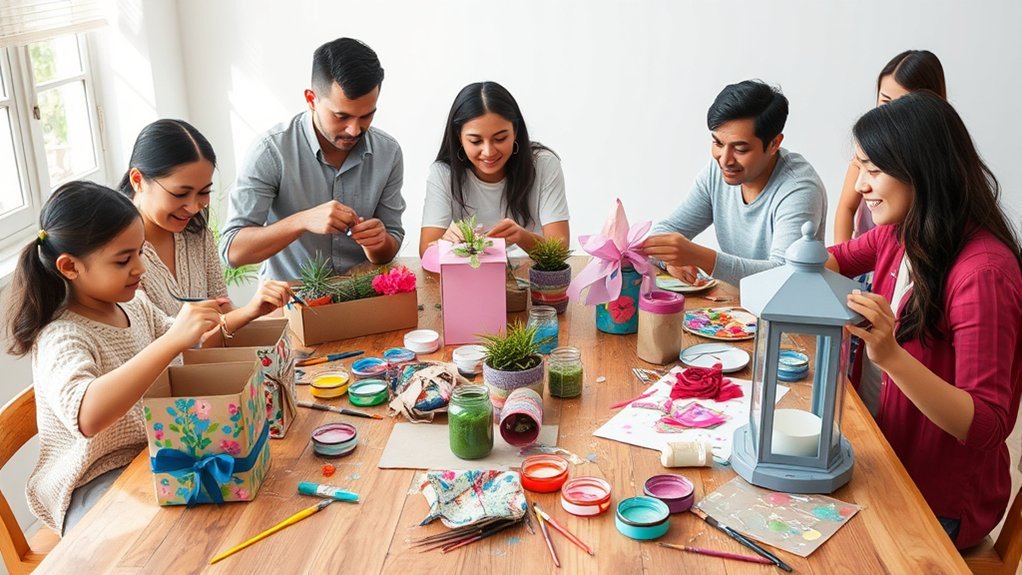
Before tossing items into the recycling bin, consider their potential as craft materials that’ll save money and spark creativity.
You’ll discover that everyday household items can transform into stunning recycled art pieces your family will treasure.
Start with these simple upcycling projects:
- Tin can planters – Paint empty cans in vibrant colors and add drainage holes for herb gardens
- Cardboard box castles – Stack and decorate shipping boxes into imaginative playhouses
- Glass jar luminaries – Wrap mason jars with tissue paper for colorful candleholders
- Egg carton creatures – Cut individual cups to create caterpillars, flowers, or monsters
These projects double as creative storage solutions while teaching children about sustainability.
You’re not just crafting—you’re building environmental awareness and problem-solving skills that’ll benefit your family for years.
Seasonal Crafts to Celebrate Throughout the Year
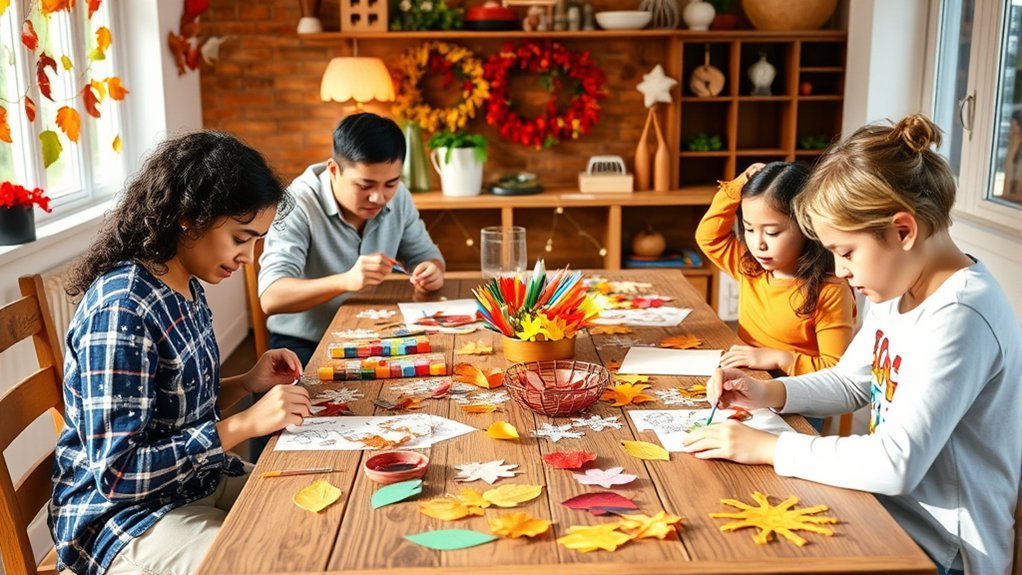
As each season brings its unique colors and celebrations, you’ll find endless opportunities to create meaningful crafts that mark the passage of time with your family.
Spring invites you to craft paper flowers and painted eggs, while summer encourages seashell mobiles and tie-dye projects.
Autumn’s arrival means leaf pressing, pumpkin decorating, and harvest wreaths that capture fall’s warm palette.
Winter transforms your home into a creative workshop with snowflake cutouts, pinecone ornaments, and handmade greeting cards.
These seasonal celebrations become cherished traditions when you incorporate holiday themes specific to your family’s culture.
You’ll discover that crafting throughout the year doesn’t just decorate your space—it creates a visual timeline of memories, marking growth and change while strengthening family bonds through shared creativity.
Painting and Drawing Activities for Creative Expression
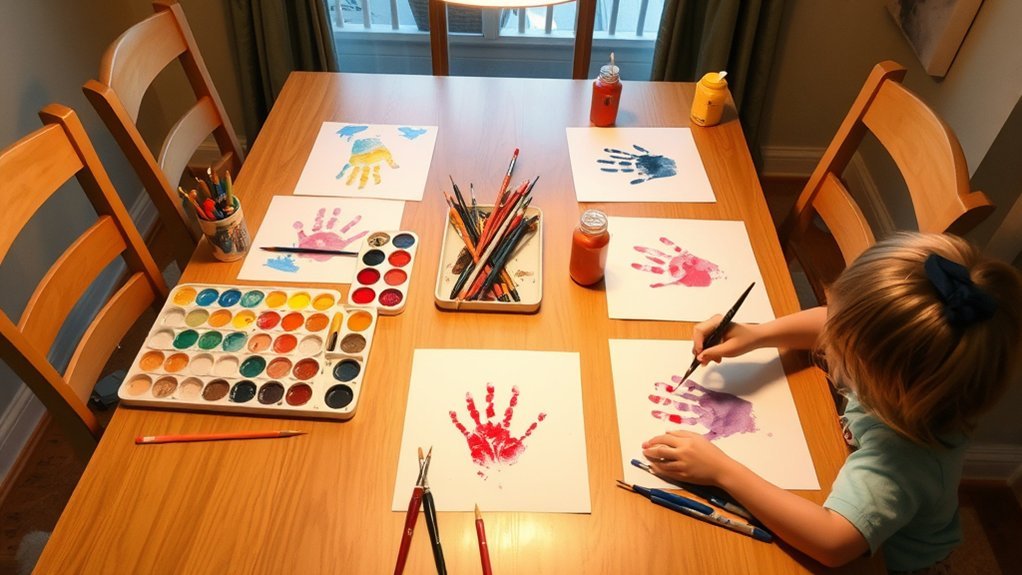
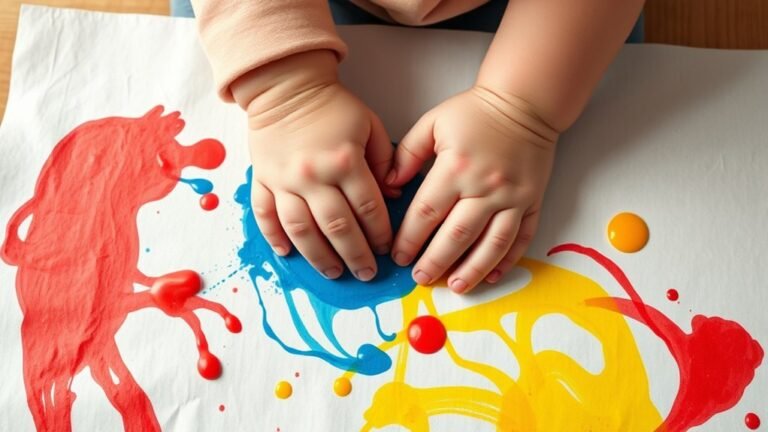
Paint and pencils unlock pure creative freedom for family members of all ages, offering a judgment-free zone where imagination takes physical form.
You’ll discover that abstract expression allows even the youngest artists to contribute meaningfully without worrying about technical perfection.
Transform your walls with collaborative murals that showcase everyone’s unique style.
Here are engaging painting activities to try:
- Emotion Color Mapping: Select colors representing different feelings, then create artwork expressing your current mood
- Blind Contour Drawing: Draw subjects without looking at your paper, producing hilarious and surprisingly artistic results
- Nature Still Life: Arrange outdoor findings like leaves and rocks, then sketch or paint them together
- String Painting: Dip string in paint and drag it across paper for unexpected abstract patterns
These activities strengthen communication while building artistic confidence.
Textile and Fabric Projects for Hands-On Fun
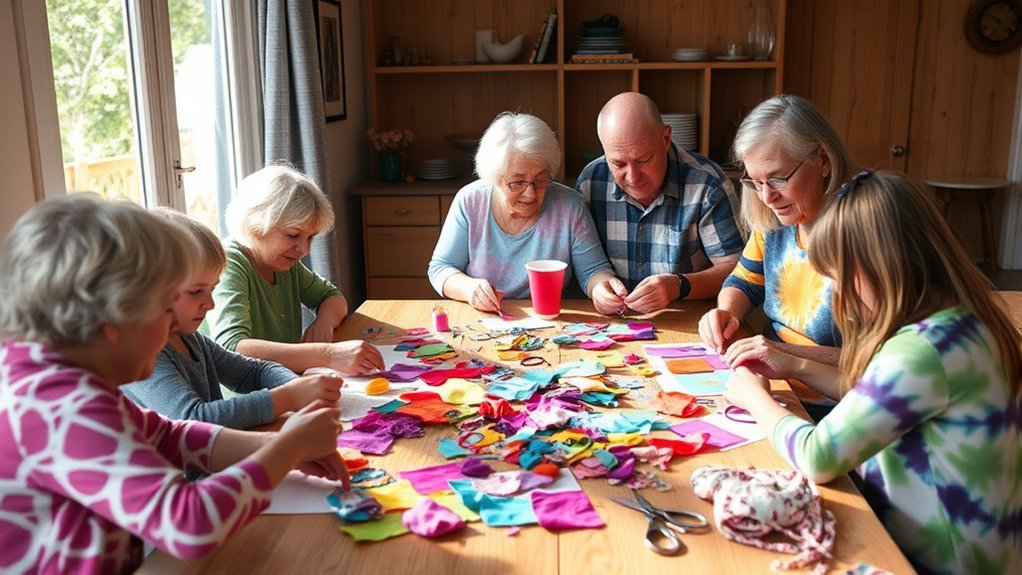
While paint-splattered canvases capture fleeting moments, fabric projects create lasting treasures you’ll actually use in daily life.
Unlike temporary art projects, fabric crafts transform into cherished keepsakes that serve practical purposes for years to come.
Start with fabric dyeing using ice cubes and powdered dye. You’ll place ice over fabric, sprinkle dye powder on top, and watch colors blend as ice melts. Kids love unpredictable patterns that emerge.
Next, introduce basic sewing techniques through hand-stitching felt ornaments. You don’t need machines—just needles, thread, and felt sheets. Create simple shapes like stars or animals, stuffing them lightly with cotton.
Try no-sew projects too. Make fleece blankets by cutting fringe along edges and tying knots. It’s perfect for younger children who aren’t ready for needles.
These textile activities teach patience, following instructions, and problem-solving while producing functional items everyone’s proud to display or gift.
Building and Construction Challenges for Problem Solvers
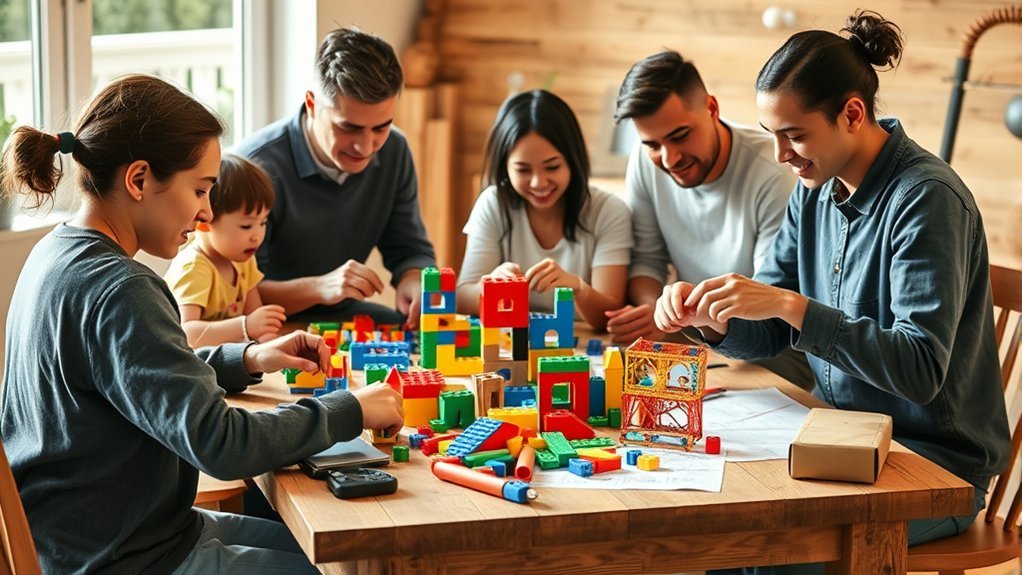
When children stack blocks only to watch them tumble, they’re not just playing—they’re engineering. Building and construction challenges transform your weekend into problem-solving adventures that strengthen spatial reasoning and teamwork skills.
These design challenges teach structural stability through hands-on experimentation:
- Bridge building competitions using popsicle sticks, straws, or cardboard to span distances
- Tower construction races where families compete to build the tallest freestanding structure
- Marble run mazes that require planning gravity-powered pathways
- Cardboard city creations where everyone designs interconnected buildings and roads
You’ll discover that failed attempts matter as much as successes. Each collapsed tower reveals why triangles strengthen structures or how wider bases prevent toppling.
These projects don’t require expensive kits—household materials work perfectly. Your family will develop critical thinking while creating together.
In case you were wondering
How Do I Manage Different Skill Levels When Crafting With Multiple Children?
You’ll succeed by using skill adaptation—assign age-appropriate tasks within the same project. Offer project variation by preparing simpler versions for younger kids while older children tackle complex elements. Everyone participates together, building confidence at their own level.
What’s the Ideal Time Duration for Craft Projects With Young Children?
You’ll find short sessions work best—15 to 30 minutes matches young children’s attention span perfectly. You’ll maintain their interest, you’ll prevent frustration, and you’ll end on a positive note before boredom strikes.
How Can I Minimize Cleanup Time After Messy Craft Activities?
You’ll minimize cleanup time by implementing smart cleanup strategies from the start. Use easy materials like washable paints and markers, cover surfaces with disposable tablecloths, and set up designated craft zones. Keep wet wipes handy for quick cleanups.
Should I Let Children Work Independently or Guide Them Through Each Step?
Balance both approaches—studies show children retain 70% more when they problem-solve independently. You’ll want to provide guided instruction for new techniques, then step back. This combination maximizes independence benefits while ensuring they don’t feel frustrated or overwhelmed.
How Do I Store Completed Craft Projects Without Creating Clutter?
You’ll want dedicated craft storage bins or portfolios for flat items. Rotate display options on walls or shelves, showcasing recent favorites while archiving older projects. Take photos before storing everything, creating digital memories without physical clutter.
Conclusion
You’ve now got a toolkit of creative weekend projects that’ll bring your family closer together. Research shows that children who engage in regular craft activities with their parents demonstrate 73% higher creative problem-solving skills compared to those who don’t. So gather your supplies, embrace the mess, and watch as these simple activities strengthen your family bonds while nurturing creativity. Your weekend adventures in crafting start now—make them memorable, make them meaningful, and most importantly, make them together.