How Sensory Art Activities Boost Toddler Development
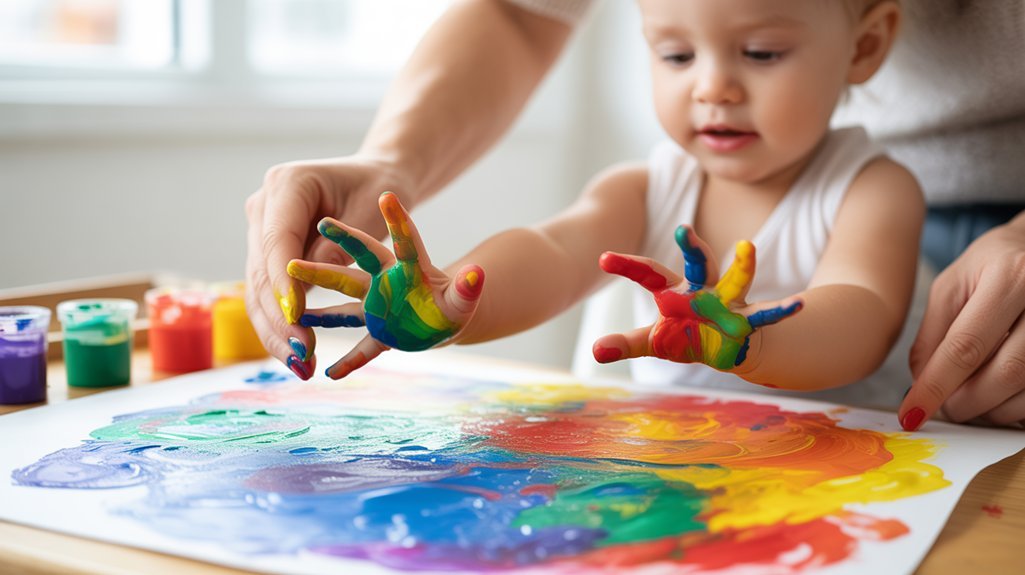
Sensory art activities create powerful developmental moments for your toddler by strengthening neural pathways during the critical first three years of life. When your child grips chunky crayons or squishes playdough, they’re building fine motor skills and hand-eye coordination essential for future independence. These tactile experiences also stimulate cognitive growth through problem-solving, enhance language development as you discuss textures and colors together, and provide emotional outlets for processing big feelings. The simple activities below will transform everyday playtime into meaningful learning opportunities.
Key Takeaways
- Sensory art strengthens neural pathways and creates complex brain connections during critical early childhood development years.
- Gripping crayons and manipulating playdough builds hand strength, fine motor skills, and hand-eye coordination essential for future independence.
- Tactile exploration stimulates curiosity, problem-solving abilities, and cognitive skills like cause-and-effect understanding and spatial awareness.
- Describing textures and colors during art activities expands vocabulary, communication skills, and understanding of abstract concepts.
- Messy play provides emotional outlets, calming sensory feedback, and nonjudgmental spaces for toddlers to express feelings confidently.
The Science Behind Sensory Play and Brain Development
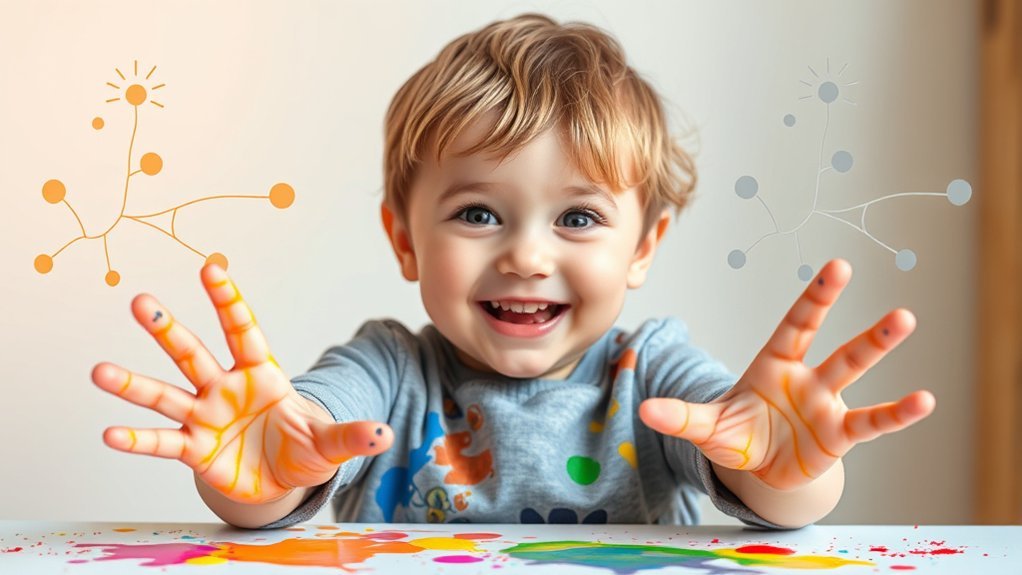
When toddlers squish playdough between their fingers or splash water during bath time, they’re not just having fun—they’re building critical neural pathways. Neuroscience insights reveal that sensory experiences directly strengthen connections between brain cells, particularly during the first three years of life when brain development occurs most rapidly.
Each time your toddler explores different textures, temperatures, or materials, they’re activating multiple sensory pathways simultaneously. This multi-sensory engagement creates stronger, more complex neural networks than single-sense activities alone.
The tactile feedback from art activities—whether finger painting, molding clay, or tearing paper—helps develop fine motor skills while simultaneously enhancing cognitive processing, language development, and emotional regulation. These interconnected benefits make sensory art activities uniquely powerful tools for your toddler’s holistic development.
Fine Motor Skills: Building Strength Through Creative Expression
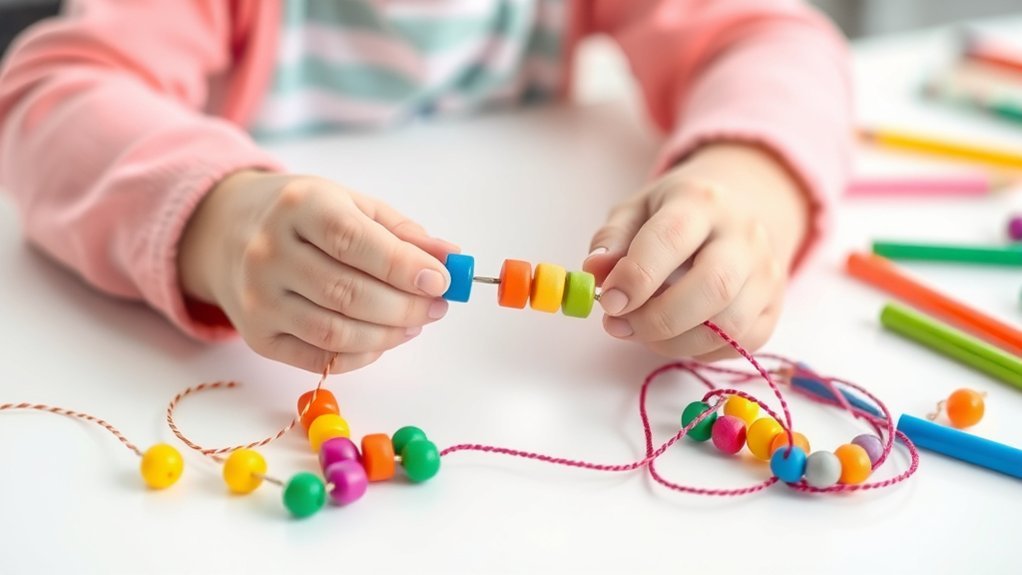
As your toddler grips a chunky crayon or pinches bits of playdough, they’re strengthening the small muscles in their hands and fingers that’ll later help them write, button shirts, and use utensils independently.
Every squeeze, pinch, and grip during art time builds the tiny hand muscles your toddler needs for future independence.
These creative activities build essential grip strength while keeping your child engaged and entertained.
Sensory art naturally develops hand eye coordination as toddlers learn to control their movements with precision.
When they tear paper, squeeze paint bottles, or manipulate clay, they’re practicing the controlled motions needed for daily tasks.
Each squish, roll, and squeeze refines their dexterity.
You’ll notice improvement in their ability to grasp objects, transfer items between hands, and manipulate small pieces.
These foundational skills emerge through playful exploration, making art an enjoyable pathway to physical development without feeling like structured practice.
Cognitive Growth and Problem-Solving Through Tactile Exploration
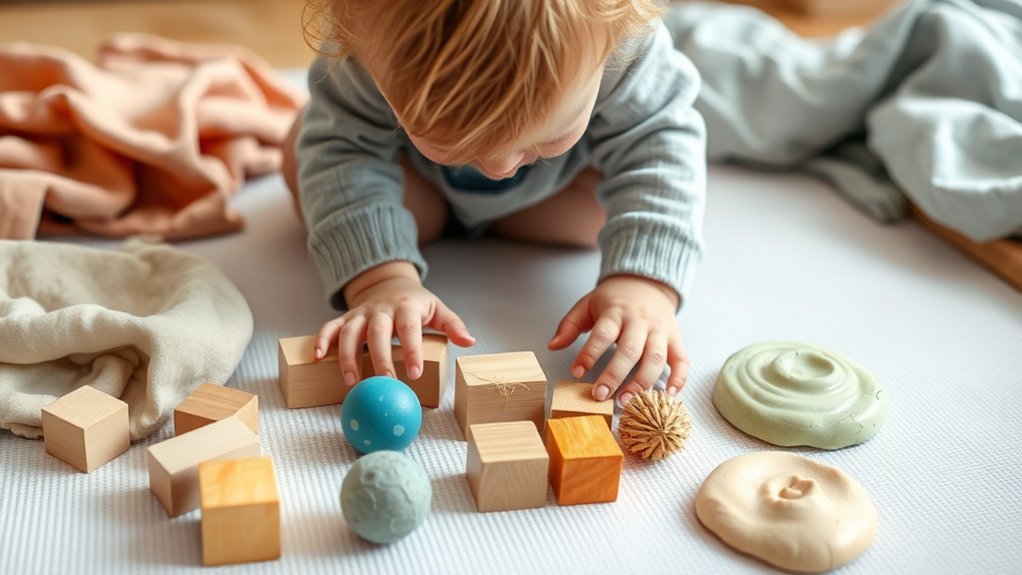
Beyond strengthening tiny hands, sensory art activities spark your toddler’s curiosity and teach them to think through challenges. When your child explores different textures—squishing playdough, spreading finger paint, or manipulating sand—they’re engaging in tactile learning that builds neural connections. Each touch sends information to their developing brain, helping them understand cause and effect.
You’ll notice your toddler experimenting: “What happens if I mix these colors?” or “How can I make this clay stick together?” This creative problem solving emerges naturally through hands-on exploration. They’ll test hypotheses, adjust their approach, and discover solutions independently.
These tactile experiences also enhance memory retention and spatial awareness. Your child learns to categorize textures, predict outcomes, and adapt their techniques—essential cognitive skills they’ll use throughout life.
Language Development and Sensory Art Experiences
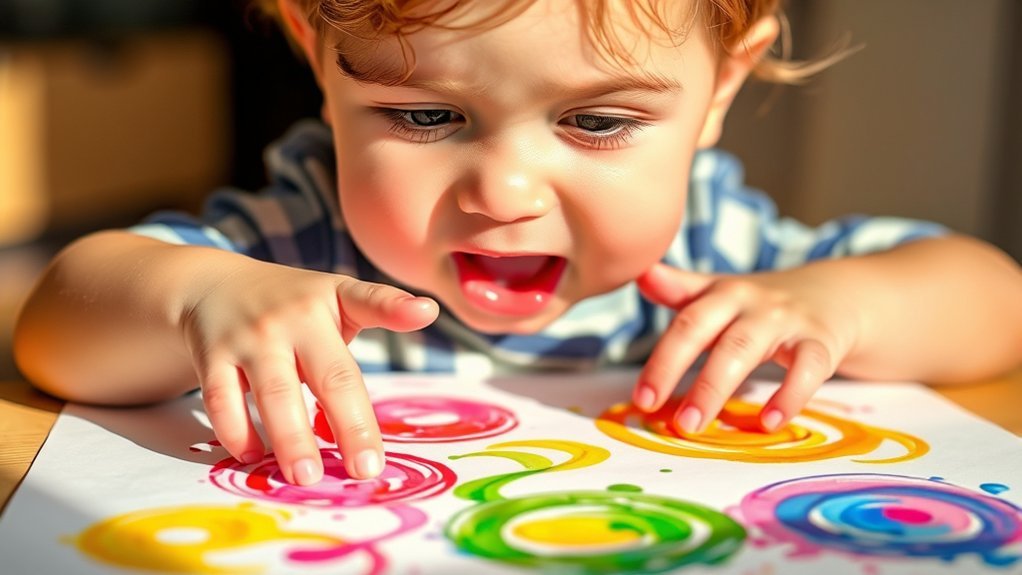
While your toddler squishes paint between their fingers, they’re not just creating art—they’re building vocabulary and communication skills. Sensory art experiences naturally prompt conversations about textures, colors, and actions, accelerating vocabulary expansion through hands-on discovery.
As you engage together, you’ll notice your child describing what they feel and see, turning abstract concepts into tangible words. These moments create perfect opportunities for storytelling techniques, where you can narrate their creative process or invent stories about their artwork.
Maximize language development through:
Every sensory art activity becomes a vocabulary-building moment when you describe textures, name actions, and explore emotions together.
- Descriptive conversations – Ask “Is it bumpy or smooth?” and “What colors do you see mixing?”
- Action vocabulary – Name movements like “squishing,” “spreading,” and “dripping”
- Emotional expression – Discuss how creating makes them feel
This verbal interaction transforms art time into powerful language-learning sessions.
Emotional Regulation and Self-Expression Through Messy Play
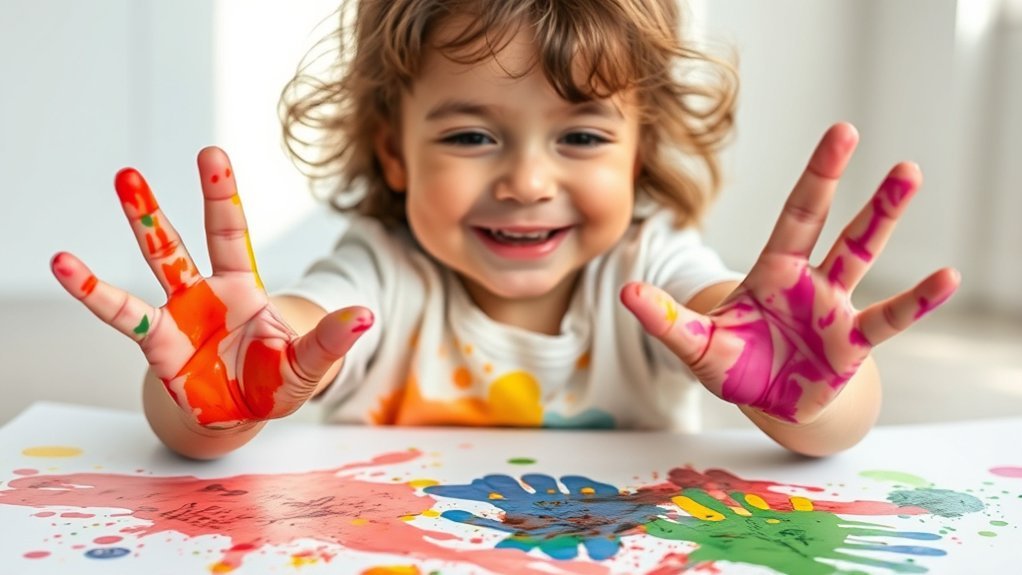
The creative freedom of messy play gives toddlers a safe outlet for big emotions they can’t yet verbalize. When your child squishes paint between their fingers or pounds playdough, they’re releasing frustration and processing feelings through physical action. This hands-on emotional expression helps them understand and manage their internal experiences.
You’ll notice messy play activities reduce tantrums because toddlers channel their energy constructively. Splashing water, spreading shaving cream, or molding clay provides sensory feedback that’s naturally calming. These experiences teach self-regulation as children learn to control their movements and moderate their intensity.
The nonjudgmental nature of messy play builds confidence. There’s no right or wrong way to explore materials, which encourages authentic emotional expression. Your toddler discovers they can make choices, create independently, and communicate feelings without words.
Simple Sensory Art Activities to Try at Home
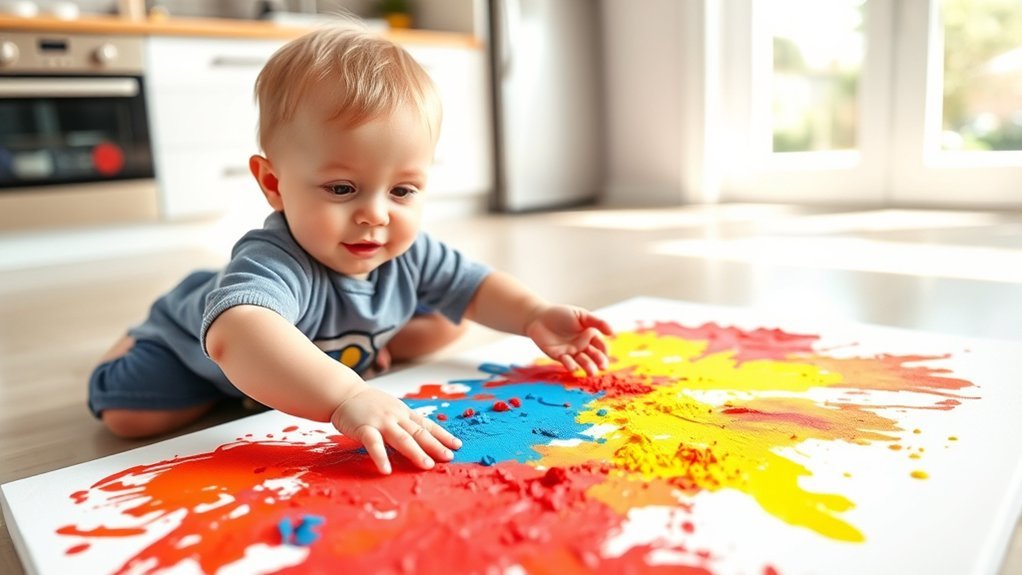
Getting started with sensory art requires nothing more than everyday household items you likely already own.
You’ll find that simple recipes using flour, water, and food coloring create endless possibilities for exploration. Mix up homemade playdough, finger paints, or cloud dough in minutes.
Transform ordinary activities into outdoor adventures by taking art outside. Your toddler can paint rocks, create mud pies, or press flowers into clay. Natural materials like leaves, twigs, and sand become perfect art supplies.
Try these engaging activities:
- Texture paintings: Add salt, rice, or coffee grounds to paint for tactile experiences
- Ice painting: Freeze paint in ice cube trays with popsicle sticks
- Shaving cream marbling: Swirl food coloring through shaving cream
Each activity strengthens developmental skills while keeping your toddler engaged.
Creating a Safe and Encouraging Environment for Sensory Exploration
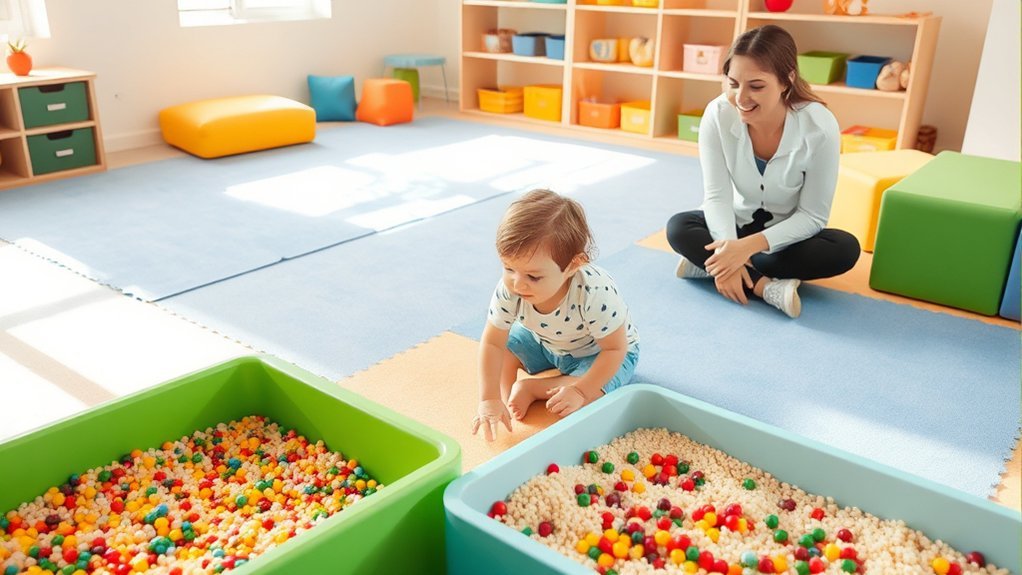
Before you dive into sensory art projects, you’ll need to set up a workspace that protects both your toddler and your home.
Designate safe spaces where spills won’t cause stress—think washable floors, covered tables, or outdoor areas. Use non-toxic materials exclusively and keep small items that pose choking hazards out of reach.
Establish clear exploration boundaries by showing your toddler where they can create freely. You’ll want to dress them in old clothes or smocks and keep cleanup supplies nearby.
Create an inviting atmosphere by sitting with them during activities, offering encouragement without directing their every move.
Let them lead the exploration while you supervise for safety. This balance between freedom and structure helps toddlers build confidence while learning to respect limits during creative play.
In case you were wondering
What Age Should I Start Sensory Art Activities With My Toddler?
You can start sensory art activities around 6-12 months, though toddler age (1-3 years) is ideal. Your child’ll experience maximum sensory benefits as they explore textures, colors, and materials, developing fine motor skills and cognitive abilities through hands-on creative play.
How Do I Handle My Toddler Eating Art Materials During Activities?
Use edible materials like yogurt, pudding, or fruit purees for young toddlers who mouth everything. Follow safety tips: supervise closely, offer snacks beforehand, and redirect gently. You’ll reduce worry while they explore textures safely through taste and touch.
Can Sensory Art Activities Help With My Toddler’s Picky Eating Habits?
Yes, there’s truth to this! Sensory art activities can reduce picky eating by normalizing messy textures. When your toddler squishes paint or playdough, they’re building comfort with food exploration, making new foods less intimidating at mealtimes.
How Often Should I Do Sensory Art Activities Each Week?
You should aim for 2-3 sensory art sessions weekly, following frequency recommendations from child development experts. You’ll want to include activity variations to maintain your toddler’s interest and ensure they’re experiencing diverse textures, materials, and creative challenges throughout the week.
What if My Toddler Refuses to Participate in Messy Play Activities?
Respect your toddler’s preferences—don’t pressure participation. Start small with simpler sensory experiences like water play or playdough. Gradually introduce messier materials. Offer alternative activities such as sensory bins with dry rice, allowing comfort-building before advancing to stickier substances.
Conclusion
You’re not just letting your toddler smoosh paint and squish playdough—you’re literally rewiring their brain with every glorious, messy fingerprint! Each splatter becomes a neural pathway, every glob of slime transforms into a problem-solving superhero, and those clay-covered hands? They’re building the foundation for writing Shakespeare someday. So embrace the chaos, surrender to the mess, and watch your tiny artist’s mind explode with possibilities. That kitchen floor will clean up eventually!