How to Make Budgeting Worksheets Kids Love
Turn budgeting into a game, not a lecture. Use bright colors, funny icons (pizza, earbuds, slime), and stickers for “money wins.” For little kids, track coins in a piggy bank chart. For tweens and teens, build worksheets around real goals like “new bike” or “concert tickets,” then break the cost into small weekly chunks. Keep sessions short, celebrate every tiny win, and treat mistakes like practice rounds—because the fun stuff is just getting started.
Key Takeaways
- Turn worksheets into games with silly story problems, challenges, and reward systems so kids “play” with money instead of filling out boring forms.
- Match activities to age: coins and piggy banks for little kids, simple budgets and real expenses for tweens and teens.
- Tie every worksheet to a real goal—like a bike or concert—by tracking the price, deadline, and weekly savings needed.
- Use bold colors, icons, and stickers instead of plain labels to make categories easy to recognize and visually exciting.
- Keep sessions short, celebrate small wins, and encourage kids to share progress so budgeting stays fun and motivating over time.
Why Budgeting Clicks Better When It’s Fun

When something feels like a game instead of homework, your kid’s brain basically throws a tiny party and actually pays attention—and that’s exactly what happens with fun budgeting.
You know how your kid can’t remember where their shoes are, but can recite Minecraft facts for an hour? That’s the power of fun. When you turn budgeting worksheets into interactive activities, you hook that same laser focus.
Turn budgeting into a game, and their Minecraft-level focus suddenly locks onto money skills.
Think silly story problems about lost ice cream money, or drawing comics to show “spend, save, share” choices. Add engaging visuals—colorful charts, stickers, doodles—and suddenly money turns from “ugh, boring” to “wait, this is kinda awesome.”
They’re not just filling boxes; they’re building money superpowers, and they don’t even notice they’re learning. That sneaky combo works for you.
Picking the Right Money Lessons for Each Age

Think of it like this:
- Little kids: coins, piggy banks, silly stickers for “save,” “spend,” “share.”
- Tweens: simple budgets, allowance tracking, choosing between two things they really want.
- Young teens: planning weekly spending, apps or charts, feeling the pain of blowing cash too fast.
- Older teens: real-world bills, gas money, small jobs, “wow, being an adult is expensive.”
When you match money skills to their developmental considerations, lessons finally stick in their minds and habits.
Turning Real-Life Goals Into Kid-Friendly Worksheets
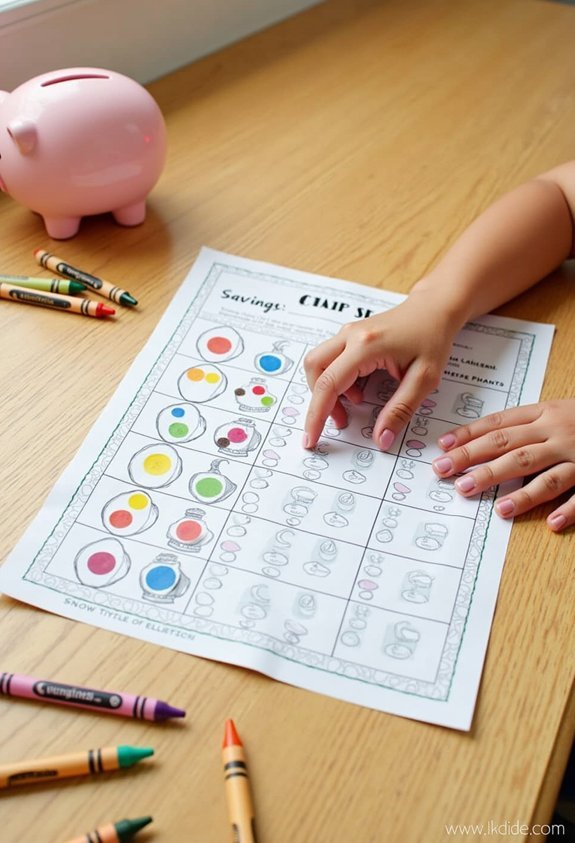
Real-life goals are where money finally gets interesting for kids—“I want a new bike,” “I’m saving for Roblox,” “I need concert tickets or I’ll literally perish.”
Instead of random numbers on a worksheet, you turn *that* drama into the plan. Start with one goal per sheet. At the top, write the thing they want, the price, and the deadline.
Then break it into simple steps: how much to save each week, how much they already have, and how much is left. Use real life scenarios: birthday money, small jobs, allowance, grandma’s secret cash drops.
Let them adjust the plan when life happens. That’s sneaky goal setting practice, plus a built-in reality check when they realize pizza today means “no concert you clown.” For now.
Using Colors, Icons, and Stickers to Bring Numbers to Life

Even the best money worksheet can feel like a math test in beige, so it’s your job to make it look like a party.
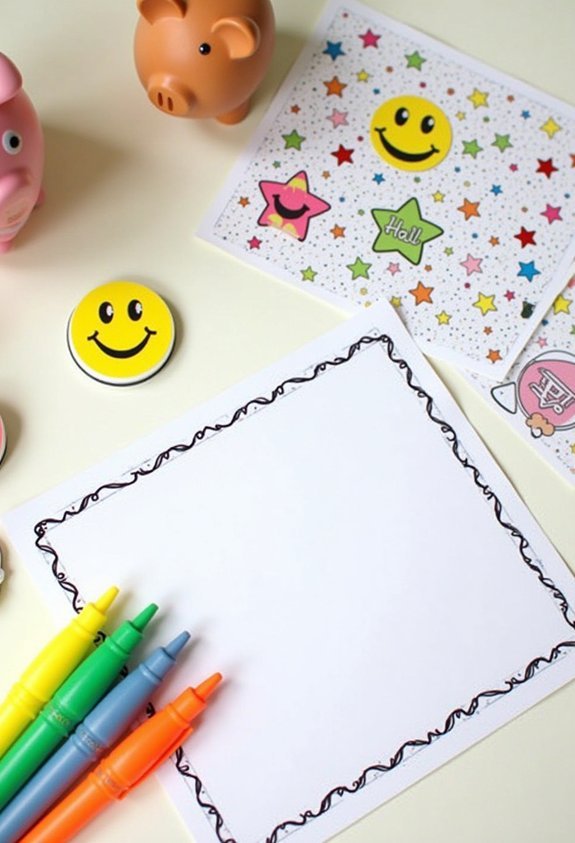
Start with bold color schemes so each dollar has a mood. Green for “saving hero,” blue for “future fun,” red for “whoa, slow down.” Add visual icons instead of boring labels. Kids spot a pizza slice way faster than the word “restaurants.” Use stickers as tiny rewards, not clutter.
- Star sticker every time they log spending.
- Smiley face when they reach a mini goal.
- Lightning bolt for surprise money, like birthday cash.
- Tiny traffic cone when they go over budget.
Suddenly the page feels like a game board, not a lecture. Kids lean in, ask questions, and finish the worksheet.
Designing Simple Layouts Kids Can Navigate on Their Own
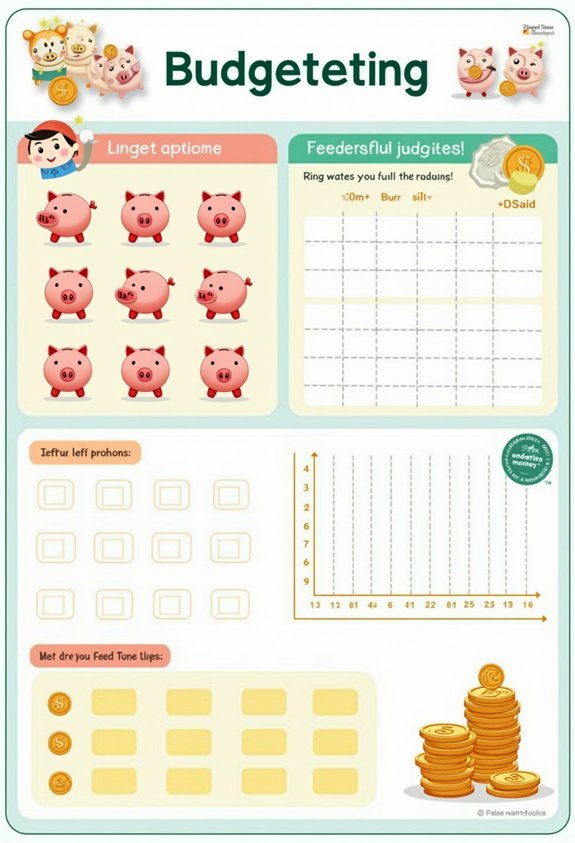
One huge secret to kid-proof money worksheets: the layout has to be so simple your kid can use it while half-distracted by a snack.
Think clear paths, not a maze. Put steps in order from left to right or top to bottom, like a comic strip. Use big titles so kids instantly know: “Money In,” “Money Out,” “Money Saved.” Boom, simple navigation.
Keep each section short, like one job per box. If a square asks for allowance, don’t also cram in birthday money, groceries, and your retirement plan.
Leave white space so the page can breathe. Add tiny arrows or numbers to guide their eyes. You’re going for calm, not chaos—but still bright, fun, and full of engaging designs. So they keep using it.
Adding Games, Stories, and Challenges to Practice Smart Choices
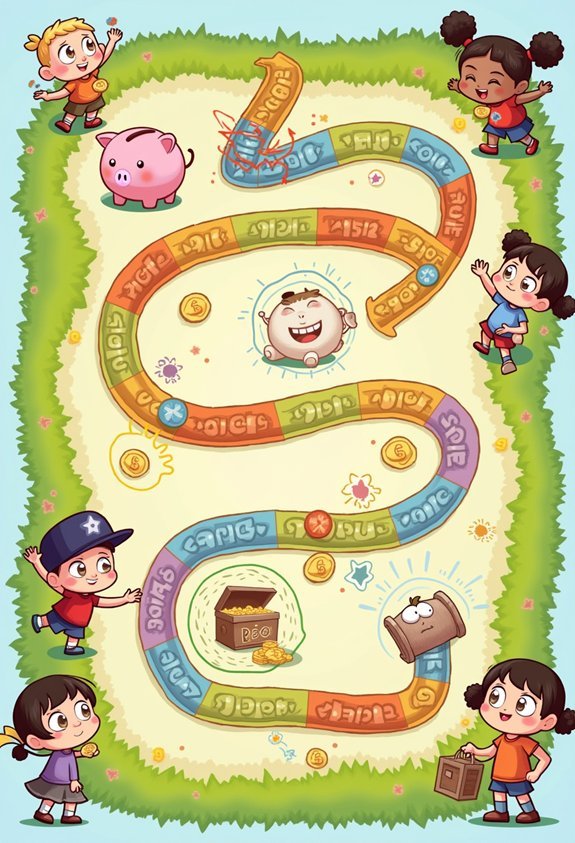
Cool layouts get kids to the worksheet; games and stories keep them there long enough to learn something. You boost the power of any money worksheet when you turn it into playtime.
Think interactive activities, not boring math jail. Wrap each budget problem in imaginative scenarios, so kids feel like heroes, not human calculators.
- Treasure Hunt Budget: Kids get “coins” to spend on snacks, toys, and gifts. They pick, you tally.
- Story Missions: A character wants a pet dragon. Can your kid save enough each week?
- Would-You-Rather Choices: Two options, one budget. Hello, dramatic trade‑offs.
- Mini Money Challenges: Beat the clock, fix a “broken” budget, or rescue savings after an impulse buy meltdown.
They laugh, but the smart spending habits sneak into their brains.
Tips for Keeping Kids Motivated to Use Their Worksheets Regularly
When the new-money-worksheet smell wears off, most kids would rather clean their room than fill in another chart—and that’s saying something.
So you’ve got to keep it spicy. First, shrink the time. Ten focused minutes after snack beats a long, boring session before bed. Next, bring in reward systems. Not “here’s twenty bucks,” but small wins: extra story time, choosing dessert, staying up fifteen minutes later.
Turn it social. Siblings can compare savings goals, or cousins can text pictures of finished pages for bragging rights and silly memes. That’s peer encouragement doing the heavy lifting.
Finally, celebrate progress, not perfection. Messy math? Wrong totals? Laugh, fix it together, and praise the effort like they just paid off a car. Make money time feel fun.
In case you were wondering
How Can I Adapt Budgeting Worksheets for Kids With Learning Differences or Disabilities?
You adapt budgeting worksheets by simplifying language, adding clear visual aids, and using hands-on, interactive elements. You break tasks into steps, offer choices, use consistent layouts, and check understanding through discussion, role-play, or real-life practice.
What Digital Tools or Apps Pair Well With Printable Budgeting Worksheets for Kids?
Like a medieval scribe clutching a smartphone, you’ll pair printable worksheets with budgeting apps like Greenlight or GoHenry, plus financial games such as Bankaroo, Prodigy Math, or Habitica, to reinforce tracking, saving, and goal-setting skills.
How Often Should I Review and Update My Child’s Budgeting Worksheet With Them?
You should review your child’s budgeting worksheet together weekly at first, then shift to monthly reviews once they’re comfortable, adding quarterly updates to adjust goals, challenges, and celebrate progress as their needs and understanding grow.
How Do I Handle Siblings Sharing or Comparing Their Budgeting Worksheets and Goals?
Like a coach balancing teammates, you’ll set ground rules: emphasize individual progress, celebrate cooperative saving, and turn sibling rivalry into motivation. Encourage privacy options, guided sharing goals talks, and regular check‑ins to address jealousy early.
How Can I Respectfully Include Cultural or Family Money Values in the Worksheets?
You respectfully include cultural or family money values by asking kids about family traditions, practicing cultural sensitivity, adding custom categories for giving, support, or remittances, and leaving space for kids to write lessons from elders.
Conclusion
So picture this: your kid’s not just filling in boxes—they’re the hero in a wild money jungle. Each worksheet is a map, every dollar is a wild animal they’re learning to train. Stickers? Magic potions. Colors? Secret codes. Goals? Hidden treasure under the couch cushions. You’re not forcing “budgeting skills.” You’re handing them the compass and stepping back. One day you’ll look up, and your kid’s the guide, and you’re just along for the ride.