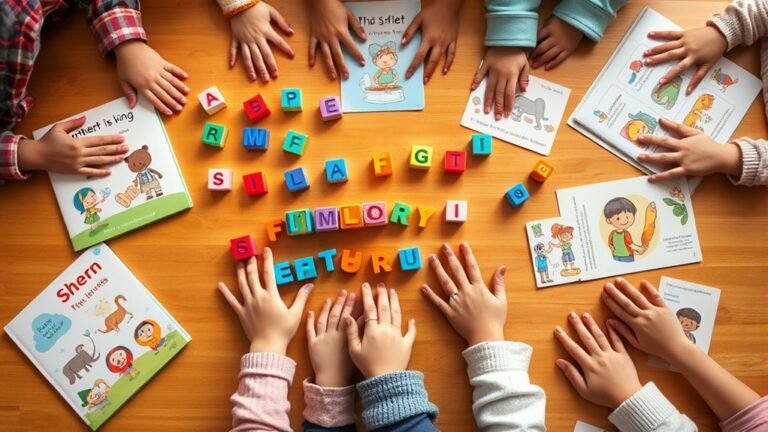
13 Ways Toys Teach Children Smart Budgeting Skills
Toys are a sneaky money school. With play cash and pretend shops, your kid practices budgeting, counting, and making change. When you say, “You can pick two toys,” they learn trade-offs, wish lists, and needs vs wants. Chore charts, stickers, and piggy banks turn saving for a dream toy into delayed-gratification boot camp. Board games add taxes, rent, and surprise bills. Before you know it, your living room becomes their money training ground—and that’s start.
Key Takeaways
- Pretend play with toy money and markets lets kids practice budgeting, comparing prices, and making change in a low-risk, hands-on way.
- Limiting toy choices with a set “budget” teaches trade-offs, prioritization, and the difference between needs and wants.
- Chore-based rewards and saving for a desired toy build earning habits, delayed gratification, and goal-setting skills.
- Board games with fake cash simulate real financial decisions like saving, paying expenses, and planning ahead.
- Regular money talk during play normalizes financial discussions, encourages negotiation, and strengthens everyday math used in budgeting.
Turning Play Money Into Real-World Budget Practice

Even though those plastic coins and rainbow bills look like pure chaos on your living room floor, they’re actually your secret weapon for teaching real-life money skills.
You can turn any game into playful budgeting practice without your kid even noticing. Give them a set amount of play cash and say, “This is your money for the whole ‘toy town’ today.” Suddenly they’ve gotta count, plan, and double-check prices like a tiny, loud accountant.
Hand them play cash and watch pretend shopping turn into sneaky, real-world budgeting practice.
You model how to pay, make change, and stop when the wallet’s empty. That’s imaginative spending with real lessons hiding underneath the play.
Later, at the store, you can say, “Hey, this is just like toy money time,” and the connection clicks. Play turns into quiet, sneaky, lifelong money sense.
Learning Trade-Offs Through Toy Choices and Wish Lists
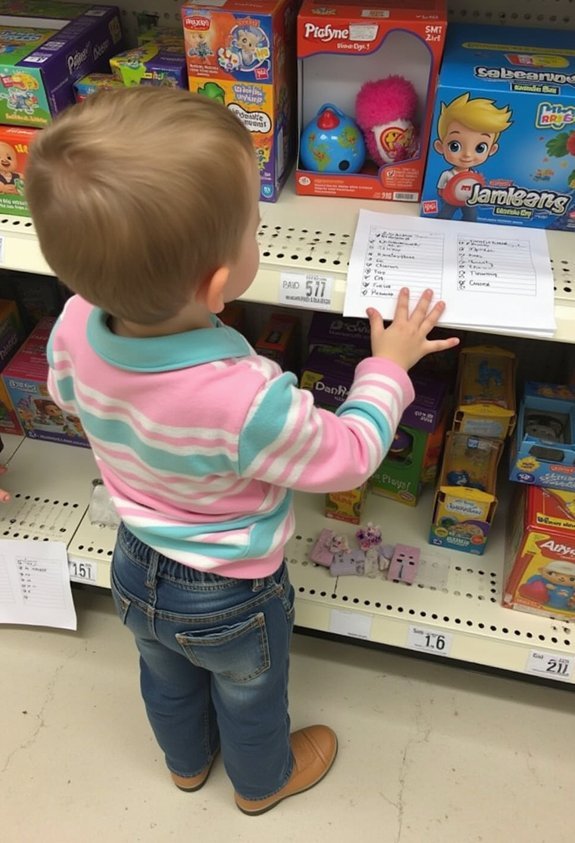
When your kid wants every toy in the store, that’s not just drama—that’s a money lesson trying to be born.
Instead of saying, “No, because I said so,” you turn it into a trade-off game. You’ve got fifteen dollars, you tell them, so which toy earns a spot?
Now their brain hits a wall: “Wait, I can’t have all of them?” That shock is gold. You guide toy selection strategies: compare prices, think about how long it’ll stay fun, talk about batteries, pieces, and mess.
Then you use wishlist prioritization at home. Top three toys go on the “Save For” list; the rest wait.
They learn: choosing one thing means letting others go, and that’s the heart of every budget. That lesson sticks deep.
Using Board Games to Simulate Saving and Spending
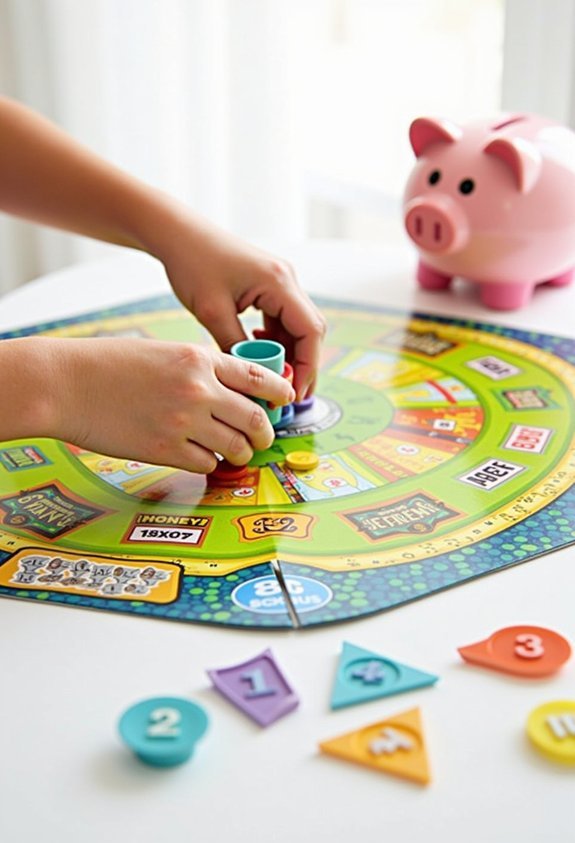
Toy choices at the store teach trade-offs, but board games let your kid practice money moves without you spending a cent.
When you pull out strategy games with fake cash, you sneak in financial literacy without another boring lecture. Your kid has to save, pay rent, maybe even handle “taxes,” and suddenly they’re yelling at a cardboard bank.
Board games turn fake cash into real money lessons—saving, rent, “taxes,” and yelling at a cardboard bank
Let them feel the panic of running out of money and the joy of a big win. Then pause the game and talk through what went wrong or right. Ask, “Should you have saved more earlier?” “Did that risk really pay off?
Soon they’re weighing choices, planning ahead, and learning that every dollar, even pretend ones, has a job, not just a shopping cart in life.
Role-Play Shops and Markets for Everyday Money Decisions

Instead of another “money talk” that makes your kid’s eyes glaze over, turn your living room into a tiny, slightly chaotic market.
You grab some toys, sticky notes, and fake money. Suddenly there’s a snack shop, a toy store, maybe even a “luxury slime boutique.”
Your child gets a budget and has to choose what to buy, skip, or save for later. They’re role playing expenses without you lecturing.
Want chips and a new robot? Sorry, budget says pick one.
Now comes market negotiation: your kid haggles, asks for discounts, offers to do “chores coupons.” You push back a little, just like real life.
They learn prices, tradeoffs, and confidence while laughing on the floor. That’s money practice that actually sticks in their brain.
Managing Limited Resources in Building and Strategy Toys
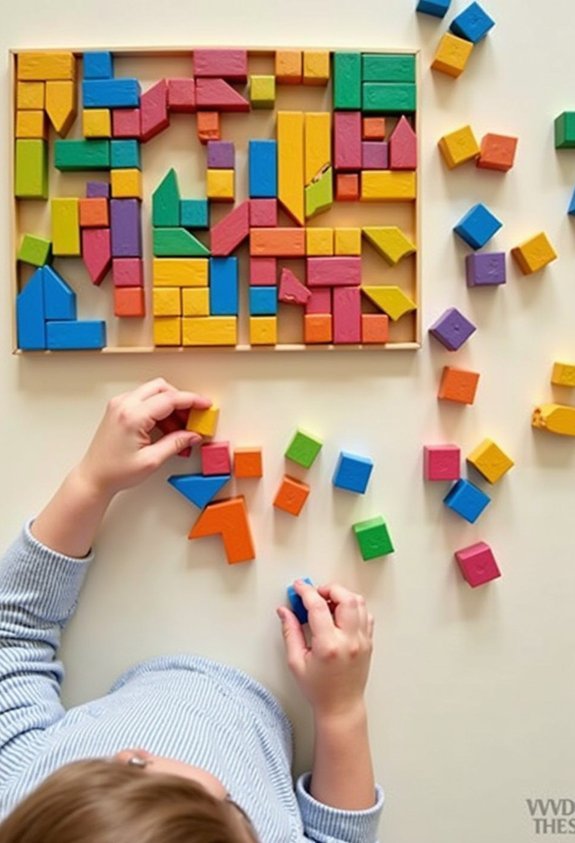
Some of the best “money lessons” sneak in while your kid is trying to build the world’s most extra LEGO castle or beat you at a board game.
You watch them stare at a tiny pile of bricks or tokens and think, “Uh‑oh, this won’t cover everything.”
That’s resource allocation in kid form. Do they build tall walls or add ten fancy dragon towers? Do they expand the farm or buy one super cow?
You can nudge them: “If you spend pieces here, what can’t you build later?”
Now you’re sneaking in strategic planning, without a boring lecture. They feel the sting of running out, the joy of saving pieces, and the power of planning before grabbing.
That’s basic budgeting, just louder and colorful.
Earning “Income” Through Chores, Points, and Game Rewards
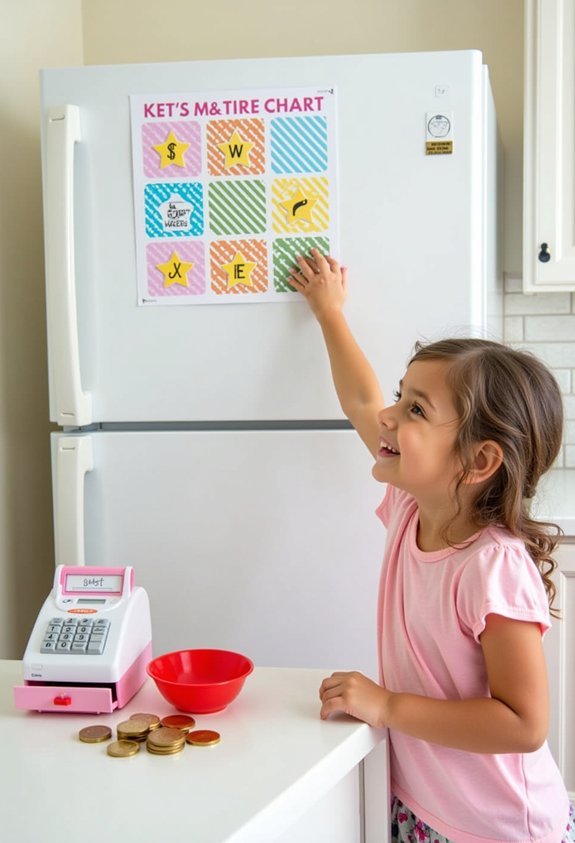
Your kid has now mastered the art of not blowing all their LEGO bricks on one mega dragon tower, so let’s mess with their brain a little more and add “income.”
In real life, you work, you get paid. You can copy that at home with a simple chore reward chart. Wash dishes? Earn two stars. Walk the dog? Boom, five.
Turn those stars into a point system or game currency your kid can trade for extra playtime or a new mini-figure. Now chores don’t feel like torture; they feel like task incentives.
You’re teaching earning potential, financial literacy, and real responsibility lessons, all wrapped in fun budgeting. And yes, they’ll finally stop saying, “Just buy it!” They know money connects to effort, period.
Setting Savings Goals With Piggy Banks and Token Systems

Token systems work the same way. Kids earn tokens and trade them for prizes or privileges.
You post a chart: 10 tokens = movie night, 20 = new game. Suddenly they see numbers grow, plans form, and patience actually pay off.
That’s quiet, powerful budget awareness hiding inside a plastic pig. And they feel proud every time belly rattles.
Comparing Prices and Value During Pretend Purchases

Piggy banks and tokens teach kids to save up, but the real magic happens when they start “shopping” with that play money.
You set up a mini store on the floor: action figures, stickers, slime, all with goofy price tags. Now your kid has to choose. Do they blow it all on giant slime, or grab three smaller treats?
Use the game to focus on value, not just “Ooh, shiny!” Talk through:
- Comparing features: “This robot moves AND lights up. That one just stands there like a bored statue.”
- Evaluating quality: “This truck is metal; this one feels like it will crack if you look at it wrong.”
- Cost-per-play: “Which toy will you still like next week?”
More practice, smarter choices.
Planning Ahead With Allowance-Based Toy Budgets
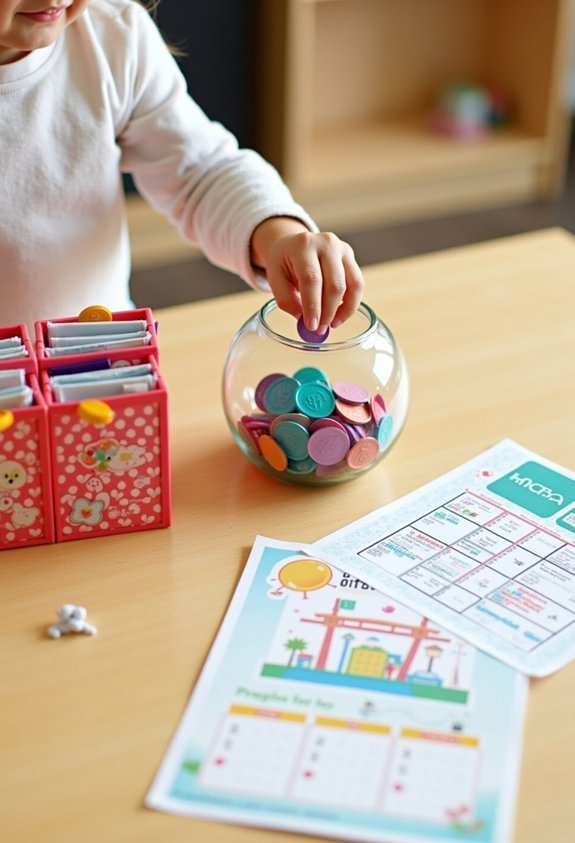
Once kids get the hang of pretend shopping, it’s time for the big leagues: a real allowance and a real toy budget.
Now you’re talking about actual money, not plastic pizza.
Start with simple allowance conversations. Ask, “How much comes in each week, and what do you want most?” Let them dream big: LEGO castle, fancy doll, ridiculous slime kit.
Then bring in budget planning like a friendly reality check. If they get five dollars a week and the toy costs twenty, boom—four-week mission.
Help them split money into jars: spend now, save for the toy, maybe give a little.
When they beg for a random toy, point to the goal jar and say, “Totally your call, boss.” They’ll feel powerful, not controlled anymore.
Tracking Spending Using Play Ledgers and Scorecards
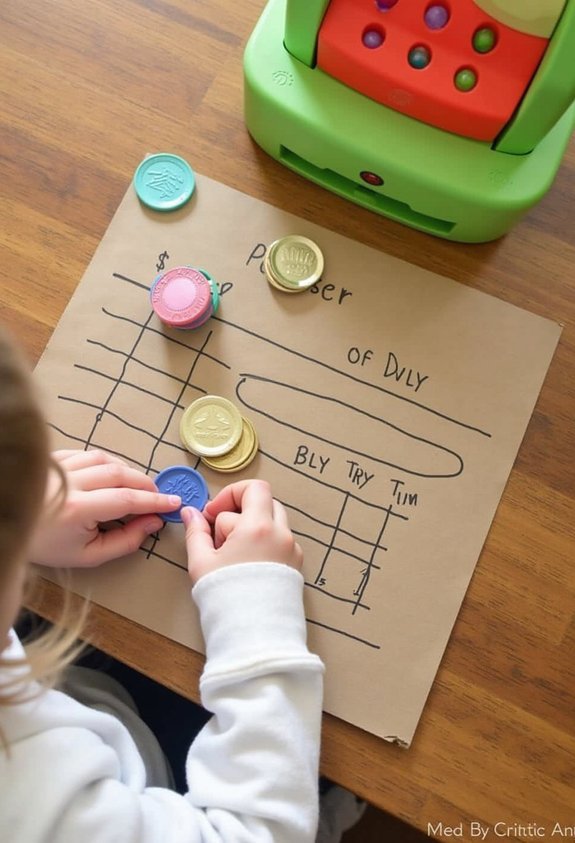
Before your kid turns into a tiny online shopper who screams “add to cart!” at every toy, teach them how to track what they spend with a simple play ledger or scorecard.
Think of play ledgers as money diaries for toys. You write down every “income” moment, like allowance, and every “expense,” like that sixth glitter slime. Soon your kid sees where the cash actually goes.
Set up three easy columns: money in, money out, and what’s left. Then keep score like a game using scorecards tracking.
- Let your kid be the “store manager” and you’re the customer.
- Give bonus points for neat math and honest tracking.
- Review the ledger together and cheer smart choices out loud so victories really stick.
Learning to Wait: Delayed Gratification Through Toy Rewards
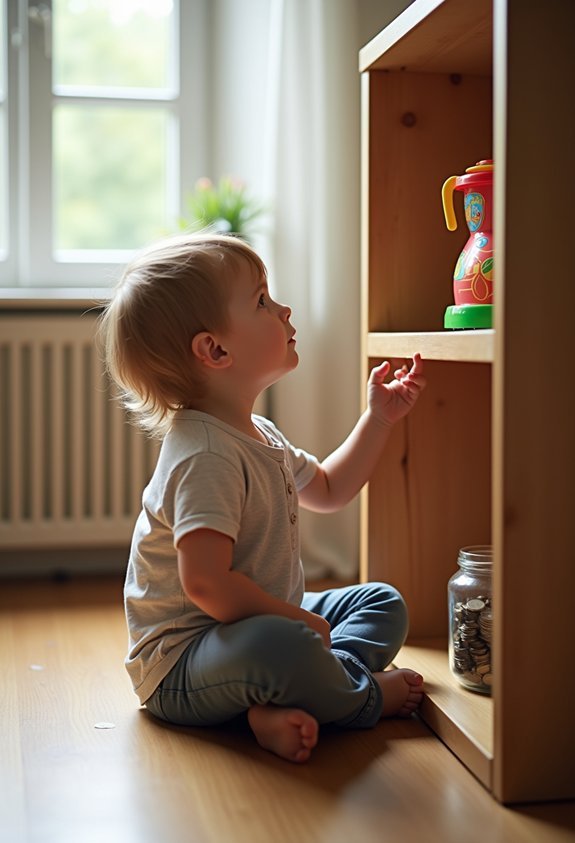
Now that your kid can track every dollar like a tiny accountant with crayons, it’s time to introduce the hardest money skill of all: *waiting*.
You’re teaching delayed gratification, but your kid just hears, “Not yet.” So use toy rewards as the bridge. Set a goal toy, then break it into tiny wins. Five stickers today, five tomorrow, prize on Friday.
That gap between effort and payoff? That’s patience building in action. Talk about the wait every day. “You’re three stickers away from robot glory.” Lean into reward anticipation. Let them feel the drama of getting closer.
When they finally earn the toy, celebrate huge. Then connect the dots: “See? You waited, you worked, and boom—robot riches.”
Next time, saving money will feel possible.
Making Smarter Choices With Needs-vs-Wants Games
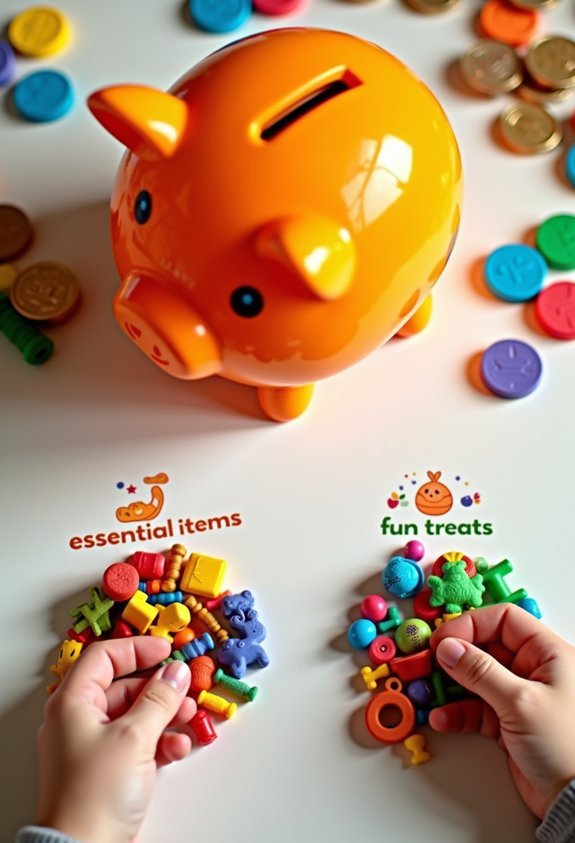
How do you stop your kid from acting like every shiny toy on the planet is a life‑or‑death emergency?
Needs-vs-wants games save your sanity. You turn the toy aisle into a quick needs assessment instead of a meltdown zone.
Give your child a tiny “budget,” real or pretend, and a few budgeting scenarios: birthday money, allowance, or gift cards. Then say, “You can’t buy everything. What matters most today?” Watch their brain spark.
- Ask, “Do we need this to live, or do we just really, really want it?”
- Sort toys into two piles: “Need now” and “Maybe later,” then choose from one pile.
- Let them “shop” with play money, and see what they’re willing to skip for something better next time.
Encouraging Family Money Talks Through Cooperative Play

Money talks with kids don’t have to feel like a boring lecture where everyone slowly dies inside—you can sneak them into games the whole family actually wants to play.
Use family game nights as your secret weapon. Grab a board game where everyone shares one pot of “money” and has to plan together. That’s cooperative budgeting in kid form.
You can say, “We only have 20 coins. Do we buy the cool dragon shield or save for the big castle?” Now they’re arguing, negotiating, doing math, all while you eat snacks.
Pause the game to link it to real life: groceries, rent, vacations. You’re not preaching; you’re playing. But the money lessons still land, hard.
Later, real money talks feel normal, not scary anymore.
In case you were wondering
At What Age Can Children Start Learning Budgeting Concepts Through Toys?
You can introduce simple budgeting concepts around age three, then deepen them at later age milestones. Use pretend shops, coin sorting, and budgeting games so your child practices choosing, saving, spending, and asking questions independently.
How Can I Adapt Money-Themed Toys for Neurodivergent or Special-Needs Children?
You adapt money-themed toys by remembering ‘slow and steady wins the race’: simplify rules, use textured coins for sensory play, add visual schedules, practice role-play shops, and incorporate interactive learning with timers, boards, and breaks.
Are Digital Budgeting Apps for Kids as Effective as Physical Toys and Games?
They can be as effective, but you’ll notice differences in digital vs physical learning. Apps track behavior, give instant feedback, and personalize tasks, but physical tools build tactile awareness, patience, and real-world money handling skills.
How Do I Prevent Toy-Based Money Lessons From Encouraging Materialism or Greed?
You prevent this by pairing money play with reflection: ask why choices matter, praise generosity, set limits, and connect saving to goals, not stuff. Emphasize materialism awareness and values education through stories, discussions, and modeling.
What Low-Cost or DIY Toys Work for Teaching Budgeting in Tight-Income Households?
You can use DIY toy ideas like homemade play money, envelope banks, or chore dice, plus budget friendly games such as price-matching bingo, savings races, and role-play shops using recycled packages and tags and labels.
Conclusion
So yeah, every Lego brick and game token is basically a tiny money lesson in disguise. One mom told me her son saved play coins for three “toy weeks” to buy a plastic dragon… then decided it “wasn’t worth the rent.” That’s budgeting gold. When you hand your kid toys, you’re not just killing screen time. You’re giving them a wallet for their brain. Let them practice now, so future them isn’t crying over real bills later.