Why Minute-to-Win-It Games Unite Families Instantly
Minute-to-win-it games unite your family fast because in 60 seconds, everyone’s equally clueless and ridiculous. No one cares who’s smartest or strongest when Dad’s chasing ping-pong balls and Grandma’s yelling at a stack of plastic cups. The stakes are tiny, the laughs are huge, and nobody has time to check their phone. It’s pure chaos, zero pressure, and nonstop “remember when you…?” stories. Stick around and you’ll grab easy ideas to make this your thing.
Key Takeaways
- The sixty-second timer levels the playing field, making kids, teens, and adults equally likely to win, which instantly feels fair and fun.
- Low-stakes, silly challenges replace serious rivalry with shared laughter, encouraging relaxed participation from even shy or reluctant family members.
- The games demand full focus and movement, pulling everyone away from screens into real-time, face-to-face interaction.
- Shared jokes, bloopers, and “remember when you…” moments are created in minutes, forming quick emotional bonds and lasting memories.
- Simple, adaptable rules let all ages and abilities join in immediately, ensuring nobody is just watching and everyone feels included.
How Sixty Seconds Levels the Playing Field

One tiny minute can turn your whole family into total chaos in the best way.
In sixty seconds, everybody gets equal opportunity to shine or totally wipe out. That time constraint is magic. Your super sporty cousin? He can’t show off much when he’s wobbling with a cookie on his forehead.
Your quiet kid who hates long games? Suddenly she’s a legend because she stacked five cups in ten seconds. You don’t need skills, just nerve and maybe decent balance.
Age, height, and “I used to play varsity” don’t matter. All that matters is, “Can you pull this off before the timer screams?” It feels wild, unfair, and somehow perfectly fair at the exact same time.
Every round feels ridiculous and unfair—and yet somehow, exactly the right kind of fair
And you’ll want to play again. Immediately after.
Why Low-Stakes Competition Builds Big Connections

Because nobody’s fighting over rent money or the last slice of pizza, these silly little games turn “competition” into pure bonding fuel.
You’re not proving who’s smartest; you’re racing to stack cups before your cousin’s cookie falls off his forehead. That kind of friendly rivalry feels safe, so everyone relaxes and joins in. You cheer, you groan, you yell “rematch!” even when you lose.
Suddenly, you’re not just a family; you’re a team with inside jokes and epic stories. These tiny battles create shared experiences you can drag out for years: “Remember when Grandma smoked us all at the ping-pong ball challenge?”
Moments like that stick. They say, “We’re in this together,” without a big, serious talk. That’s the kind of magic families need.
The Science of Laughter and Instant Bonding

Laughter is basically your brain’s way of throwing a party and yelling, “These people are safe—stay close!”
Every laugh is your brain hanging a neon sign: “You’re safe here—relax and belong.”
When you crack up during a dumb game—like watching your uncle try to blow a marshmallow across the table and nearly pass out—your body starts pumping out feel-good chemicals.
That’s the simple version of laughter science: your brain drops stress, your guard lowers, and suddenly everyone feels closer.
You also copy the people around you. One person snorts, another wheezes, and boom—whole-room giggle explosion.
Your brain reads that shared sound as, “We’re on the same team.” Those are real bonding effects.
You don’t need deep talks or perfect plans. You just need fast, silly moments where you all look ridiculous together.
That feeling sticks with you later.
Turning Screens Off and Turning Presence On

All that laughing together feels amazing… until someone reaches for their phone and *poof*—the moment dies like a bad balloon animal. You’ve seen it. One buzz, one scroll, and suddenly everyone’s half here, half in TikTok land.
That’s why these quick, goofy games double as a sneaky digital detox. You can’t stack cups with one hand and text with the other. Well, you can try. It’ll be hilarious.
When you park the phones, you give your brain a break and your people a chance. You notice faces, not notifications. You hear real laughs, not ringtones.
That’s mindful engagement in the simplest way: eyes up, hands busy, heart open, fully locked into sixty wild seconds together. No app can beat that kind of chaos.
Bridging Generational Gaps in One Silly Challenge

Somewhere between “Back in my day…” and “OK boomer,” families forget they’re actually on the same team.
Minute-to-win-it games shove everyone onto that team whether they’re ready or not. You’re all racing the same clock, dropping ping-pong balls, wearing a tissue box belt, looking totally ridiculous together.
That’s the magic. Silly challenges level the field. Grandpa’s bad knees don’t matter when he’s sliding cookies down his face. Your teen’s eye-roll doesn’t stand a chance once Grandma starts trash-talking. Age, job titles, and who-pays-which-bill all fall away.
You get loud laughter, fake drama, and real family bonding. For sixty seconds, nobody’s the “kid,” “parent,” or “grandparent.” You’re just people, trying not to lose to a plastic cup.
And you all secretly want a rematch tomorrow.
Easy Setup, Big Impact: Games You Can Play Tonight

Before you start worrying about supplies, relax—you don’t need a craft closet that looks like Pinterest threw up in it.
Minute-to-win-it games shine because they’re pure quick setup, zero drama. You grab easy materials, throw everyone in the living room, and boom—instant chaos and laughter.
Zero prep, zero stress—just grab random stuff, hit start, and watch the living room explode in laughter.
Here are three you can run tonight:
- Stack Attack – Everyone gets plastic cups. You’ve got sixty seconds to build the tallest tower. When it crashes, the screams are half the fun.
- Cookie Crawl – Place a cookie on your forehead. No hands. Wiggle it to your mouth before the timer dies.
- Balloon Waddle – Put a balloon between your knees and race across the room. Drop it, you restart. Cue dramatic groans from the crowd.
Adapting Challenges for Every Age and Ability
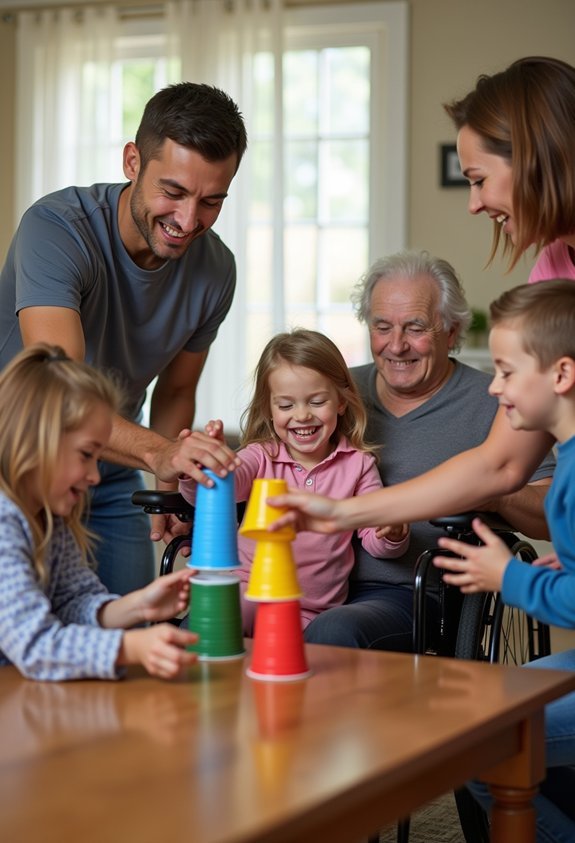
Even though these games are fast and wild, they don’t have to be one-size-fits-nobody chaos. You can tweak almost any challenge so Grandma, your hyper nephew, and your “I don’t run” sibling all play together without tears.
Use age adaptations: fewer cups to stack for little kids, more distance to run for teens, maybe a blindfold for that one cousin who always wins everything.
Then layer in ability modifications. Let players sit instead of stand, toss lighter objects, or give extra time when needed. You’re not “cheating”; you’re leveling the field so every win actually feels epic.
The only real rule? Nobody just watches. If they can cheer, toss, or time the clock, they’re in. That’s how the room explodes with laughs, not groans.
Turning Quick Games Into Lasting Family Traditions

1. Pick a “signature” game.
Choose one Minute-to-Win-It challenge that’s so stupidly fun it hurts. Declare it the official crown jewel of your game nights. Same game, every time, no excuses.
2. Add tiny traditions.
Special snacks. A goofy trophy. Loser wears the glitter wig. Simple bits that repeat make the night feel sacred and silly.
3. Lock in the calendar.
Pick a monthly date, text everyone, and guard it. When life gets loud, traditions give your people a home base. They’ll always remember these.
In case you were wondering
How Can We Handle Competitive Kids Who Get Upset When They Lose?
You stay calm, validate their feelings, and reframe losing as practice for emotional resilience. You model sportsmanship skills, praise effort over outcome, rotate partners, debrief afterward, and set rules about reacting to wins and losses.
What if Our Family Members Are Shy or Hate Being the Center of Attention?
You can ease pressure by offering small-team challenges, letting shy participants choose roles like timer or DJ, and providing quiet alternative activities, so everyone contributes comfortably without spotlights, forced performances, or anxiety about being watched.
How Often Should We Schedule Game Nights to Keep Them Exciting, Not Routine?
Aim for game nights every two to three weeks so they feel special, not routine. Bi weekly schedules work well; rotate hosts, rounds short, add seasonal themes so shy relatives can participate without pressure too.
Can These Games Help Blended Families or Step-Siblings Feel More Comfortable Together?
Yes, these games can gently support blended family bonding by lowering pressure and sparking laughter. You share silly challenges, celebrate tiny wins, and see step sibling connections grow as everyone relaxes, cooperates, and feels included.
How Do We Keep Costs Low While Still Making Game Nights Feel Special?
On a shoestring budget, you transform game night by using DIY decorations, repurposing household items as props, rotating simple themes, and serving inexpensive themed snacks, so everyone feels cherished, excited, and connected without spending much.
Conclusion
So here’s the deal: you don’t need a perfect house, deep talks, or some life-changing trip. You just need sixty seconds, a silly challenge, and your people. Minute-to-win-it games turn your living room into a tiny, loud stadium where everyone’s the star. So grab cups, cookies, tape—whatever’s laying around—and start. You’ll blink and realize you didn’t just play a game; you built a memory that sticks like peanut butter to the roof of your heart.