How to Stop Trail Whining With Fun Games
Turn the hike into a game, not a death march. Make it a story adventure: you’re the grumpy troll, they’re brave explorers escaping mud monsters. Add scavenger hunts (find “something mushy,” “something tiny and red”), silly movement missions (walk only on rocks, duck under branches), and quiet games when they’re tired (count bird calls, spot bug battles). Give them “jobs” like Path Captain or Snack Manager. Stick with me and you’ll collect a whole backpack of sneaky tricks.
Key Takeaways
- Turn the hike into a story adventure with characters and villains so kids focus on the plot instead of “Are we there yet?”
- Run simple scavenger hunts with themed lists and bonus points to keep kids scanning, debating, and moving forward.
- Use movement missions and silly challenges—like rock-hopping or ducking branches—to turn walking into a playful obstacle course.
- Switch to quiet games when kids tire, such as mindful walking, nature “I spy,” or counting colors and sounds.
- Assign rotating “trail jobs” like Path Captain or Snack Manager so kids feel important and stay motivated to keep going.
Turn the Trail Into a Story Adventure
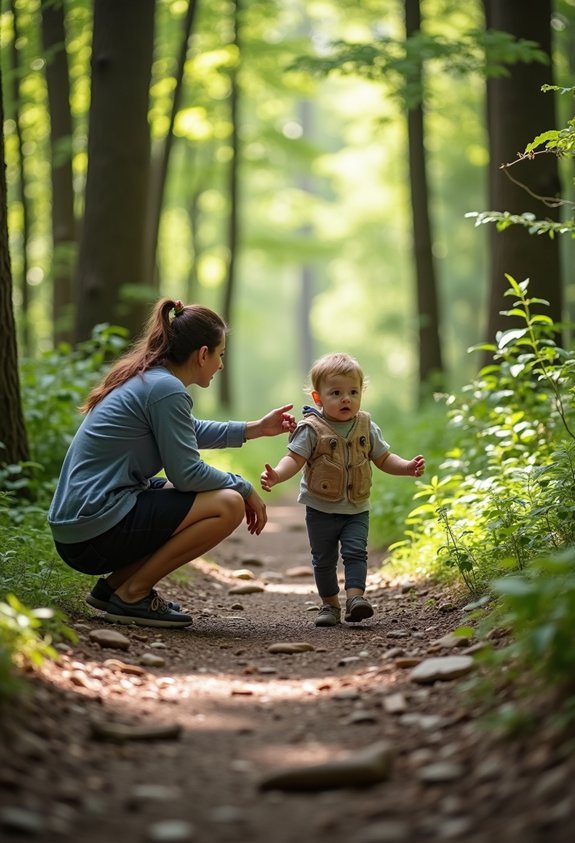
When your kid starts dragging their feet and asking, “How much loooonger?” it’s your cue to turn the trail into a full-on story adventure.
When “How much looonger?” starts, flip the hike into a ridiculous, high-stakes story quest
You don’t just walk; you enter a movie. Pick simple character roles: brave explorer, tired but hilarious sidekick, grumpy troll parent who secretly loves snacks.
Give the trail a villain—mud monsters, twig dragons, the Evil Squirrel King who steals granola.
Use quick story prompts to keep things rolling: “Uh-oh, the bridge is cursed, how do we cross?” or “We hear drums… friend or foe?”
Let your kid decide what happens next. When they stall, add drama. Gasp, whisper, point. The more you commit, the faster they forget they’re “so exhausted.”
Scavenger Hunts That Keep Feet Moving
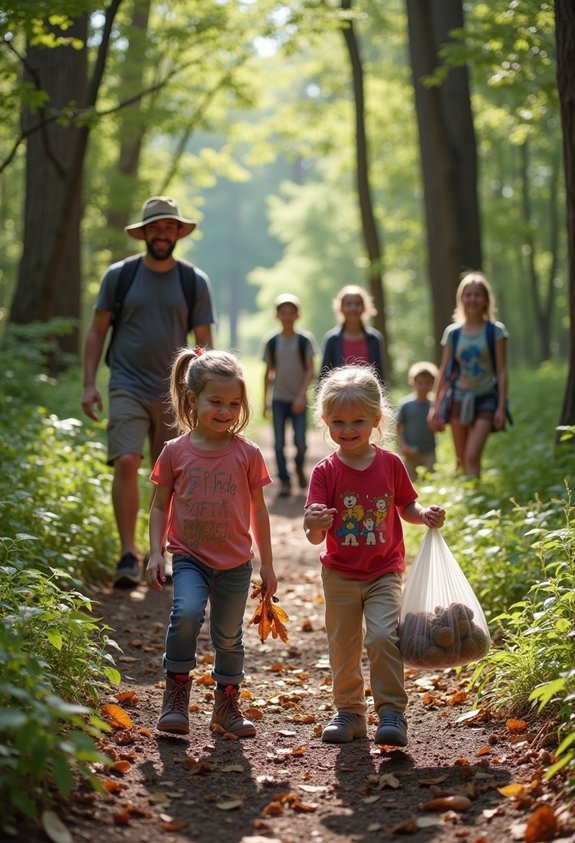
Nothing shuts down trail whining faster than a good scavenger hunt, because suddenly your “I can’t walk another step” child is sprinting to find three weird rocks and something that smells terrible.
You just give them a list and boom, instant motivation. Use simple nature themes: “mushy things,” “tiny red things,” “stuff that crunches.”
Keep the scavenger clues loose so kids can argue their case; debates burn lots of steps. Let them snap photos instead of grabbing everything, so you don’t end up hauling a forty-pound “collection” back to the car.
Add bonus points for hard finds, like a heart-shaped rock or a crooked feather. When attention fades, swap lists, reset the hunt, and keep feet rolling.
End the hike without tears, just stories.
Movement Missions and Silly Challenges

Of course, some days even a scavenger hunt can’t save you, so it’s time to bust out movement missions and full-on silly challenges.
Turn the trail into a secret agent course. You announce, “Mission One: walk only on rocks for ten steps.” Boom—instant movement motivation.
Next up: “Lightning Lava Dash.” Everyone has to reach the next tree before you count to ten or the “lava” gets their socks.
Toss in playful obstacles you spot: step over roots like giant snakes, duck under low branches, tiptoe past “sleeping bears” (aka hikers who look tired).
Let kids take turns inventing missions. When they’re the boss, they forget to complain because they’re too busy trying to beat their own ridiculous rules. They’ll beg for extra trail time.
Quiet Games for Tired Legs and Busy Minds
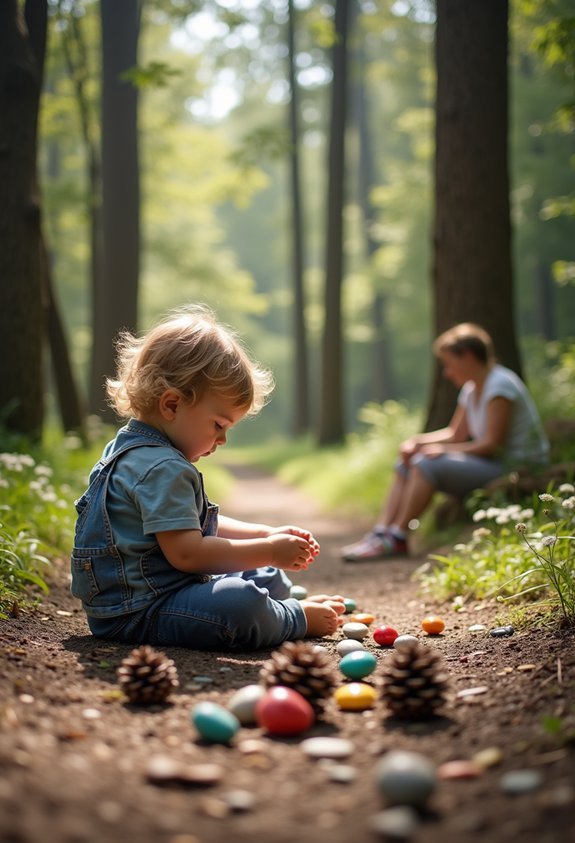
Eventually even the wildest secret agent runs out of steam, and suddenly your “lightning lava dash” squad looks like a pile of melted candles.
That’s your cue to switch to quiet games that rest legs but keep brains buzzing. Try mindful walking: everyone moves slowly, heel to toe, like sneaky sloths on a mission, noticing every sound and crunch.
Use simple nature observation so kids forget they’re tired. Challenge them to spot tiny dramas around them, like bugs wrestling leaves.
- Count five shades of green without pointing.
- Listen for three different bird calls, then name them anything you want.
- Play “nose detective” and quietly sniff out pine, mud, or wildflowers.
When minds stay busy, legs stop complaining about this entire hike.
Trail Jobs That Make Kids Feel Important
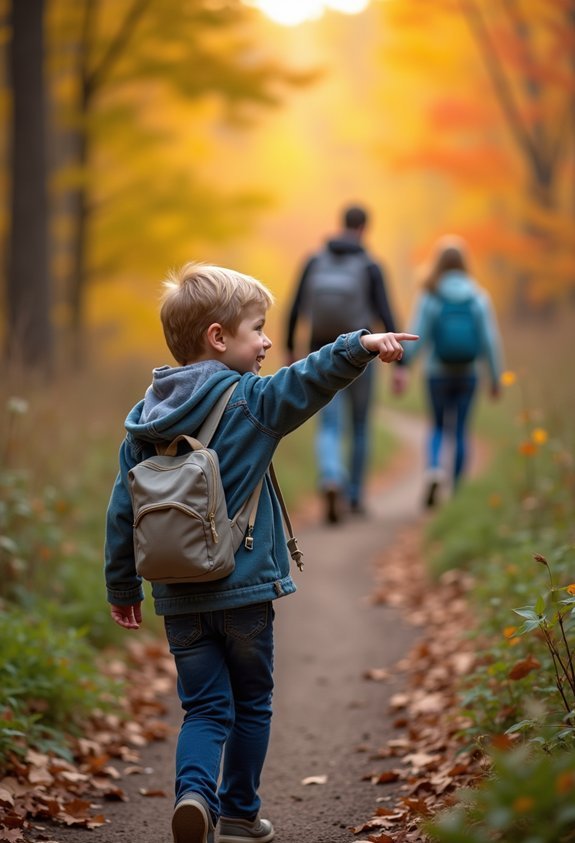
When kids start whining, don’t just hand them a snack—hand them a *job*. Kids hate feeling dragged; they love feeling in charge.
So give out trail responsibilities like you’re casting a movie. Make one child the “Path Captain.” They walk in front, watch for turns, and shout, “This way, crew!”
Another kid is “Snack Manager,” guarding the food bag like it’s gold. Someone else is “Water Wizard,” calling drink breaks.
You can also add tiny team roles: Bug Scout, Bird Caller, Mood Booster, Pace Keeper. Rotate jobs every 10–15 minutes so nobody starts a turf war.
Suddenly they’re not walking a boring trail; they’re running a mission. And missions are way cooler than whining. You’ll notice the complaints vanish faster than spilled trail mix.
Simple Prep Tips to Make Games Work Every Time
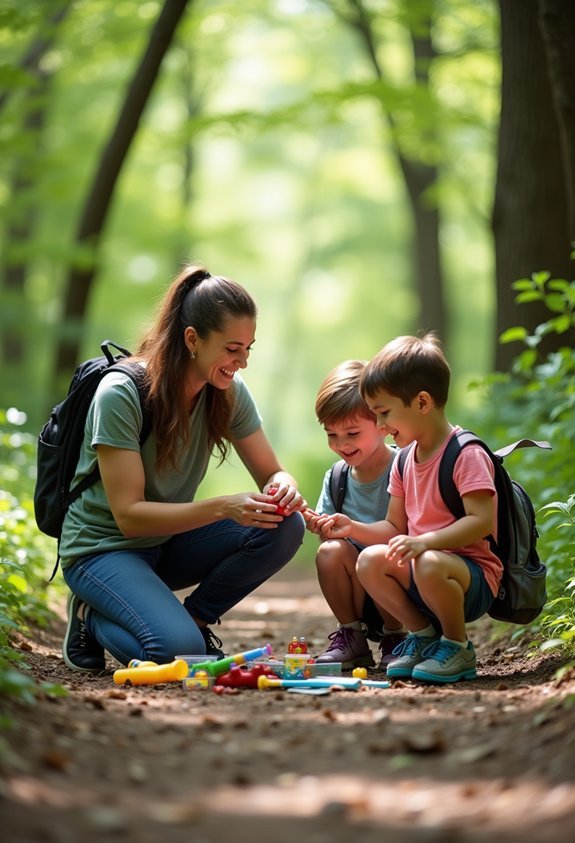
Magic trick time: the real secret to trail games isn’t the game—it’s the setup. First, nail game selection. Pick something kids can learn in one minute, not a board-game rule book. Watch group dynamics: mix shy and loud kids so no one gets steamrolled or bored.
Trail game magic isn’t the rules—it’s choosing simple games that fit your unique mix of kids
Use a few simple preparation strategies before you even leave the car:
- Quick equipment check: do you actually have the deck of cards, or is it still on the kitchen counter?
- Fast time management scan: when snacks are ten minutes away, choose a short, high-energy game.
- Smart weather considerations: windy? skip paper; blazing sun? pick games that keep kids moving, not melting.
Do that, and your games almost never flop. You’ll feel like a trail wizard by accident.
In case you were wondering
How Do I Handle a Child Who Refuses to Participate in Any Game?
You first accept their feelings, then invite choices instead of full games. Use engagement strategies like shared storytelling and role-play, plus motivational techniques such as praise, curiosity questions, and challenges. Always protect autonomy and connection.
What Trail Safety Rules Should Kids Know Before Starting These Activities?
You guide kids education in trail safety by covering staying on paths, staying in sight, yielding, not touching wildlife, water, recognizing trail signs, and knowing what to do if they’re lost or injured or separated.
How Can I Adapt These Games for Toddlers Versus Preteens?
Like tuning two instruments, you adjust games by simplifying rules and shortening distances for toddler adaptations, while adding strategy, teamwork roles, and light challenges as preteen modifications, so each age feels capable, engaged, and proud.
Are There Ways to Include Kids With Mobility or Sensory Challenges?
You can include kids by choosing inclusive activities like seated scavenger hunts, story-based walks, and buddy teams. Offer sensory friendly games with quiet zones, headphones, visuals, and let kids opt into, adapt, or skip challenges.
What Should I Do if Weather Changes Suddenly During Our Hike Games?
You pause the game immediately, assess conditions, and prioritize safety. You use your weather preparedness plan, add layers, hydrate, then seek emergency shelter or safe cover. You shift to storytelling or observation games while wait.
Conclusion
Next time you hit the trail, don’t just walk it—paint it. Your games are the colors, your kid’s laughter is the brush, and every “I’m tired” becomes a tiny erased pencil mark. You’re not raising a hiker, you’re forging a little explorer with mud on their shoes and stories in their pockets. So pack snacks, grab your “game bag,” and go rewrite the legend of The Whiny Hike of Doom. Once and for all today.