10 Best Outdoor Nature Sensory Activities for Kids
Want your kids outside and actually excited about dirt? Try a backyard sensory scavenger hunt, a barefoot texture walk, and messy mud kitchen play. Add a sound safari, leaf and rock rubbings, DIY nature sensory bins, and a smell-and-taste herb garden. Let them build with sticks and stones, then brave a nighttime flashlight senses adventure. It’s chaos, it’s muddy, and it secretly builds science brains—wait till you see all the wild twists you can add.
Key Takeaways
- Organize a sensory scavenger hunt with prompts for smells, colors, textures, and tiny treasures collected in egg cartons.
- Go on a nature texture walk, barefoot or with hands, exploring and ranking surfaces like grass, dirt, bark, moss, pebbles, and water.
- Create a backyard mud kitchen using bowls, spoons, dirt, water, and leaves to mix imaginative “recipes” and explore cause-and-effect.
- Try a sound safari, quietly identifying and naming bird calls, rustling leaves, echoes, and other environmental sounds.
- Plan a nighttime nature senses adventure with flashlights, listening for nocturnal sounds, smelling the night air, and stargazing to invent sky stories.
Sensory Scavenger Hunt in Your Backyard
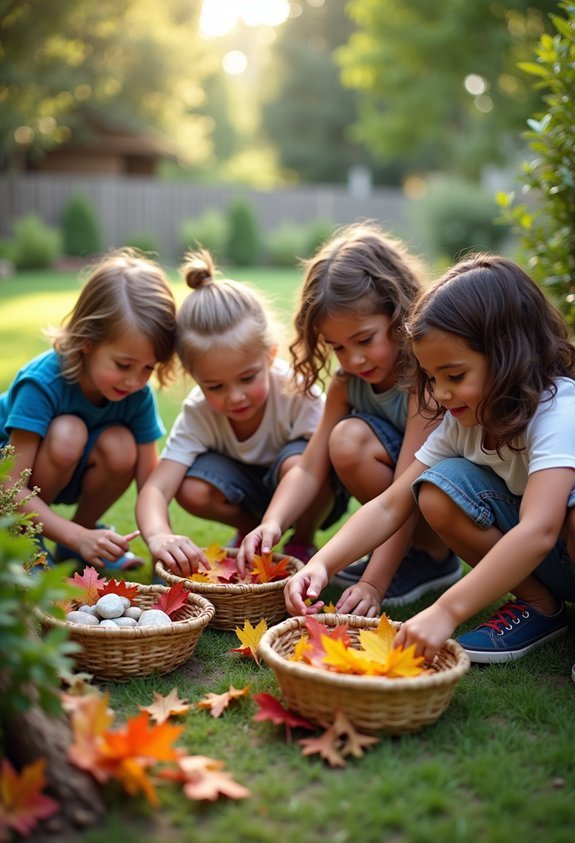
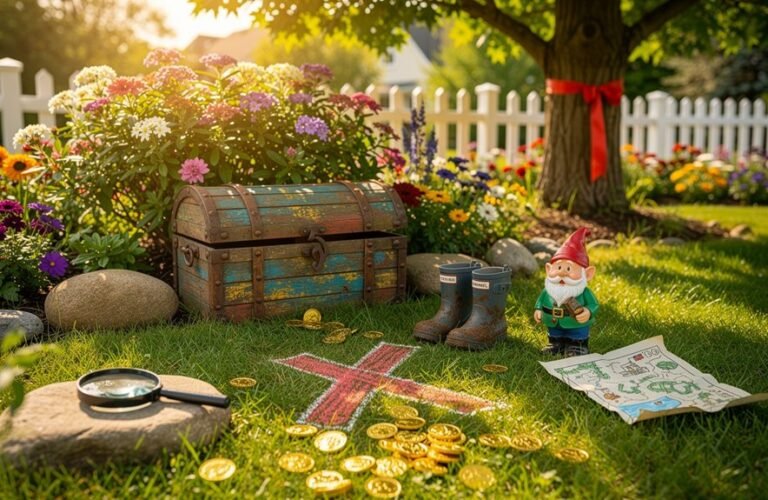
Even if your backyard feels “meh” and boring right now, it can turn into a full-on adventure zone with a simple sensory scavenger hunt. You grab a clipboard, a crumpled paper list, maybe a detective hat if you’re extra, and boom—backyard exploration mode.
Write quick prompts: “Something that smells strong,” “Three shades of green,” “A sound that surprises you.” Then you race to find them. Kids sniff leaves, shake branches, listen for birds, and argue over whether the neighbor’s lawn mower counts. Spoiler: it totally does.
For sensory collection, use an egg carton. Each cup holds a tiny treasure—smooth rock, dry leaf, mystery seed. When you’re done, share favorites and tell the wild stories behind them. Suddenly, outside feels bigger, stranger, and way cooler.
Nature Texture Walk: Barefoot and Hands-On Exploring
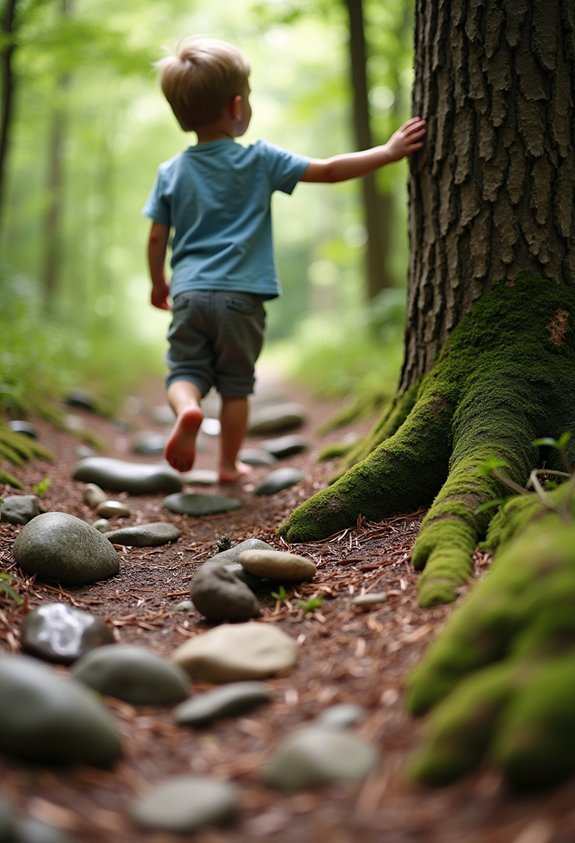
Bare feet, meet backyard. You’re about to turn your lawn into a mini spa for tiny toes. Start with simple barefoot exploration: grass, patio, a shady patch of dirt.
Bare feet, meet backyard: a tiny toe spa of grass, stone, and squishy earth.
Have your kid walk slowly, eyes closed, and describe each feeling. Is it prickly, smooth, cold, crumbly, ew-what-was-that?
Add safe “texture stations”: a towel, a tray of pebbles, leaves, pinecones, and a shallow pan of water. Let them step, jump, and stomp through, then rank textures from “ahhh” to “never again.” That’s tactile discovery in action.
Don’t forget hands. Invite your child to touch tree bark, moss, flower petals, and smooth rocks. You’re basically training a tiny scientist, just one who still loses socks daily.
Plus, you’re outside, so cleanup is just shaking off feet.
Mud Kitchen Play for Imaginative Chefs
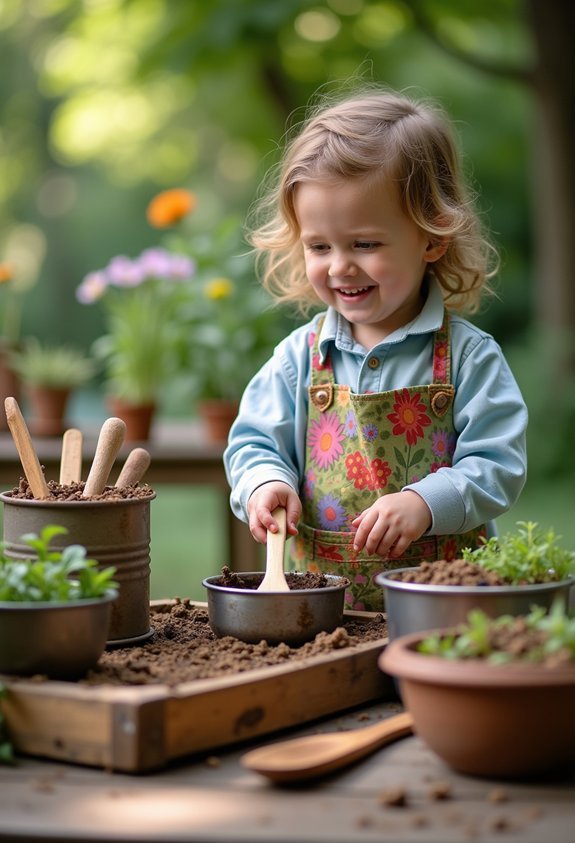
Your kid’s feet have met the yard, now it’s time for their inner chef to meet the mud. Set up a simple “kitchen” outside with old bowls, spoons, and a beat-up muffin tin. Add dirt, water, leaves, grass, maybe a stray acorn or two. Boom—instant restaurant.
Encourage your kid to mix, squish, and slap together the wildest mud pie they can dream up. Talk about ingredient variations: dry dirt versus soggy sludge, smooth sand versus chunky gravel. Ask, “What happens if you add more water?” then let them test it.
Yes, it’s a mess. Your porch might look like a bakery exploded. But they’re learning problem-solving, creativity, and cause-and-effect—without a single worksheet in sight.
Hose them off later; the memories stick around way longer.
Sound Safari: Listening Games in the Outdoors

Next, try bird call identification. Don’t stress about names. You can say, “That one’s the Laser Bird. That one’s the Angry Car Alarm Bird.” You’re training attention, not writing a science paper.
For forest echo exploration, shout silly words at trees or a hillside and wait. Kids LOVE when the forest “answers back.”
Finally, sneak mode: tiptoe, whisper, and see how quiet you can walk without scaring sounds away into the bushes first.
Leaf, Flower, and Rock Rubbing Art
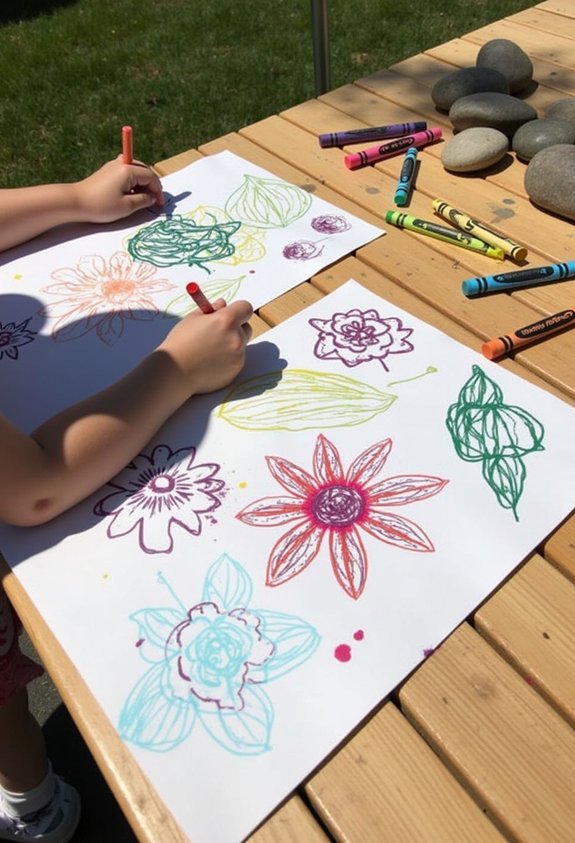
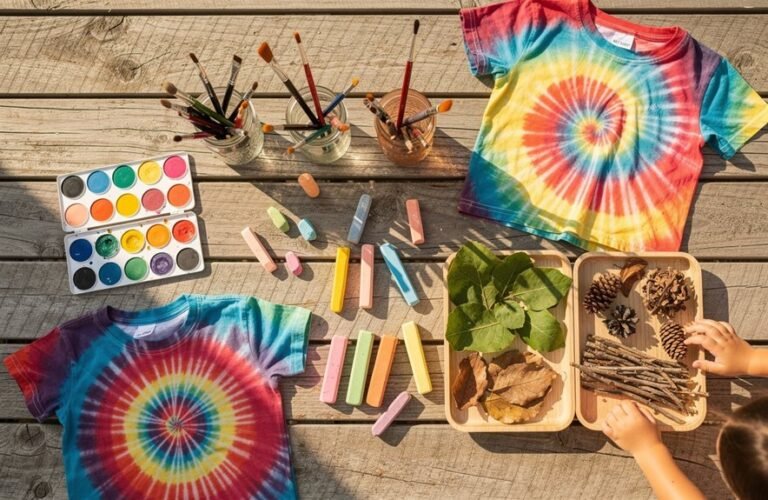
A sneaky way to turn your walk into an art studio is with leaf, flower, and rock rubbings. Grab paper, crayons, and a kid who likes to stomp on crunchy things.
Press paper over a leaf and rub the side of the crayon. Boom—leaf art. Suddenly veins appear like magic.
Try petals next for soft flower impressions, then hunt for rough rocks to reveal wild rock patterns. You’re basically printing the ground.
Talk about which rubbing techniques work best: light strokes, heavy strokes, different colors, layered nature prints. Kids feel the bumps, edges, and grooves as they work, soaking in creative textures.
Bonus: this project fits in a backpack and never involves glitter. You’re welcome.
Save the masterpieces for walls, fridges, and surprise gifts.
Water Play With Buckets, Funnels, and Natural Tools
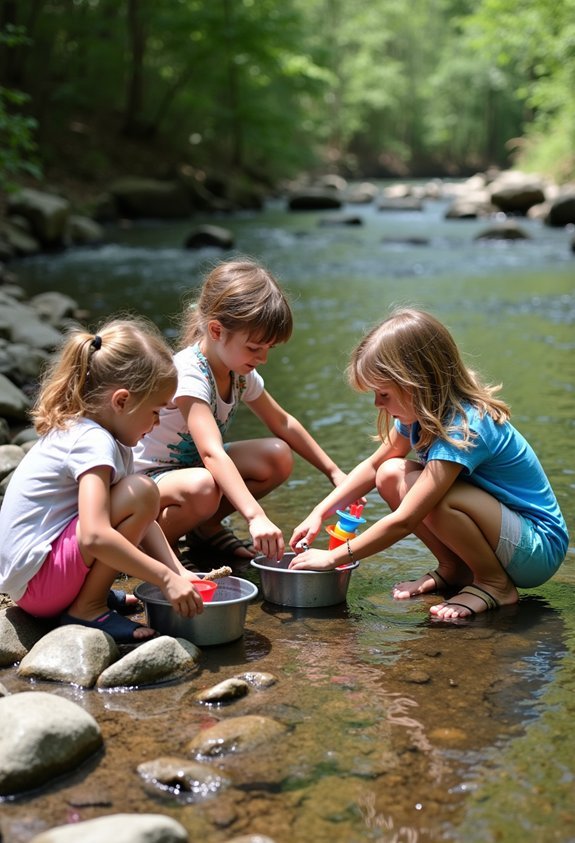
Once kids have covered the sidewalk in leaf prints, it’s time to get things wet—really wet. Grab a big bucket, a few smaller containers, and every funnel you own. Head outside and turn the yard into a mini water lab.
Ask kids to test which pours faster: wide funnel, skinny funnel, or no funnel at all. Boom—instant water experiments.
Now raid the yard for natural materials. Sticks become stirrers. Leaves turn into tiny boats. Pinecones? Surprise: they soak up water like sponges, then drip everywhere.
Have kids guess which items sink or float, then let them drop, splash, and shout. When everyone’s soaked and the ground’s a muddy mess, you’ll know the activity worked.
Toss in towels, because nobody walks away dry from this.
Build-and-Explore Nature Sensory Bins
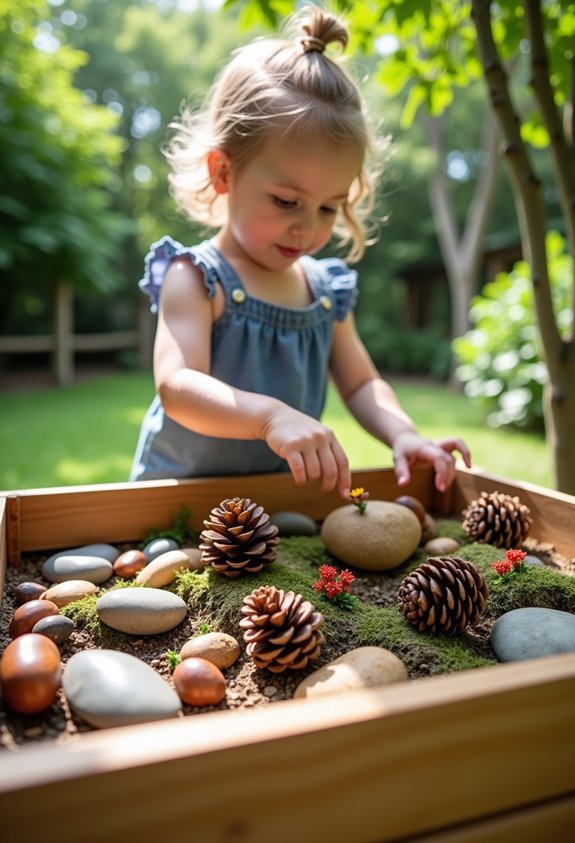
Try themes to spice up bin exploration:
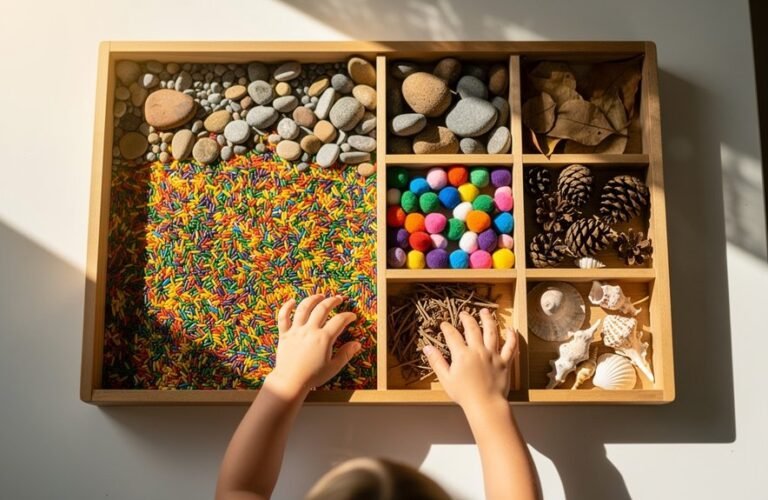
- Forest bin: damp soil, bark, moss, pretend bugs, tiny animal toys.
- Rocky beach bin: sand, pebbles, shells, driftwood, small cups for scooping.
- Construction bin: gravel, sticks as “logs,” toy trucks for hauling.
Ask questions: “What feels rough? What’s smooth? Which sticks snap?”
Let them pour, bury, and sort. Yeah, it’s messy, but it’s also cheap, calm, and secretly educational.
Toss in spoons and scoops so little hands stay busy longer.
Smell and Taste Garden With Herbs and Edible Plants
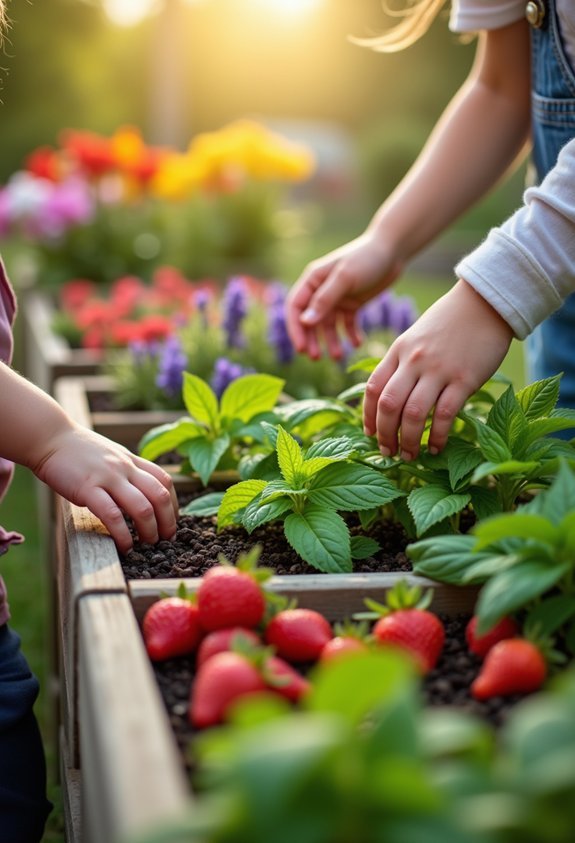
Sensory bins are awesome, but now it’s time to let kids play with nature they can actually *eat*.
Turn a small corner of your yard into a smell-and-taste garden, and suddenly science feels like snack time. Plant easy herbs: mint, basil, chives, thyme, maybe strawberries for bonus cheers.
Turn a tiny yard corner into a snackable science lab with kid-friendly herbs and bonus strawberries
As plants grow, do simple herb identification games: rub a leaf, sniff, and let kids guess the name. Wrong answers are hilarious.
Then comes the showstopper—plant tasting. You pick a leaf, they lick, nibble, or make dramatic faces. Talk about which flavors seem sweet, spicy, or “pizza-y.”
Compare smells before and after rain. Keep a little notebook of favorites and “never again” plants. Just make one rule crystal clear: only taste plants an adult has okayed.
Stick, Stone, and Leaf Construction Zone
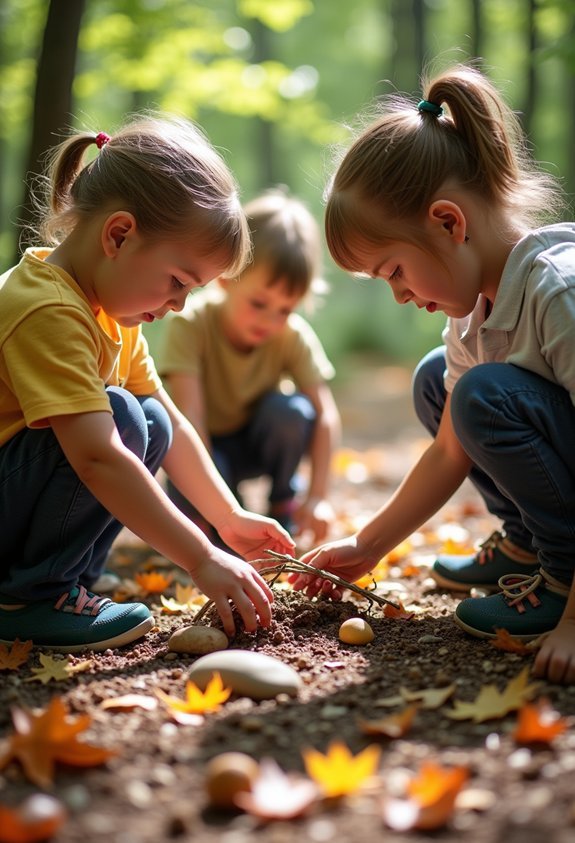
Build site approved: your yard is now a full-on “stick, stone, and leaf construction zone,” no hard hats required.
Send your kid out as the boss of backyard nature architecture. Hand them a bucket and say, “Collect anything that won’t crawl away.” Sticks become beams, stones turn into walls, leaves make fancy roofs. Suddenly, you’ve got a tiny city growing under the tree.
- Set a “challenge build,” like a fairy house, bug stadium, or rock hotel.
- Add water in a bin so they can test bridges and boats.
- Snap photos of their creative construction and let them explain every detail.
You’re sneaking in design skills, problem-solving, and focus, and they just think they’re playing.
No batteries, screens, or instructions included—just simple outside magic today.
Nighttime Nature Senses Adventure
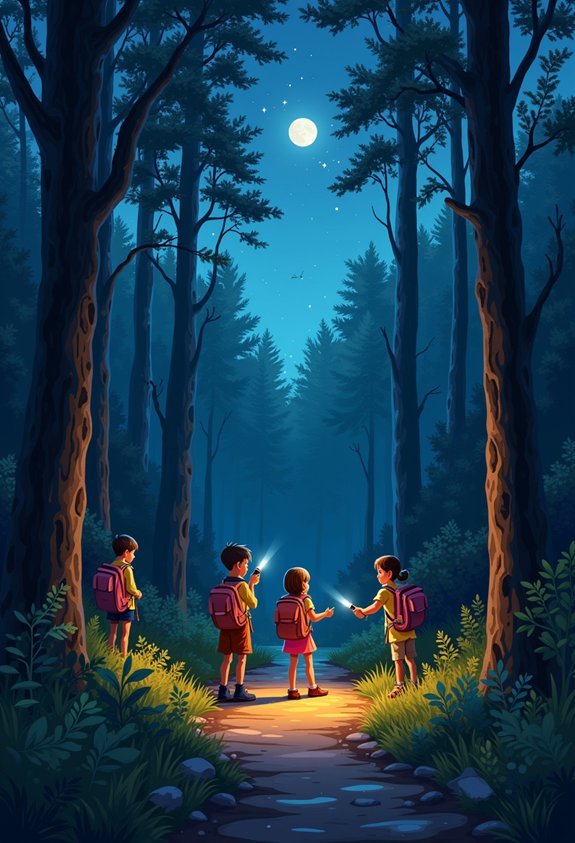
Ever notice how the backyard feels like a whole different planet after dark? Grab a flashlight, a sweater, and your kid, then step outside like brave explorers sneaking into the unknown.
First, turn off the light and just stand still. Listen. Crickets, rustling leaves, maybe an owl—those are your local nocturnal animals clocking in for work.
Now tilt your heads back and check out the starry sky. Play “sky detective”: find shapes, give them ridiculous names, and make up quick stories. Smell the cool air, the wet grass, the neighbor’s suspiciously burnt barbecue.
Try a “quiet walk” challenge, tiptoeing around like ninjas. Every new sound or smell, your kid whispers what they think it is—no wrong answers. Write it down later in a journal.
In case you were wondering
What Ages Are Best Suited for Outdoor Nature Sensory Activities?
Outdoor nature sensory activities suit children from infancy through early adolescence, as long as you match experiences to developmental stages. You’ll select age appropriate activities: simple textures for toddlers, exploration for school-age kids and preteens.
How Can I Adapt Nature Sensory Activities for Children With Sensory Sensitivities?
You adapt activities by offering choices, using gradual exposure, and planning sensory modifications like softer textures, quieter spots, and sunglasses or hats. You add calming techniques such as deep breathing, rhythmic movement, and predictable routines.
What Safety Precautions Should I Take During Outdoor Sensory Play?
Since 25% of injuries happen outside, you’ll check spaces for hazards, supervise closely, pack First aid supplies, enforce sun and hydration breaks, teach boundaries, and use insect precautions like repellent, covered food, and skin checks.
How Can We Do Nature Sensory Activities in Bad Weather or Limited Outdoor Space?
You transform bad weather into exploration by bringing nature indoors: build sensory bins with soil, leaves, and stones, grow herbs, use balcony water play, rotate indoor adaptations, and treat greenhouses, and porches as weather alternatives.
What Inexpensive or Recycled Materials Can I Combine With Natural Items for Sensory Play?
You fill recycled containers with sand, pebbles, and leaves, then add bottle caps, cardboard tubes, fabric scraps, and spoons, so kids sift, pour, and stir, exploring natural textures while you quietly guide their curious hands.
Conclusion
Now it’s your turn to kick the kids outside and let nature do some of the parenting. Research shows just 20 minutes in nature can boost kids’ attention by up to 20%—basically the cheapest “brain upgrade” ever. So pick one activity, toss some supplies in a bucket, and head out. Expect dirt, loud giggles, and maybe a lost shoe. Totally worth it. You’re not just making memories; you’re wiring their senses for life today.