Independent Play Isnt Natural”Its a Skill. Heres How to Teach It (Without Losing Your Mind)
Independent play isn’t magic, it’s training. You start as the “backup singer” while your kid leads the show. Sit nearby, let them pick a toy, and pretend to be boring. Slowly stretch the time you’re “busy” while they play. Keep just a few simple toys out, stash the noisy light-up junk, and celebrate tiny wins like, “You played for five minutes alone!” Expect whining, “I’m boooored,” and clinginess—and then learn exactly how to handle it like a boss.
Key Takeaways
- Treat independent play as a learnable skill; start with very short stretches and build up gradually, just like practicing any new habit.
- Stay nearby but avoid leading the play; your calm, quiet presence helps kids feel safe while they experiment and entertain themselves.
- Simplify the play area: fewer, accessible, open-ended toys in one zone reduce overwhelm and make it easier for kids to dive into play.
- Expect clinginess and cries of “I’m bored”; offer quick reassurance, then gently stick to boundaries and use small “missions” or prompts.
- Praise effort and small wins in solo play, focusing on their creativity and problem-solving rather than the outcome or how long they played.
What Independent Play Really Looks Like (and Why It Matters)
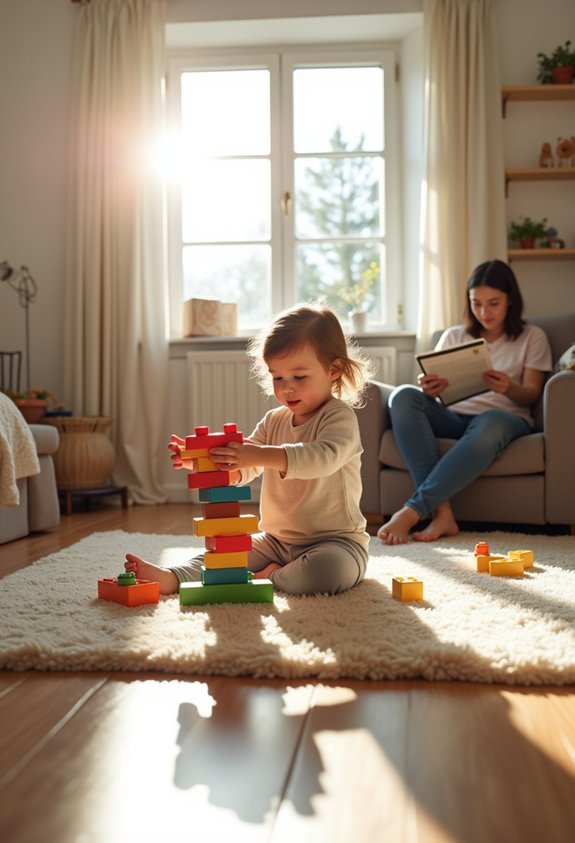
So what does “independent play” actually look like—because it’s not your kid sitting cross‑legged in total silence, building a perfect LEGO city while you sip hot coffee and scroll your phone like a Disney mom.
Real independent play is messy, loud-ish, and kind of weird. Your kid drifts between toys, talks to themselves, acts out stories, abandons stuff, comes back. They test different types of play: lining up cars, cooking fake soup, putting dolls in “timeout” for crimes unknown.
You’re nearby but not running the show. That’s the magic.
The benefits of independence pile up here: focus, problem‑solving, confidence, and a kid who doesn’t need you every 2.4 seconds.
It’s not about perfection; it’s about practice without constant applause. Slow progress still totally counts.
Why Some Kids Struggle to Play on Their Own
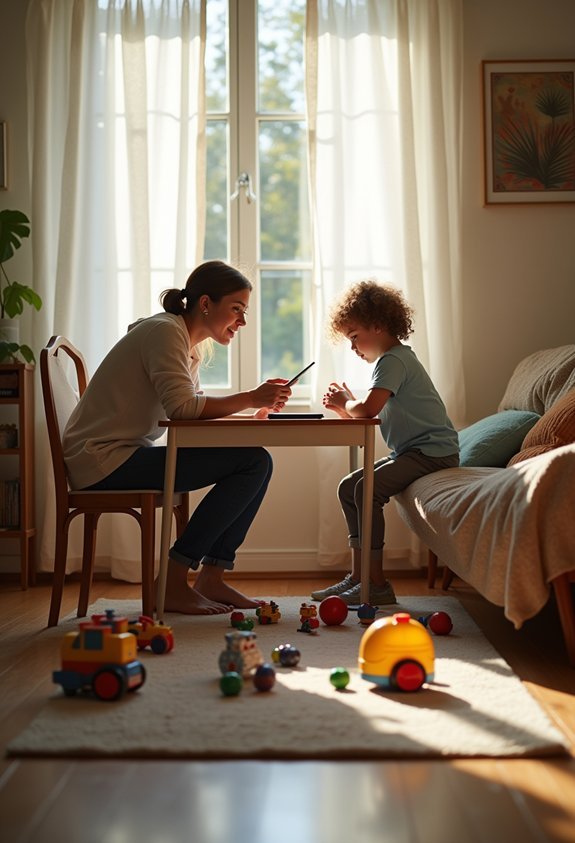
Some kids struggle with emotional regulation. The second a block tower leans, they panic, melt down, and yell for you.
Others rely on you for every idea: “What now? What next? What now again?” They haven’t practiced starting play or sticking with it.
Kids who lean hard on adult interaction or have wobbly social skills may also think play means “with someone.”
Alone can feel boring, confusing, or even kind of unsafe to them.
Simple Steps to Gently Build Your Child’s Solo Play Skills
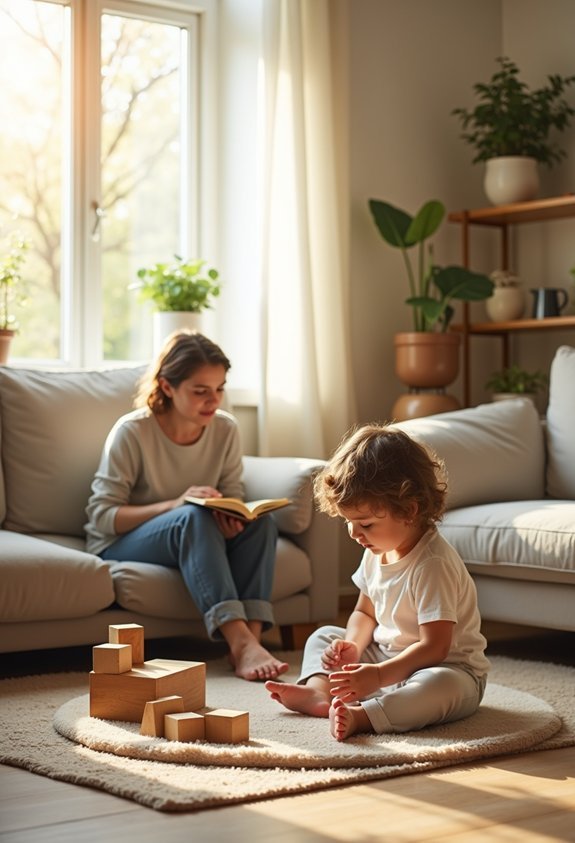
Even if your child currently acts like they’ll *physically perish* if you leave the playroom, you can absolutely teach them to play on their own—without tears, drama, or 500 snacks.
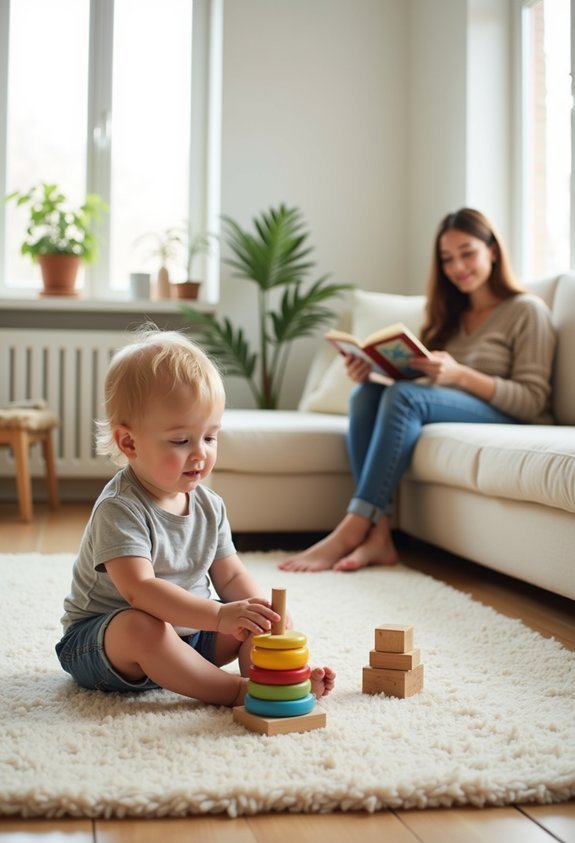
Start tiny. Sit beside them and say, “I’m here, but I’m not playing. This is your turn.” Let them pick the solo activities, even if it’s lining up stuffed animals like a tiny dictator.
After a few minutes, step back: “I’m grabbing water. I’ll be back when this song ends.” Then actually come back. Repeat. Stretch the time. Celebrate every win: “You played alone for four minutes. That’s huge.”
When they slip into imaginative exploration, don’t rush in with ideas. Your quiet, boring presence is the secret training tool. Slow, steady practice makes independence.
Setting Up Your Home and Toys to Encourage Real Play
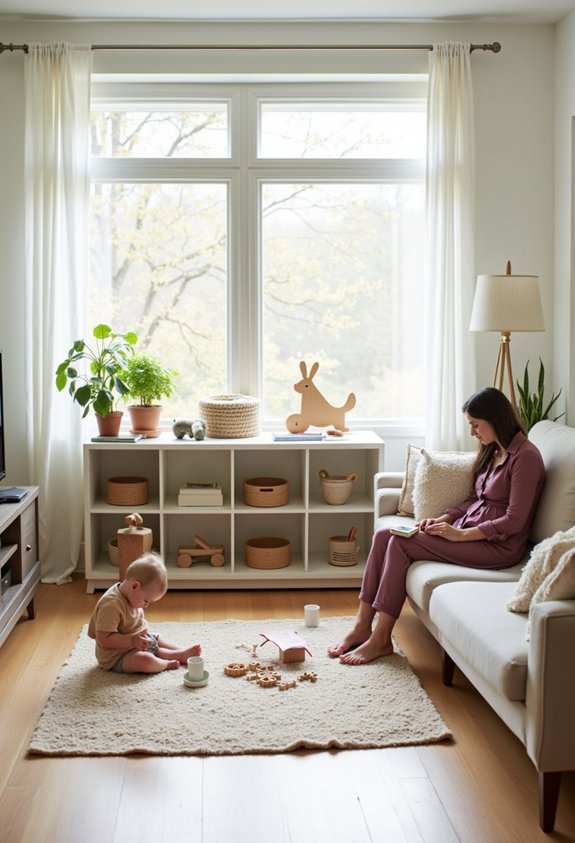
One big secret about “independent play” that no one tells you: it’s way less about your kid and way more about your stuff and your space.
When you tweak the room, your child suddenly plays longer, like magic, but without the rabbit.
Think less toy store, more cozy mini-playground. You want a playful environment that whispers, “Come mess with me.”
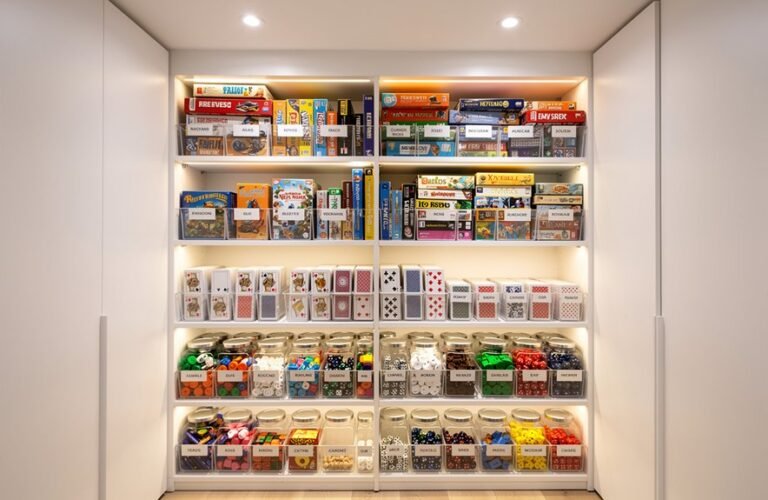
- Ditch the overflowing bin; keep just a few toys visible.
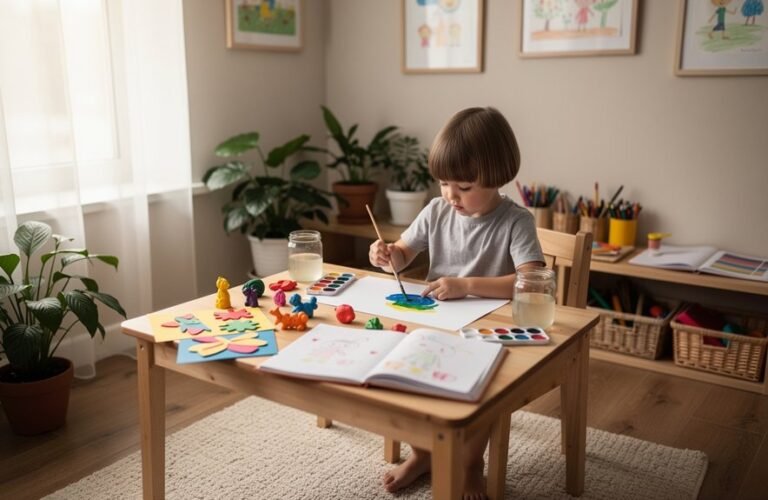
- Focus your toy selection on open-ended stuff: blocks, dolls, cars, art.
- Create one clear play zone, not fifteen random piles.
- Put toys on low shelves so little hands can actually reach.
- Store noisy, light-up toys away; save your sanity and your kid’s imagination.
Then step back, sip your coffee, and let play happen naturally.
Troubleshooting Clinginess, Whining, and “I’m Bored” Moments
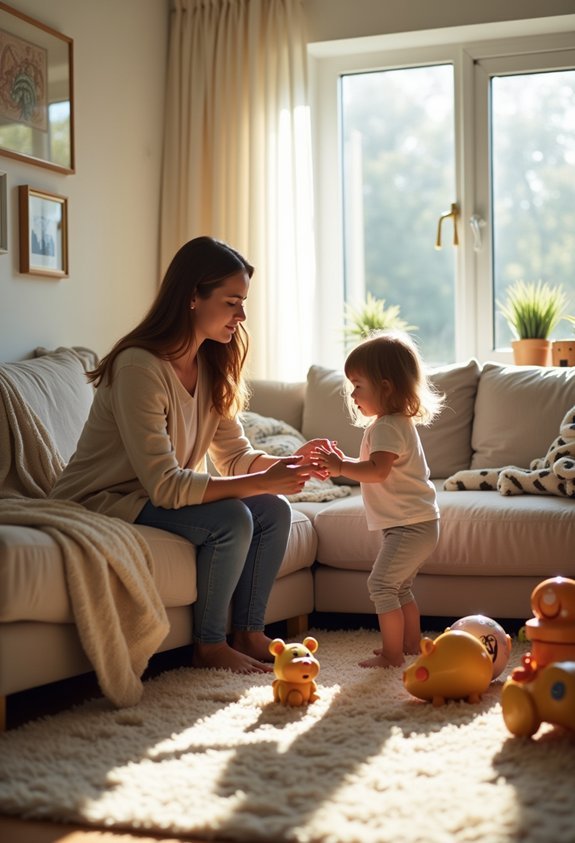
Although your play space might be Pinterest-level perfect, your kid can still cling to your leg like a baby koala and whine, “Mooooom, I’m boooored.” Totally normal.
First, stay calm. They’re not broken; they’re checking, “Am I safe?” Offer quick emotional support: a hug, eye contact, “You’re ok, I’m nearby.”
Then give a tiny job: “Pick three cars to race,” “Can you make the dolls a snack?” Small missions feel doable.
Use creative distractions you actually like: timers, silly challenges, a “bored box” with tape, stickers, random junk.
Expect pushback. When they whine, repeat the script: “You’re bored, that’s hard. You can play cars or draw. I’m finishing my coffee.”
Hold the line, kindly. Soon, those clingy minutes shrink, and play stretches longer alone.
In case you were wondering
How Much Independent Play Time Is Developmentally Appropriate at Different Ages?
You can expect short independent play around age milestones: 6 months, 5–10 minutes; 1 year, 10–20; 2–3 years, 20–30; 4–5 years, 30–45. Treat play duration as flexible, following temperament and practice rather than rules; don’t.
Can Screen Time Ever Support, Rather Than Replace, Independent Play Skills?
Yes, screen time can support independent play when you treat it as a tool. You highlight screen time benefits by choosing open-ended apps, inviting the child to reenact or extend ideas offline, keeping balanced exposure.
How Should Divorced or Separated Parents Coordinate Expectations Around Independent Play?
You coordinate expectations by practicing co parenting communication, agreeing on routines, and sharing what works. Create playtime agreements, respect each other’s styles, and update plans so your child experiences chances to build independent play skills.
What Independent Play Expectations Are Realistic for Neurodivergent Children (Adhd, Autism, Sensory Differences)?
Like a dimmer switch, you set expectations gradually: short, predictable stretches, matched to unique play styles, sensory needs, and social cues, supported by visual schedules, structured activities, check-ins, and flexibility when regulation or anxiety wobbles.
How Can Teachers or Caregivers Reinforce Our Home Independent Play Routines?
Ask teachers to mirror your cues and language, use similar visual supports, and create playful environments with predictable choices. Share your schedule so routine integration feels seamless, and invite daily check-ins to adjust supports together.
Conclusion
So yeah, independent play isn’t magic, and your kid isn’t “bad at it.” It’s just a skill, and you’re teaching it one block tower, one stuffed-animal wedding, one “go play, I’ll be right here” at a time. Remember, Rome wasn’t built in a day—and neither is a kid who can play solo for 30 minutes. But you’ll get there. And hey, one day you might drink hot coffee while they play. Wild.