13 Outdoor Weekend Activities for Preschoolers
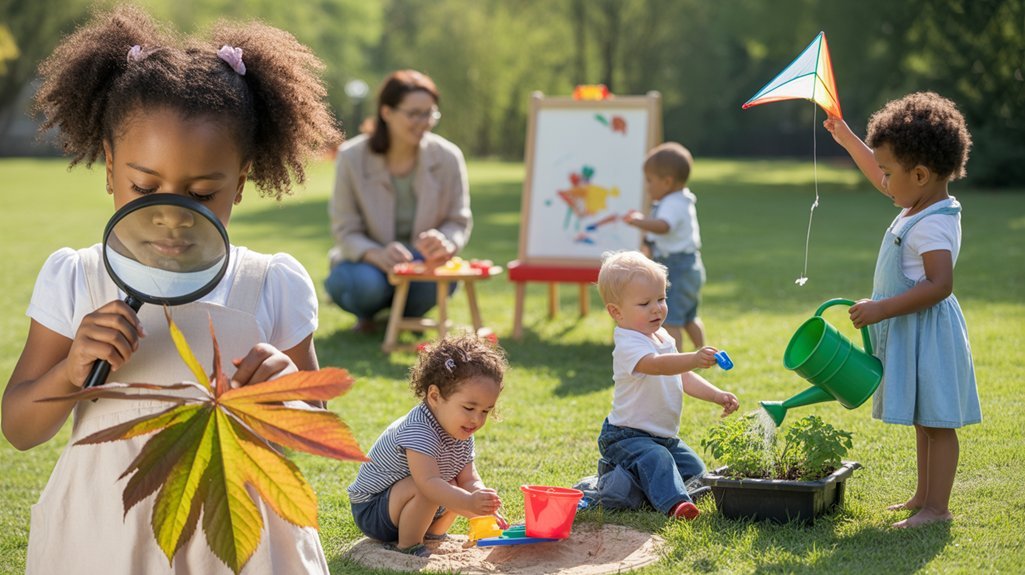
You’ll find endless entertainment with activities like nature scavenger hunts using picture cards, backyard obstacle courses with household items, and bug safaris with magnifying glasses. Set up bubble blowing stations, transform sidewalks into chalk art festivals, or create water play areas with sensory tables. Don’t overlook puddle jumping on rainy days, rock painting with washable acrylics, or outdoor picnics combined with storytelling. Each activity builds motor skills, vocabulary, and scientific thinking while keeping your preschooler engaged for 20-30 minutes. Below you’ll discover detailed setups for turning simple weekends into memorable learning adventures.
Key Takeaways
- Nature scavenger hunts with picture checklists help preschoolers explore outdoors while building vocabulary through textures, colors, and shapes.
- Backyard obstacle courses using household items develop motor skills, problem-solving abilities, and physical literacy through creative play stations.
- Bug safaris with magnifying glasses teach scientific observation and compassion by studying insects in their natural habitats.
- Outdoor chalk art festivals on sidewalks encourage color mixing, collaborative creativity, and fine motor skill development.
- Water play areas with shallow containers and natural elements provide sensory exploration through temperature discovery and hands-on experiments.
Nature Scavenger Hunt in Your Local Park
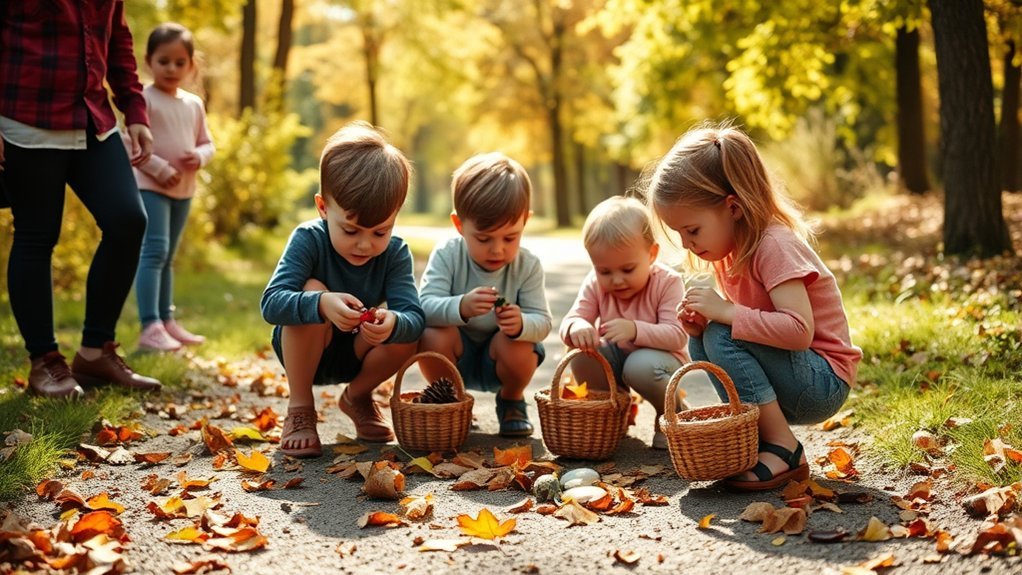
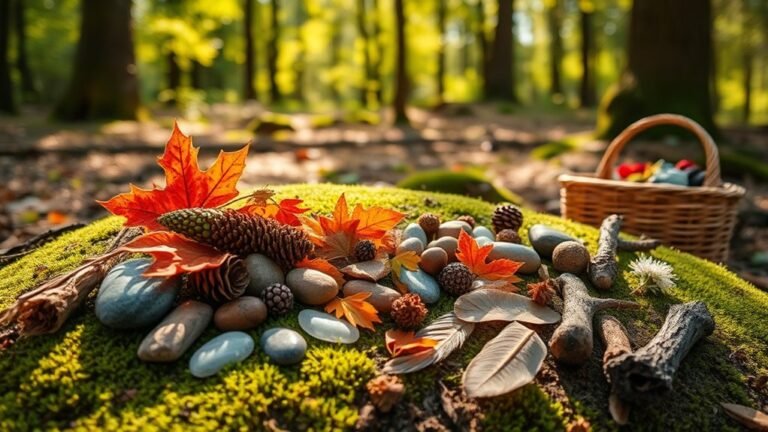
A nature scavenger hunt transforms an ordinary park visit into an exciting adventure that sharpens your preschooler’s observation skills. Create a simple checklist with pictures of items like pinecones, smooth rocks, colorful leaves, and bird feathers.
You’ll encourage nature exploration while keeping your child engaged and focused. Start with five to seven items that match your local park’s environment. Hand your preschooler a small bag for collecting treasures and let them lead the search.
Let your little explorer take the lead with a simple bag and short list of nature items to discover.
This park discovery activity builds vocabulary as you discuss textures, colors, and shapes together. Make it age-appropriate by choosing larger, easy-to-spot items. You can laminate picture cards for durability and reuse them on future visits.
The hunt typically lasts 20-30 minutes, perfect for maintaining your preschooler’s attention span.
Backyard Obstacle Course Challenge
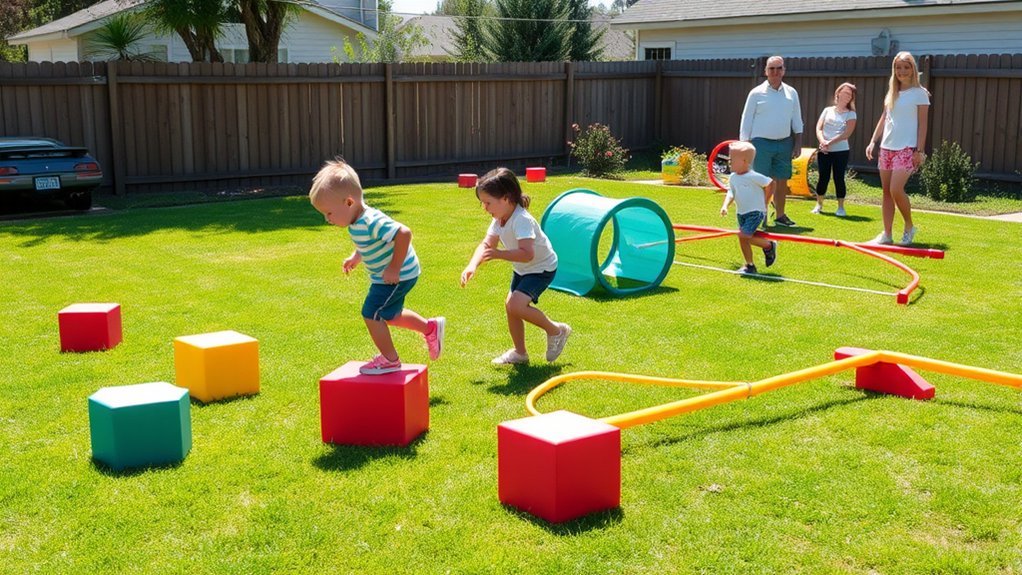
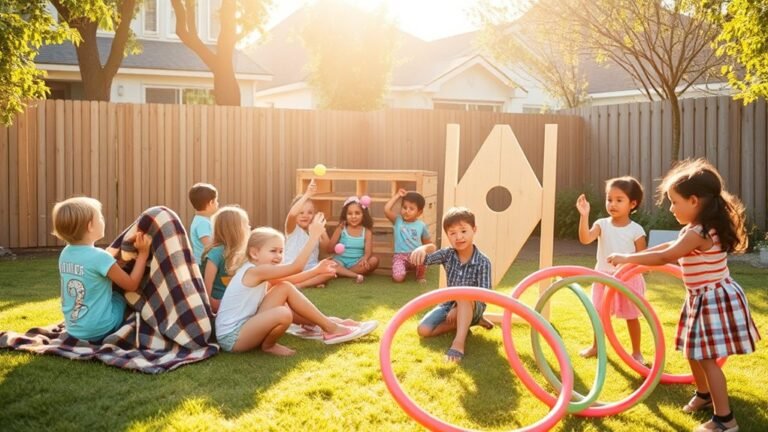
While parks offer wonderful exploration opportunities, your own backyard can become an exciting training ground for developing motor skills and physical confidence. Set up creative stations using household items: balance beams from wooden planks, tunnel crawling through cardboard boxes, and jumping hurdles made from pool noodles.
Add sections for crawling under chairs or blankets stretched between posts. This obstacle variety keeps preschoolers engaged and challenges different abilities.
You’ll foster problem-solving skills as children navigate each section. Transform the course into a team relay where siblings work together, or create a time challenge where kids compete against their previous records.
Rotate stations weekly to maintain excitement. The best part? You’re building physical literacy while your preschooler thinks they’re simply playing an adventure game.
Bug Safari and Insect Observation
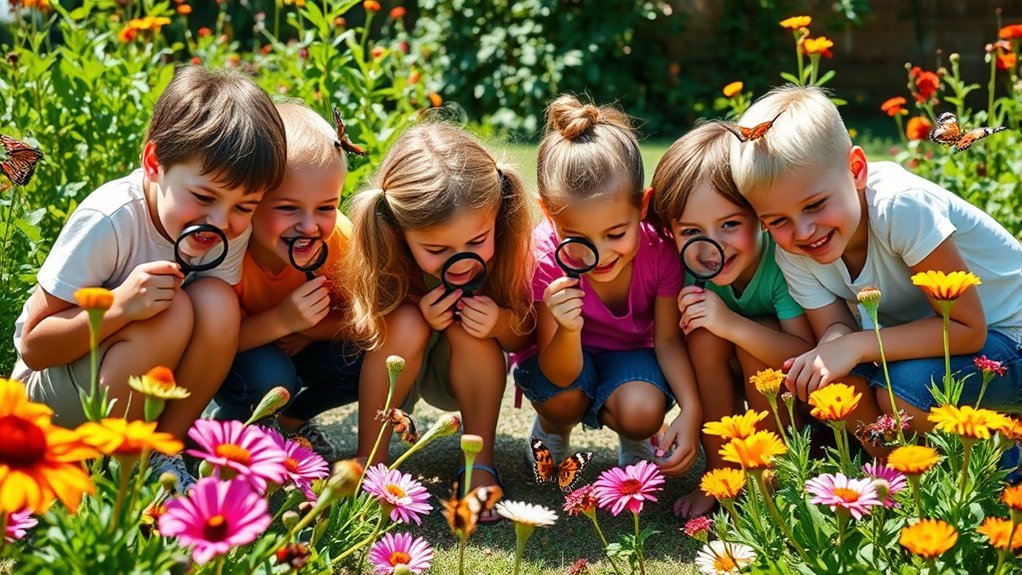
Under rocks, beneath leaves, and across garden paths, a microscopic world awaits your preschooler’s discovery. Transform your backyard into an exciting bug safari where little explorers can observe insects in their natural insect habitats.
Equip your child with a magnifying glass, small container with air holes, and a simple bug identification chart. Guide them to gently lift rocks, examine tree bark, and peek under flowerpots.
You’ll discover ants marching in lines, ladybugs climbing stems, and beetles scurrying through grass.
Teach your preschooler to observe without touching, respecting these tiny creatures. Count a butterfly’s spots, watch how a caterpillar moves, or trace an ant’s path.
After observation, always return insects to where you found them. This activity builds scientific thinking while nurturing compassion for all living things.
Sidewalk Chalk Art Festival
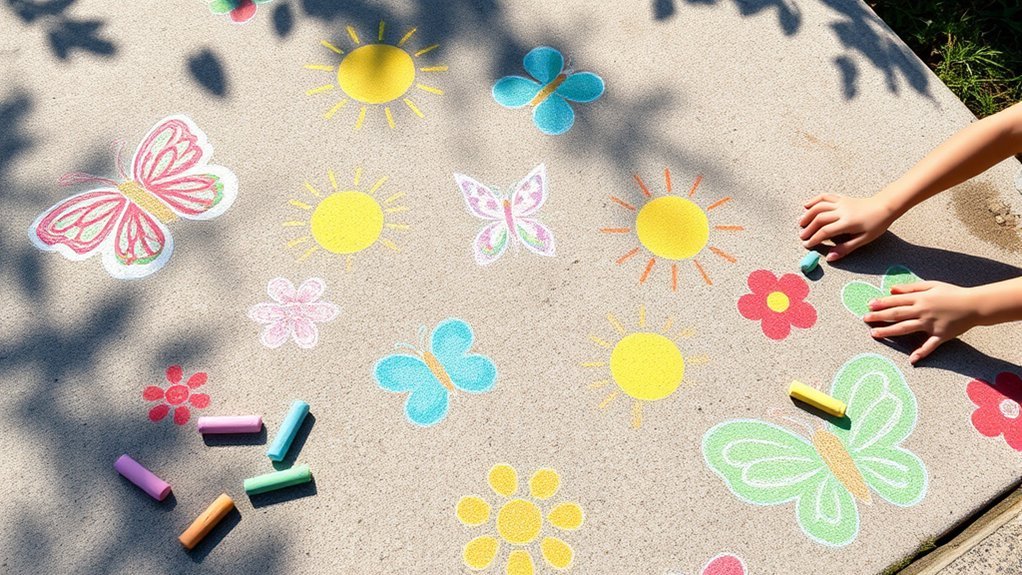
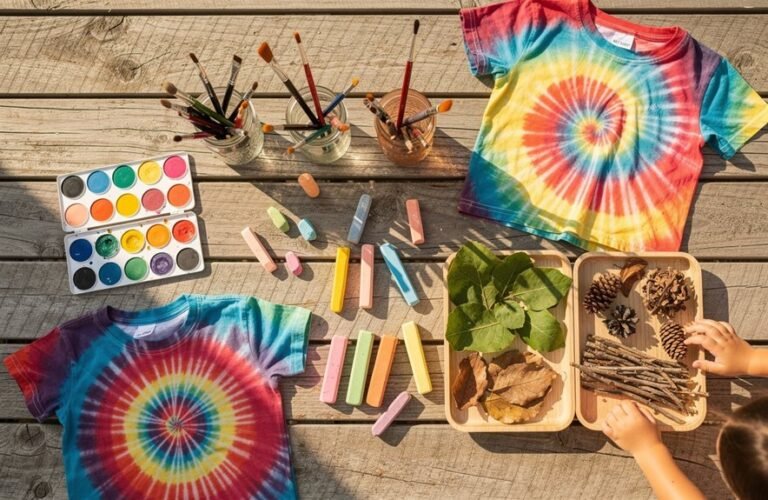
From observing nature’s tiny artists, your preschooler can now become the artist themselves with an outdoor chalk art festival. Transform your driveway or sidewalk into a canvas where they’ll explore artistic expression through vibrant chalk designs.
Encourage color mixing by showing how overlapping hues create new shades. Your child can start with simple shapes, then progress to large murals that span multiple concrete squares.
Introduce themed creations like underwater scenes, jungle animals, or rainbow gardens to spark imagination.
Make it collaborative art by inviting neighborhood friends to contribute. Each child can claim a section, or they’ll work together on one giant masterpiece.
This activity develops fine motor skills, color recognition, and creative thinking while keeping them actively engaged outdoors.
Puddle Jumping and Rain Play
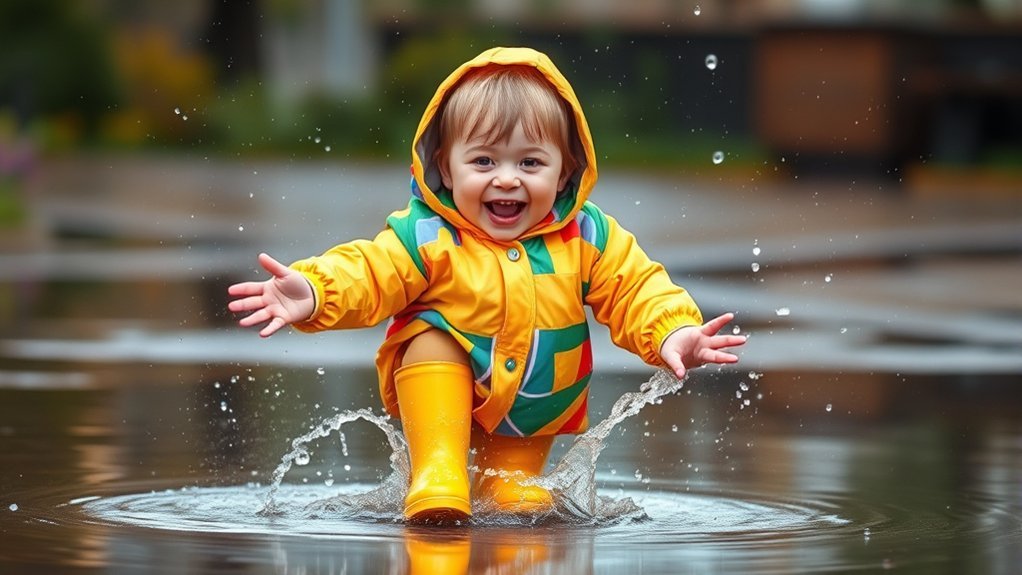
When rain transforms your yard into a wonderland of puddles, don’t rush inside—this is prime playtime for adventurous preschoolers. Gear up your little ones in rain boots and waterproof jackets, then let them explore nature’s water park.
Create splash games by measuring who can make the biggest splash or challenge them to jump from puddle to puddle without touching dry ground. You’ll encourage gross motor skills while they’re having a blast.
After outdoor play, transition to rain crafts indoors. Tape paper to windows and let your preschoolers paint raindrop patterns they’ve observed.
You can also collect rainwater for nature experiments or create mud paintings.
This weather-based activity costs nothing but provides hours of sensory-rich entertainment that builds confidence and appreciation for nature’s changing moods.
Bird Watching With Simple Binoculars
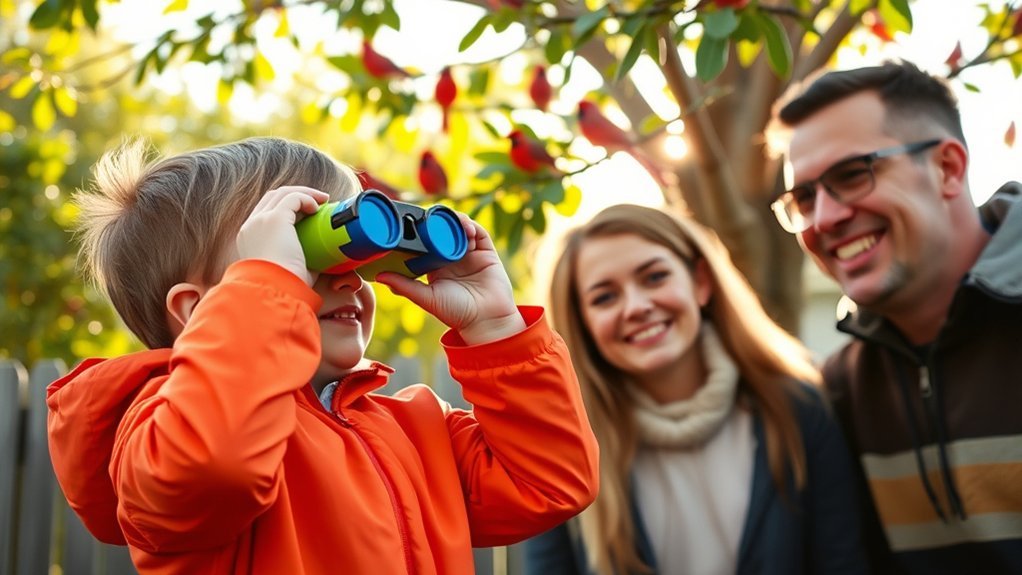
Bird watching turns your backyard into an exciting discovery zone where preschoolers can develop patience and observation skills.
You’ll want to start with lightweight, child-sized binoculars that fit comfortably in small hands. Teach binocular safety first—no running while looking through lenses and keeping the strap around their neck prevents drops.
Create a simple bird identification chart with common backyard birds like robins, sparrows, and cardinals. Use bright pictures your child can match to real birds they spot. You can set up a bird feeder near a window to attract more visitors.
Make it engaging by having your preschooler mimic bird calls or draw pictures of spotted birds.
Keep sessions short—fifteen minutes works perfectly for maintaining their interest and enthusiasm.
Outdoor Music and Sound Exploration
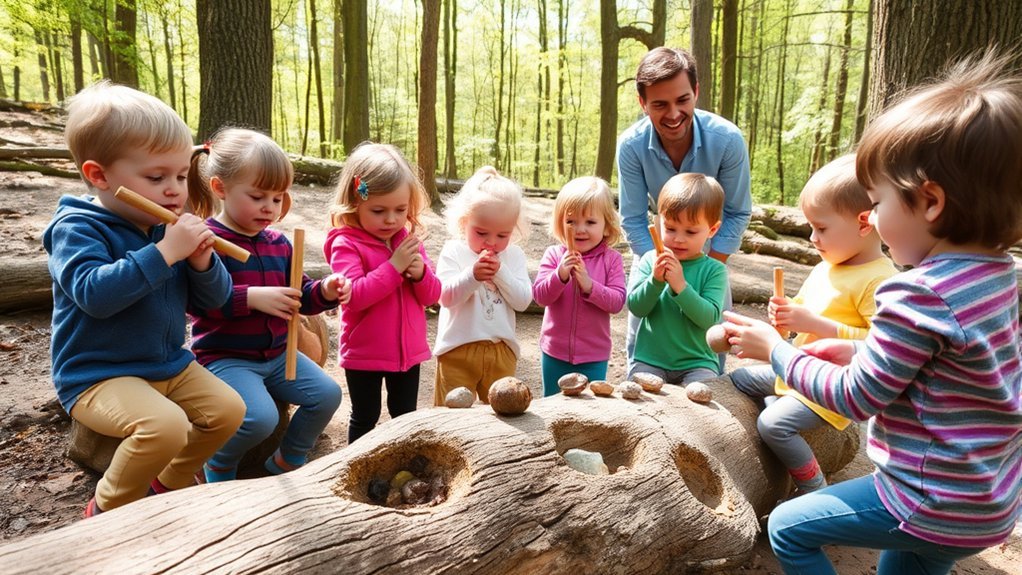
Nature provides the perfect concert hall where preschoolers can explore rhythm, pitch, and volume through hands-on sound experiments.
You’ll encourage musical storytelling by creating soundscapes with rustling leaves, tapping sticks, and shaking pebbles in containers. Start with instrument crafting using natural materials—hollow logs become drums, and seed pods transform into shakers.
Organize sound games where your child identifies bird calls, wind chimes, or crunching footsteps. Nature rhythms emerge when you clap along to woodpecker patterns or rain droplets.
Listen closely and move together—nature’s rhythms teach children that music lives in every chirp, drip, and crunch around them.
Set up outdoor performances where preschoolers showcase their homemade music instruments on stumps or garden stages.
Through rhythm exploration, you’re developing auditory discrimination and creative expression. Your child learns that music exists everywhere, from babbling brooks to buzzing bees, making every outdoor adventure an opportunity for sonic discovery.
Garden Planting and Digging Time
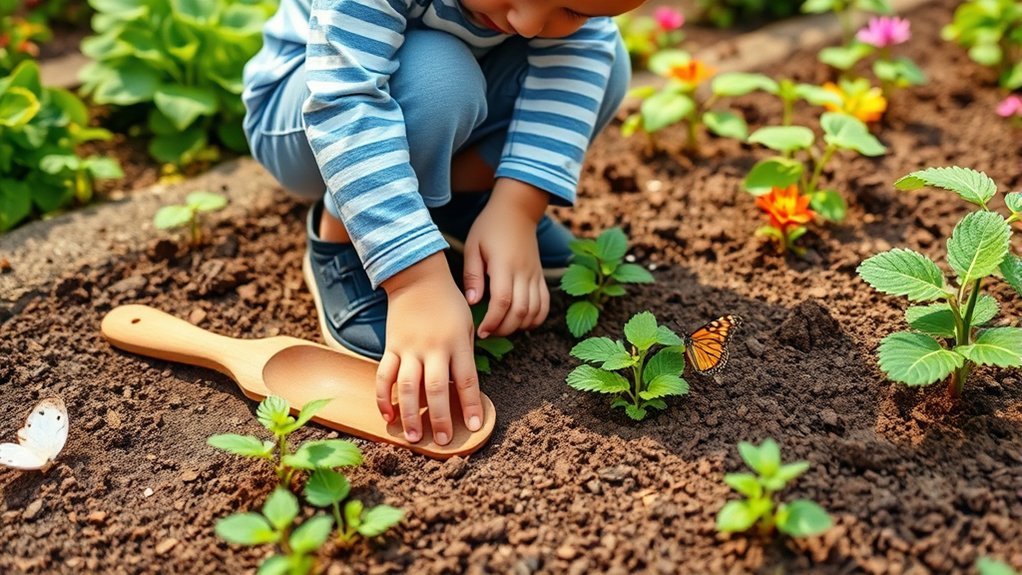
Getting hands dirty in soil connects preschoolers to where food comes from while building essential motor skills and patience. Start with seed selection by letting your child choose fast-growing varieties like radishes or sunflowers.
Before digging, teach tool safety with child-sized rakes and trowels, demonstrating proper handling techniques.
Soil preparation becomes a sensory adventure as little hands mix compost and feel different textures. Create a dedicated garden exploration zone where your preschooler can freely investigate bugs, roots, and earthworms.
This nature education opportunity extends beyond planting day—daily plant care routines teach responsibility as your child waters seedlings and observes growth patterns.
Label plants with pictures so your preschooler can track progress independently, turning garden time into an ongoing learning experience.
Neighborhood Nature Walk and Leaf Collection
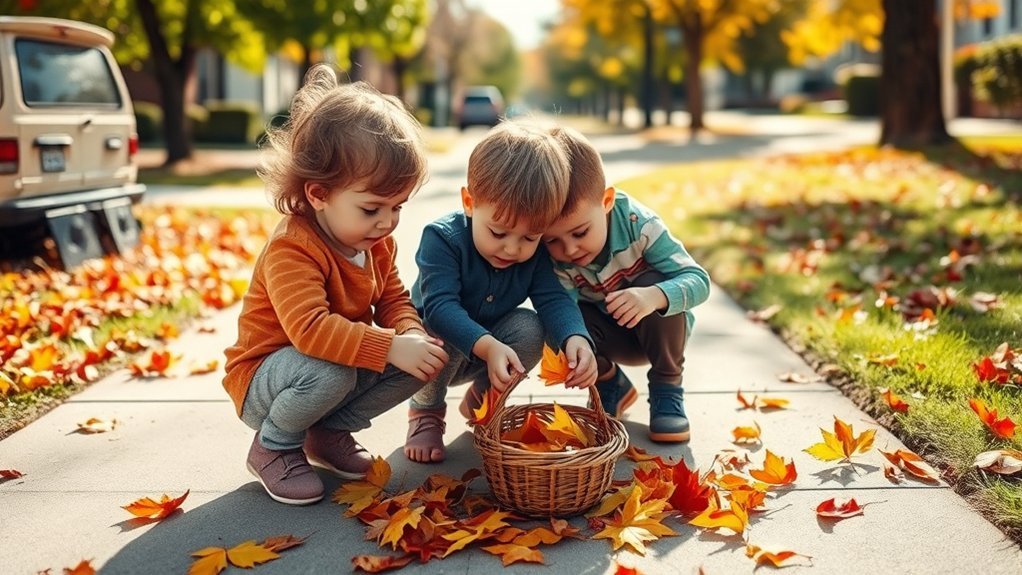
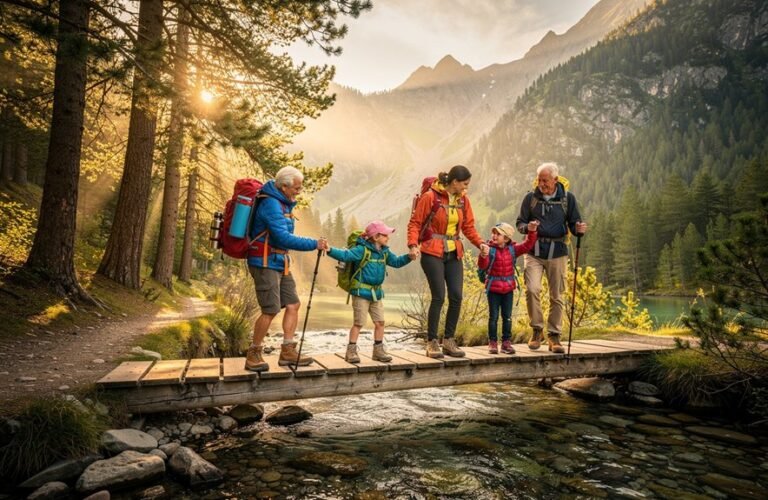
While your backyard offers rich learning opportunities, venturing beyond your property line opens up an entirely new world of discovery for curious preschoolers.
A neighborhood nature walk transforms ordinary sidewalks into outdoor classrooms where your child can collect leaves, observe insects, and practice nature identification skills.
Bring a small bag for treasures and encourage your preschooler to gather leaves in different shapes, sizes, and colors.
Once home, you’ll create leaf rubbing art by placing leaves under paper and gently coloring over them with crayons. This simple activity teaches texture awareness while preserving your nature finds.
These walks also build observation skills, vocabulary, and physical stamina.
You’re fostering environmental appreciation that’ll last a lifetime.
Bubble Blowing Extravaganza
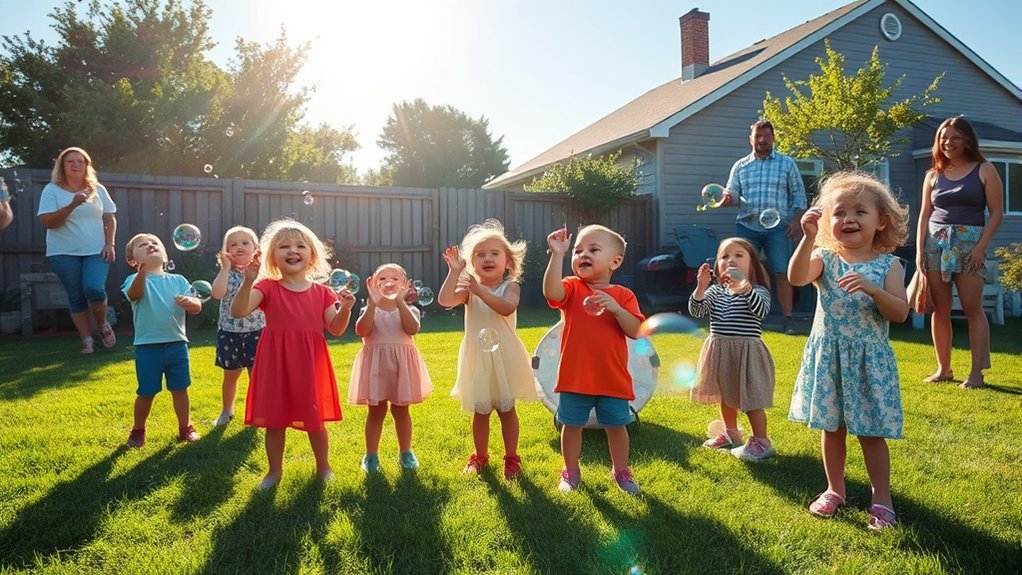
After exploring the textures and patterns of leaves, shift your preschooler’s focus to something equally mesmerizing but far more magical—bubbles floating through the air.
Set up a bubble blowing extravaganza in your backyard with various bubble types. Include traditional wands, giant bubble makers, and multi-bubble tools. Each creates different sizes and effects that’ll captivate your child’s imagination.
Transform simple bubble blowing into engaging bubble games. Challenge your preschooler to pop bubbles before they touch the ground, catch them on the wand, or count how many they can blow in one breath.
Create bubble art by adding food coloring to the solution and letting bubbles pop on paper. This activity develops hand-eye coordination, breath control, and scientific thinking as children observe how bubbles form, float, and disappear.
Outdoor Picnic and Storytelling Session
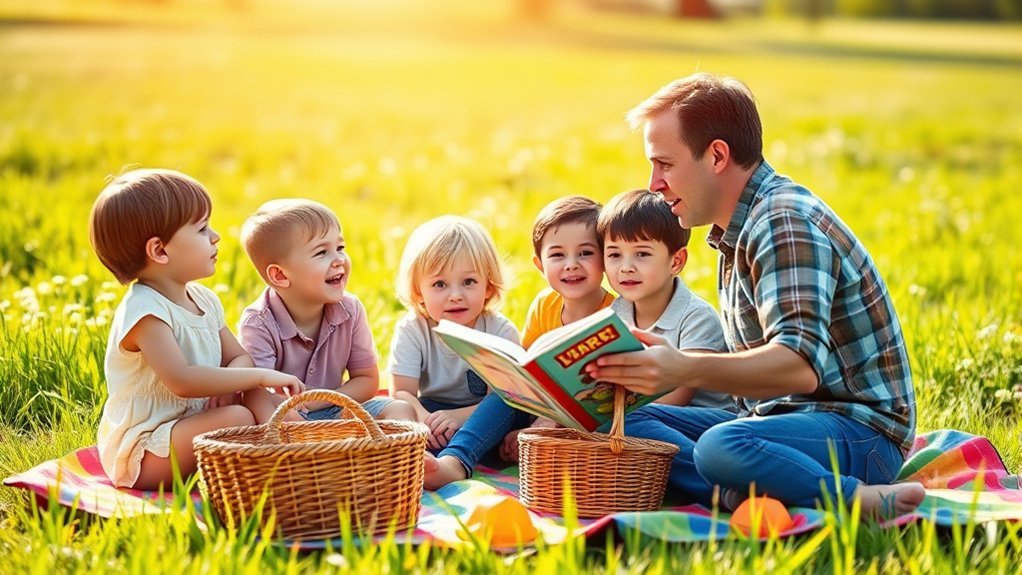
Pack a simple lunch, grab your child’s favorite storybooks, and head to a shady spot in your yard or local park. This outdoor activity combines relaxation with learning, creating memorable moments for your preschooler.
Setting Up Your Storytelling Picnic:
- Spread a colorful blanket and arrange sandwiches, fruit, and juice boxes for easy snacking between stories.
- Use storytelling props like puppets, stuffed animals, or simple costumes to bring characters to life and engage your child’s imagination.
- Introduce simple picnic games such as “I Spy” or nature scavenger hunts to keep energy levels balanced throughout your outing.
- Let your child retell stories in their own words, encouraging creativity and language development while enjoying the fresh air.
This combination of outdoor dining and interactive reading nurtures both physical and cognitive growth.
Water Play and Sensory Tables
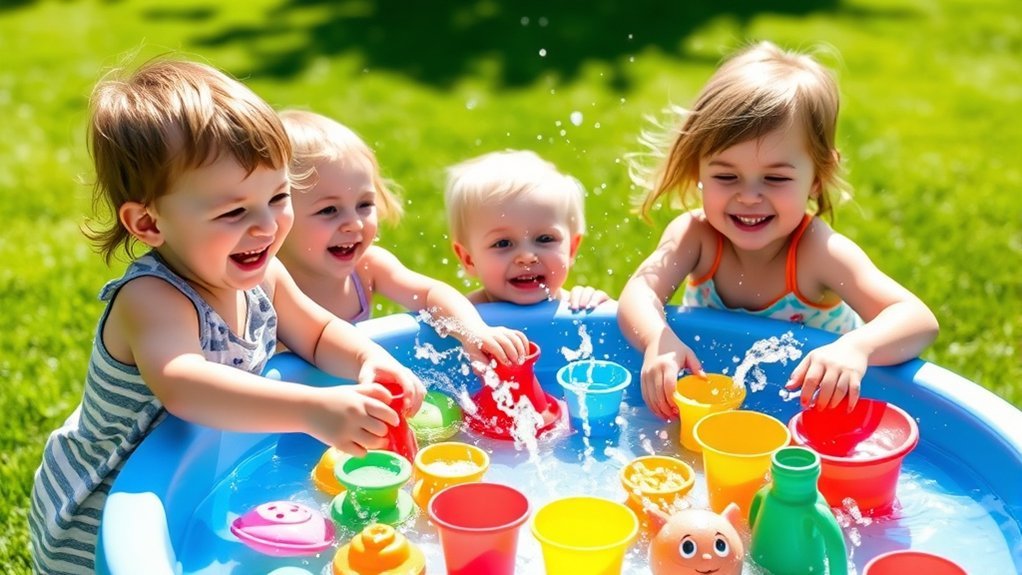
Since water naturally captivates young children, setting up a dedicated water play area transforms your backyard into an exciting sensory learning zone.
You’ll need shallow containers, measuring cups, funnels, and floating toys to create engaging water sensory experiences. Add natural elements like leaves, stones, or pinecones to enhance outdoor exploration opportunities.
Consider setting up multiple sensory tables with different themes. One table might feature soapy bubbles, while another contains ice cubes for temperature discovery. You can incorporate food coloring to teach color mixing or add sponges for squeeze-and-release activities.
These hands-on experiences develop fine motor skills and scientific thinking. Your preschooler learns about concepts like volume, buoyancy, and cause-and-effect through playful experimentation.
Always supervise water activities closely and dress children appropriately for splashing fun.
Rock Painting and Decorating
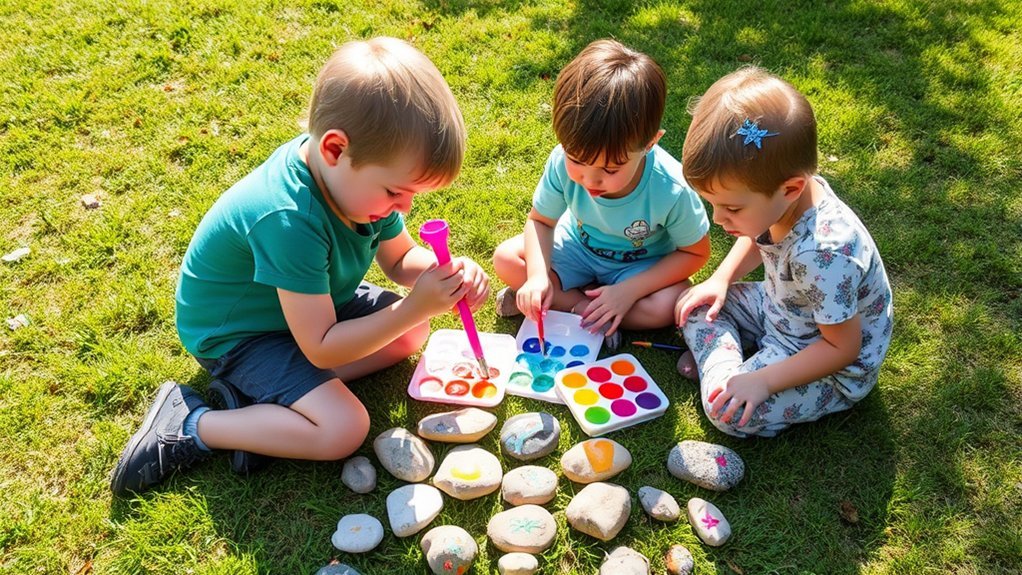
While water play engages children through fluid exploration, rock painting offers a completely different creative outlet that yields lasting keepsakes. You’ll find smooth rocks at parks, beaches, or craft stores that provide perfect canvases for your preschooler’s imagination.
Rock painting encourages creative designs while teaching patience and fine motor control. Your child can experiment with rock color mixing to discover new shades and combinations.
Rock painting builds fine motor skills and patience while letting young artists explore color mixing and creative expression.
Essential supplies for rock painting:
- Washable acrylic paints in primary colors
- Various brush sizes for different stroke widths
- Paper plates for paint palettes
- Sealant spray for finished artwork
You can display completed rocks in your garden, use them as paperweights, or hide them around your neighborhood for others to discover.
This activity transforms ordinary stones into treasured art pieces.
In case you were wondering
What Should I Do if My Preschooler Refuses to Participate in Outdoor Activities?
Don’t force participation. Instead, try different engagement strategies like making it a game or bringing favorite toys outside. Offer alternative activities such as nature scavenger hunts, bubble blowing, or sidewalk chalk to spark your child’s interest naturally.
How Can I Keep My Child Safe From Sun Exposure During Outdoor Play?
Picture Emma’s outdoor playdate cut short by sunburn. You’ll prevent this by applying broad-spectrum sunscreen every two hours, dressing your child in protective clothing like wide-brimmed hats and UV-blocking shirts, and seeking shade during peak sun hours.
What Are Age-Appropriate Supervision Guidelines for Preschoolers Playing Outside?
You’ll need constant visual supervision for preschoolers aged 3-5, staying within arm’s reach near water or climbing equipment. Effective supervision techniques include active engagement, scanning every few seconds, and maintaining clear sightlines. Age guidelines recommend never leaving preschoolers unattended outdoors.
How Long Should Outdoor Activity Sessions Last for Preschoolers?
Like goldfish attention spans, you’ll want to keep outdoor sessions between 30-60 minutes. This activity duration maximizes toddler engagement without overwhelming them. You can always head back outside after they’ve recharged indoors.
What Should I Pack in an Emergency Kit for Outdoor Preschooler Activities?
You’ll need first aid supplies like bandages, antiseptic wipes, and children’s pain reliever. Include packing essentials such as emergency contact information, any necessary medications, sunscreen, insect repellent, water bottles, and extra snacks for hungry little ones.
Conclusion
You’ve got thirteen fantastic ways to transform ordinary weekends into extraordinary outdoor adventures. Will your preschooler remember a day spent indoors, or will they treasure the muddy boots, painted rocks, and bubble-filled afternoons? The choice is yours. These activities don’t just fill time—they’re building confidence, curiosity, and a lifelong love of nature. So grab those rain boots, pack that picnic basket, and watch your little explorer’s imagination soar. Adventure’s calling!