Why Play-Based Learning Activities Transform Child Development
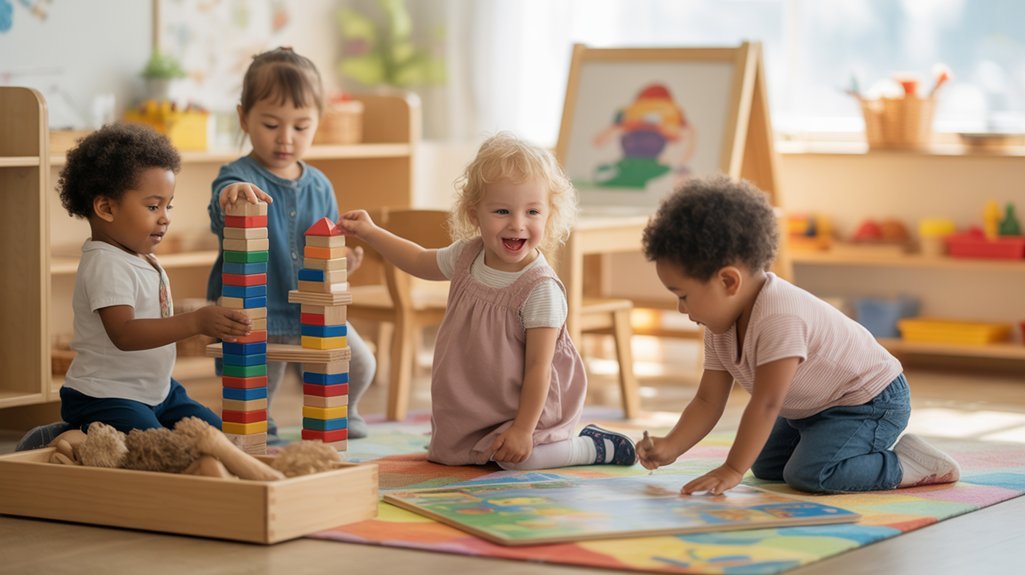
Play-based learning transforms your child’s development by activating crucial neural pathways that strengthen synaptic connections in the prefrontal cortex, enhancing executive functions and problem-solving abilities. Through unstructured play, your child develops critical thinking, emotional regulation, and social competence while naturally absorbing language skills and building creativity. The dopamine release during play aids memory formation and improves attention spans, giving your child academic advantages that structured instruction alone can’t provide. Below, you’ll discover how to create environments that maximize these developmental benefits for your child’s future success.
Key Takeaways
- Play strengthens neural pathways and synaptic connections in the prefrontal cortex, enhancing executive functions, memory formation, and academic readiness.
- Unstructured play develops critical thinking through independent exploration, problem-solving, hypothesis testing, and cognitive flexibility via trial and error.
- Collaborative play builds social competence by teaching negotiation, conflict resolution, communication, empathy, and emotional regulation through peer interactions.
- Play-based environments create natural contexts for language acquisition, expanding vocabulary, narrative skills, conversational abilities, and complex sentence structures.
- Thoughtfully designed play spaces with accessible materials, adequate room, and minimal clutter promote independence, creativity, focus, and sustained engagement.
The Science Behind Play and Brain Development
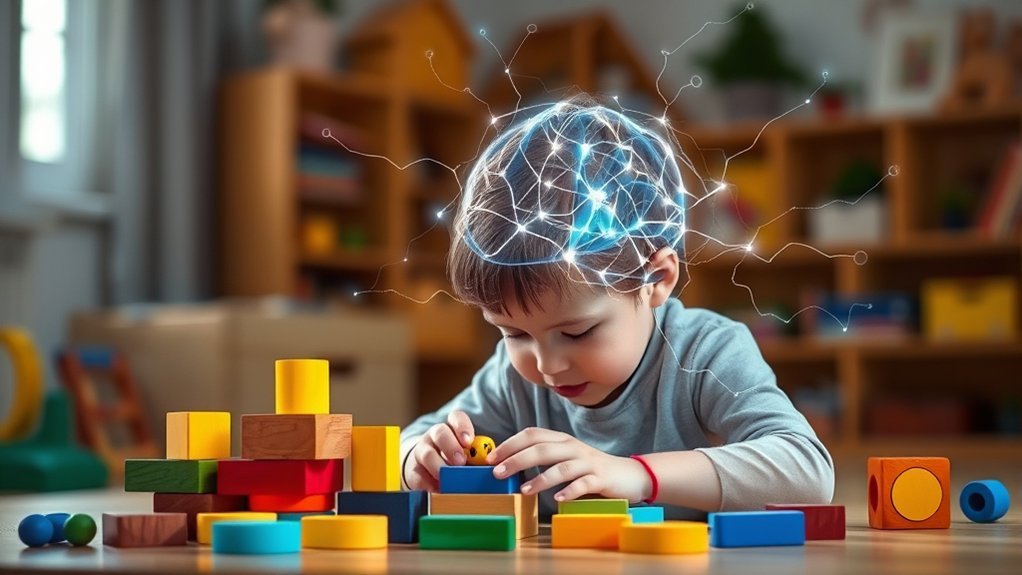
When children engage in play, their brains light up with neural activity that rivals any structured learning environment. Neuroscience insights reveal that play strengthens synaptic connections, particularly in the prefrontal cortex where executive functions develop.
Play activates neural pathways as powerfully as formal education, strengthening critical brain connections that shape executive function development.
You’ll notice your child’s problem-solving abilities sharpen as they navigate pretend scenarios and physical challenges.
The cognitive benefits extend beyond immediate skill acquisition. Play triggers dopamine release, which enhances memory formation and emotional regulation.
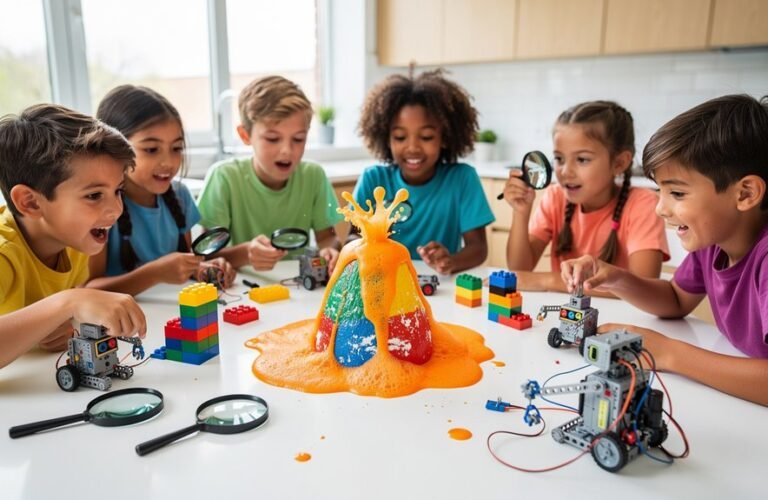
When your child builds blocks or engages in imaginative games, they’re simultaneously developing spatial reasoning, language skills, and social cognition.
Research shows that children who engage in regular play-based activities demonstrate improved attention spans and greater academic readiness.
You’re not just entertaining your child—you’re actively sculpting their neural architecture for lifelong learning success.
How Unstructured Play Builds Critical Thinking Skills
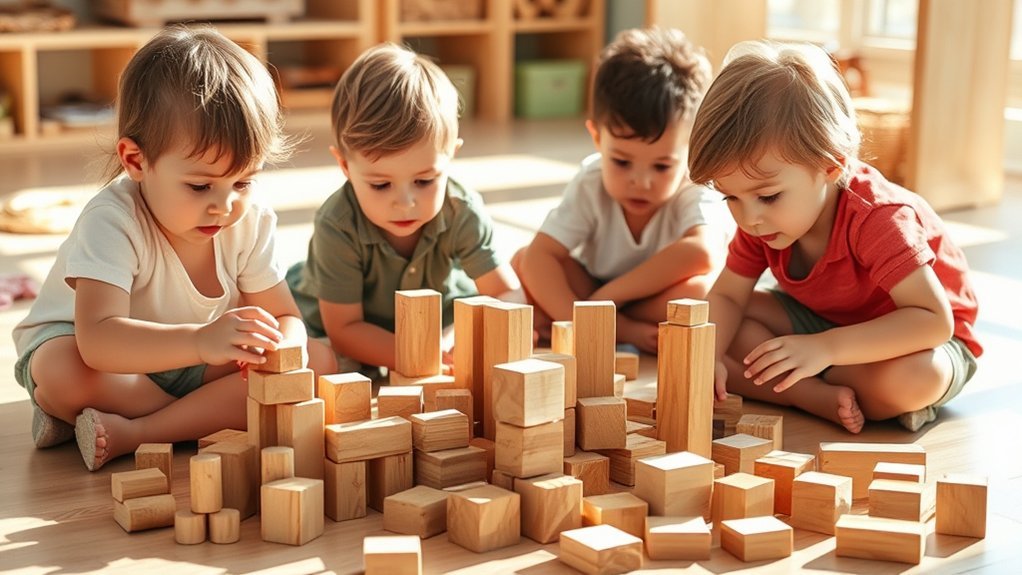
Unstructured play hands your child the reins to their own learning journey. When you step back and let them explore independently, they’ll naturally encounter obstacles that require problem solving strategies.
Whether building a fort that keeps collapsing or negotiating roles during pretend play, they’re constantly analyzing situations and testing solutions.
You’ll notice your child making countless choices during free play: which materials to use, how to approach challenges, or when to change direction. These moments strengthen decision making skills without adult interference. Each choice creates a cause-and-effect learning loop.
Through trial and error, they develop hypothesis testing abilities. When something doesn’t work, they’ll adjust their approach.
This self-directed process builds cognitive flexibility and analytical thinking that structured activities can’t replicate.
Social Competence Through Collaborative Play Experiences
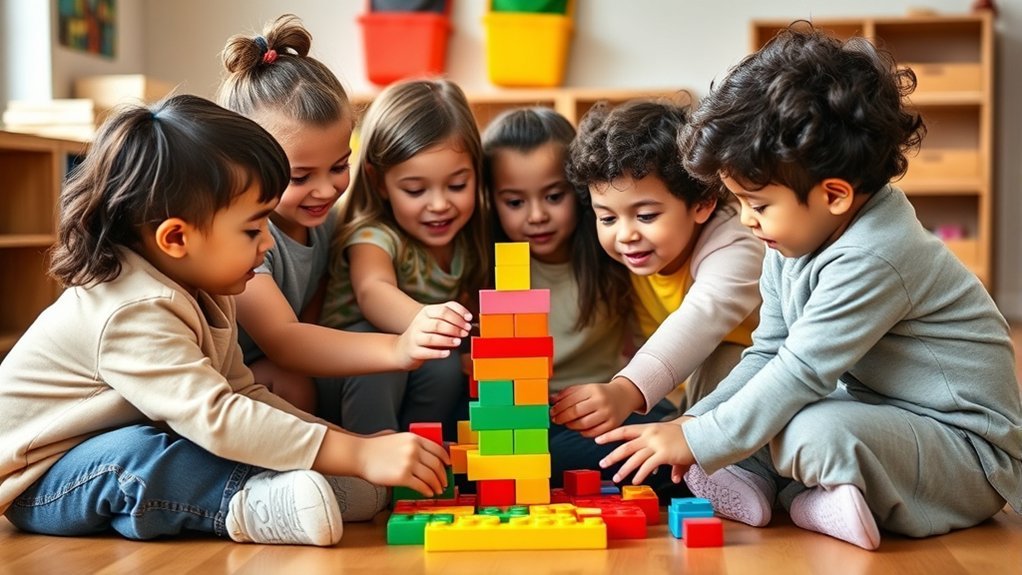
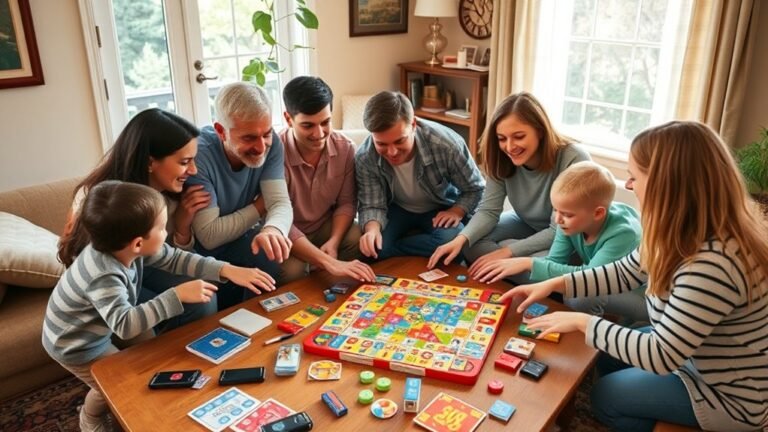
As children engage with peers during play, they’re building the foundation for lifelong social skills. Through peer interaction, your child learns to negotiate, share resources, and resolve conflicts naturally. Collaborative play experiences create opportunities where teamwork skills flourish organically.
When children work together during play, they develop:
- Communication abilities – expressing ideas clearly and listening to others’ perspectives
- Emotional regulation – managing frustration when plans don’t go their way
- Empathy development – recognizing and responding to peers’ feelings and needs
- Leadership qualities – taking initiative while respecting group dynamics
You’ll notice your child becoming more adept at reading social cues and adapting their behavior accordingly.
These collaborative moments teach compromise, turn-taking, and cooperative problem-solving—essential competencies that extend far beyond childhood into academic and professional success.
Emotional Intelligence and Self-Regulation Through Play

Through play scenarios that mirror real-life challenges, children learn to identify, understand, and manage their emotions in a safe environment.
You’ll notice how dramatic play helps your child develop emotional awareness as they navigate pretend conflicts and relationships. When your child practices taking turns during board games or waiting for playground equipment, they’re building essential self control skills.
Role-playing activities let your child experiment with different emotional responses without real-world consequences. They’ll process feelings like frustration, disappointment, and joy through structured play experiences.
You can observe how your child regulates their reactions when games don’t go their way or when sharing becomes necessary. These repeated practice opportunities strengthen their ability to pause, think, and respond appropriately in challenging situations.
Language Acquisition in Play-Based Environments
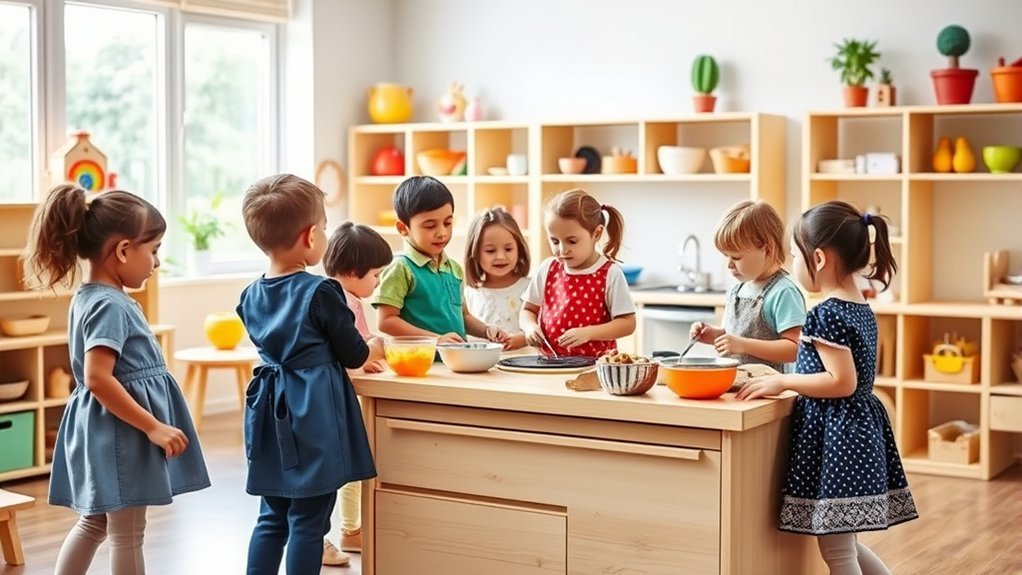
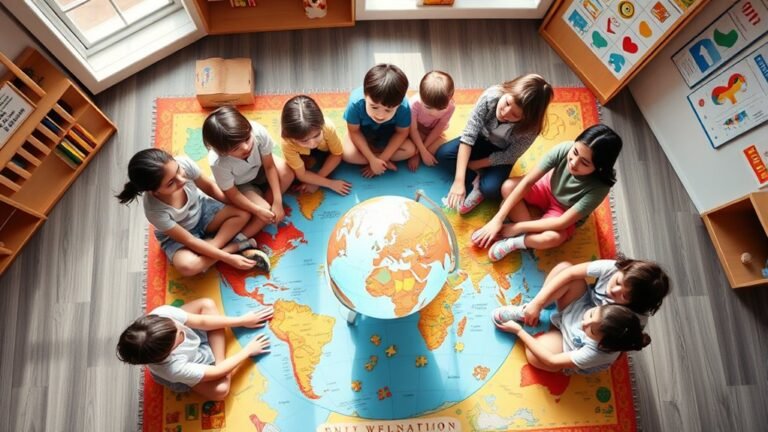
Play-based environments create natural language laboratories where your child absorbs vocabulary, grammar, and communication skills without formal instruction. Through pretend play, blocks, and interactive games, children practice expressing ideas, negotiating roles, and constructing meaningful sentences.
Key language development benefits include:
- Vocabulary expansion through exposure to new words during themed play scenarios like grocery stores or veterinary clinics.
- Narrative skills development as children create stories, explain their actions, and describe imaginary situations.
- Conversational turn-taking that teaches listening, responding, and maintaining dialogue with peers.
- Question formation practice when children seek information, clarify rules, or express curiosity.
You’ll notice your child naturally experiments with complex sentence structures, verb tenses, and descriptive language while fully engaged in playful activities.
Physical Development and Motor Skills Enhancement
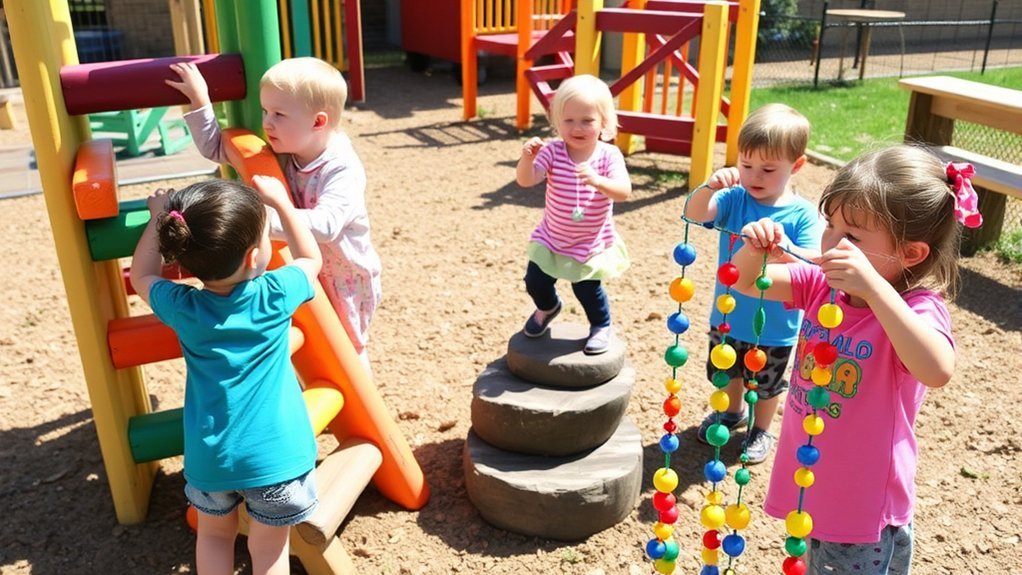
When children climb, jump, balance, and manipulate objects during play, they’re building essential physical capabilities that form the foundation for lifelong movement and coordination.
You’ll notice gross motor skills develop as your child runs, swings, and navigates playground equipment, strengthening large muscle groups and spatial awareness.
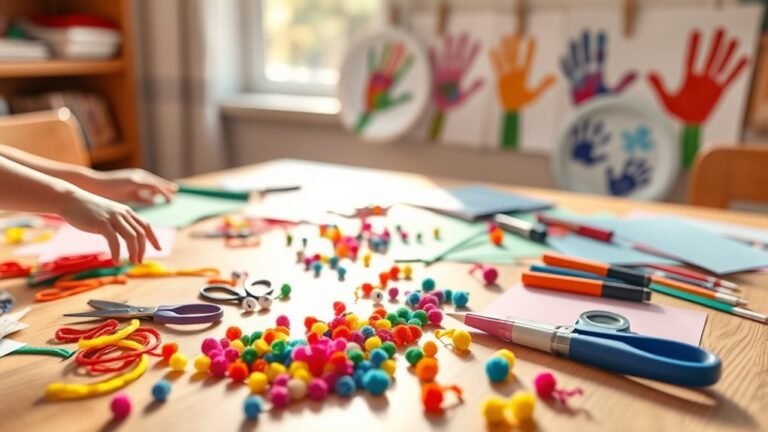
Fine motor skills emerge through activities like building blocks, threading beads, and drawing. These precise movements enhance hand-eye coordination and prepare children for writing and self-care tasks.
Small hand movements during play—stacking, grasping, coloring—directly translate into essential life skills like buttoning shirts and holding pencils.
Play-based environments naturally encourage repetitive practice without the tedium of structured exercises.
Your child’s physical confidence grows alongside their abilities. They’ll take calculated risks, test their limits, and develop body awareness.
This active engagement strengthens bones, improves cardiovascular health, and establishes healthy movement patterns that persist throughout life.
Creativity and Innovation Fostered by Playful Exploration
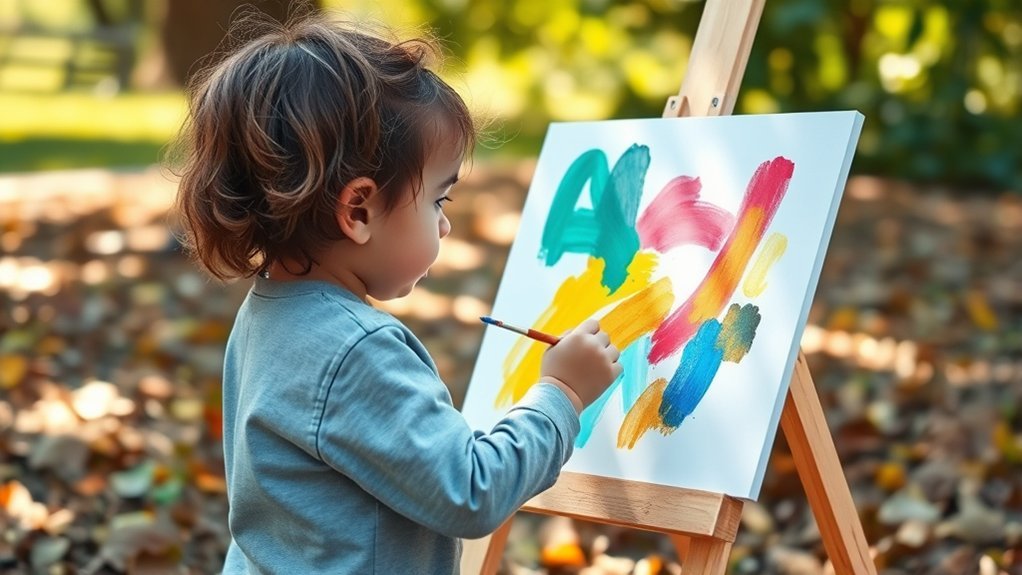
As your child transforms a cardboard box into a spaceship or reimagines wooden blocks as a bustling city, they’re exercising the cognitive flexibility that underlies creative thinking.
Play-based learning nurtures imaginative expression through unstructured exploration, allowing children to test ideas without fear of failure.
Playful experimentation develops innovation through:
- Problem-solving scenarios where children devise unique solutions to self-created challenges
- Open-ended materials that encourage multiple uses and interpretations
- Collaborative play that exposes them to diverse perspectives and approaches
- Risk-taking opportunities in safe environments where mistakes become learning moments
This creative foundation transfers beyond childhood, equipping your child with adaptive thinking skills essential for navigating complex, ever-changing situations throughout their academic journey and future careers.
Creating Effective Play-Based Learning Spaces at Home and School
Understanding how play fosters creativity naturally leads to an important question: where should this meaningful play happen?
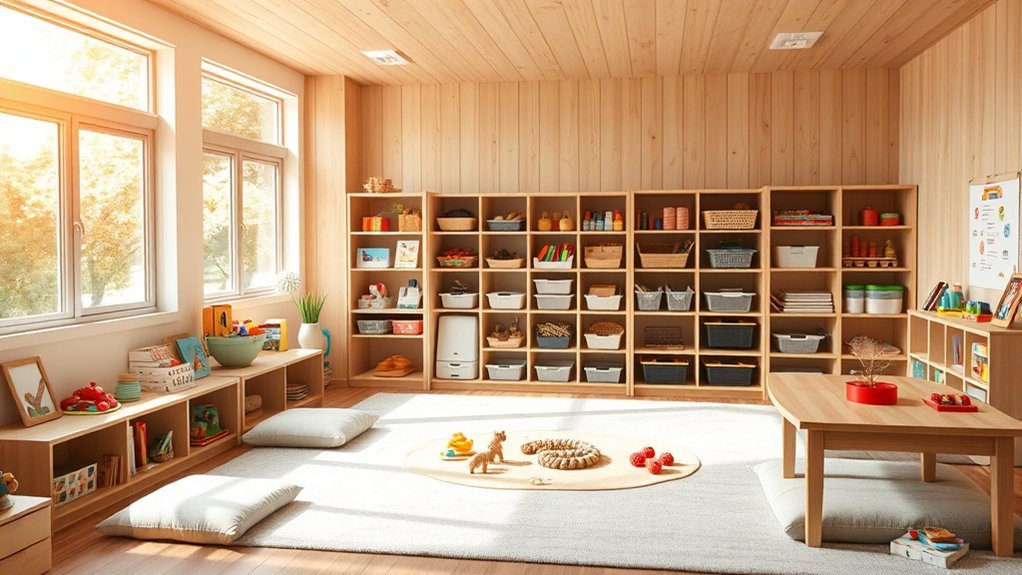
You’ll need intentional space organization to maximize learning opportunities. Create distinct zones for different activities—building blocks in one corner, art supplies in another, dramatic play elsewhere. This structure helps children transition between activities smoothly.
In playful environments, accessibility matters most. Store materials at your child’s eye level using clear containers they can open independently. Rotate toys weekly to maintain interest without overwhelming them. Include open-ended materials like cardboard boxes, fabric scraps, and natural objects that spark imagination.
Whether you’re organizing a classroom or home, ensure adequate floor space for movement and construction.
Natural lighting, comfortable seating areas, and minimal visual clutter support focused, engaged play that drives development.
In case you were wondering
What Age Should Children Transition From Play-Based Learning to Traditional Classroom Instruction?
You’ll find there’s no single “right” age, as it depends on your child’s developmental milestones and your school’s educational philosophies. Most children transition between ages 5-7, but they’ll still benefit from play-integrated learning afterward.
How Much Daily Playtime Do Children Need for Optimal Development?
your child needs 1-3 hours of daily playtime for optimal development. Following daily recommendations ensures they’ll reap play benefits like improved creativity, social skills, and cognitive growth that’ll last a lifetime.
Can Play-Based Learning Work for Children With Special Needs or Learning Disabilities?
Yes, play-based learning effectively supports children with special needs when you implement adaptive strategies tailored to their abilities. You’ll find it thrives in inclusive environments where activities are modified, ensuring every child participates meaningfully and develops at their own pace.
How Do Standardized Test Scores Compare Between Play-Based and Traditional Education Models?
Research shows you’ll find mixed results when comparing standardized assessments between these approaches. Play-based students often demonstrate stronger problem-solving skills, though traditional models may show slight advantages in specific standardized test formats measuring educational effectiveness.
What if My Child Only Wants Screen Time Instead of Active Play?
You’re not alone in this uphill battle. Set clear boundaries by limiting screen time and making active play irresistible—join them outside, offer engaging toys, and create tech-free zones. You’ll gradually shift their preferences through consistency.
Conclusion
You’ve seen the evidence—play isn’t just fun, it’s fundamental. But here’s what most parents don’t realize: every moment you delay implementing play-based learning, your child’s brain is missing critical developmental windows that’ll never fully reopen. The question isn’t whether you should prioritize play anymore. It’s whether you’re ready to transform your child’s potential starting today. What you do next matters more than you think.