Why Your Child Fights Bedtime Routine (Even When You’Ve Tried Everything to Avoid Bedtime Battles)
Your child’s bedtime battles aren’t happening because you’ve failed—they’re rooted in real biological and emotional factors. Their circadian rhythm isn’t fully developed, meaning melatonin doesn’t always kick in when you need it to. Separation anxiety activates genuine distress in their brain, while their growing need for autonomy makes bedtime feel like a loss of control. Understanding these underlying causes can help you move from frustration to effective, connection-based solutions that actually work.
The Science Behind Your Child’s Bedtime Resistance

When your child fights sleep despite clearly being exhausted, there’s actually solid neuroscience explaining this frustrating contradiction. Their developing brains struggle to regulate the transition between wakefulness and sleep, creating genuine difficulty winding down.
Children’s sleep cycles differ significantly from adults’. Their circadian rhythms aren’t fully mature until adolescence, meaning their internal clocks often run on a different schedule than yours. When you notice bedtime resistance, it’s frequently because their bodies haven’t released enough melatonin yet.
Your child’s internal clock runs on its own schedule—their brain simply hasn’t caught up to bedtime yet.
Additionally, overtired children experience a cortisol surge—the stress hormone that actually increases alertness. This creates a paradox where exhaustion triggers hyperactivity rather than drowsiness.
Understanding this biology helps you recognize that your child isn’t being defiant; their brain chemistry is working against them.
How Separation Anxiety Fuels Nighttime Struggles

Although separation anxiety peaks between 8 and 18 months, it can resurface throughout childhood—and bedtime becomes ground zero for these fears.
When you leave your child’s room, they’re facing hours alone in the dark, which triggers their attachment system into overdrive.
Your child isn’t manipulating you. Their distress is genuine. Research shows that separation anxiety activates the same brain regions as physical pain, making bedtime feel threatening to their nervous system.
Nighttime fears compound this struggle. Your child’s developing imagination creates vivid scenarios they can’t yet distinguish from reality. Monsters under the bed feel as real as you standing in the doorway.
You can help by establishing brief, predictable check-ins that reassure your child you’re nearby without reinforcing the anxiety cycle.
Your Child’s Need for Control and Autonomy at Bedtime
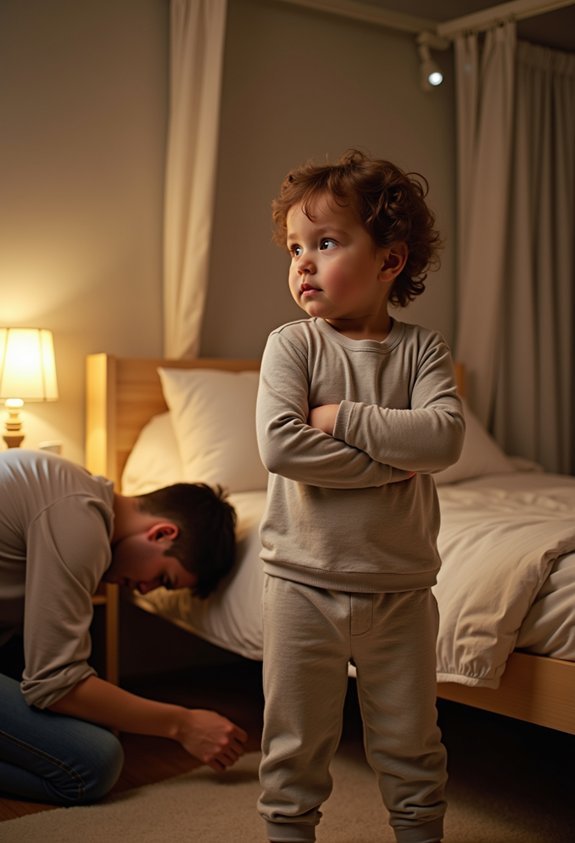
As children develop their sense of self, bedtime often becomes a battleground for control. Your child’s autonomy expression isn’t defiance—it’s a developmental milestone.
Research shows that children between ages two and six experience an intense drive for independence, and bedtime represents one of the few areas where they can assert their will.
Control struggles at night often emerge when children feel powerless during their day. You can redirect this need constructively by offering limited choices:
- Let them pick between two acceptable pajama options
- Allow them to choose which stuffed animal joins them
- Give them control over selecting the bedtime story
These small decisions satisfy their autonomy needs while maintaining your essential boundaries. You’re not surrendering authority—you’re teaching healthy decision-making skills.
The Role of Overstimulation and Screen Time in Sleep Battles

Beyond the drive for autonomy, your child’s brain chemistry plays a crucial role in bedtime resistance. When children experience overstimulation effects from bright lights, loud noises, or exciting activities close to bedtime, their bodies produce cortisol instead of melatonin. This stress hormone keeps them wired when they should be winding down.
Screen time presents a particular challenge. The blue light emitted from tablets, phones, and televisions suppresses melatonin production by up to 50%. Research consistently shows that establishing screen time limits—ideally powering down devices one to two hours before bed—significantly improves sleep onset.
You’re not failing if your child struggles after screen exposure. Their developing brains are simply more sensitive to these stimuli.
Creating a low-stimulation buffer zone before bedtime helps their natural sleep systems function properly.
Why Inconsistent Routines Make Bedtime Harder Than It Needs to Be

When bedtime rules shift from night to night, your child’s internal clock struggles to establish the predictable rhythms it needs.
Research shows that bedtime consistency directly impacts how quickly children fall asleep and stay asleep. Without reliable patterns, your child’s brain can’t anticipate when sleep should occur.
Here’s what inconsistency disrupts:
- Circadian rhythm regulation – Variable bedtimes confuse your child’s natural sleep-wake cycle.
- Emotional security – Unpredictable routines create anxiety about what comes next.
- Sleep environment associations – Your child can’t link their bedroom with rest when expectations change.
You’re not failing if consistency feels challenging.
Start by anchoring just one element—perhaps the same wake-up time daily. Small, sustainable changes build the foundation your child needs to embrace bedtime rather than fight it.
Hidden Physical Factors That Keep Your Child From Settling Down

Although you’ve created a consistent routine, your child might still struggle to settle down due to physical factors you can’t immediately see.
Underlying sleep disorders like restless leg syndrome or sleep apnea can make falling asleep genuinely difficult for your child, even when they’re exhausted. These conditions often go undiagnosed because children can’t articulate what they’re experiencing.
Sensory sensitivities also play a significant role. Your child may find pajama seams unbearable, perceive room temperature differently than you do, or hear sounds you’ve tuned out. These aren’t behavioral choices—they’re neurological responses.
Watch for patterns: Does your child complain about specific physical discomforts? Do they seem restless despite being tired?
If struggles persist despite consistent routines, consult your pediatrician. Identifying these hidden factors can transform bedtime from a battle into a peaceful transition.
Building Connection-Based Strategies That Actually Work

Once you’ve ruled out physical factors, the real work begins: strengthening your emotional connection with your child before bed.
Children resist bedtime when they feel disconnected from you. Their protests aren’t defiance—they’re bids for emotional support and reassurance that you’re still available to them.
Try these connection techniques that research shows calm resistant children:
- Spend 10-15 minutes of undivided attention during the wind-down period, following your child’s lead in play or conversation.
- Use physical touch strategically—back rubs, hair stroking, or holding hands signal safety to your child’s nervous system.
- Validate their feelings about the day ending without trying to fix or dismiss their emotions.
When children feel securely connected, they’re neurologically better equipped to tolerate separation and transition into sleep.
In case you were wondering
What Age Do Most Children Naturally Outgrow Bedtime Battles?
You’ll typically see bedtime battles ease around ages 4-5 as your child moves through bedtime developmental stages. However, sleep regression factors like stress or routine changes can temporarily revive struggles, so stay patient and consistent.
Should Siblings Share a Bedroom if One Resists Bedtime?
You can keep siblings together, but bedroom dynamics require planning. Stagger bedtimes so the resistant child doesn’t disrupt the other. This reduces sibling rivalry and lets each child settle independently while still sharing their space.
How Do Bedtime Struggles Differ Between Firstborn and Younger Children?
Your firstborn craves control, your younger child craves connection—these firstborn traits and sibling dynamics shape bedtime differently. You’re not failing; you’re navigating real developmental differences that require tailored, patient approaches for each child.
Can Certain Foods Eaten at Dinner Worsen Bedtime Resistance?
Yes, certain dinner foods can definitely affect your child’s sleep quality. Sugary treats, caffeine, and heavy meals close to bedtime may increase restlessness. You’ll likely notice smoother bedtimes when you choose lighter, balanced evening meals.
When Should Parents Consider Professional Sleep Consulting for Bedtime Issues?
You should consider professional sleep consulting when bedtime battles persist for weeks despite consistent efforts. Expert advice can provide personalized sleep training strategies, giving you reassurance that you’re not alone in navigating these challenges.
Conclusion
You’ve learned the science, you’ve understood the emotions, and you’ve discovered the hidden factors at play. Bedtime battles aren’t about defiance—they’re about connection, security, and developmental needs your child can’t yet articulate. When you respond with patience, when you stay consistent, when you prioritize connection, you’re not just solving sleep problems. You’re building trust that lasts far beyond childhood. You’ve got this.