Why Science Experiments Make Learning Fun for Kids?
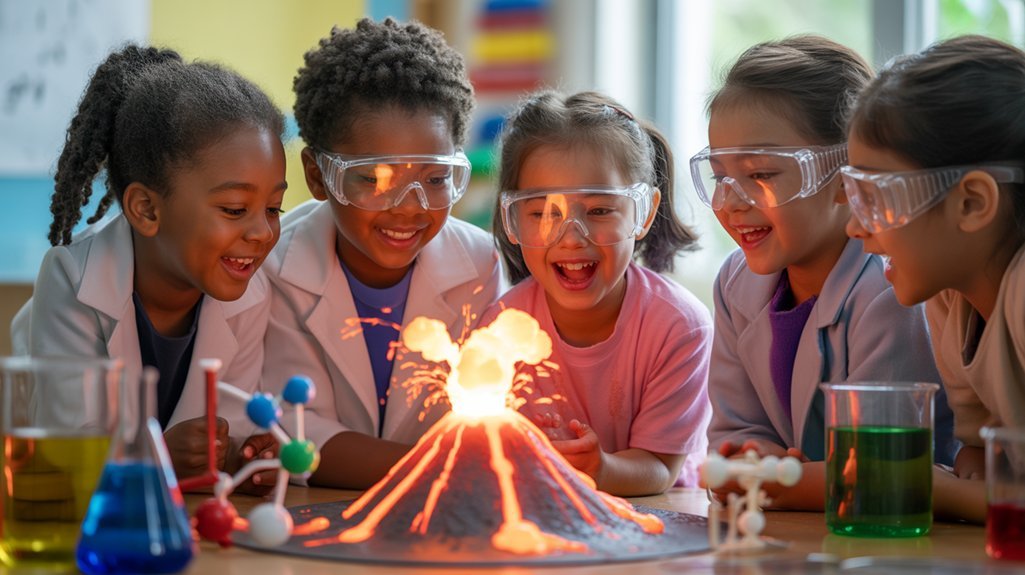
Science experiments make learning fun because they engage your child’s multiple senses, creating stronger neural pathways than passive studying ever could. When your kids see density differences firsthand or watch chemical reactions unfold, abstract concepts transform into concrete understanding they’ll actually remember. These hands-on experiences foster genuine curiosity, build critical thinking skills, and create emotional connections to discoveries that textbooks simply can’t match. The surprising outcomes and tangible results keep them naturally engaged while developing problem-solving abilities that’ll benefit them far beyond the classroom.
Key Takeaways
- Hands-on experiments engage multiple senses, creating stronger neural pathways and memory retention than passive textbook learning.
- Making invisible scientific principles visible and tangible transforms abstract concepts into concrete, easily understandable experiences.
- Discovery-based experimentation respects children’s natural curiosity, allowing them to explore, hypothesize, and draw conclusions independently.
- Troubleshooting experimental failures builds critical thinking and problem-solving skills that transfer to other academic subjects.
- Surprising outcomes trigger emotional responses and deeper memory encoding, creating lasting positive associations with STEM learning.
Hands-On Learning Engages Multiple Senses
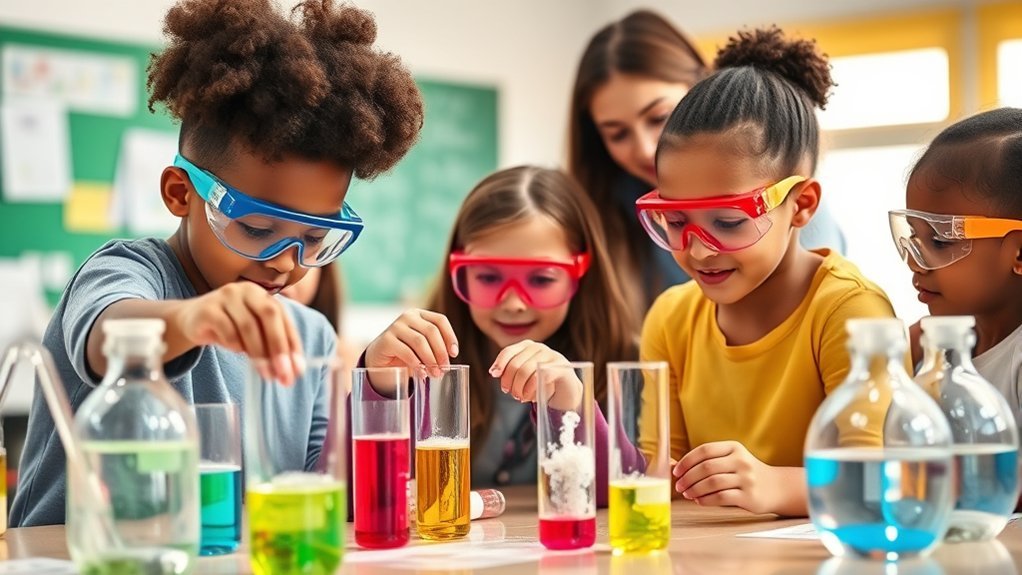
When children touch, observe, and manipulate materials during science experiments, they create stronger neural pathways than passive learning allows. Your child’s brain processes information more effectively through sensory exploration, making concepts stick longer and deeper.
Tactile engagement transforms abstract ideas into concrete understanding. When your kid mixes baking soda and vinegar, they’re not just reading about chemical reactions—they’re feeling the fizz, hearing the bubbles, and seeing the transformation firsthand. This multi-sensory approach activates different brain regions simultaneously, reinforcing memory formation.
You’ll notice your child recalls hands-on lessons far better than textbook facts. That’s because physical interaction creates emotional connections to learning. Each touch, smell, and visual observation becomes an anchor point, helping your child retrieve information when needed and building genuine scientific curiosity.
Experiments Transform Abstract Concepts Into Tangible Experiences
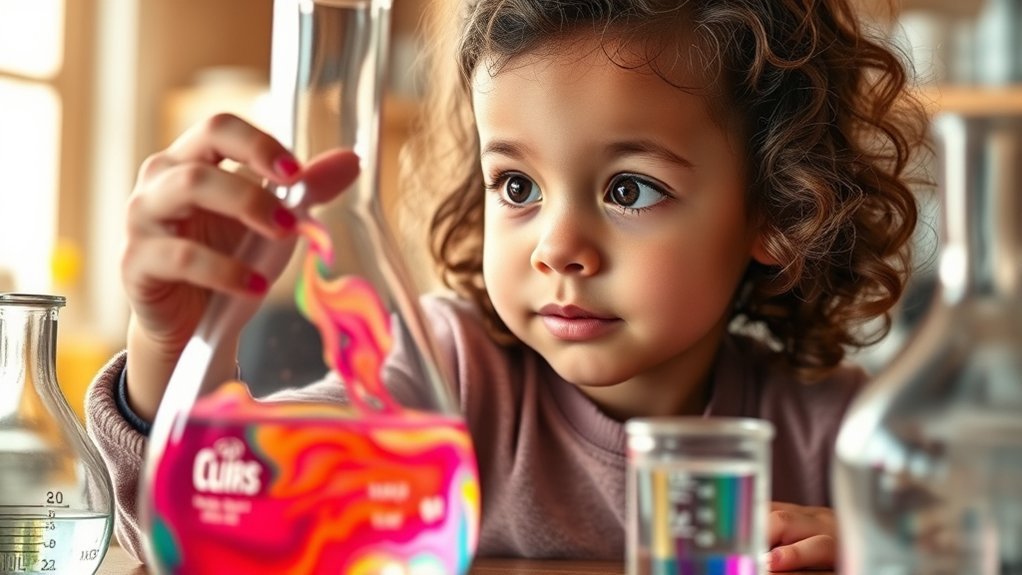
Building on this multi-sensory foundation, experiments give your child something even more powerful: they make invisible scientific principles visible and understandable. When your child mixes baking soda and vinegar, they’re not just reading about chemical reactions—they’re witnessing molecules interact through bubbling foam. This concrete application bridges the gap between theory and reality.
Visual perception plays a crucial role in transforming abstract ideas into memorable lessons. Your child can actually see:
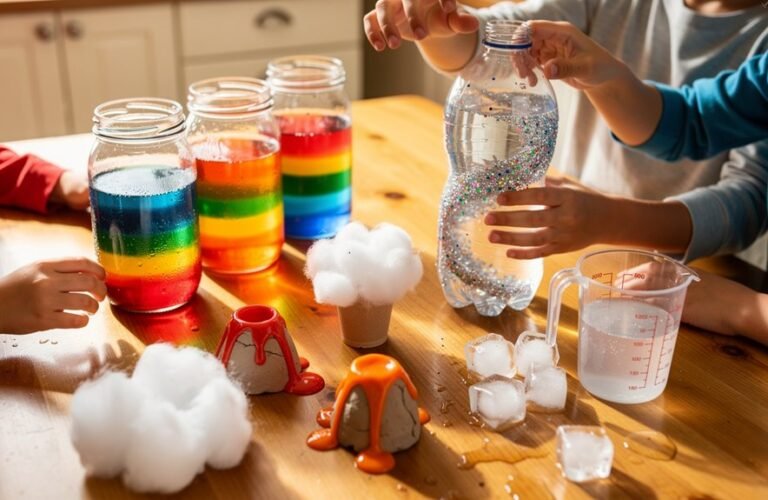
- Density differences when oil floats on water
- Gravity’s force pulling objects during drop tests
- Plant photosynthesis through color-changing leaves
These tangible experiences create mental anchors that textbooks alone can’t provide. Instead of memorizing definitions, your child builds genuine understanding through direct observation, making complex scientific concepts accessible and naturally exciting.
Encouraging Natural Curiosity Through Discovery

Have you noticed how children naturally ask “why” about everything they encounter? Science experiments tap into this innate inquisitiveness by creating opportunities for curiosity driven exploration. When you let kids investigate questions through hands-on activities, they’re not just following instructions—they’re becoming active participants in their own learning journey.
Discovery based learning transforms children from passive listeners into engaged scientists. Instead of memorizing facts from textbooks, they’re formulating hypotheses, testing ideas, and drawing conclusions. This approach respects their natural tendency to explore and wonder.
Discovery based learning honors children’s instincts to explore, transforming them from passive observers into engaged scientists who actively construct their own understanding.
You’ll find that experiments give kids permission to investigate freely. They can observe cause and effect relationships firsthand, make mistakes without judgment, and experience the thrill of uncovering answers themselves.
This authentic discovery process makes learning genuinely enjoyable while building lasting scientific thinking skills.
Building Critical Thinking and Problem-Solving Skills

Through hands-on experimentation, children develop mental frameworks that extend far beyond the science lab. When you let your kids work through experiments, they’ll naturally engage in critical analysis as they observe results and draw conclusions.
They’re not just following steps—they’re thinking deeply about cause and effect.
Science experiments teach your children to:
- Question assumptions and test hypotheses systematically
- Troubleshoot failures by identifying what went wrong and adjusting their approach
- Develop creative solutions when experiments don’t go as planned
You’ll notice your kids becoming more analytical in everyday situations. They’ll approach challenges methodically, consider multiple solutions, and persist through setbacks.
These problem-solving skills transfer directly to math, reading comprehension, and real-world scenarios they’ll encounter throughout life.
Making Mistakes Becomes Part of the Adventure
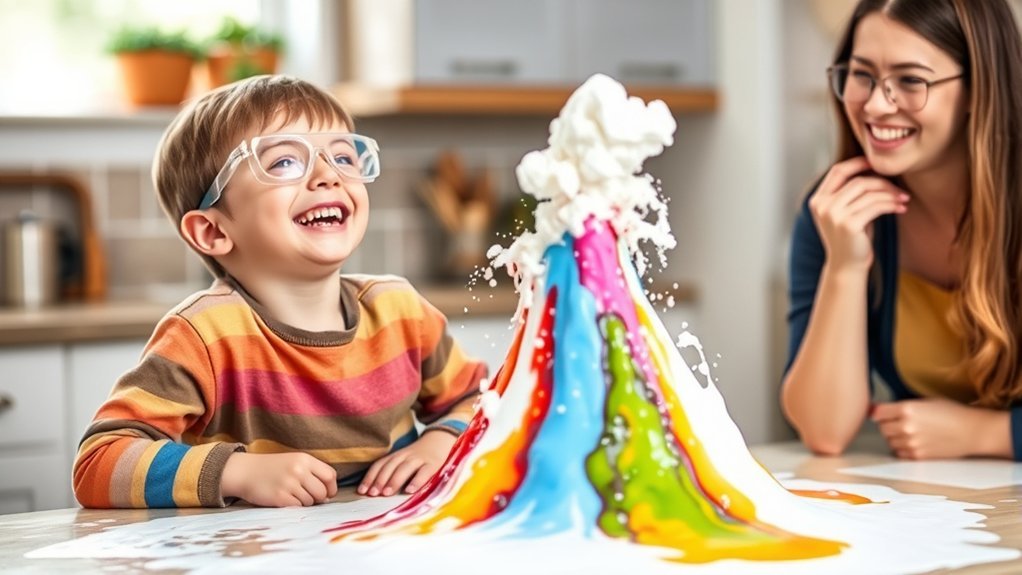
When experiments bubble over or produce unexpected colors, children learn that failure isn’t something to fear—it’s valuable data.
You’ll notice your kids develop a risk taking mindset as they adjust variables and try again without discouragement.
This playful exploration transforms “oops” moments into discovery opportunities. When their volcano doesn’t erupt properly, they’ll troubleshoot by adding more vinegar or adjusting baking soda amounts.
Each mistake teaches cause-and-effect relationships better than any textbook explanation could.
You’re essentially giving them permission to fail forward. They’ll ask “What if I try this instead?” rather than worrying about getting it wrong.
This experimental attitude builds resilience that extends beyond science projects into everyday challenges.
The mess becomes meaningful, and setbacks turn into stepping stones toward understanding.
Creating Memorable Moments That Enhance Retention
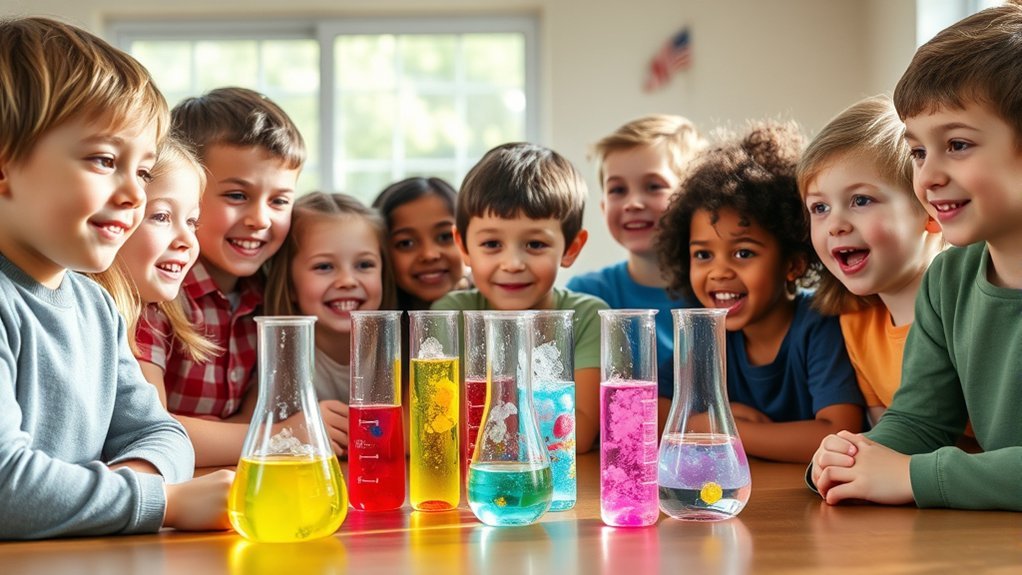
Beyond building resilience through trial and error, hands-on experiments create lasting impressions that stick with children far longer than worksheets or lectures.
When you’re actively involved in discovering how vinegar reacts with baking soda, you’re using experiential learning that engages multiple senses simultaneously. This multisensory approach functions as one of the most effective memory techniques available.
Why experiments boost retention:
- Your brain forms stronger neural connections when you physically manipulate materials and observe real-time results
- Emotional responses during surprising outcomes trigger deeper memory encoding
- The combination of visual, tactile, and cognitive engagement creates multiple memory pathways
You’ll remember the excitement of watching a volcano erupt or creating slime years after completing the activity.
These vivid experiences transform abstract concepts into tangible memories that support long-term learning.
Fostering Confidence and Independence in Young Learners
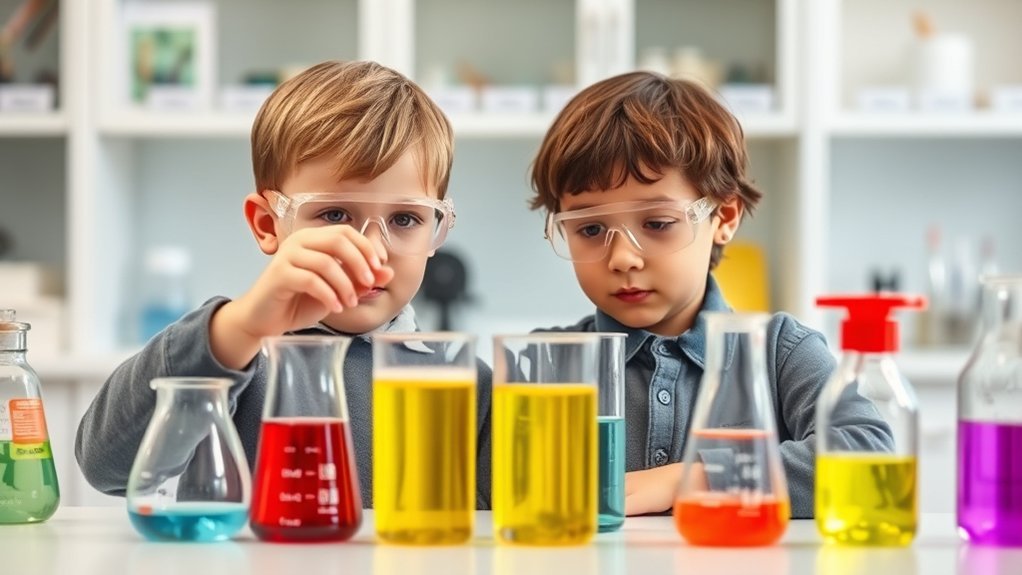
As children conduct their own experiments—measuring liquids, making predictions, and testing hypotheses—they develop a powerful sense of autonomy that builds genuine self-confidence.
When you let kids take ownership of scientific investigations, you’re enabling self-esteem building through tangible achievements they can see and measure.
Each successful experiment proves they’re capable problem-solvers. When predictions prove accurate, they feel validated. When results surprise them, they learn resilience and adaptability.
This hands-on approach nurtures independent thinking as children formulate questions, design solutions, and draw conclusions without constant adult intervention.
You’ll notice young learners become increasingly willing to tackle challenges independently. They stop seeking approval before every decision and trust their analytical abilities.
Science experiments transform passive students into confident, self-directed learners who believe in their capacity to understand complex concepts.
Sparking Long-Term Interest in STEM Fields
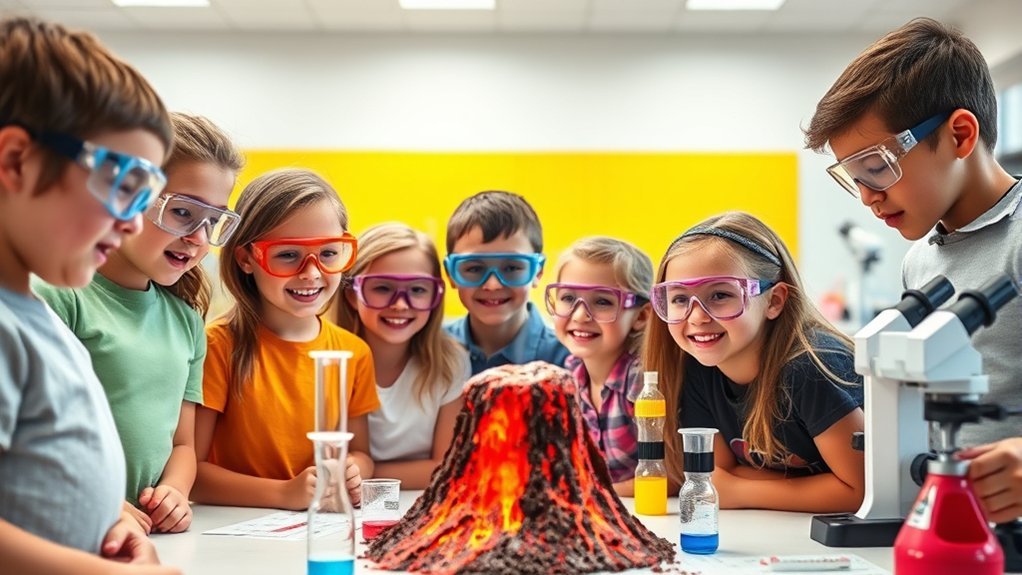
The confidence children gain from hands-on experimentation often ignites a curiosity that extends well beyond the classroom. When you introduce science experiments early, you’re planting seeds for potential STEM careers.
Children who engage with scientific concepts through practical activities develop stronger connections to these subjects, making them more likely to pursue related educational pathways in high school and college.
Hands-on science builds lasting connections that guide students toward STEM pathways throughout their academic journey.
Early exposure creates familiarity and comfort with scientific thinking. Consider these long-term benefits:
- Career exploration: Kids discover which STEM fields genuinely excite them through varied experiments
- Foundation building: Hands-on learning establishes core competencies needed for advanced studies
- Sustained motivation: Positive early experiences keep students engaged during challenging coursework
You’re not just teaching science—you’re opening doors to future opportunities and helping shape tomorrow’s innovators.
In case you were wondering
What Age Is Appropriate to Start Doing Science Experiments With Children?
You can start with simple toddler experiments as early as age 2-3, introducing basic sensory activities. By ages 4-5, preschool science becomes more engaging with hands-on projects that’ll spark your child’s natural curiosity about the world around them.
How Much Do Science Experiment Kits and Materials Typically Cost?
You get what you pay for! Science kit prices range from $15-$100, depending on complexity. While budget options exist, you’ll find mid-range kits offer the best educational value, balancing quality materials with engaging experiments your kids will love.
Are There Safety Concerns Parents Should Know About Home Experiments?
Yes, you’ll need to follow safety precautions like wearing protective gear and handling chemicals properly. Supervision requirements vary by experiment complexity, but you should always monitor younger children closely during hands-on activities to prevent accidents.
How Often Should Children Do Science Experiments for Optimal Learning?
You’d think daily experiments would be best, but ironically, too much overwhelms kids. You’ll find weekly frequency works perfectly for optimal hands-on learning—it keeps curiosity alive without turning science into a chore they’ll dread.
Can Science Experiments Work for Children With Different Learning Styles?
Yes, you’ll find science experiments accommodate all learning styles perfectly. They offer hands-on activities for kinesthetic learners, visual learning opportunities through observations and demonstrations, and auditory benefits when you’re discussing results and explaining concepts together.
Conclusion
Picture your child’s eyes lighting up as colorful liquids fizz and bubble before them. You’ll watch their small hands confidently mix solutions, their mind racing with questions and possibilities. Through science experiments, you’re not just teaching facts—you’re igniting a spark that’ll burn bright for years to come. You’re raising curious thinkers who see wonder in every challenge, transforming ordinary moments into extraordinary discoveries that shape their future.