17 Best Simple Toddler Crafts for Home Fun
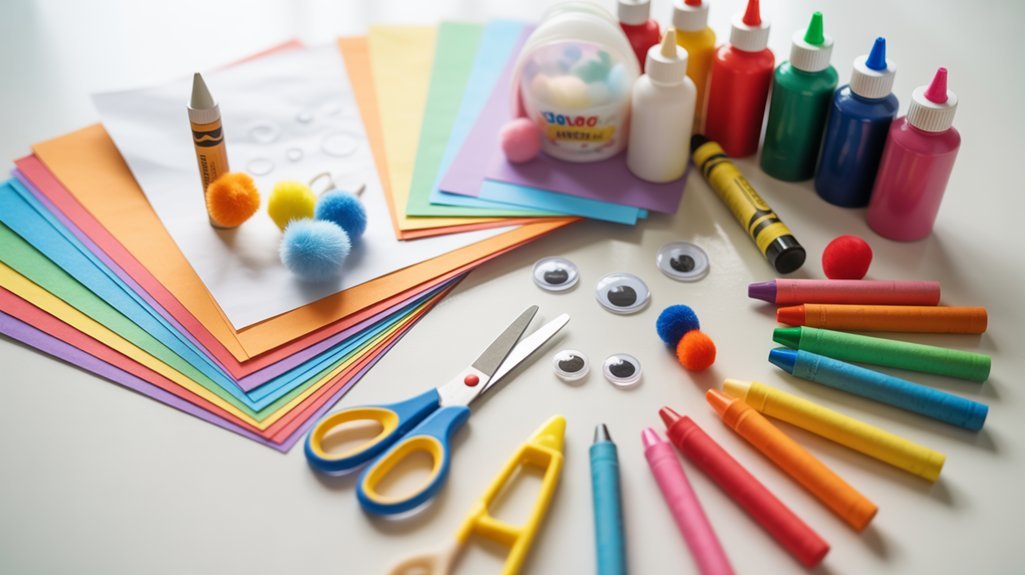
You’ll find endless entertainment with simple household items transformed into engaging toddler crafts. Try paper plate animals with painted masks, pasta necklace threading for fine motor skills, or cardboard tube stamping to create unique artwork. Set up a contact paper sticky wall for sensory exploration, use egg cartons and muffin tins for sorting activities, and create clothespin color matching games. Don’t forget bubble wrap printing, plastic bottle shakers for musical fun, and paper bag puppets for storytelling. These budget-friendly activities promote development while keeping little ones happily occupied, and there’s so much more you can discover.
Key Takeaways
- Paper plate animals, pasta necklaces, and cardboard tube stamping develop fine motor skills while encouraging creative expression with household materials.
- Sensory activities like sticky walls, cotton ball painting, and bubble wrap printing enhance tactile exploration and strengthen hand-eye coordination.
- Egg carton and muffin tin sorting activities teach color recognition, categorization, and problem-solving through hands-on play.
- Homemade instruments from plastic bottles promote musical exploration, sound differentiation, and rhythm development through interactive play.
- These budget-friendly crafts use recyclable materials like paper bags, toilet rolls, and magazines for sustainable entertainment at home.
Paper Plate Animals
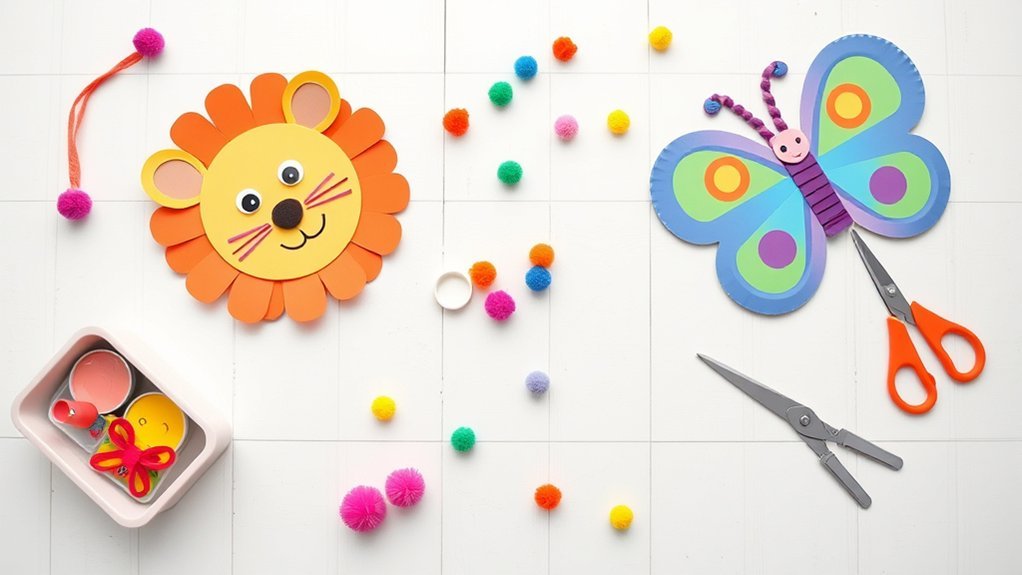
Paper plate animals transform a simple household item into an exciting craft project that keeps toddlers engaged for hours.
You’ll need paper plates, paint, glue, and construction paper to create lions, elephants, and tigers for your paper plate safari. Let your toddler paint the plates in bright colors while you cut out ears, trunks, and manes from colored paper.
Animal mask making becomes extra fun when you attach popsicle sticks as handles. Your child can hold up their creation and pretend to be different animals.
Adding popsicle stick handles turns simple paper plate animals into interactive toys for dramatic play and storytelling adventures.
Cut eyeholes for wearable masks, or keep them as wall decorations. These crafts develop fine motor skills through painting and gluing while sparking imagination.
Store finished animals in a box for repeated playtime adventures.
Pasta Necklace Threading
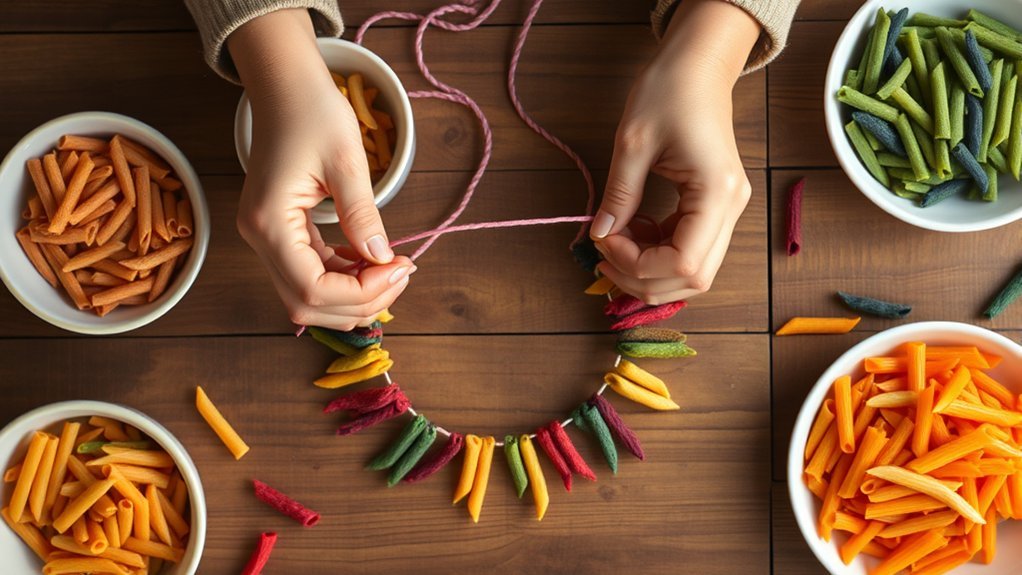
Threading colorful pasta shapes onto yarn creates a classic toddler craft that builds hand-eye coordination and concentration skills. You’ll want to choose tubular pasta types like penne, rigatoni, or ziti that accommodate easy threading techniques for small hands.
Before starting, dye the pasta using food coloring for vibrant sensory exploration. Your toddler can experiment with color patterns while developing fine motor skills through each threading motion.
Essential supplies you’ll need:
- Uncooked tubular pasta (pre-dyed in various colors)
- Yarn or string with masking tape wrapped around one end
- Bowl or container for organizing pasta pieces
This activity encourages creative expression as your child designs unique necklace designs.
You’ll discover that these simple family bonding moments create lasting memories while teaching patience and focus.
Cardboard Tube Stamping
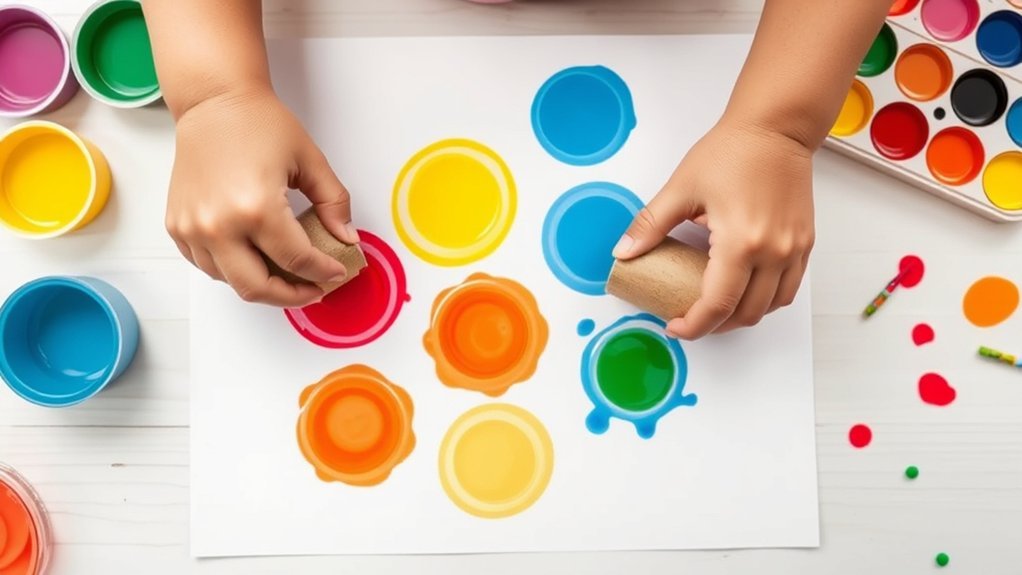
Save those empty paper towel and toilet paper rolls for another engaging craft activity. Cardboard tube crafts transform recyclables into fantastic art tools your toddler will love exploring.
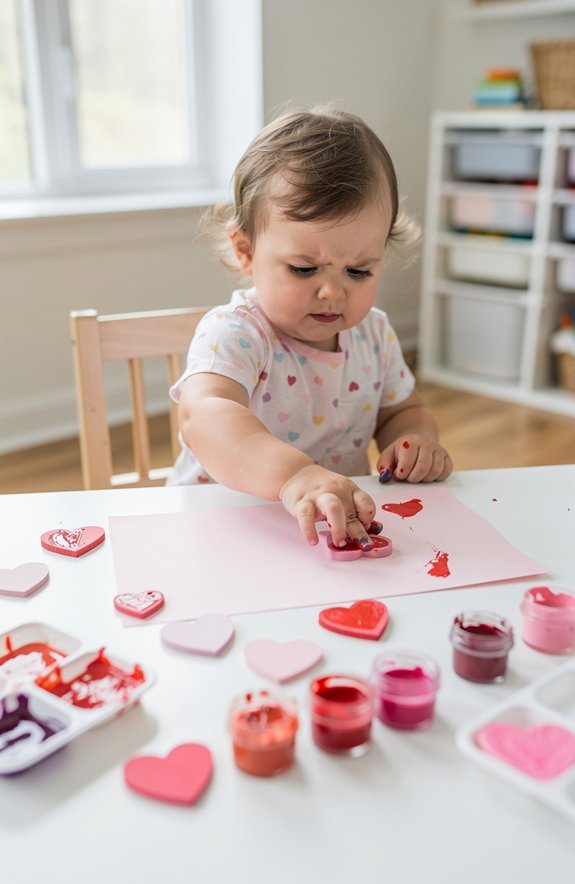
Cut the tubes into various widths to create different stamp sizes. You can also pinch one end to form a heart shape or cut notches for a flower pattern. Pour washable paint onto paper plates, and let your little one dip and stamp away on construction paper.
Transform ordinary cardboard tubes into hearts, flowers, and circles—then watch your toddler create colorful stamped masterpieces with washable paint.
This creative stamping activity develops fine motor skills while teaching pattern recognition. Your toddler can create wrapping paper, greeting cards, or abstract artwork. The tubes’ circular shapes naturally encourage color mixing experiments too.
Clean-up’s easy with washable paints, and you’re repurposing household items. It’s an eco-friendly craft that costs nothing.
Contact Paper Sticky Wall
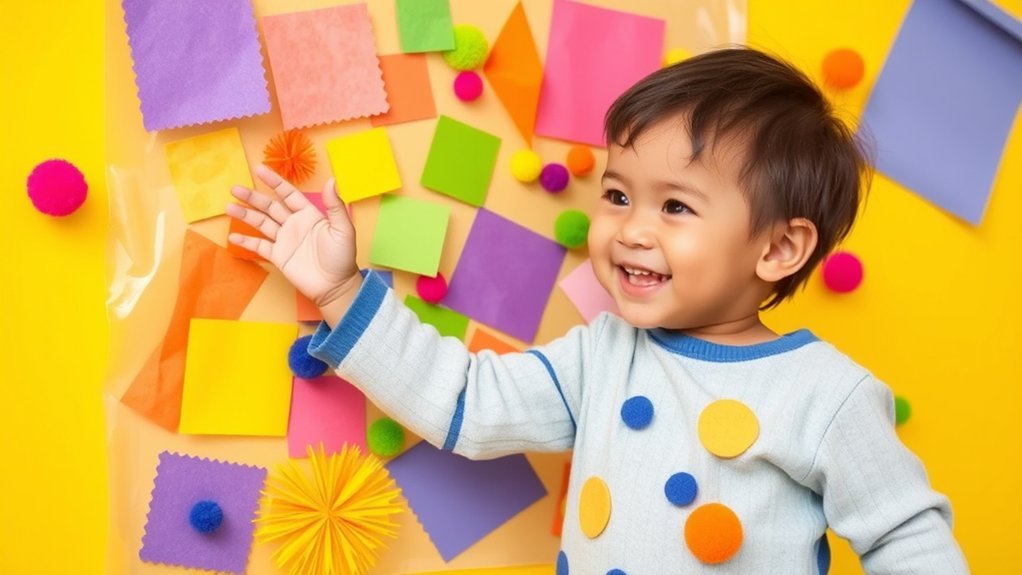
Transform a blank wall into an interactive sensory experience with clear contact paper. You’ll tape the paper sticky-side-out at your toddler’s height, creating an instant canvas for exploration.
The sticky wall benefits include developing fine motor skills and encouraging independent play while keeping little ones engaged for extended periods.
Gather lightweight materials for your toddler to stick and remove repeatedly:
- Tissue paper squares in rainbow colors
- Foam shapes and pom-poms
- Feathers and felt pieces
Your child will experiment with creative designs, arranging and rearranging materials without any mess. This low-prep activity costs pennies but delivers hours of entertainment.
You can change themes seasonally by introducing holiday-themed items or nature elements like leaves and flower petals.
Egg Carton Sorting Activity
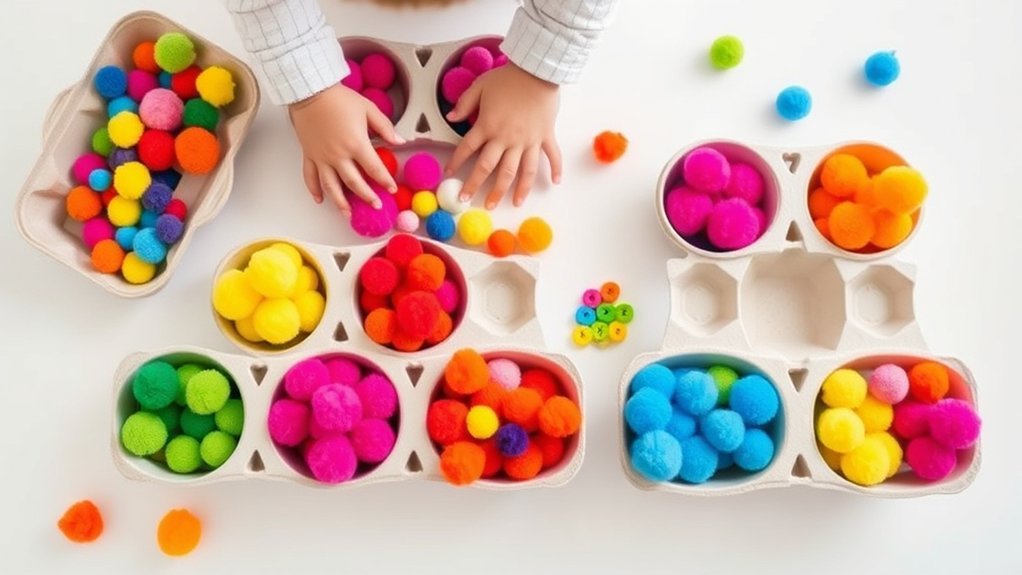
Another hands-on activity that promotes learning through play uses empty egg cartons as sorting stations. You’ll transform a simple carton into an educational tool by painting each cup a different color or placing colored paper inside. Your toddler can then sort pompoms, buttons, or small toys by matching them to the correct compartment.
This color sorting fun develops fine motor skills as little fingers grasp and place objects precisely. You can expand the activity by having your child sort by size, shape, or texture instead of color.
Once your toddler masters basic sorting, encourage creativity by turning the carton into egg carton creatures. Add googly eyes, pipe cleaners, and markers to transform compartments into caterpillars, bugs, or silly monsters, combining learning with imaginative play.
Torn Paper Collage
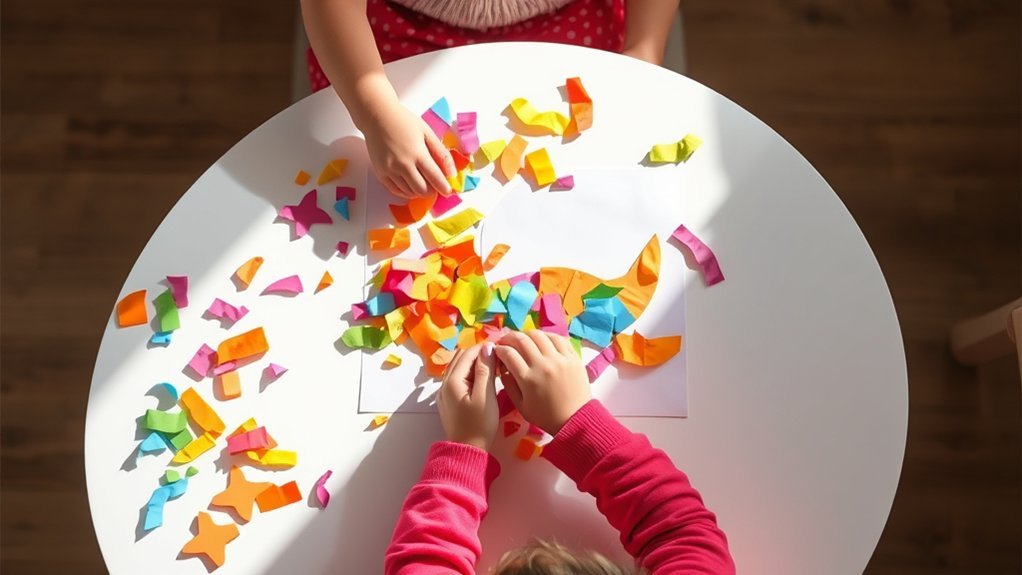
Tearing colorful paper into pieces gives your toddler a sensory-rich craft that doesn’t require scissors. This activity strengthens little fingers while exploring torn paper techniques that create unique textures and shapes. Your child will love the ripping sounds and tactile experience of transforming flat sheets into dimensional art.
Paper tearing builds fine motor skills while engaging multiple senses through sound, touch, and creative exploration without sharp tools.
Set up a simple workspace with construction paper, tissue paper, or magazine pages. Show your toddler how different papers tear in various ways, then let them experiment freely.
Creative collage ideas to try:
- Create a rainbow by arranging torn pieces in color groups
- Build animals or flowers using large torn shapes
- Layer tissue paper pieces for translucent window decorations
Glue torn pieces onto cardstock or paper plates to preserve their masterpiece.
Cereal Box Puzzles
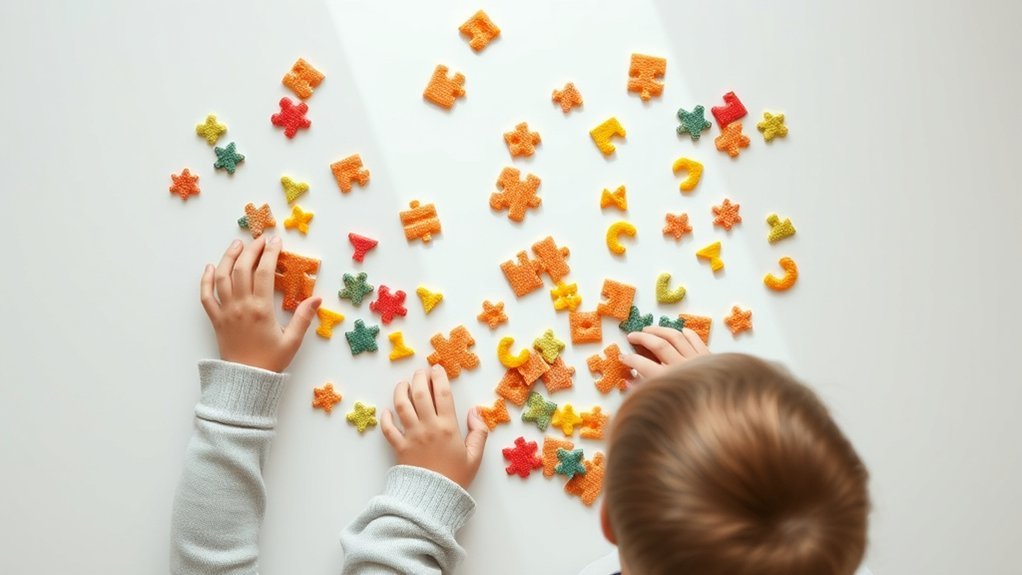
Your empty cereal boxes hold perfect puzzle-making potential for toddlers just learning spatial skills. Cut colorful box fronts into three or four large pieces, creating simple puzzle piece designs your child can reassemble. Start with straight cuts before advancing to wavy or zigzag patterns as their abilities grow.
This cereal box recycling activity costs nothing while teaching problem-solving and hand-eye coordination. Laminate pieces with clear contact paper for durability, letting toddlers handle them repeatedly without wear. Store each puzzle in a labeled envelope so pieces don’t mix together.
Create multiple puzzles featuring different cereal characters or box designs. Your toddler will love matching familiar images while developing cognitive skills. As they master simpler puzzles, increase difficulty by adding more pieces or choosing boxes with detailed graphics.
Pom Pom Drop Game
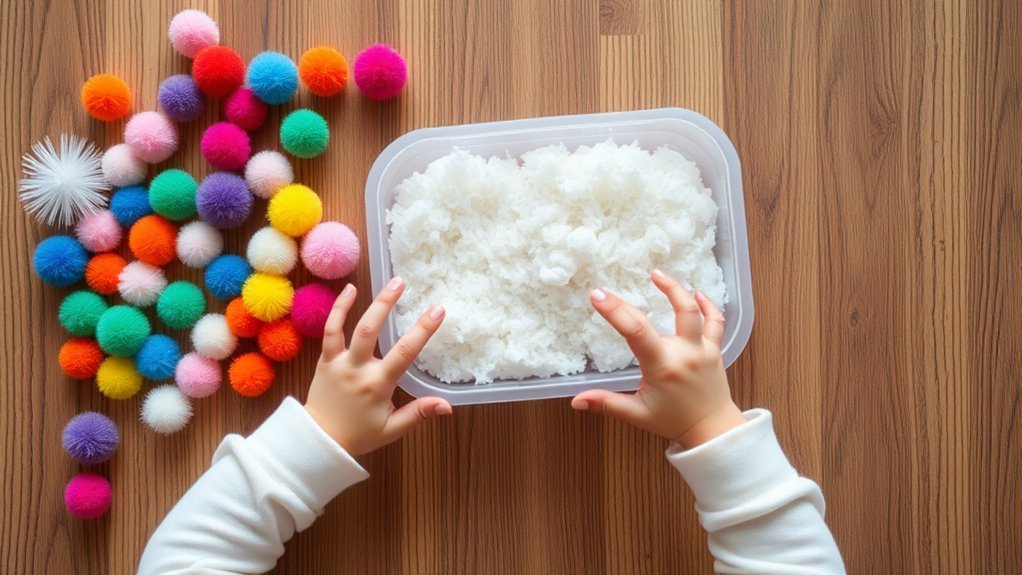
Building on puzzle-making fun, pom poms offer another inexpensive craft supply that transforms everyday containers into engaging toddler games.
Pom poms and recycled containers create budget-friendly learning games that grow with your toddler’s developing abilities.
You’ll create a simple drop activity using different pom pom sizes and recycled household items. Cut holes in cardboard boxes, oatmeal containers, or plastic bottles. Your toddler drops colorful pom poms through the openings, developing hand-eye coordination and fine motor skills.
Game variations include:
- Sorting colors – Label containers with colored paper matching your pom poms
- Size matching – Create different-sized holes for small, medium, and large pom poms
- Counting practice – Challenge your toddler to drop specific numbers into each container
This craft requires minimal setup and provides hours of entertainment. You can easily adjust difficulty levels as your child’s skills improve, making it adaptable for various developmental stages.
Toilet Paper Roll Binoculars
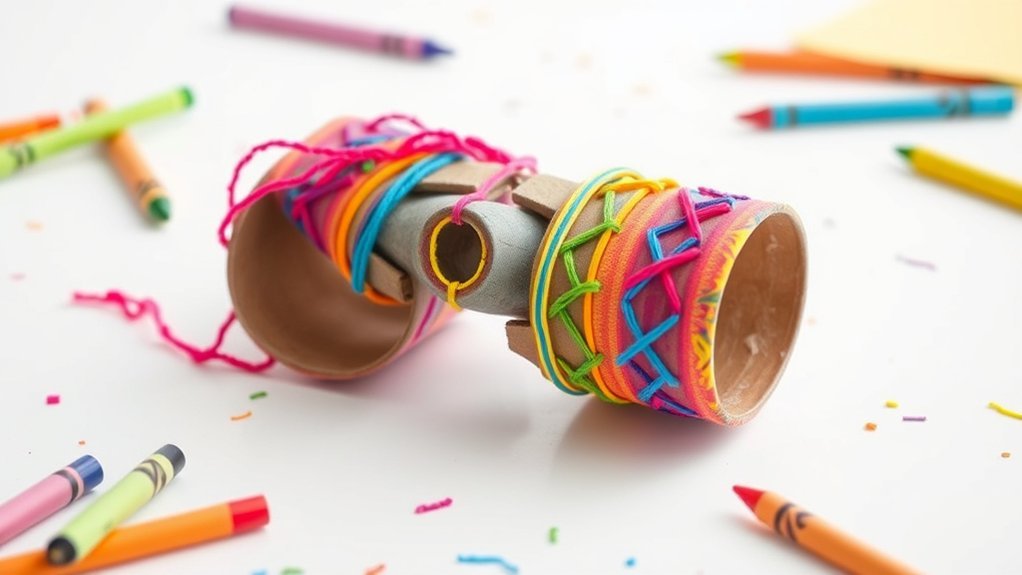
Two empty toilet paper rolls and basic craft supplies transform into adventure-ready binoculars that spark your toddler’s imagination. Tape the rolls together side-by-side, then let your child decorate them with markers, stickers, or paint. Punch holes on the outer edges and attach string for a neck strap.
These homemade binoculars encourage outdoor exploration and active play. Your toddler can use them for nature scavenger hunts, searching for specific leaves, flowers, or rocks in your backyard.
They’re perfect for animal tracking games where your little one pretends to spot birds, squirrels, or butterflies.
The craft develops fine motor skills during construction and promotes observational abilities during play. Your child will love peering through their special binoculars, transforming ordinary walks into exciting expeditions while building curiosity about the world around them.
Cotton Ball Painting
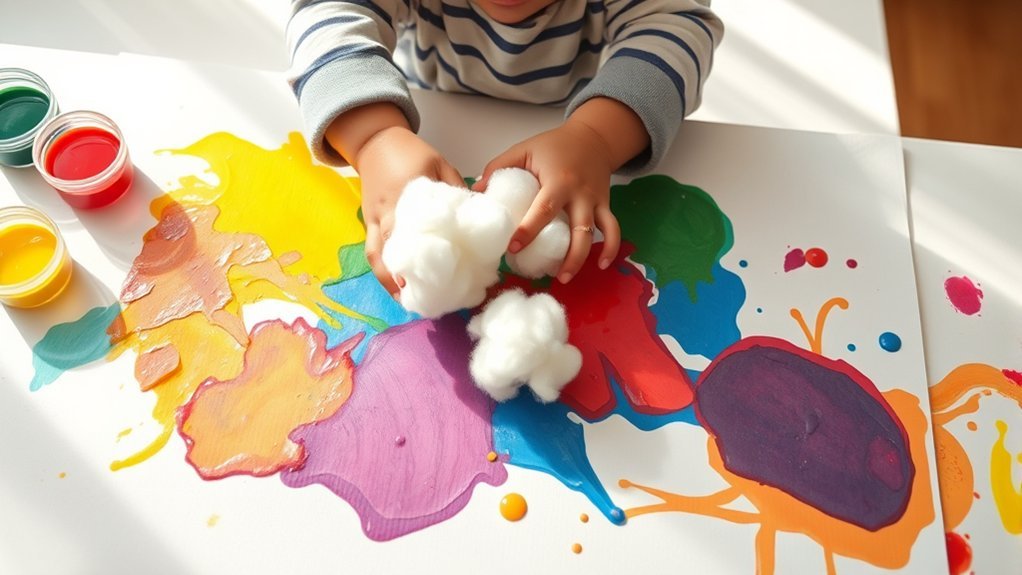
Cotton balls dipped in paint create a unique sensory experience that toddlers find irresistible. This activity combines sensory exploration with creative expression, making it perfect for young artists.
You’ll need washable paint, cotton balls, and paper. Your toddler can experiment with different cotton ball techniques like dabbing, swirling, or stamping to create textured artwork. The soft, fluffy material feels different from traditional brushes, encouraging tactile learning.
Set up your painting station with:
- Shallow bowls of primary colors for easy dipping
- Large paper or cardboard for ample creative space
- Clothespins attached to cotton balls for mess-free gripping
This craft strengthens fine motor skills while your child explores color mixing and pattern creation. The cotton’s absorbent nature produces distinctive textures that make each artwork uniquely theirs.
Paper Bag Puppets
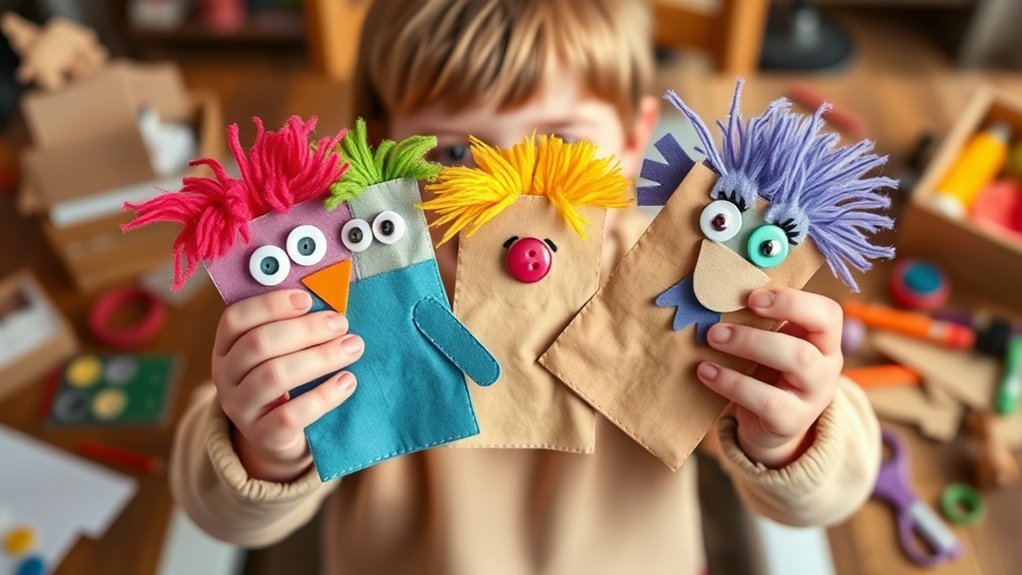
Paper bag puppets transform ordinary lunch bags into imaginative characters that’ll spark hours of creative play. You’ll need basic supplies: brown paper lunch bags, construction paper, markers, glue, and googly eyes.
Show your toddler how to create faces on the bag’s bottom flap, which becomes the puppet’s moving mouth. They can design animals, monsters, or family members through character creation using cut paper shapes and drawings.
Once complete, encourage puppet storytelling by helping your child put on simple shows. They’ll develop language skills while narrating adventures with their handmade characters.
Create multiple puppets together so your toddler can act out conversations between different personalities. This craft combines art, dramatic play, and communication skills in one engaging activity that costs practically nothing.
Aluminum Foil Sculptures
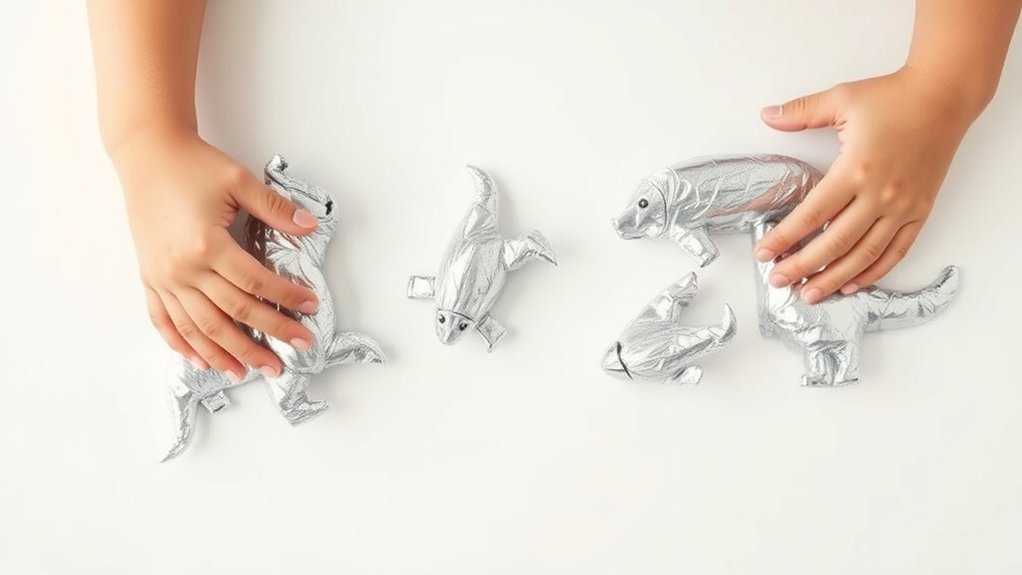
Aluminum foil sculptures offer toddlers a unique sensory experience while developing their fine motor skills and three-dimensional thinking. You’ll find that aluminum foil art provides endless possibilities for creative textures as your little one crumples, twists, and shapes the material into imaginative forms.
Start by tearing off manageable sheets of foil for your toddler. They can create:
- Simple animals like snakes, fish, or butterflies by folding and twisting
- Shiny balls of various sizes by crumpling and compressing
- Crown decorations or jewelry pieces by molding around their wrists
Encourage your child to explore different techniques—smooth surfaces versus crinkled ones. The malleable nature of foil allows them to reshape their creations repeatedly.
You can enhance the activity by adding tape or creating foil paintings afterward, extending the creative experience beyond basic sculpting.
Magazine Tear and Paste
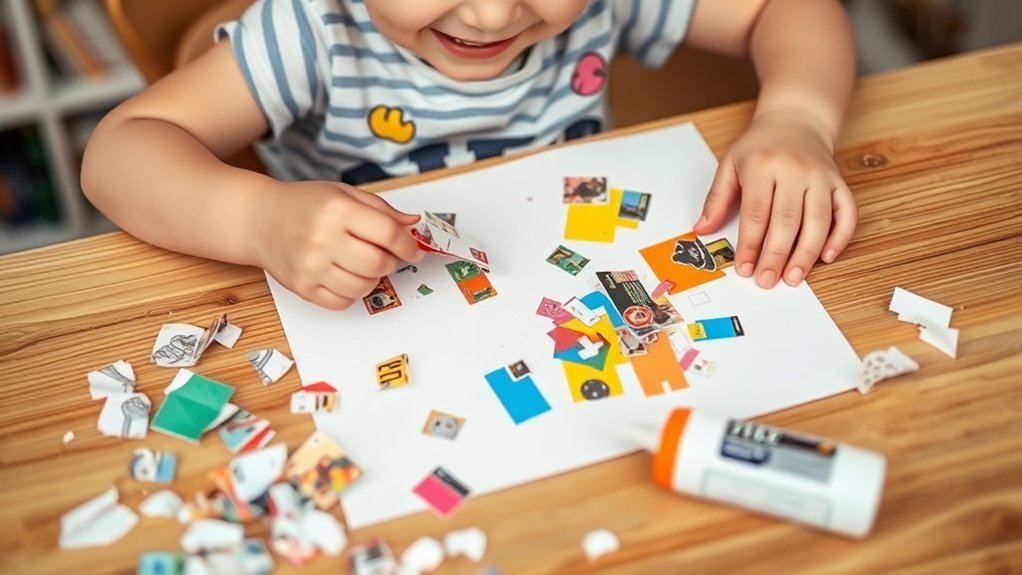
While flipping through colorful magazines might seem like a simple activity, it transforms into an engaging multisensory craft when you let your toddler tear and paste images onto paper. This magazine collage project strengthens fine motor skills as little fingers grip, rip, and manipulate glossy pages into interesting shapes.
You’ll need old magazines, construction paper, and child-safe glue sticks. Let your toddler choose images they’re drawn to—animals, foods, or bright colors. The tearing motion builds hand strength while offering satisfying sensory feedback.
Guide them to arrange pieces before gluing, but don’t interfere with their creative expression. There’s no wrong way to create their masterpiece.
This activity keeps toddlers engaged for extended periods while developing spatial awareness and decision-making skills. Plus, cleanup’s minimal.
Clothespin Color Matching
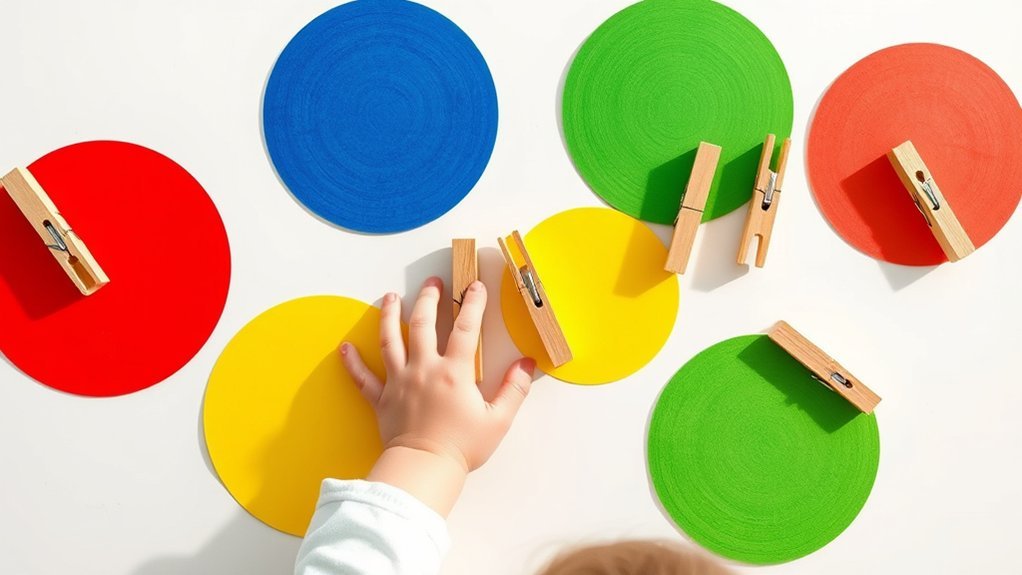
Transforming ordinary wooden clothespins into a color-learning tool creates an educational activity that’s both affordable and effective.
You’ll paint clothespins in various colors and have your toddler match them to corresponding colored paper, containers, or craft sticks. This activity strengthens color recognition while developing fine motor skills through the pinching motion required to open clothespins.
To set up this engaging activity:
- Paint 10-12 wooden clothespins in basic colors like red, blue, yellow, and green
- Create matching stations using construction paper circles or painted cardboard squares
- Demonstrate the pinching technique and let your child clip pins onto their matching colors
You can increase difficulty by adding more colors or mixing shades. Your toddler will enjoy the satisfying click of each successful match.
Muffin Tin Sorting Tray
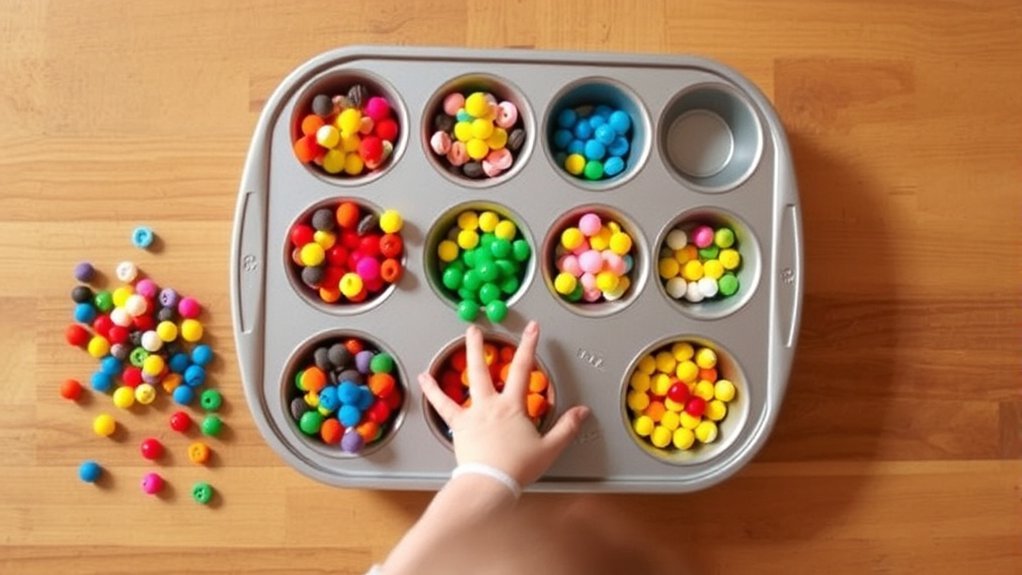
A standard muffin tin becomes an excellent sorting station when you pair it with small objects from around your house. Your toddler can organize items by category, developing critical thinking skills while having fun.
Start with muffin tin colors by placing colored paper circles in each cup. Have your child match pom-poms, buttons, or blocks to the corresponding colored sections. This reinforces color recognition through hands-on practice.
Next, try muffin tin shapes by drawing simple shapes in each compartment. Your toddler sorts toys, crackers, or craft materials based on their geometric forms. Circles, squares, and triangles work perfectly for beginners.
This versatile activity grows with your child. You can increase difficulty by combining colors and shapes or introducing counting elements. The muffin tin’s compartmentalized design naturally guides their sorting exploration.
Bubble Wrap Printing
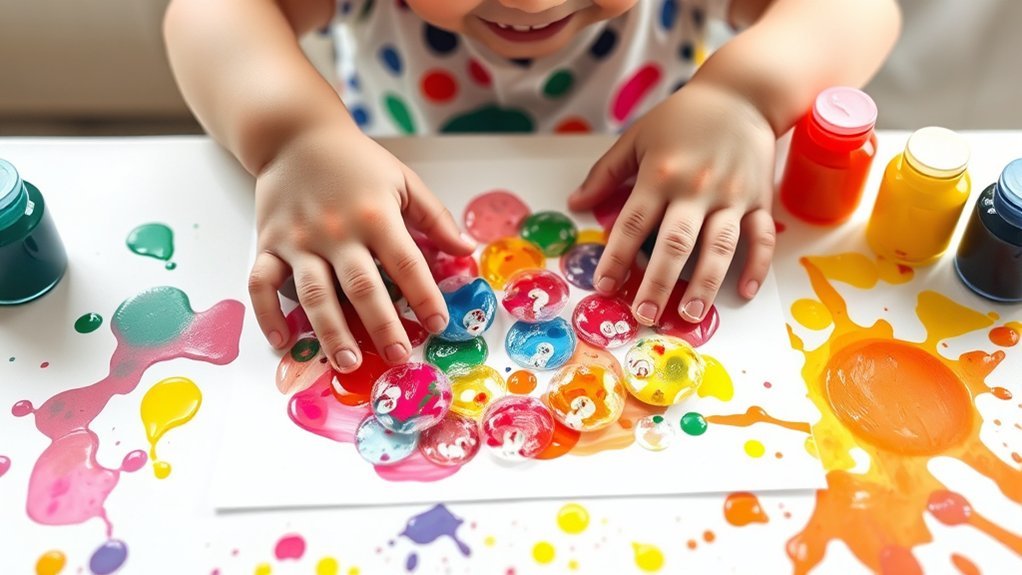
Bubble wrap transforms into a textured stamp that creates mesmerizing patterns your toddler will love making.
Turn ordinary packing material into an extraordinary art tool that delivers sensory delight and creative exploration for your little one.
You’ll wrap bubble wrap around wooden blocks or secure it to your child’s hands with tape. They’ll dip the bubble wrap textures into washable paint and press firmly onto paper to reveal beautiful circular prints.
This sensory-rich activity develops fine motor skills while introducing basic printing concepts:
- Colorful bubble art emerges as your toddler experiments with mixing colors and overlapping prints
- Different bubble sizes create varied patterns, from tiny polka dots to larger circles
- Rolling bubble-wrapped cylinders across paper produces unique stripe effects
You’ll find cleanup straightforward since bubble wrap rinses easily.
Your toddler stays engaged watching their prints appear, making this craft perfect for afternoons when you need entertaining activities.
Plastic Bottle Shakers
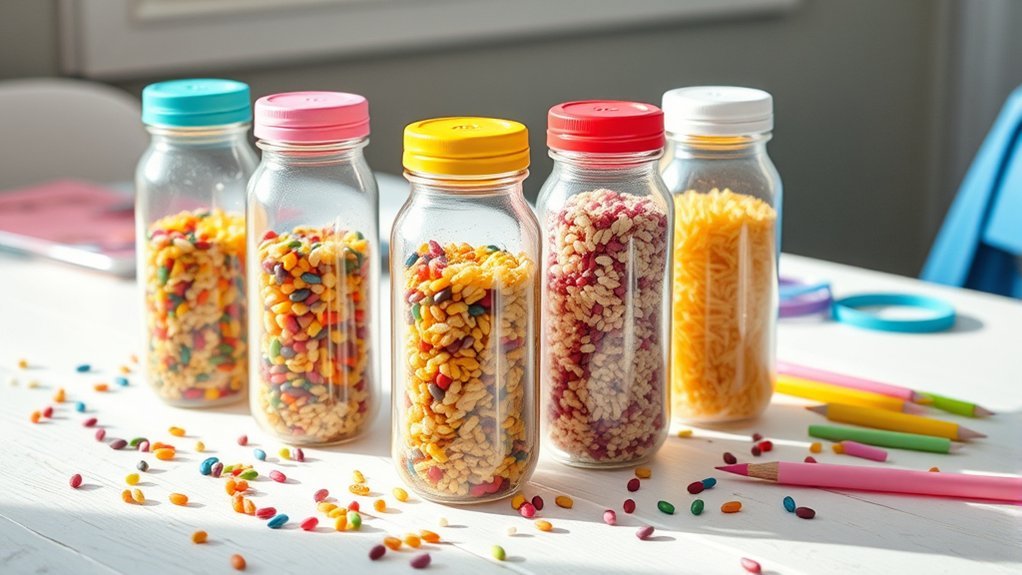
Empty water bottles become instant musical instruments that’ll keep your toddler shaking, rattling, and exploring rhythm.
Simply fill clean plastic bottles with rice, dried beans, pasta, or beads—each creates distinct sounds for music exploration. Seal the lids tightly with hot glue to prevent spills.
Your toddler will discover cause-and-effect relationships while developing motor skills through shaking and gripping. The transparent bottles add visual interest as contents swirl and bounce inside, enhancing sensory play.
Decorate bottles with colorful tape, stickers, or paint to make them more engaging. Create multiple shakers with different fillings so your child can compare sounds and rhythms.
You’ll encourage listening skills, coordination, and musical appreciation through this simple activity. These homemade instruments cost practically nothing yet provide endless entertainment.
In case you were wondering
What Age Is Best to Start Doing Crafts With Toddlers?
You can start around 18 months when your toddler shows readiness for simple activities. Begin with safe, non-toxic craft materials like large crayons and washable paint. Watch for their interest level and fine motor development before diving in.
How Do I Keep My Toddler Engaged During Craft Activities?
Keep your toddler engaged by rotating crafting supplies regularly and offering varied activity ideas. You’ll maintain their interest when you let them choose projects, work alongside them, and celebrate their creations enthusiastically throughout each session.
What Safety Precautions Should I Take During Toddler Craft Time?
Safety first is your golden rule! Always choose non-toxic craft supplies and keep small items away. Follow key supervision tips: stay within arm’s reach, monitor what goes near mouths, and prepare your workspace beforehand for worry-free creativity.
How Do I Handle the Mess From Toddler Crafts?
You’ll need smart mess management and cleanup strategies. Use washable materials, lay down protective coverings like plastic tablecloths, and set up a craft station near water. Keep wet wipes handy and involve your toddler in tidying up afterward.
Can These Crafts Help With My Toddler’s Development?
Like building blocks for the brain, yes! You’ll boost your toddler’s cognitive skills through creative problem-solving and strengthen their fine motor abilities as they grasp, cut, and glue. It’s developmental magic in action.
Conclusion
You’ve planted seeds in a garden that’ll bloom with imagination. Each craft is a stepping stone across a river of creativity, helping your little one leap from curiosity to confidence. As you journey together through paper plates and pasta beads, you’re not just filling an afternoon—you’re building bridges between their tiny hands and big dreams. These simple activities are your compass, guiding them toward a world where anything’s possible with imagination and glue.