15 Fun Phonics Games for Your Toddler

You can transform phonics learning into playtime with games like Letter Sound Scavenger Hunts, where your toddler finds objects matching specific sounds, or Musical Alphabet Chairs that combine movement with letter recognition. Try Phonics Hopscotch with sidewalk chalk, build letters with playdough to strengthen muscle memory, or create Sound Shaker containers filled with different materials. Flashlight Letter Hunts in dimmed rooms make evening practice exciting, while Rhyming Word Basket Toss builds phonemic awareness through active play. Each activity combines physical engagement with sound recognition to make learning stick naturally, and there’s plenty more to discover.
Key Takeaways
- Letter sound scavenger hunts and treasure boxes connect phonics to real objects, building sound recognition through hands-on exploration and sensory experiences.
- Musical alphabet chairs and phonics memory match combine letter recognition with movement and games, making learning interactive and socially engaging.
- Phonics hopscotch and alphabet action cards merge physical activity with letter sounds, reinforcing learning through kinesthetic and gross motor movement.
- Playdough letter building and sound shaker games use tactile experiences to strengthen letter formation skills and auditory discrimination abilities.
- Rhyming word basket toss and flashlight letter hunts turn phonemic awareness into active adventures that boost confidence and motivation.
Letter Sound Scavenger Hunt
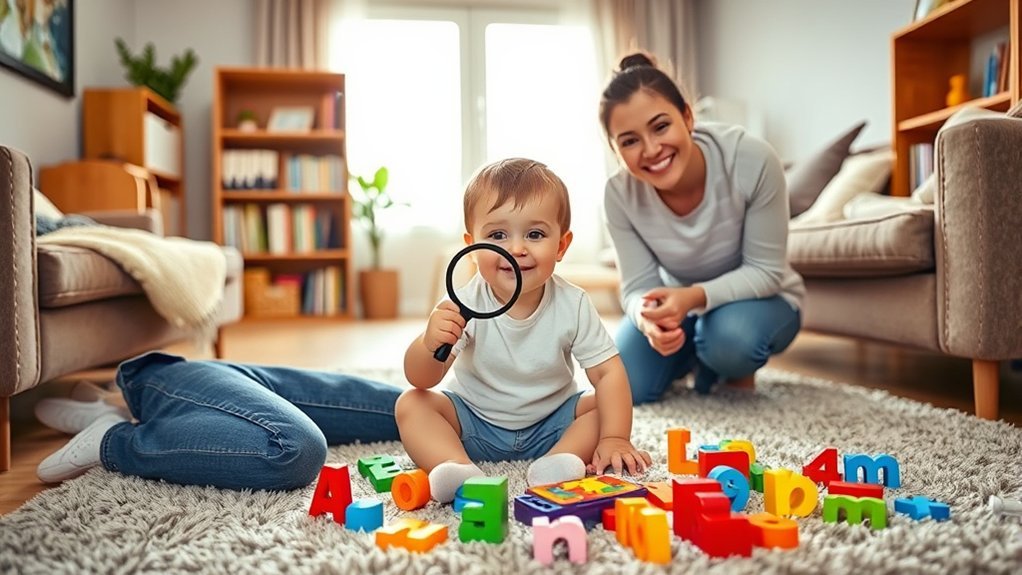
Since toddlers learn best through movement and exploration, a letter sound scavenger hunt transforms phonics practice into an exciting adventure.
You’ll strengthen letter identification and sound recognition while keeping your child engaged through interactive learning.
Start with simple scavenger hunt strategies: call out a letter sound and have your toddler find objects matching that sound. Outdoor exploration adds sensory experiences—searching for “S” items like sticks, stones, and sand makes this alphabet adventure memorable.
Transform phonics into adventure by calling out letter sounds and watching your toddler discover matching treasures in nature’s classroom.
Encourage family participation by taking turns choosing letters. You’ll discover creative gameplay opportunities everywhere: inside closets, around the backyard, or during neighborhood walks.
This approach to engaging toddlers builds confidence as they connect sounds to real-world objects. The physical activity combined with phonics practice creates lasting educational impact.
Musical Alphabet Chairs
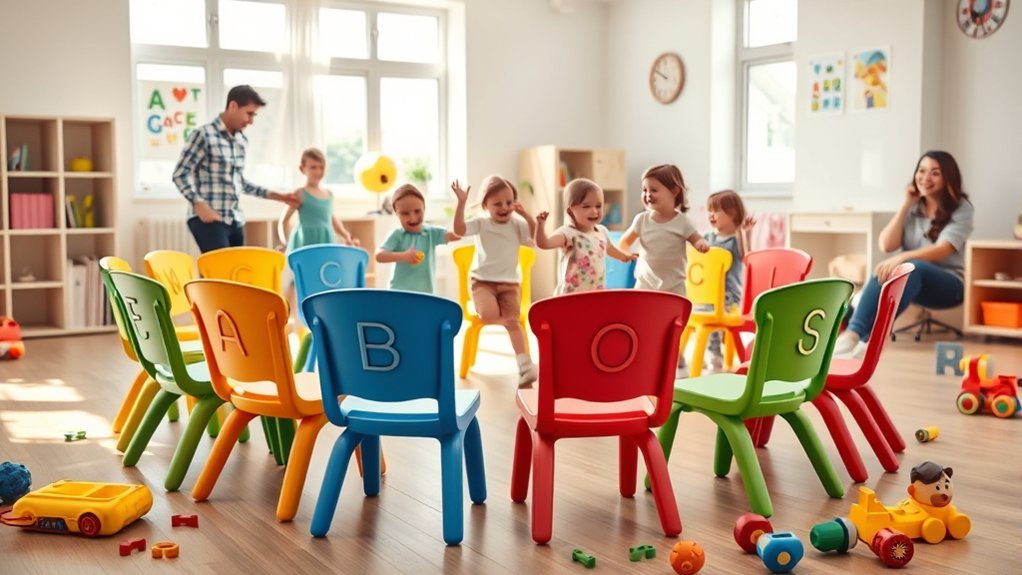
Musical alphabet chairs combines the beloved game of musical chairs with phonics practice, creating a learning activity that burns energy while building letter recognition skills.
Place letter cards on chairs arranged in a circle. Play alphabet songs while your toddler walks around the chairs. When the music stops, they’ll sit and identify the letter on their chair, making the sound it represents.
You can increase difficulty by asking them to name words starting with that letter. If they’re correct, they stay seated for the next round.
This game works well with multiple children, encouraging social interaction and friendly competition. The physical movement keeps toddlers engaged while the repetitive nature reinforces phonics concepts.
It’s an effective way to transform traditional musical chairs into an educational experience that develops both gross motor skills and literacy foundations.
Phonics Hopscotch
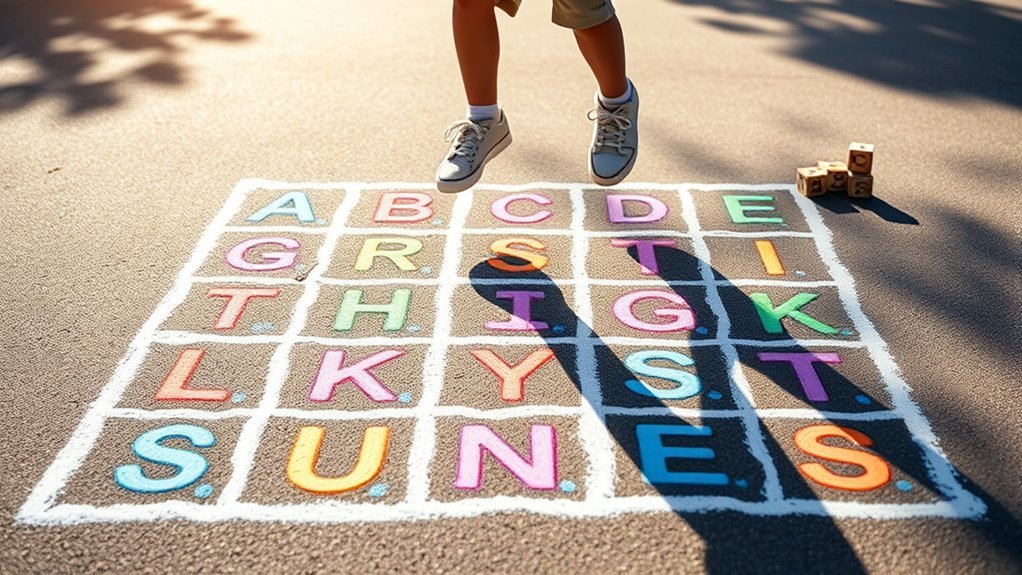
Phonics hopscotch transforms sidewalk chalk and pavement into an interactive literacy game that combines jumping, balance, and letter-sound practice.
Draw traditional hopscotch squares and write letters inside each box instead of numbers. Call out a letter sound, and your toddler jumps to the corresponding letter. You can modify hopscotch rules to match your child’s skill level—beginners can jump to any letter while advanced players follow specific sequences.
Make phonics fun by creating themed hopscotch boards. Draw animal letters where “B” becomes a bear or “F” transforms into a fish. Your toddler identifies the sound before hopping.
This outdoor activity develops gross motor skills while reinforcing phonemic awareness. Your child won’t realize they’re learning because they’re too busy jumping and laughing.
It’s perfect for burning energy while building literacy foundations.
Playdough Letter Building
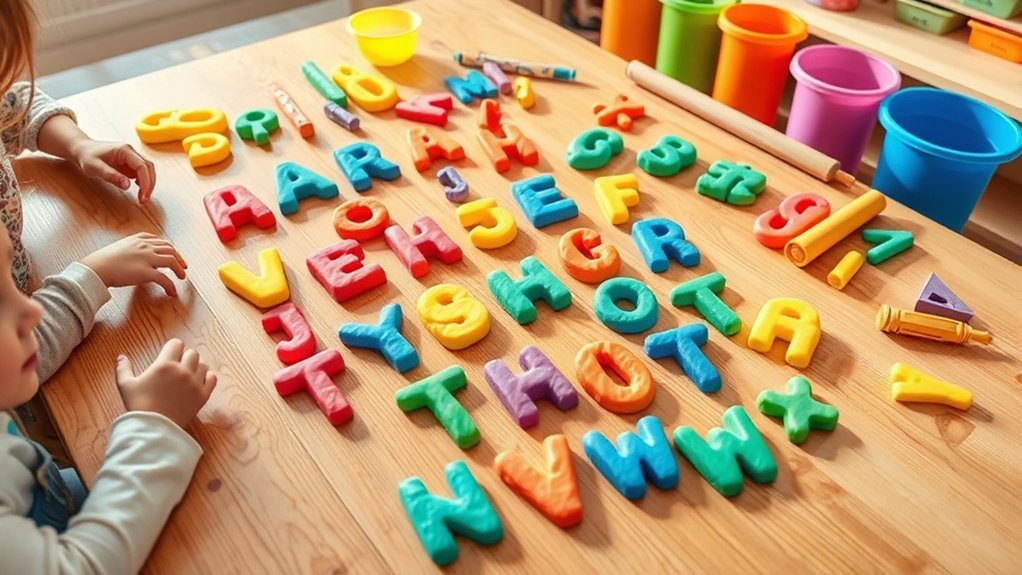
Playdough letter building turns tactile play into a multisensory phonics experience that strengthens fine motor skills and letter recognition simultaneously.
You’ll guide your toddler to roll, pinch, and shape playdough into letters while saying each sound aloud. This hands-on approach helps cement the connection between letter shapes and their phonetic sounds.
Benefits of this activity:
- Your child develops muscle memory by physically forming each letter
- Playdough letter shapes can be flattened and remade, encouraging experimentation without fear of mistakes
- Creative letter sculptures allow toddlers to add fun details like dots for “i” or curves for “s”
Start with simple letters like “O,” “I,” and “L” before progressing to more complex forms.
You can demonstrate first, then let your toddler create independently while reinforcing phonics sounds through repetition.
Sound Sorting With Toys

While molding letters builds visual recognition, sorting everyday objects by their beginning sounds creates meaningful connections between phonics and your toddler’s world. Gather toys from around your home and create groups based on toy sound identification. Start with toy sound comparison using two distinct sounds like /b/ and /m/. Your toddler will enjoy toy sound exploration as they touch each item while saying its name.
Encourage toy sound matching by placing similar items together—balls, blocks, and bears in one basket. This toy sound association strengthens through toy sound recognition activities. Add toy sound creation by making the phonetic sounds together.
Try toy sound blending once they’re comfortable with individual sounds. Enhance learning through toy sound storytelling, where sorted toys become characters. This playful toy sound sorting makes abstract concepts tangible and memorable.
Rhyming Word Basket Toss
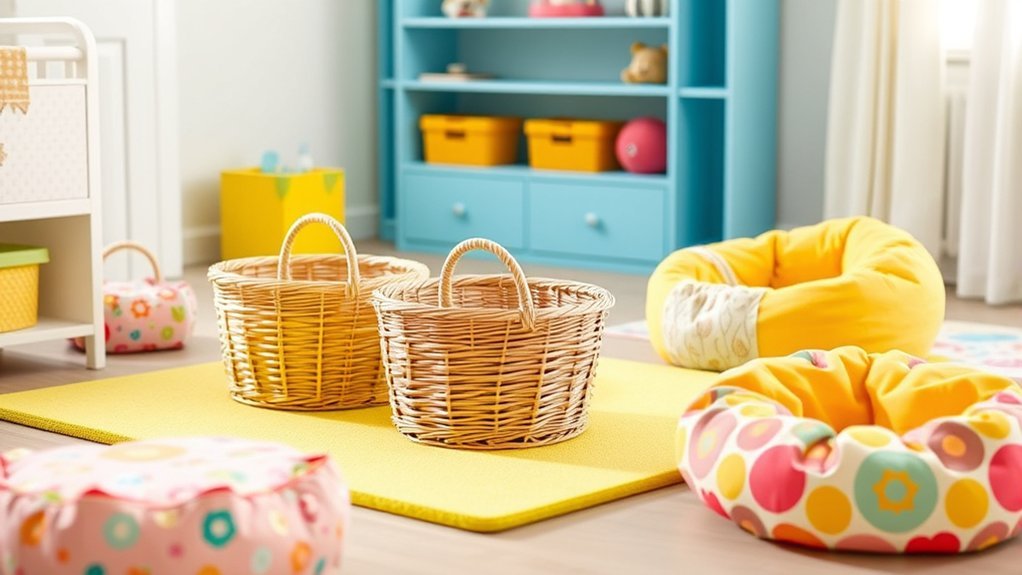
Transform ordinary basket toss into a dynamic rhyming adventure that’ll have your toddler giggling while learning sound patterns. You’ll call out simple words like “cat” or “dog,” and your child tosses beanbags into baskets while shouting rhyming word pairs such as “hat” or “frog.” This active approach keeps restless toddlers engaged while reinforcing phonemic awareness.
Toss, rhyme, repeat—watch your toddler’s brain light up as beanbags fly and phonics skills bloom through playful movement.
Essential setup tips:
- Place baskets at varying distances to match your toddler’s developing basket toss techniques.
- Use picture cards attached to baskets showing rhyming objects (star/car, bee/tree).
- Start with two-basket options and gradually increase difficulty as confidence grows.
Celebrate every attempt, whether the toss lands or misses. The repetition of rhyming sounds during physical movement strengthens neural pathways, making phonics concepts stick naturally. You’re building literacy skills without your toddler even realizing they’re learning.
Letter Sound Freeze Dance
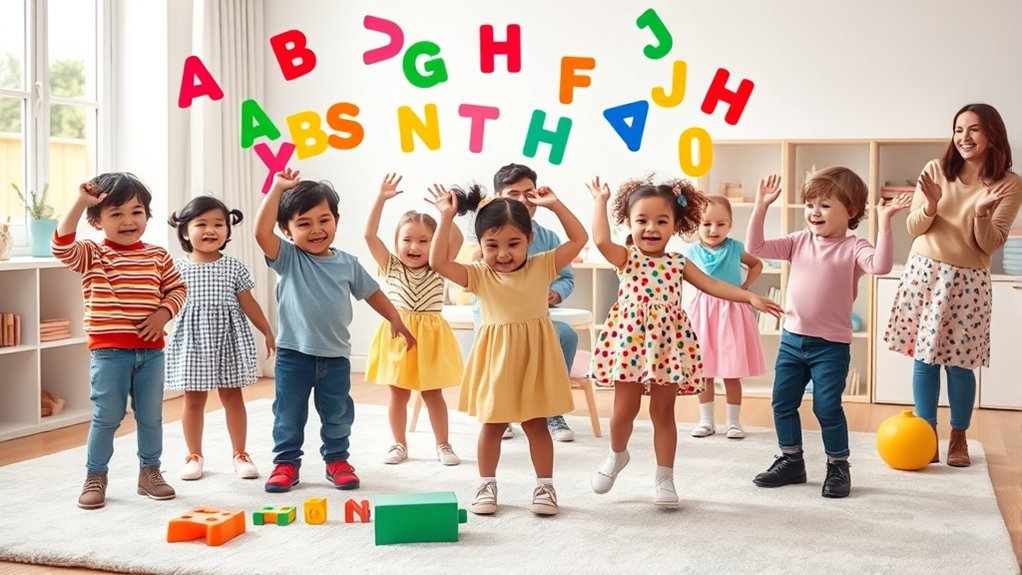
Crank up your toddler’s favorite music and get ready for a high-energy phonics party that combines dancing with letter recognition.
Call out a letter sound while your child dances freely. When the music stops, they’ll freeze and name something that starts with that sound. This game builds dance rhythm recognition as they move to the beat while processing phonetic information.
You can enhance the activity through letter sound storytelling by creating mini-narratives. For example, say “The letter ‘S’ went to the store” and have your toddler act it out through movement.
Alternate between fast and slow songs to vary the challenge level. The combination of physical activity and phonics practice keeps toddlers engaged while reinforcing sound-letter connections through multiple learning channels simultaneously.
Magnetic Letter Fishing Game
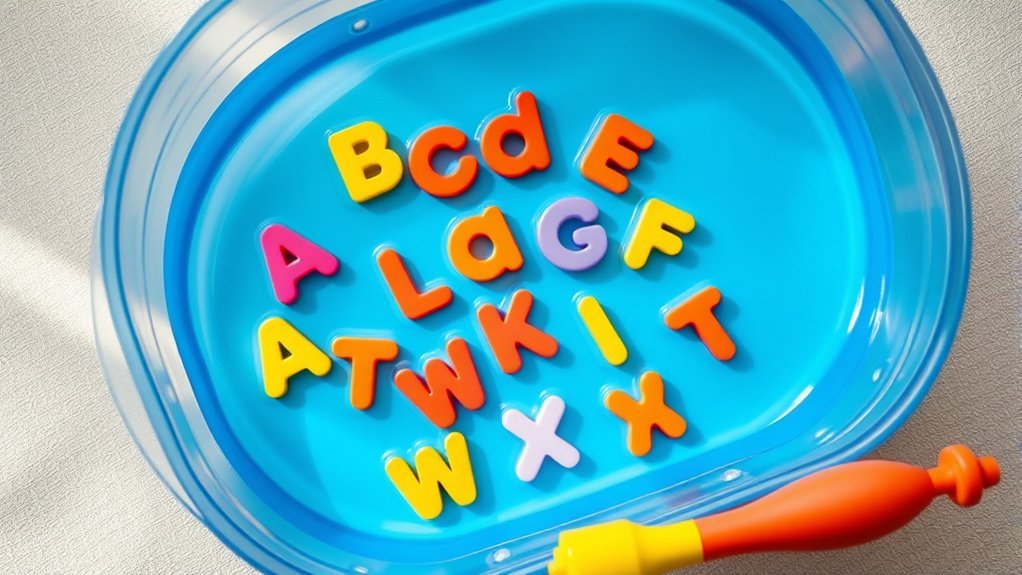
This interactive water-based activity turns phonics practice into an exciting fishing adventure that captivates toddlers through sensory play.
You’ll place magnetic letters in a shallow tub of water while your child uses a fishing rod with a magnet attached to “catch” the letters. As they reel in each letter, encourage them to identify its name and sound before tossing it back.
Benefits of this game:
- Develops fine motor skills through hand-eye coordination required for successful fishing
- Creates multi-sensory learning by combining tactile water play with visual letter recognition
- Builds phonemic awareness as toddlers associate each caught letter with its corresponding sound
The excitement of fishing keeps your toddler engaged while they’re actually mastering essential pre-reading skills.
You can adjust difficulty by requesting specific letters or sounds.
Phonics Memory Match
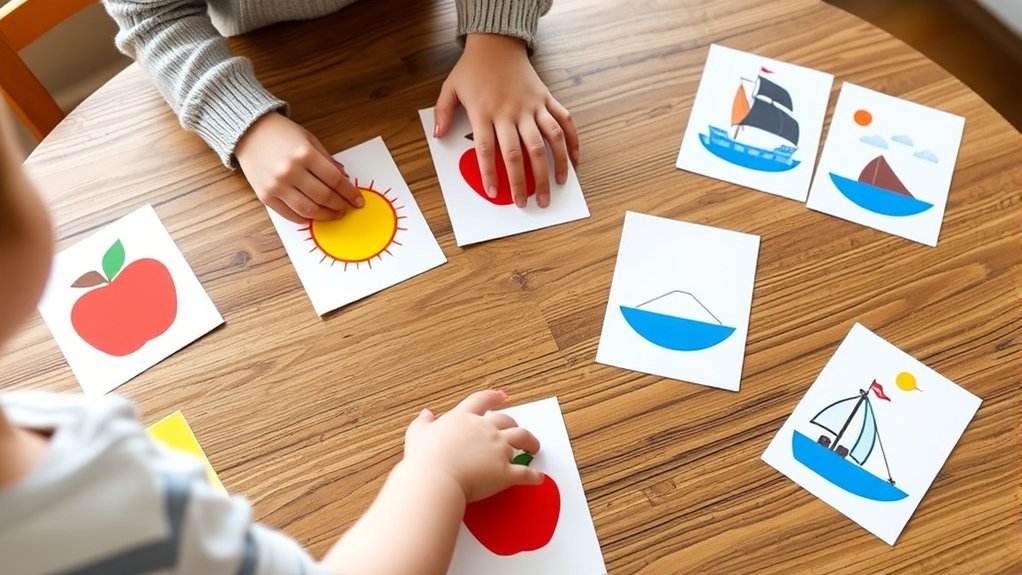
When you pair matching cards with phonics practice, you’ll create a classic memory game that strengthens both cognitive skills and letter-sound recognition. Start by creating simple pairs: one card shows a letter while its match displays a corresponding picture. For example, “B” pairs with a ball image.
Lay cards face-down and take turns flipping two at a time. When your toddler finds a match, say the sound together before collecting the pair. This repetition reinforces learning naturally.
These phonics card games work wonderfully because they’re self-paced and pressure-free. Your child controls the gameplay while absorbing sound recognition activities through play.
Begin with just six pairs to prevent overwhelming your toddler. As their confidence grows, gradually add more letter-picture combinations to increase the challenge and maintain engagement.
Beginning Sound Treasure Box
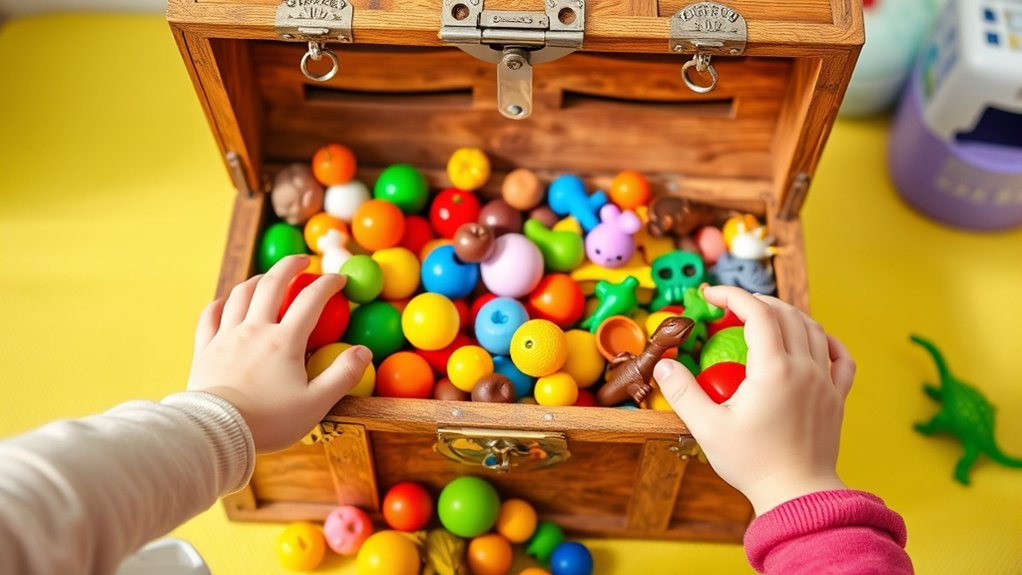
Your toddler’s natural curiosity becomes a powerful learning tool when you fill a special box with small objects that share the same beginning sound. Start by selecting a target letter, like “B,” then gather items such as a ball, button, and toy bear.
Let your child explore the sound treasure while you emphasize the beginning sound of each item. Rotate your box contents weekly to maintain excitement and introduce new letter sounds. This hands-on approach helps toddlers connect sounds with real objects they can touch and manipulate.
Tips for Success:
- Choose objects that are safe and age-appropriate for your toddler to handle independently
- Store items in a decorated container that’s easy for small hands to open
- Practice the target sound together before exploring each treasure
Alphabet Action Cards
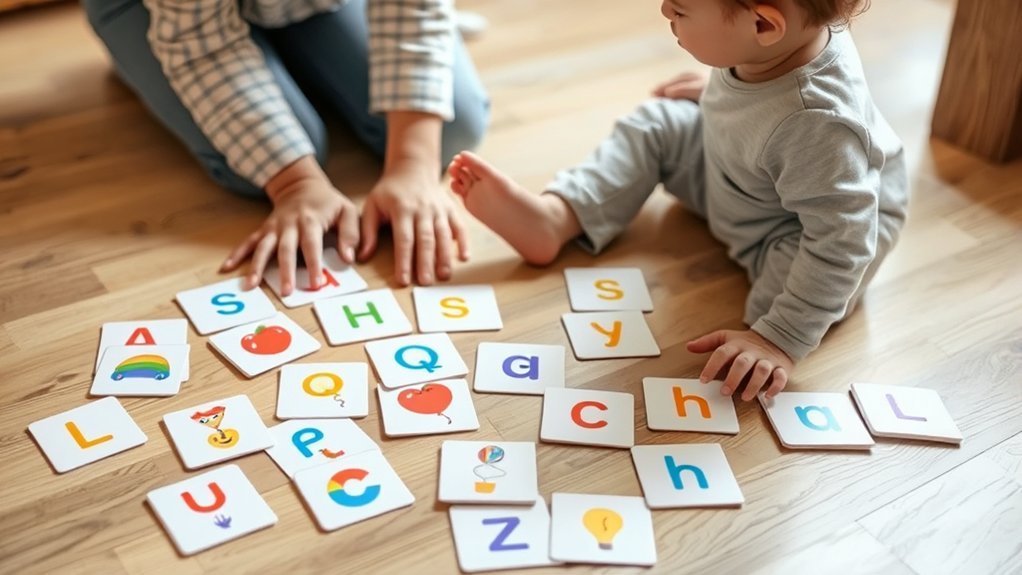
Movement and letter learning merge beautifully through alphabet action cards, where each letter pairs with a specific physical activity.
You’ll create cards featuring individual letters alongside corresponding action words like “A for arms up,” “B for bounce,” or “J for jump.” This approach strengthens alphabet recognition while keeping your toddler actively engaged.
Flash a card and watch your child perform the matching movement. They’re simultaneously processing letter shapes and executing physical commands, which reinforces memory through kinesthetic learning.
When children match letters to movements, they’re encoding information through multiple pathways—visual, verbal, and physical—creating stronger neural connections.
You can gradually increase difficulty by having them identify the letter before doing the action.
Make it a daily routine by cycling through five cards at a time. Your toddler won’t realize they’re learning because they’re too busy moving. The physical component prevents restlessness and transforms what could be sedentary learning into an energetic game.
Sound Shaker Guessing Game

While action cards engage the body, auditory discrimination develops through a different sensory channel. The Sound Shaker Guessing Game sharpens your toddler’s sound identification skills through sensory exploration. Fill opaque containers with different materials—rice, beans, bells, or buttons—and let your child shake each one to discover unique sounds.
How to play:
- Shake two containers and ask your toddler to identify which sounds match or differ
- Connect sounds to beginning letter sounds (beans = “b-b-b”)
- Progress from matching identical shakers to identifying specific materials inside
This activity strengthens auditory processing while introducing phonemic awareness. Your toddler learns that different objects create distinct sounds, just as letters produce unique sounds in words.
Start with three containers and gradually add more as your child’s sound identification abilities improve. Make it playful—enthusiasm keeps toddlers engaged.
Letter Hunt With Flashlights
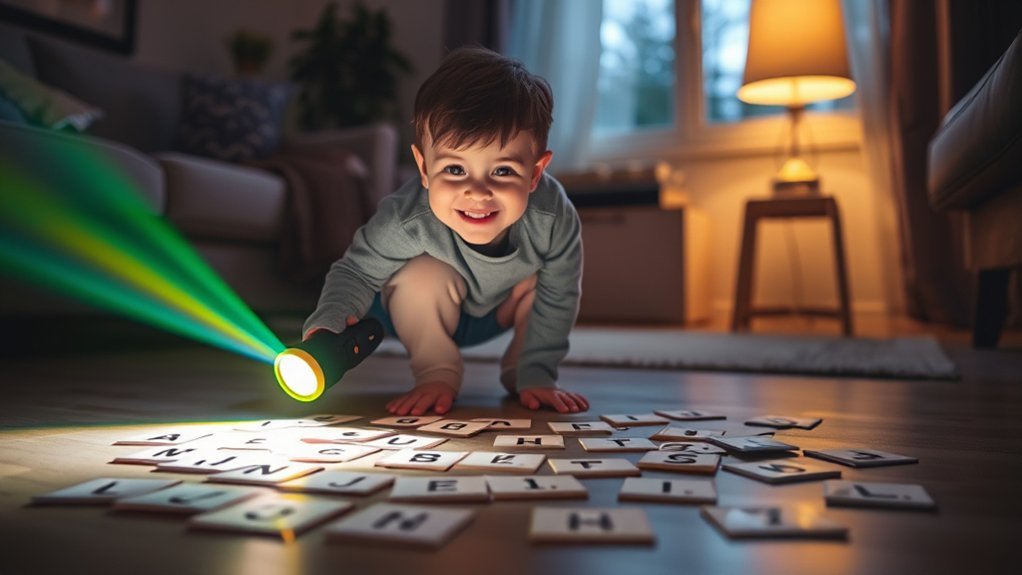
When darkness falls, ordinary letter learning transforms into an exciting adventure. You’ll tape large letter cutouts around a dimmed room, then hand your toddler a flashlight to begin their search mission.
Call out a letter sound, and watch your child sweep their beam across walls and furniture hunting for the match. This flashlight exploration keeps toddlers engaged through movement and discovery. When they find the correct letter, they’ll shine their light on it and practice the sound together with you.
Nighttime learning doesn’t require complete darkness—just dim the lights enough to make the flashlight beam visible. You can increase difficulty by hiding letters behind partially open doors or under chairs.
This game builds letter recognition while burning energy before bedtime, making it both educational and practical for your evening routine.
Phonics Bowling With Cups
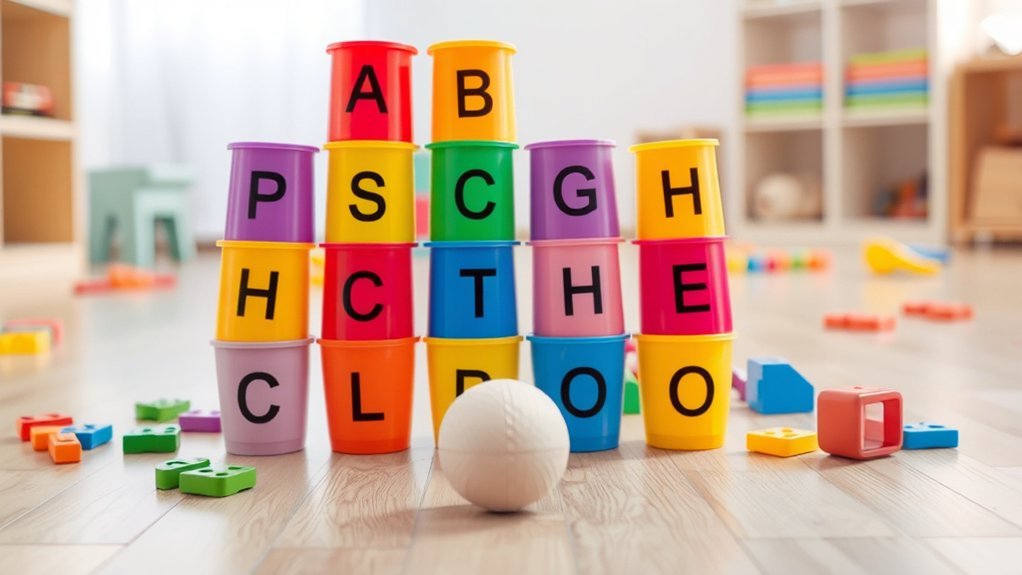
Stack six plastic cups in a pyramid, write one letter on each cup with a marker, and you’ve created a phonics learning station your toddler can knock down. This phonics cup activity combines bowling fun with letter recognition, making learning irresistible for active toddlers.
Give your child a soft ball to roll toward the cups. When they knock one down, help them identify the letter and produce its sound. Rebuild the pyramid and let them try again.
Key benefits of this game:
- Develops gross motor skills while reinforcing letter-sound connections
- Encourages multiple learning attempts through repetitive play
- Adapts easily by changing letters as your toddler masters new sounds
You can increase difficulty by asking your toddler to aim for specific letters or create simple words using the knocked-down cups. This hands-on approach keeps toddlers engaged while building essential phonics skills.
Story Sound Clapping Game

Everyone loves a good story, and this phonics activity transforms reading time into an interactive sound-recognition adventure. Choose your toddler’s favorite book and identify specific sounds to listen for throughout the narrative. When you encounter those target sounds, clap together to acknowledge them.
Start with simple story character sounds like animal noises or repeated words. For example, clap every time you read “moo” in a farm story or whenever a character’s name appears.
As your toddler progresses, incorporate narrative sound effects like “whoosh,” “splash,” or “boom.”
This game strengthens phonemic awareness while maintaining engagement during reading sessions. You’ll notice your child anticipating sounds and clapping independently. The combination of listening, recognizing, and responding through clapping reinforces sound patterns naturally within an enjoyable storytelling context.
In case you were wondering
What Age Should My Toddler Start Learning Phonics?
You can start introducing phonics around age 2-3, aligning with key toddler learning milestones. However, the ideal phonics introduction age is typically 3-4 years when your child’s ready to recognize letter sounds and connect them to written symbols.
How Long Should Phonics Practice Sessions Last for Toddlers?
Like a butterfly’s brief visit to a flower, you’ll want to keep phonics practice sessions short—just 5-10 minutes. Use engaging techniques like songs and games to maintain your toddler’s interest and make learning feel like play.
Can Phonics Games Help With Speech Delays or Language Development Issues?
Yes, phonics games can support speech improvement by helping your toddler recognize sounds and practice pronunciation. While phonics benefits language development, they shouldn’t replace professional speech therapy if your child has significant delays. Always consult specialists for concerns.
Should I Focus on Uppercase or Lowercase Letters When Teaching Phonics?
You should prioritize lowercase letters when teaching phonics since children encounter them most frequently in reading. While uppercase focus has its place for names, lowercase importance can’t be overstated—it’s what your toddler will read daily.
How Do I Know if My Toddler Is Ready for Phonics?
Your toddler’s practically screaming they’re ready! Watch for toddler readiness signs like recognizing letters and singing alphabet songs. Phonics interest indicators include asking about sounds, rhyming words, and showing curiosity when you’re reading together.
Conclusion
Think of phonics learning like planting seeds—you won’t see a towering oak overnight, but with consistent watering, growth happens. Research shows children who engage in playful phonics activities just 15 minutes daily develop reading skills six months ahead of their peers. You’re not just teaching letter sounds through these games; you’re cultivating a love for language that’ll flourish for years. Start small, stay consistent, and watch your toddler’s literacy skills bloom naturally through play.