The Lazy Parent’s Guide to Spring Cleaning With Kids (They’ll Actually Help!)
Forget perfect charts—you’re going lazy genius. Turn chores into games: timer races, sock‑matching contests, “who can clear the floor fastest” showdowns. Set baskets everywhere so toys basically put themselves away. Give kids jobs that match their age, then bribe shamelessly with stickers, music picks, and extra story time. Focus on quick sweeps, not deep scrubs. You’ll still be tired, but your house won’t look like a toy tornado, and the tricks are just getting started.
Key Takeaways
- Turn chores into quick games or contests with timers, themes, and silly prizes so kids race to clean instead of resist.
- Set up “lazy-proof” systems—baskets, labeled bins, handy wipes, and nearby hampers—so tidying takes seconds, not effort.
- Match chores to ages: toddlers pick up toys, older kids vacuum and wipe surfaces, teens tackle bathrooms and heavier jobs.
- Prevent messes by keeping things where kids naturally drop them, using one-room-at-a-time rules, and doing fast ten-second sweeps.
- Use simple, repeatable routines and small rewards—like music choice or extra story time—to keep kids motivated without complex charts.
Turn Chores Into Games They Actually Want to Play

Some days it feels like the toys are winning and you’re just living in their kingdom, right?
So instead of begging for help, turn cleaning into a game show. Set a timer and shout, “You’ve got five minutes to rescue all the LEGO from the Lava Floor!” Kids race, stuff bins, and boom—living room back.
Use chore competitions: who can match the most socks, wipe the most fingerprints, or clear the floor fastest without shoving things under the couch.
Winner picks the music for dinner or the bedtime story.
Pile on playful incentives. Sticker charts, silly titles like “Dust Boss,” or five-minute dance breaks after each job.
You’re not tricking them; you’re giving their brains a fun reason to care. About the clean house.
Set Up “Lazy-Proof” Systems That Practically Clean Themselves
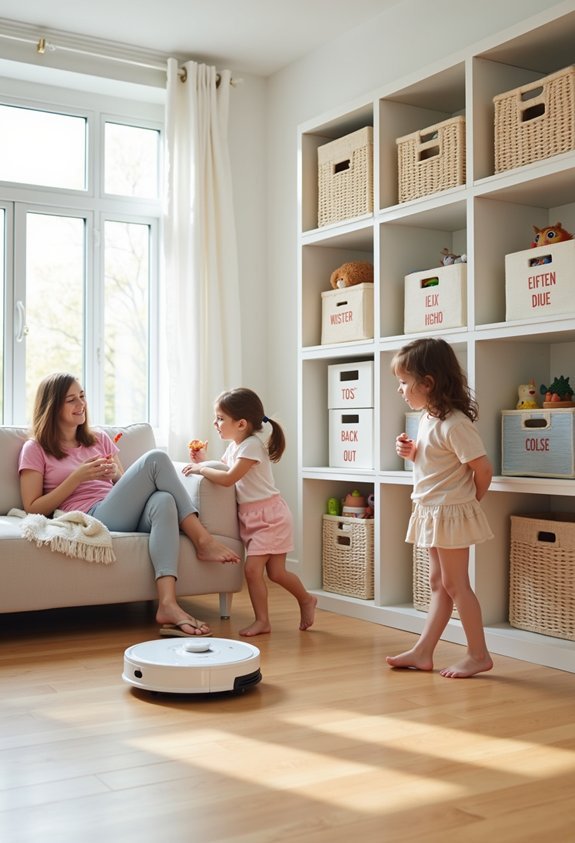
You’ve turned chores into games, but here’s the truth bomb: you don’t want to host “Cleaning Olympics” every single day.
Make decluttering so brainless it happens while you’re ignoring the toy tornado on purpose
So set up lazy-proof self cleaning systems that do the heavy lifting while you drink coffee and pretend not to see the Lego explosion. Think less effort, more autopilot.
- Put a basket in every room. Kids don’t “clean,” they just toss. End of day, they race baskets to bedrooms.
- Keep wipes and a mini trash can in the bathroom. If they’re sitting there anyway, they can swipe the counter.
- Use clear bins with picture labels. That’s automated organization for tiny humans who can’t read yet.
- Park a laundry hamper where clothes actually land, not where Pinterest says it belongs today.
Match Tasks to Ages So Everyone Pulls Their Weight
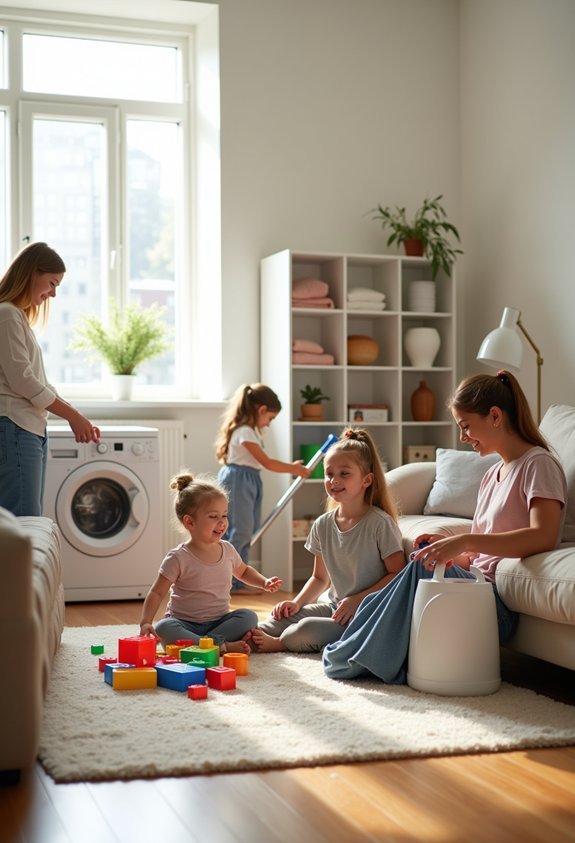
Let’s be honest: not every kid should be trusted with glass cleaner and a loose sense of purpose.
Matching age appropriate chores to each child keeps your house safe and your sanity mostly intact.
Think of it like building a tiny cleaning army.
Toddlers can toss toys in bins, wipe low doors with a damp cloth, and shove laundry in baskets.
Bigger kids can vacuum, scrub sinks, and change sheets.
Teens? Hand them the scary jobs: toilets, showers, and anything that smells like regret.
Rotate jobs so nobody feels doomed to lifelong trash duty.
Post a simple chart so arguments go to the paper, not to you.
That’s how you turn chaos into real family teamwork.
Less nagging for you, more wins for everyone.
Make Mess Prevention Easier Than Cleaning Up
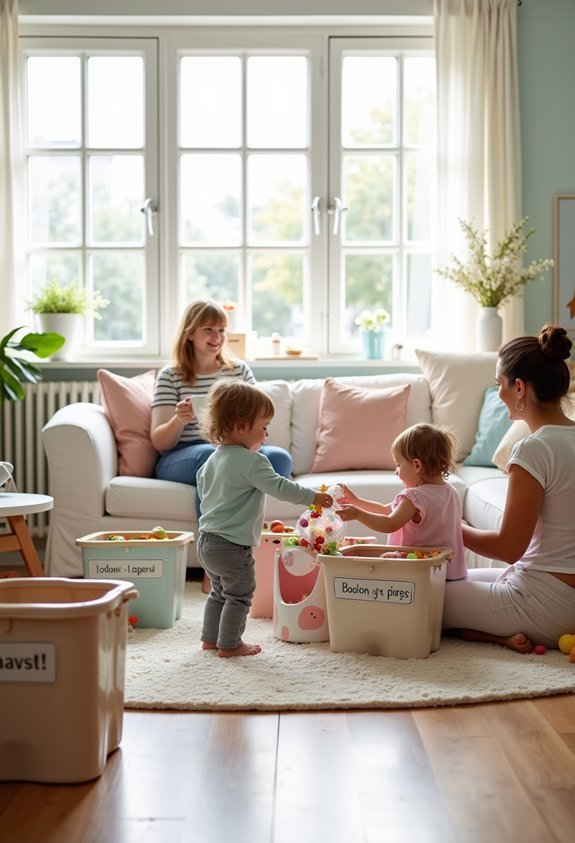
Before you clean a giant mess, it’s way easier to just stop the mess from exploding in the first place.
That’s the heart of mess management: less cleaning, more chilling on the couch.
Try these prevention strategies that feel lazy but work hard:
- Park stuff where kids actually drop it. Hooks by the door, basket on the stairs, bin by the couch for toy “strays.” You’re not fighting habits, you’re fencing them in.
- Use “one-room at a time” rules. Toys stay in the playroom, snacks stay in the kitchen. Fewer travel zones, fewer crime scenes.
- Prep for disasters: towel by the pet bowl, wipes near art.
- End chaos fast: quick ten-second sweeps before TV or bed. Tiny habits prevent disaster.
Use Rewards and Routines Without Turning Into a Drill Sergeant
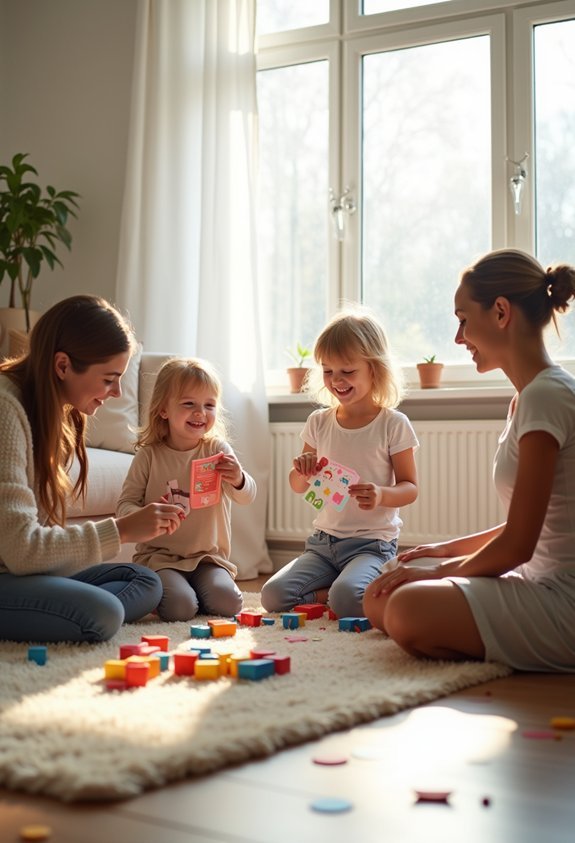
Even though it sounds nice in theory, barking orders and handing out gold stars like a tiny dictator turns cleaning into a power struggle fast.
Instead, treat it like a game with perks. You’re not a drill sergeant; you’re the game show host.
Set simple routines: “After dinner, we all reset the living room,” or “Before screens, beds get made.” Kids love clear incentive structures. Not bribes, just, “When this is done, then that fun thing happens.”
Use positive reinforcement like crazy. Notice effort: “Hey, you lined up the shoes. That helped a ton.” Short, sweet praise works better than a ten‑minute speech.
And keep rewards small: extra book at bedtime, choosing dessert, DJ rights during clean‑up. No charts, no yelling, way less tears.
Speed-Cleaning Strategies for When You’re Already Exhausted

By the time you finally sit down, the house looks like a toy store exploded and you’d honestly rather live in the mess than stand back up.
So don’t. You’re going for smart, not heroic. Think quick tidy ups that take five to ten minutes, max, and use kid chaos as fuel.
- Set a timer for five minutes and yell “power cleaning!” Everyone races to shove stuff into bins. Loud music required.
- Pick one zone: couch, table, or entry. Ignore the rest like it’s another dimension.
- Give each kid a color. They grab anything that matches it and put it away.
- Use the “arms full” rule: never walk a room empty-handed. Two trips, and the place looks shockingly human again, for parents already done.
Keep It Going All Season Without Nagging (Much)

Speed-cleaning sprints are fun, but you don’t want to run a cleaning Olympics every single night just to see your floor.
So make your mess control system simple enough that even your most dramatic child can handle it. Start with a loose spring schedule: one tiny job per kid, per day. Five minutes, max. Dishes, toys, laundry, floors—pick one and rotate.
Use family teamwork to keep it from turning into “Mom versus The Filth.” Turn on a song, set a timer, shout “Ready, set, scrub!” and everyone attacks their task.
When the timer dings, you’re done. No extensions, no debates. Praise fast, even if it’s messy-perfect. Kids repeat what earns them cheers, not nagging lectures.
Less yelling, more couch time, and still clean-ish tonight.
In case you were wondering
How Do I Handle Spring Cleaning When My Child Has Allergies or Asthma?
Choose unscented, allergy friendly products and ventilate rooms well. You’ll dust with damp cloths, vacuum using HEPA filters, and avoid aerosols. Involve your child, explaining asthma safe techniques and scheduling breaks when breathing seems strained.
What if My Co-Parent Refuses to Enforce Any Cleaning Expectations With the Kids?
You can’t control your co-parent, but you can set clear expectations at your house, explain why they matter, and use communication strategies that acknowledge co parenting challenges while prioritizing consistency, empathy, and your kids’ security.
How Can I Include a Toddler With Significant Developmental Delays in Spring Cleaning?
You include your toddler by turning cleaning into simple toddler tasks and playful sensory play. Offer choices, model each step, use visuals, celebrate efforts, and prioritize connection over results so they feel capable and involved.
Is It Okay to Let Kids Use Natural Cleaning Products Without Gloves?
Yes, sometimes, but you’ll want limited exposure. About 10% of poisonings involve cleaners, even “natural” ones, so prioritize natural cleaning safety, enforce kids cleaning supervision, avoid sprays, rinse hands afterward, and use gloves for skin.
How Do I Manage Spring Cleaning When I Work Nights and Sleep During the Day?
You break tasks into 10‑minute chunks, anchor them to nighttime routines, and build cleaning schedules for days off, delegating kid‑friendly jobs, lowering standards temporarily, and prioritizing rest so progress stays steady without exhausting your energy.
Conclusion
So now you’ve turned chores into games, set up lazy-proof systems, and trained your tiny roommates. Feels kind of dangerous, right? Because here’s what’s coming next: there’s going to be a day when the house is a mess… and you won’t panic. You’ll just call a five‑minute drill, hand out tasks, and watch the chaos shrink. And when that happens, you’ll realize the wild twist: spring cleaning basically runs itself. With kids. Your kids. Forever.