Fun Backyard Activities for Preschoolers: Complete Guide
Turn your backyard into a kid paradise with zero fancy gear. Play wild tag games, set up silly obstacle courses, or do “Olympics” with dramatic commentary. Use sticks, rocks, and leaves to build fairy houses and rock letters. Add a tub of water, plastic animals, bubbles, and sprinklers for splash chaos. Throw in messy paint, nature collages, and easy color-mixing “science.” You’ll get giggles, worn-out kids, and a ton of secret learning—there’s plenty more where that came from.
Key Takeaways
- Active outdoor games like tag, obstacle courses, and races build coordination, burn energy, and create fun, memorable backyard adventures.
- Nature play with sticks, rocks, and leaves encourages creativity, storytelling, and early learning through building, scavenger hunts, and pattern-making.
- Simple water activities—tubs, sprinklers, and gentle water balloons—keep kids cool while supporting sensory play and imaginative scenarios.
- Backyard art projects using washable paints and natural materials foster creativity, fine motor skills, and meaningful storytelling through hands-on crafts.
- Easy science and sensory experiments with bubbles, color mixing, and messy play introduce basic STEM concepts in a playful, low-pressure way.
Outdoor Games That Get Preschoolers Moving
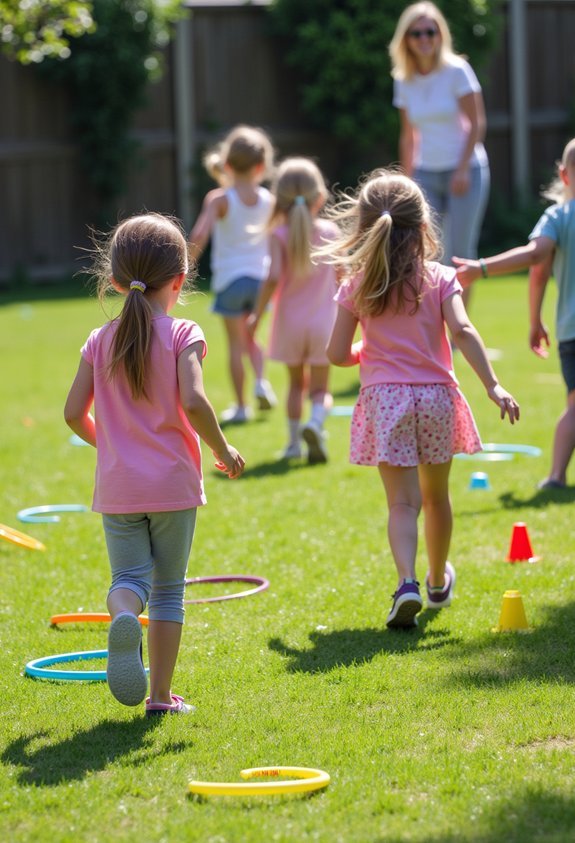
Even if your backyard’s not huge or fancy, it can still turn into the world’s loudest, happiest little stadium. You just need games that make preschoolers move instead of melting into the couch.
Start simple with tag games: classic tag, freeze tag, or superhero tag where kids “zap” each other with invisible lasers and collapse dramatically. You’ll get giggles, not arguments.
Turn tag into theater: invisible lasers, dramatic slow-motion falls, and nonstop preschool giggles.
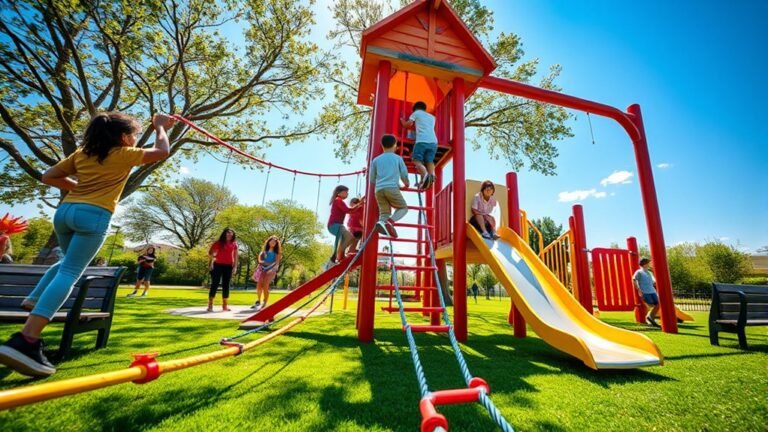
Then build easy obstacle courses using stuff you already own. Toss down pillows to jump over, chalk lines to balance on, and laundry baskets to crawl through.
Time them like it’s the Olympics, complete with over-the-top commentary. Mix in running races, follow-the-leader, and silly animal walks.
The goal’s movement, laughter, and a bedtime that comes fast. You get peace, they get epic memories.
Nature Play Ideas Using Sticks, Rocks, and Leaves
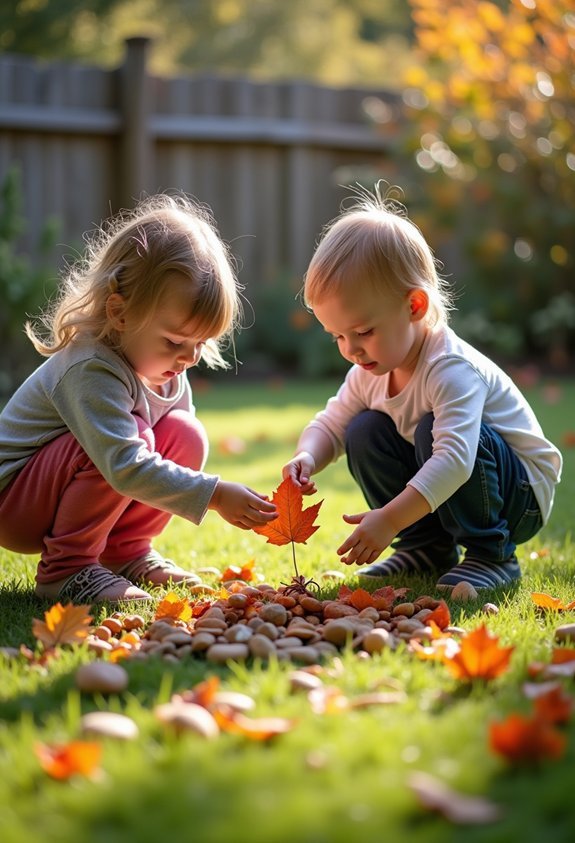
Something kind of magical happens when you hand a preschooler a stick, a rock, and a pile of leaves and just… back away slowly.
They start building worlds. Show them how to make tiny stick structures: fences for ants, fairy houses, or a “parking garage” for toy cars. Add leaves as roofs, beds, or superhero capes that flap dramatically in the wind.
Then switch to rock play. Turn your kid into a rock scavenger and send them hunting for “treasure” by color, size, or shape. Line the rocks up to make letters or simple patterns. Toss in a challenge: Can they make a smiley face from sticks, rocks, and crunchy leaves? Snap a picture so they can brag about their masterpiece later to everyone.
Simple Water Activities to Keep Kids Cool
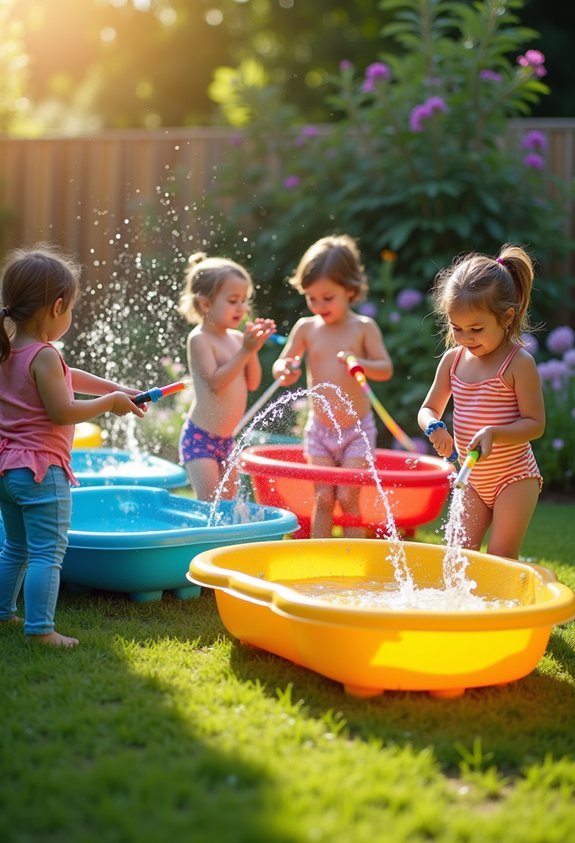
When the sun turns your backyard into a giant toaster oven, water play is your new best friend.
Drag out a cheap plastic tub, add water, cups, and spoons, and boom—instant mini “pool” for pouring, scooping, and splashing. Toss in a few plastic animals so they can “go swimming.”
Grab a plastic tub, add water and spoons, and you’ve got an instant backyard splash lab
For bigger laughs, set up sprinkler fun. Tell your preschooler it’s “rain practice” and watch them shriek while they dash through. Add challenges: freeze in place when you yell stop, hop like a frog, or tiptoe like a sneaky cat.
Water balloon games are gold too. Skip the wild battles; try gentle toss-and-catch, color sorting, or aiming at a bucket.
Always stay close and keep play shady and quick so kids stay cool and happy.
Creative Backyard Art and Craft Projects
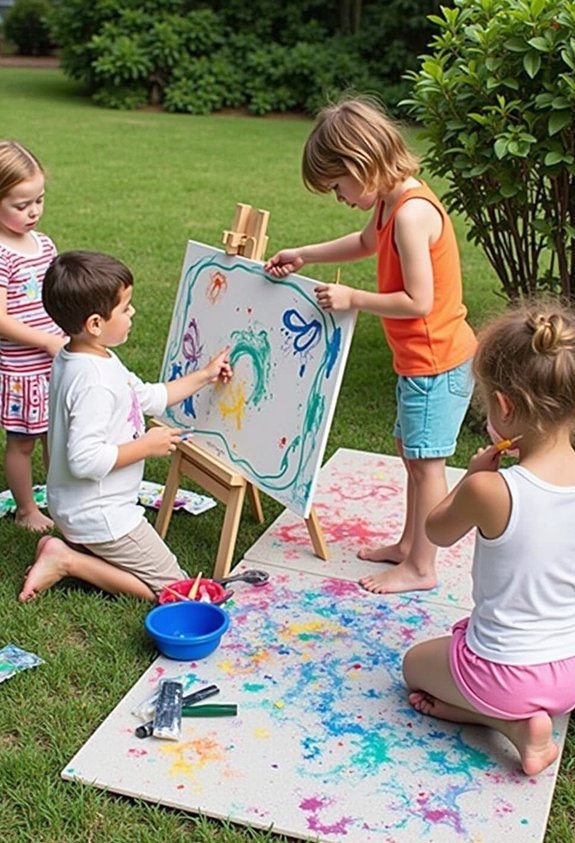
Before you haul everyone to another crowded play place, turn your backyard into an art studio that doesn’t care about spills or mess. Spread an old sheet on the grass, toss down some washable paints, and let your kid go wild.
Try painting rocks they find around the yard; suddenly that boring gray stone is a rainbow monster or a sparkly “pet.” No breakable vases, just dirt.
For quieter days, make nature collages. Hand them a paper plate and some glue, then go “shopping” for leaves, petals, sticks, and grass. They stick everything down however they want, then tell you the story behind it.
Boom—art project, nature lesson, and thirty priceless fridge decorations. You get fresh air, they get chaos with a purpose today.
Imaginative Play Setups for Everyday Spaces
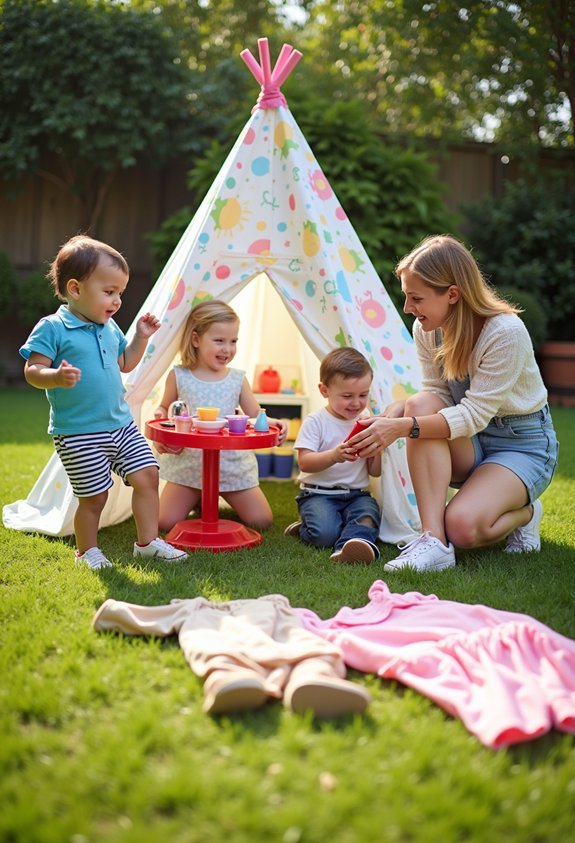
Next, try a puppet theater. Drape a sheet over two chairs, grab socks with marker faces, and you’ve got front‑row seats to the Weird Preschool News Network.
For something quieter, build a tiny fairy garden under a bush. Pebble paths, bottle‑cap tables, and your kid talking to invisible fairies? Gold.
Got a big box? Turn it into a cardboard castle. Cut windows, add crayons, and prepare for dramatic royal arguments over snacks in the royal kitchen.
Easy Backyard Science and Sensory Experiments
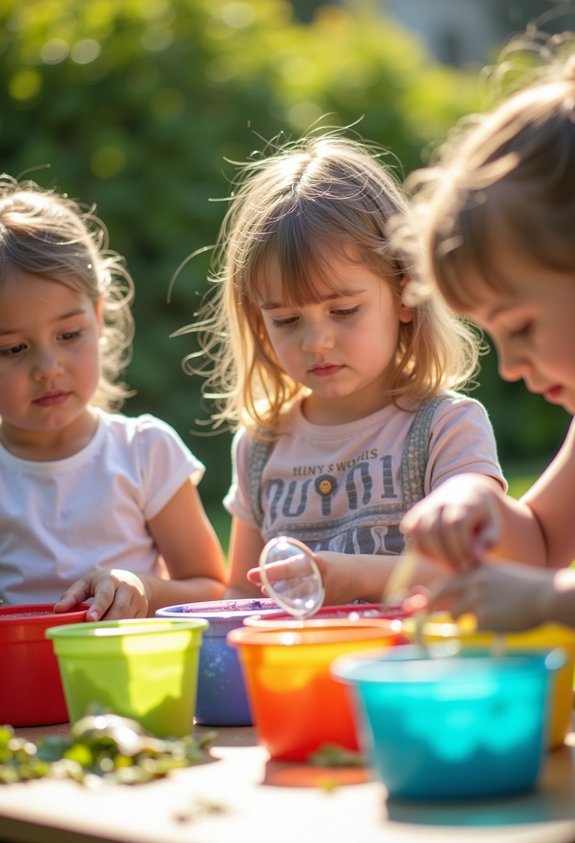
Pretend play is great, but now it’s time to blow your kid’s mind with actual backyard “science,” a.k.a. making huge messes on purpose.
Start with bubble experiments. Mix water and dish soap in a shallow pan, grab straws and cookie cutters, and let your kid huff, puff, and shout, “It’s HUGE!” Talk about which shapes make big bubbles and which pop fast.
Next, try color mixing. Fill clear cups with water and add red, yellow, and blue food coloring. Hand over droppers and let your child test combos: red plus yellow, blue plus green, all the “oops” browns.
Ask what they notice: “Did it get darker or lighter?” Finish with a hose wash-down, because science is sticky and ridiculously fun for both of you.
Quick-Set Activities for Busy Days and Small Spaces
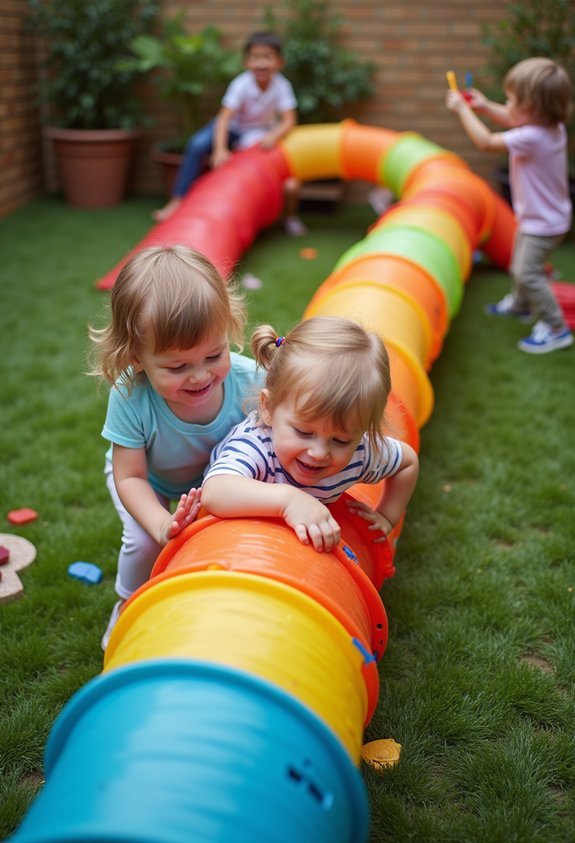
Some days you step outside, look at the tiny patch of yard or balcony you’ve got, check the time, and think, “Yeah… absolutely not.”
Some days the clock, the weather, and your tiny outdoor space all say, “Nice try, parent.”
That’s when you need quick-set backyard activities that take 60 seconds to set up and almost no space. Grab a bucket, toss in water, spoons, and plastic cups, and boom—instant splash lab.
Chalk a “road” on the patio and let toy cars race like it’s rush hour. Tape a blanket to two chairs for quick puppet shows; your kid’s stuffed animals will suddenly have Very Important Problems.
If the weather’s wild, swap outside time for indoor scavenger hunts that still end on the balcony. Tiny space, huge fun, zero craft-store meltdown.
You look prepared; your future self sends a hug.
In case you were wondering
How Can I Adapt Backyard Activities for Children With Different Abilities?
Adapt activities by offering choices, simplifying rules, and creating inclusive games everyone joins. Use sensory play stations, visual cues, and seating. Adjust pace, provide gentle assistance, celebrate successes, and ask children what feels most fun.
What Backyard Activities Work Best in Winter or Colder Climates?
You can embrace winter with snow play, frozen treasure hunts, and simple bird-feeding stations. You’ll also create winter crafts outdoors, paint snow with water, build forts, and practice gross-motor skills through shoveling and stomping games.
How Do I Keep Preschoolers Safe From Sun Exposure During Outdoor Play?
Guard them like explorers in a desert; you’ll plan routes under shade structures, schedule quests outside peak sun, repeat sunscreen application every two hours, add hats, UV-protective clothing, and teach them sunlight’s magic and limits.
What Low-Cost Backyard Essentials Should I Buy to Support Frequent Play?
Buy versatile outdoor toys like balls, chalk, buckets, and a water table; add play equipment—tunnel, balance beam, small slide, and sandpit. Prioritize durability, easy storage, and open-ended use over themed gadgets to support frequent play.
How Can I Involve Older Siblings in Preschool-Friendly Backyard Activities?
You invite older siblings to lead simple games, model safety, and share tools, emphasizing sibling teamwork. Encourage creative play through obstacle courses, pretend restaurants, garden helpers, and treasure hunts so everyone feels capable and connected.
Conclusion
Picture this: you step outside “for five minutes,” and suddenly your preschooler’s leading a leaf parade, the dog’s the drum major, and you’re handing out snack medals like it’s the Backyard Olympics. That’s what these ideas do—they turn plain Tuesdays into big, messy adventures. Start with one game, one bucket, one weird stick. Keep it simple, stay flexible, and let the chaos be the magic. Your yard’s not small; it’s just zoomed in for them.