Why Small Backyards Make Better Game Spaces?
Small backyards secretly make games way better. You can’t just spread out, so you get creative: bounce-only basketball, sock ladder-golf, tic-tac-toe painted on the patio. Everyone’s close, so trash talk is louder, phones stay in pockets, and even bad throws become legendary. Cheap DIY setups, quick layout swaps, and weird house rules turn your little yard into a tiny chaos arena. Stick around and you’ll see how to turn every square foot into fun today.
Key Takeaways
- Small yards force creative, adapted games that fit the space, sparking innovation like bounce-only basketball or sock-based ladder golf.
- Close proximity boosts social interaction, reduces phone use, and builds stronger team dynamics, rivalries, and in-jokes.
- Budget-friendly DIY upgrades—painted game boards, simple props, and dollar-store décor—quickly transform small spaces into inviting play zones.
- Flexible layouts and lightweight, multi-use furniture let small yards shift easily between games, lounging, and gatherings throughout the day.
- Everyday features—paths, fences, corners, and benches—double as play zones, maximizing fun without adding clutter or needing more square footage.
How Limited Space Inspires Smarter Game Design
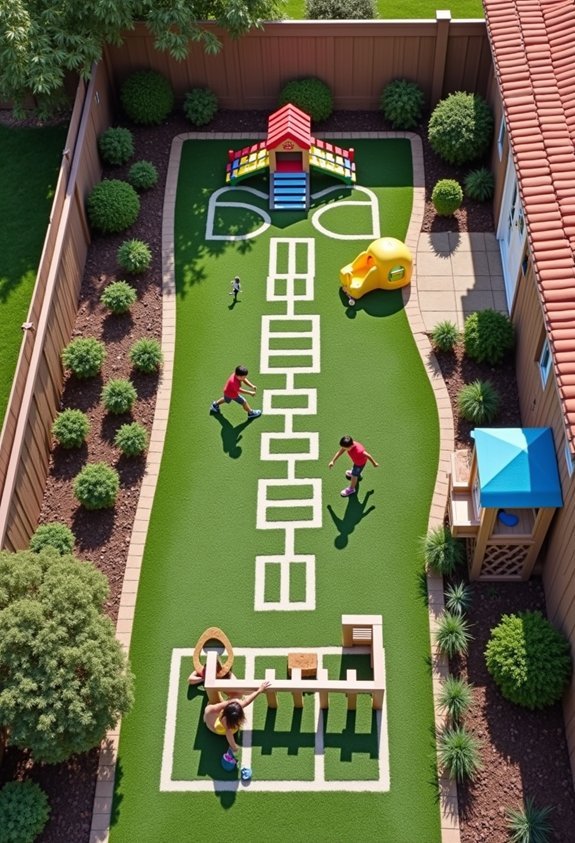
When your yard is the size of a parking spot, you can’t just toss in a full soccer field and call it a day—you’ve gotta get clever.
That tiny space throws creative constraints at you, but that’s actually your secret weapon. You trim the rules, shrink the goals, maybe play “one–touch” soccer so nobody blasts the ball through the neighbor’s window.
Suddenly you’re inventing games that fit your space instead of wishing for a bigger lawn. You test weird ideas: bounce–only basketball, ladder–golf with socks, obstacle tag around the grill.
Some ideas fail hard. You laugh, tweak, and try again. Bit by bit, you build innovative gameplay that feels sharp, fast, and surprisingly intense.
Soon, the space feels huge because your ideas won’t stop.
The Social Benefits of Cozy Outdoor Play Areas
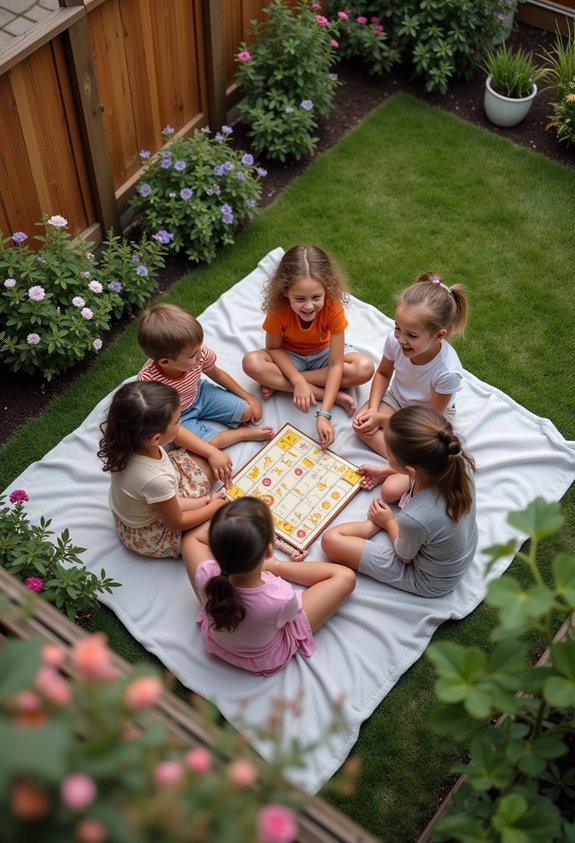
All that clever small–space game design doesn’t just make better games; it secretly builds better hangouts.
When everyone’s close together, you can’t drift off to your phone; you’re stuck laughing, shouting, and trash–talking from three feet away. That tight space turns neighbors into teammates and siblings into very dramatic rivals. You feel community bonding happen in real time, like, “Wow, I actually like these people.”
Small yards also boost outdoor creativity. You’re forced to invent weird rules, shared jokes, and house legends: the crooked tree that’s always “goal,” the cracked tile that’s instant lava.
Small yards turn every crooked tree and cracked tile into sacred, ridiculous, unforgettable house rules.
These tiny traditions stick. Later, people don’t remember the size of your yard. They remember the noise, the nonsense, and the way it felt to belong on a summer night.
Budget-Friendly Upgrades That Maximize Fun
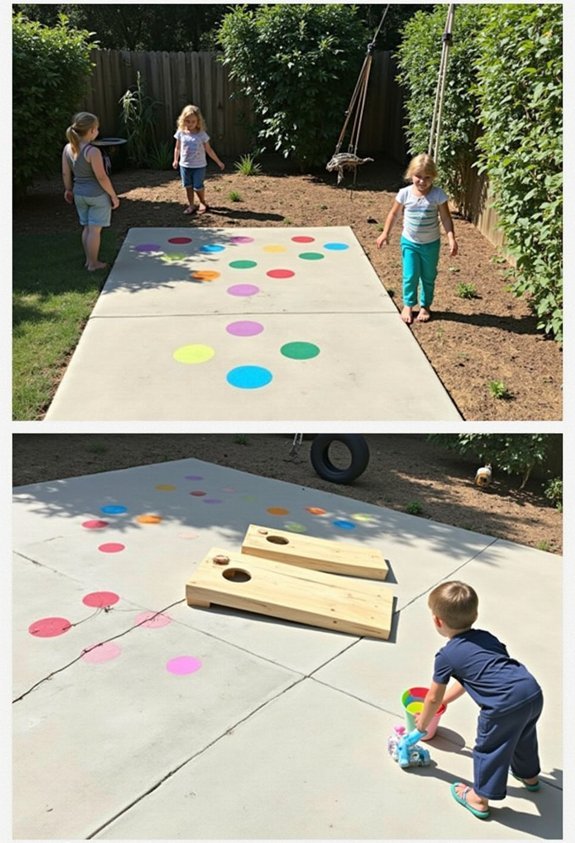
You don’t need a giant budget or a Home Depot truck in your driveway to turn a tiny yard into Pure Chaos Fun Zone.
Start with DIY games. Paint a tic-tac-toe board on a scrap of plywood. Use rocks as pieces. Boom, instant tournament.
Hang a sheet on the fence, shine a flashlight, play shadow charades. Costs nothing, looks ridiculous, everyone screams laughing.
Next, use cheap multifunctional furniture. A storage bench hides balls and chalk, but also becomes a scoreboard or snack bar.
A simple folding table works for cards, crafts, or a slime lab. String dollar-store lights overhead, and suddenly your backyard feels like a festival instead of a parking spot with grass.
Add music from a phone speaker, and the party’s full.
Flexible Layouts for Different Games and Gatherings
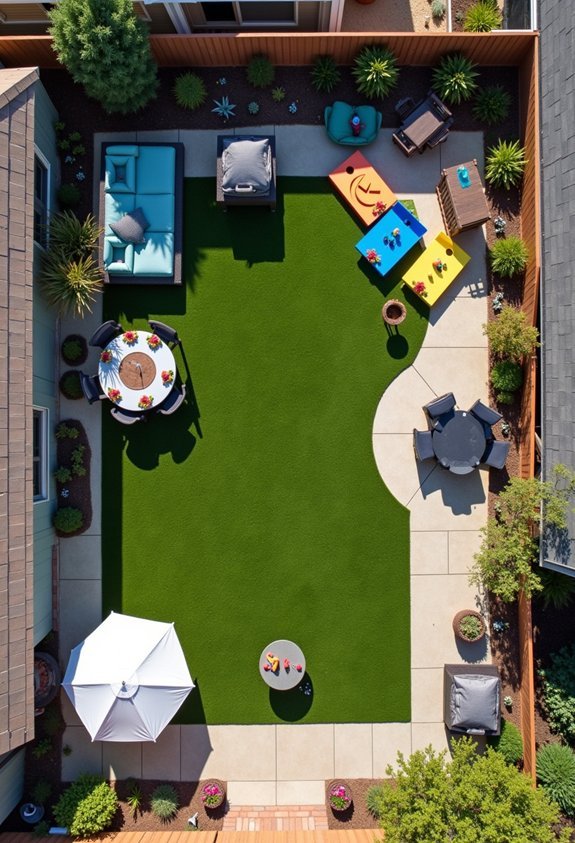
That tiny yard you just filled with DIY games and dollar lights? Now it’s time to make it flip tricks.
Think of the space like a stage that changes scenes. Afternoon? Slide out the cornhole boards and a folding table. Night hangout? Tuck games against the fence, drag in chairs, boom—instant lounge.
Use multi use furniture so every piece earns its keep. Benches with storage hide balls and beanbags. A slim table becomes a snack bar, then a scoreboard, then a card table.
Aim for light gear and adaptable setups: rolling carts, stackable stools, rugs you can shake off and move. You’re not stuck with one layout. You’re running a tiny backyard transformer.
Change it daily so your crew never knows what’s coming next.
Turning Everyday Features Into Play-Focused Zones
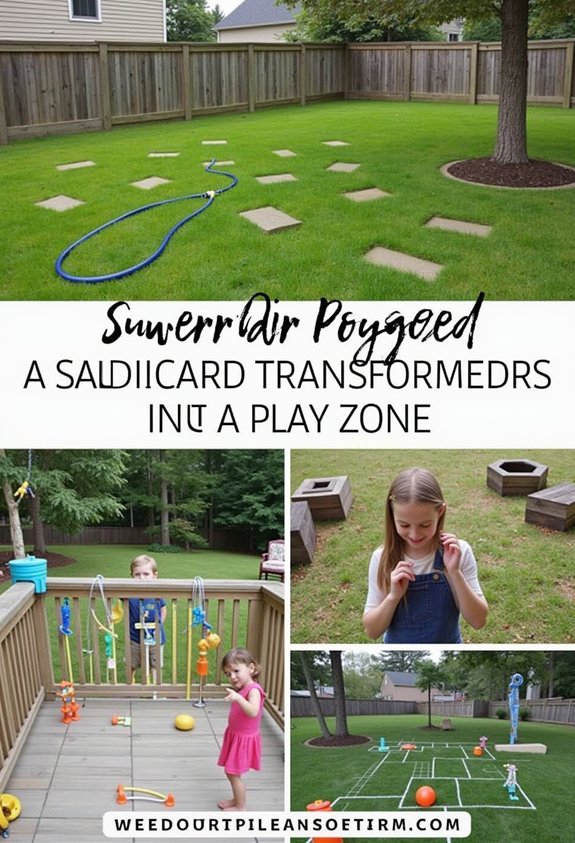
Once you start looking around, the “boring” parts of your yard suddenly turn into game gear in disguise.
That plain path? Tape down chalk lines and boom—instant balance beam, racetrack, or “lava” bridge.
Your fence becomes a target wall for soft balls, wet sponges, or paper plate frisbees.
Even that sad corner of dirt can shine with playful landscaping: a tiny hill for rolling, stepping stones for “don’t touch the ground,” maybe a mini maze of potted herbs.
Look at your seating, too.
Pick multifunctional furniture that flips from chill zone to game station.
A storage bench hides water balloons.
A folding table hosts card tournaments, science “experiments,” or very serious cookie-decorating contests.
You don’t add clutter; you just unlock secret levels outside today.
In case you were wondering
How Can I Reduce Noise Complaints From Neighbors During Backyard Games?
Schedule games earlier, keep voices down, and use softer balls for noise reduction. Establish neighbor communication: share plans, ask about acceptable hours, and offer contact info. Add fences, shrubs, or acoustic panels to block sound.
What Safety Measures Are Essential for Kids Playing in Small Backyards?
You don’t need a yard to keep kids safe; you create clear play zones, choose age-appropriate playground equipment, install safety surfaces, secure gates and tools, supervise constantly, and teach rules about sharing space and boundaries.
How Do I Weatherproof My Small Yard for Year-Round Gaming?
You weatherproof your yard by choosing durable yard materials, adding drainage, and using outdoor-rated furniture. Install shade sails, windbreaks, and string lights with covers. Rotate seasonal decorations, store gear in waterproof bins, and clear debris.
Can Small Backyards Support Accessible Play Areas for People With Disabilities?
Absolutely your tiny backyard can become an outrageously accessible hub when you use inclusive design, smooth surfacing, clear paths, and adaptive equipment, so everyone—wheelchair users, sensory seekers, and support staff—can play, socialize, and relax confidently.
How Much Ongoing Maintenance Do Backyard Game Spaces Usually Require?
Backyard game spaces usually require moderate, regular care; you’ll inspect surfaces, clean equipment, and refresh markings seasonally. Game space maintenance means controlling weeds, managing drainage, and planning predictable upkeep costs instead of surprise repairs later.
Conclusion
Your tiny backyard isn’t a problem; it’s your secret game lab. With less space, you think smarter, move faster, laugh louder. One study found kids are 2–3 times more active in smaller, well-designed play areas than in big, empty ones. So drag out the chalk, string some lights, stack those crates. Turn the grill into a “score table.” You don’t need acres. You just need attitude, imagination, and maybe sunscreen for epic, backyard legend status.